

P2008 on 2015-2018 Nissan Murano: IMRC Solenoid and ECM Update Guide
On a 2015-2018 Murano, P2008 often points to a software glitch in the Engine Control Module (ECM). Before replacing any parts, check with a Nissan dealer if Technical Service Bulletin NTB19-045b has been performed. This TSB addresses an error where the ECM improperly stores P2008 as a permanent code. If a part has failed, it's likely the Intake Manifold Runner Control (IMRC) solenoid, which is a relatively inexpensive part.
- For a 2015-2018 Murano, P2008 is very often caused by an ECM software error, not just a bad part.
- Your first action should be to check with a Nissan dealer about TSB NTB19-045b before replacing any parts.
- Even if the IMRC solenoid is faulty and replaced, the ECM reprogram is likely still required to clear the code permanently.
What's Unique About the 2015-2018 Nissan MURANO
For this specific generation of Nissan Murano and its platform mates with the VQ35DE engine, the P2008 code has a well-documented, unique cause. Nissan issued multiple Technical Service Bulletins (TSBs) because the original ECM software had 'calibration errors'. These errors can cause the ECM to improperly store P2008 as a permanent diagnostic trouble code (P-DTC), even if there is no actual hardware fault or after a repair has been made. The official fix involves a mandatory ECM software update, which changes how the permanent DTC is stored and erased, making this a critical first check before attempting any hardware repairs.
🎬 Watch: How a bad VIAS valve affects engine performance.Diagnostic Flowchart
Tap your situation to follow the diagnostic path that matches what you're seeing on this vehicle.
Symptoms You May Notice
- Check Engine Light (MIL) is on
- Reduced engine power, especially at lower RPMs
- Hesitation or stumbling during acceleration
- Rough or uneven idle
- Decreased fuel economy
- Engine surging
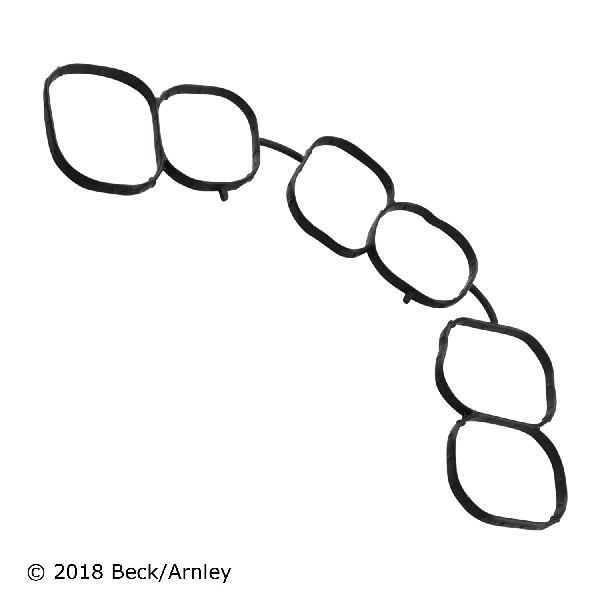
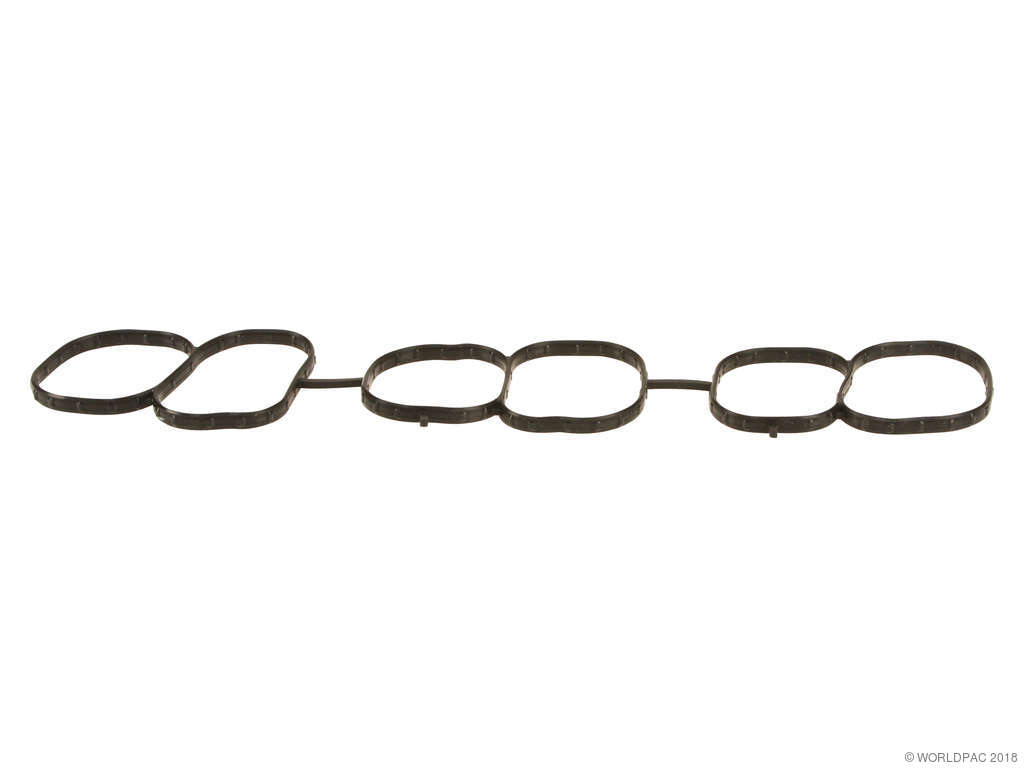
- Replacing the entire intake manifold when only the external solenoid has failed.
- Replacing the IMRC solenoid without first checking if the ECM software update TSB applies, leading to the code returning or being impossible to clear.
- Assuming the code can be cleared with a standard OBD-II scanner without performing the TSB reprogram, leading to frustration when the 'permanent' code remains.
Most Likely Causes
- Engine Control Module (ECM) Software Requires Update 🔴 High Probability → Shop Engine Control Module (ECM) As documented in Nissan TSBs like NTB19-045b, the factory ECM software can improperly store this DTC due to calibration errors. The reprogram does not fix the DTC itself, but rather 'updates the way the permanent DTC is stored and allowed to be erased'.
How to confirm: Contact a Nissan dealership with your VIN and ask if TSB NTB19-045b is open for your vehicle. They can also check the ECM's current software part number against the TSB's list of affected part numbers.
Typical fix: Reprogramming the ECM with the updated software. This must be done by a dealer or a qualified shop with Nissan's CONSULT-III plus diagnostic tool. The TSB explicitly states that the hardware fault must be diagnosed and repaired *before* applying the reprogram.
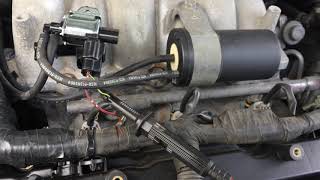
Est. part cost: $0 - Faulty Intake Manifold Runner Control (IMRC) Solenoid 🟡 Medium Probability → Shop Engine Intake Manifold The solenoid is an electromagnetic coil that can fail over time due to heat cycles and vibration in the engine bay, causing an open circuit internally. It is located on the driver's side of the engine, near the back of the intake manifold.
How to confirm: Disconnect the solenoid and measure its resistance with a multimeter. An infinite resistance reading (OL) indicates an open circuit. A factory-level bi-directional scan tool can perform an 'active test' to command the solenoid to click; no click suggests a failure in the solenoid or its wiring.
Typical fix: Replace the faulty IMRC solenoid. It is accessible on the intake manifold and secured by one or two bolts.
Est. part cost: $50-$100 - Damaged Wiring or Loose Connector ⚪ Low Probability The wiring harness in the engine bay is exposed to heat and vibration, which can lead to chafed wires or loose pins in the connector over time. Rodent damage is also a possibility, as they are drawn to the warmth of the engine.
How to confirm: Visually inspect the wiring harness leading to the IMRC solenoid for any signs of damage, such as chew marks, burns, or chafing against other components. Unplug the connector and check for corrosion or bent pins. Use a multimeter to check for continuity from the ECM to the solenoid connector.
Typical fix: Repair the damaged section of the wire or replace the connector pigtail.
Est. part cost: $5-$25
Rare But Worth Checking
- Failed Engine Control Module (ECM): → Shop Engine Control Module (ECM) This is rare, but if the solenoid and wiring are confirmed to be good, the driver circuit within the ECM itself may have failed. The TSB for a software update should always be performed before condemning the ECM.
Diagnosis Steps
- Check for TSBs: Contact a Nissan dealer with your VIN to determine if TSB NTB19-045b (or its revisions) is open for your vehicle. This is the most important first step, as it dictates the final repair procedure.
- Scan for Codes: Use an OBD-II scanner to confirm P2008 is the active code. Note any other codes present, especially P2006, P0087, P0101, or P0448.
- Visual Inspection: Locate the IMRC solenoid on the driver's side rear of the intake manifold. Ensure its electrical connector is securely plugged in. Look for any obvious damage to the wiring harness, such as burns, chafing, or signs of rodents.
- Active Test (if available): Use a bi-directional scanner (like Nissan's CONSULT) to command the IMRC/VIAS solenoid on and off. Listen for an audible click from the solenoid. A click indicates the solenoid and its wiring are likely functional.
- Electrical Tests (if no click): Disconnect the solenoid connector. Turn the ignition to 'ON' (engine off). Use a multimeter to check for battery voltage at one of the pins on the harness side. The other pin should be the ground control from the ECM.
- Solenoid Resistance Test: With the solenoid unplugged, set your multimeter to measure resistance (Ohms) and probe the two pins on the solenoid itself. A healthy solenoid for a VQ35DE engine should read between 22-30 ohms. An 'OL' or infinite reading confirms the solenoid has an open circuit and needs replacement.
- Repair and Reprogram: If a faulty part is found, replace it. After the hardware repair is complete, the ECM must be reprogrammed by a dealer per TSB NTB19-045b to update the permanent DTC logic and allow the code to be cleared.
Parts You'll Likely Need
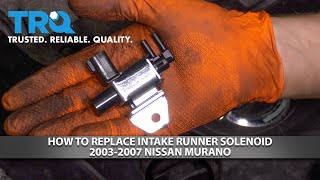
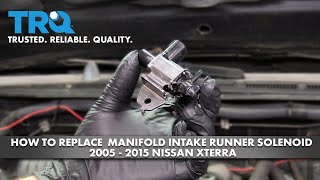
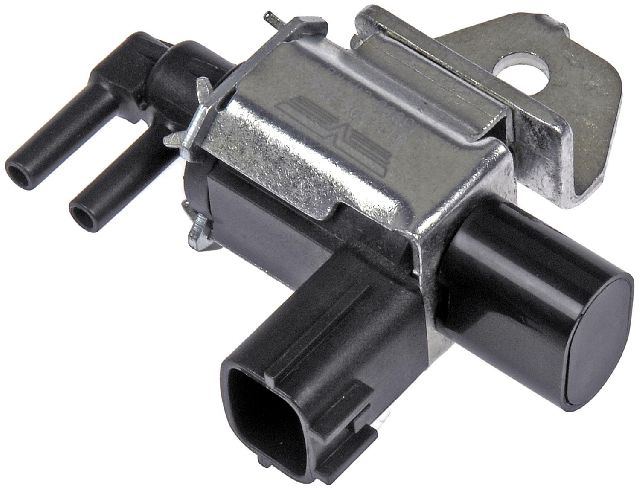
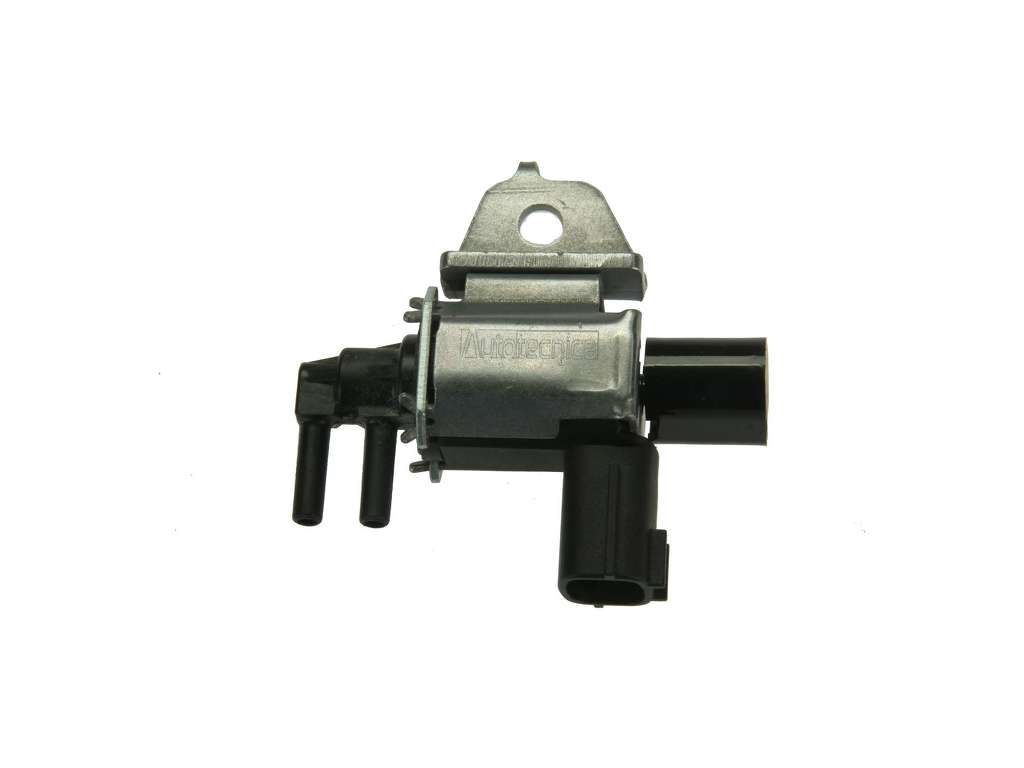
- Intake Manifold Runner Control Solenoid Valve
(OEM #14955-8J10A)— This solenoid is the most common hardware component to fail, causing the 'open circuit' condition detected by the ECM.
Trusted brands: Nissan (OEM), Hitachi, Dorman, Standard Motor Products (SMP)
OEM price range: $80-$120
Aftermarket price range: $40-$70
Related Codes That Often Appear With This One
- P2006 — P2008 indicates an open electrical circuit, meaning the solenoid can't be activated. If it can't be activated, the runners will remain in their default (closed) position, which can trigger P2006 (Intake Manifold Runner Control Stuck Closed).
- P0087, P0101, P0448 — Nissan TSB NTB19-045b groups these codes together with P2008 as being related to the same ECM software calibration issue that requires a reprogram to properly manage permanent DTC storage.
Technical Service Bulletins (TSBs) & Recalls
- NTB19-045b: 'MIL ON WITH DTC P0087, P0101, P0448, OR P2008' - This is the primary TSB detailing the ECM software issue. It clarifies that the reprogram's purpose is to update the logic for storing and erasing the permanent DTC, and that it must be done *after* any necessary hardware repairs are completed.
- NTB19-045: The original version of the TSB, which identified the issue across multiple Nissan models including the Murano, Altima, and Maxima with the VQ35DE engine.
Platform-Specific Known Issues
- A series of Technical Service Bulletins (NTB19-045, NTB19-045a, NTB19-045b) were issued for 2015-2018 Muranos because the ECM could improperly store a permanent DTC for P2008 due to software calibration errors. The fix requires an ECM reprogram, which updates how the code is stored and erased.
- Owner Experience: Dealer Reprogram is Key: Multiple owners on forums report that even after replacing a confirmed faulty solenoid, they were unable to clear the P2008 code themselves. The code remained as a 'permanent' fault until they had a Nissan dealer perform the ECM reprogram specified in TSB NTB19-045b.
Mechanic-Grade Diagnostic Values
- IMRC / VIAS Solenoid Coil Resistance — expected: 22–30 Ohms at room temperature.. Failure: A reading outside this range, especially an infinite reading (Open Loop / OL), indicates a faulty solenoid. A reading of 48 ohms, for example, was documented as a failure.
Scan Tool Commands That Help
- Nissan CONSULT-III Plus or equivalent bidirectional scanner: Active Test / Actuation Test for the VIAS / IMRC Solenoid — Use this with the key on, engine off to command the solenoid to activate. A distinct clicking sound confirms the solenoid coil and its wiring circuit are capable of functioning. No sound points directly to an open circuit (P2008) in the wiring or the solenoid itself.
Wiring & Ground Locations
- ECM Ground (Example) — On a similar generation Murano (Z51), ECM grounds were located at points designated E21 (left rear of engine compartment) and E38. While not guaranteed for the Z52, it indicates that primary engine management grounds are found in the engine bay, not the passenger cabin.. A poor ground connection for the ECM can cause a variety of incorrect readings and fault codes, including circuit codes like P2008. Verifying the main ECM ground is a valid step in advanced diagnosis if the solenoid and its direct wiring check out.
OEM Part Supersession History
14955-8J100→14955-8J10A— Standard part revision and update by the manufacturer.
Heads up: The part is often sold under multiple names which can cause confusion. Besides 'IMRC Valve' or 'VIAS Solenoid', it is also listed by parts suppliers as 'Purge Solenoid', 'Vapor Canister Vent Solenoid', and 'Vent Control Solenoid'. A technician must ensure they are ordering the correct part for the IMRC system, as a similarly named EVAP system part will not work.
Helpful Videos

We Have This Part in Stock


The information in this article is provided for general reference and educational purposes only. Vehicle specifications, procedures, and part compatibility can vary by production date, trim level, and region. Always consult your vehicle's factory service manual and verify part numbers before purchasing or performing repairs. Safety-critical components such as airbags, seat belts, and braking systems should be installed by a qualified professional.
- Nissan MURANO:
- 🧭 Diagnostic Flowchart
- 🎬 Helpful Videos
- 🛍️ Shop This Part
- What's Unique About the 2015-2018 Nissan MURANO
- Symptoms You May Notice
- Most Likely Causes
- Rare But Worth Checking
- Diagnosis Steps
- Parts You'll Likely Need
- Related Codes That Often Appear With This One
- Technical Service Bulletins (TSBs) & Recalls
- Platform-Specific Known Issues
- Mechanic-Grade Diagnostic Values
- Scan Tool Commands That Help
- Wiring & Ground Locations
- OEM Part Supersession History
- 🎟️ Get 5% Off