

P2015 on 2008-2017 Audi S5 3.0L TFSI: Intake Runner Sensor Causes and Fixes
On the Audi S5 3.0T, code P2015 typically points to a faulty intake manifold runner position sensor or a vacuum leak in its actuator on Bank 1. Since the sensor is often not sold separately, the most common fix is replacing the entire Bank 1 (passenger side) lower intake manifold, which is a labor-intensive job requiring supercharger removal. Unlike on 2.0T engines, aftermarket repair brackets are not a solution for this platform.
- P2015 on your S5 3.0T means the position sensor for the Bank 1 intake runner flaps has a performance issue.
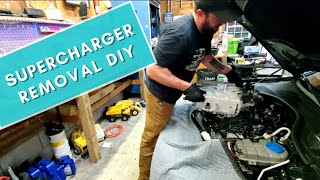
- This is not a DIY-friendly fix. The supercharger must be removed to access the faulty component.
- The most reliable repair is to replace the entire Bank 1 lower intake manifold assembly, as the sensor and actuator are usually not sold separately.
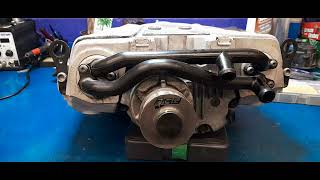
- While the supercharger is off, it is a cost-effective time to replace other known failure items like the PCV valve, thermostat, and water pump.
What's Unique About the 2008-2017 Audi S5
On the 3.0L TFSI engine, the intake runner system is composed of two separate lower intake manifolds located directly underneath the supercharger. Each has its own set of flaps, a vacuum actuator, and a position sensor. A failure on Bank 1 triggers P2015, while a failure on Bank 2 triggers P2020. Unlike on many other VAG engines (especially the 2.0T and TDI models) where external repair brackets can fix linkage over-travel issues, that is not the case here. The common failure on the 3.0T is often internal to the manifold assembly, either the sensor itself or the diaphragm in the vacuum actuator. This makes the repair significantly more involved as the supercharger must be removed for access.
Generation note: The 2008-2017 S5 model years span the B8 and B8.5 generations. The 3.0L TFSI engine was equipped in the S5 Cabriolet from 2009-2017. The S5 Coupe and Sportback models used a 4.2L V8 until the B8.5 facelift, switching to the 3.0L TFSI from 2013-2017. This guide applies to all S5 models equipped with the 3.0L TFSI V6.
Symptoms You May Notice
- Check Engine Light is on
- Reduced engine performance, particularly a lack of power above ~4,000 RPM
- Rough or unstable idle
- Decreased fuel economy
- Hesitation during acceleration
- Slightly louder intake noise
- Replacing only the intake runner control solenoid when the fault is a bad position sensor or a vacuum leak at the actuator diaphragm.
- Assuming the problem is carbon buildup when it is actually a failed sensor or actuator.
- Attempting to use an aftermarket repair bracket, which is a common fix for the 2.0T engine but does not apply to the 3.0T's failure mode.
Most Likely Causes
- Faulty Intake Manifold Runner Position Sensor (Bank 1) 🔴 High Probability → Shop Engine Intake Manifold The position sensor is an electronic component integrated into the intake manifold assembly that can fail over time due to heat cycles and vibration. Oil contamination from a failing PCV system, which is also located under the supercharger, can seep into the engine valley and damage the sensor's electronics.
How to confirm: Using a diagnostic tool like VCDS, monitor the specified vs. actual position of the Bank 1 intake runner flaps in Measuring Value Block 143. If the actual value is erratic, does not change, or is implausible while the actuator is known to be working, the sensor is likely faulty.
Typical fix: Audi does not sell the sensor separately. The standard repair is to replace the entire lower intake manifold assembly for Bank 1.
Est. part cost: $400-$700 - Failed Intake Manifold Runner Vacuum Actuator (Bank 1) 🟡 Medium Probability → Shop Engine Intake Manifold The rubber diaphragm inside the vacuum actuator can tear or perish over time due to heat and age, causing a vacuum leak. This prevents the actuator from moving the flaps to their commanded position.
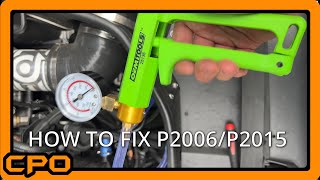
How to confirm: After removing the supercharger, disconnect the vacuum line from the actuator on the Bank 1 manifold and connect a handheld vacuum pump. If the actuator cannot hold a vacuum, the diaphragm is torn. You should see the linkage move smoothly and hold its position under vacuum.
Typical fix: Similar to the sensor, the actuator is integrated into the manifold assembly. The entire Bank 1 lower intake manifold must be replaced.
Est. part cost: $400-$700 - Faulty Intake Runner Control Solenoid (N316) ⚪ Low Probability This solenoid controls the vacuum supply to the actuators. It's a common failure point on VAG vehicles and can cause flap actuation problems. Manufacturer TSB Bulletin #A0124312072273_2 notes that a failure in the electric changeover valve N316 can specifically trigger P2015 along with other runner-related codes.
How to confirm: Test the solenoid for proper electrical function and ensure it is not clogged. A scan tool can be used to command the solenoid on and off while checking for vacuum at the output port. It is located under the supercharger, making it difficult to access without disassembly. A healthy solenoid should have a resistance of 25-35 Ohms.
Typical fix: Replace the N316 solenoid. This is often done as a 'while you're in there' job during manifold replacement, as it is also located under the supercharger.
Est. part cost: $40-$80 - Carbon Buildup on Intake Flaps ⚪ Low Probability Direct injection engines like the 3.0T are prone to carbon buildup on intake valves and ports. This can also affect the runner flaps, causing them to bind or stick, preventing them from reaching their target position.
How to confirm: This can only be confirmed by removing the lower intake manifold and visually inspecting the flaps for heavy carbon deposits that restrict movement.
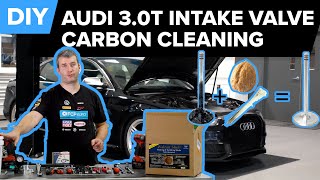
Typical fix: Manually clean the intake ports and runner flaps. This is a labor-intensive process 🎬 See how to scrape and walnut blast your intake valves often performed concurrently with intake manifold replacement.
Est. part cost: $0 (if DIY), $500+ (shop labor)
Rare But Worth Checking
- Damaged Wiring or Connector: Rodent damage or chafing of the sensor's wiring harness can cause an implausible signal. It's worth a visual inspection of the harness leading to the manifold before committing to major parts replacement.
- Incorrect Reassembly After Service: If work was recently done (like carbon cleaning or fuel injector replacement), it's possible the intake manifold was reinstalled incorrectly, causing the flaps to jam against the internal port dividers. This usually throws 🎬 Watch: How to avoid jamming the flaps during reassembly 'stuck closed' codes (P2006/P2007) but could potentially cause a P2015.
Diagnosis Steps
- Read the fault codes using an OBD-II scanner to confirm P2015 is present and note any other codes.
- With a VAG-specific scan tool (like VCDS), access the engine control module and observe Measuring Value Block 143 to see the specified vs. actual position of the intake runner flaps.
- Perform an output test to command the flaps open and closed. Observe if the 'actual' position changes and if it matches the 'specified' position. An erratic or non-moving 'actual' value points to a sensor or actuator issue.
- If the flaps do not move, the supercharger must be removed to access the lower intake manifolds.
- Visually inspect the linkage on the Bank 1 manifold for any obvious damage or disconnection.
- Use a handheld vacuum pump to test the actuator's diaphragm. Disconnect the vacuum line and apply vacuum. If it doesn't hold vacuum, the manifold assembly needs replacement.
- If the actuator holds vacuum and the linkage moves freely, the problem is likely the position sensor itself or the wiring.
- Inspect the sensor's connector and wiring harness for any damage, corrosion, or loose connections. Check for oil contamination from the PCV system in the engine valley.
- If all other components test good, the position sensor is faulty, which necessitates replacing the intake manifold assembly as the sensor is not sold separately by Audi.
Parts You'll Likely Need
- Lower Intake Manifold Assembly (Bank 1)
(OEM #06E133109AF)— This is the most common fix because the position sensor and vacuum actuator are integrated into the assembly and not typically sold separately by Audi. Part number 06E133109AF has been superseded by several newer revisions like AL, AP, AR, AS, and BE.
Trusted brands: Audi Genuine, Pierburg
OEM price range: $600-$750
Aftermarket price range: $400-$550 - Supercharger Gasket Kit
(OEM #06E145601KT (ECS Tuning Kit))— Required for reinstallation of the supercharger, which must be removed to access the intake manifolds. Includes various gaskets and seals that are one-time use, such as the main supercharger-to-manifold gaskets (079129717D).
Trusted brands: Audi Genuine, Elring, Victor Reinz
OEM price range: $100-$150
Aftermarket price range: $50-$100 - PCV Valve / Oil Separator
(OEM #06E103547AC)— The PCV valve is a common failure item located under the supercharger. Since the supercharger is already removed, it is highly recommended to replace the PCV as a preventative measure to avoid future labor costs. A failing PCV can cause oil consumption and leak oil that damages other components.
Trusted brands: Audi Genuine, RKX
OEM price range: $150-$250
Aftermarket price range: $50-$100
Related Codes That Often Appear With This One
- P2020 — This is the equivalent code for Bank 2 (driver's side). It's common for both manifolds to degrade at a similar rate, leading to faults on both banks. Many owners choose to replace both at the same time.
- P2006 / P2007 — These codes mean 'Intake Manifold Runner Control Stuck Closed'. They can appear alongside P2015 if a vacuum failure or mechanical binding is severe enough to prevent any movement.
Technical Service Bulletins (TSBs) & Recalls
- TSB 01-13-50 (2030192): While for 4.2L/5.2L FSI engines, it documents P2015 being caused by a seal issue behind the position sensor, showing a history of sensor-related issues on Audi manifolds.
- TSB 2033296/1: While for P2006/P2007 codes on the 3.0T, it documents failures of the vacuum actuators, which is a related potential cause for P2015.
- TSB Bulletin #A0124312072273_2: This bulletin provides information for when the MIL is on with code P2015, specifically identifying the electric changeover valve N316 as a component of interest.
Platform-Specific Known Issues
- The location of the intake manifolds beneath the supercharger is the primary factor driving the high labor cost for this repair.
- While the supercharger is off, it is considered best practice to also replace the thermostat, water pump, and PCV valve, as these are all common failure items on the 3.0T engine and require supercharger removal to access.
Mechanic-Grade Diagnostic Values
- Intake Runner Control Solenoid (N316) Resistance — expected: 25 - 35 Ohms. Failure: Infinite resistance (Open Line) or a reading outside the specified range.
- VCDS Advanced Measuring Values - Intake Manifold Runner Control — expected: In VCDS, check the block for 'Intake manifold runner control'. The 'Specified value' should closely match the 'Actual value' as the ECU commands the flaps to move. At idle, the specified value is often near 0-10%, and under load (or during an output test) it should command towards 90-100%.. Failure: The 'Actual value' is stuck, erratic, or does not follow the 'Specified value'. A large deviation between the two indicates a fault in the sensor, actuator, or linkage.
Scan Tool Commands That Help
- VCDS (VAG-COM): Basic Settings - Group 142 (Bank 1) & 144 (Bank 2) — After replacing an intake manifold, this function must be run to adapt the new position sensor to the ECU. The procedure involves letting the engine idle, navigating to Basic Settings, selecting the appropriate group, and running the adaptation until the status reads 'ADP i.O.' (Adaptation in Order).
- VCDS (VAG-COM): Output Tests (DTM) for Intake Manifold Runner — This allows a technician to manually command the intake runner flaps open and closed while observing the live data in measuring blocks. It's used to confirm if the actuator and linkage are physically moving and if the sensor is reporting the change in position, helping to isolate a mechanical vs. electrical failure before disassembly.
Wiring & Ground Locations
- Engine Control Module (ECM/J623) — Located in the plenum chamber, under the plastic cowl cover on the driver's side (LHD vehicles), near the base of the windshield.. The ECM sends the command to the N316 solenoid and receives the position signal from the G476 sensor. All wiring for the system originates here.
- Ground Point (12) — In the engine compartment, on the left side longitudinal member (frame rail).. This is a primary engine bay ground point. A corroded or loose connection here could potentially cause erratic voltage and sensor reading issues for various engine components, including the intake runner position sensor.
- Intake Manifold Runner Position Sensor (G476) Connector — On the lower intake manifold for Bank 1 (passenger side on LHD), underneath the supercharger.. This is the direct electrical connection to the sensor. It is susceptible to oil contamination from a leaking PCV valve, which can degrade the connection and cause the P2015 code.
Real Owner Repair Stories
- AudiWorld Forums User (2016 Audi A6 3.0T) — Check Engine Light with codes P2019 (Bank 2 sensor circuit) and P2006 (Bank 1 stuck closed).
❌ Tried (didn't work) Initial diagnosis confirmed the flaps moved freely, suggesting it wasn't a mechanical binding issue.
✅ What actually fixed it After performing service that required removing the supercharger, the user had inadvertently swapped the electrical connectors for the intake manifold runner and the camshaft position sensor. The plugs are identical. Correcting the wiring by plugging the correct harness into each component resolved the fault codes. - Ross-Tech Forums User (2013 Audi Q7 3.0T) — Check Engine Light with codes for both intake runner actuators being inoperative after purchase.
❌ Tried (didn't work) The user planned to perform preventative maintenance under the supercharger and considered deleting the swirl flaps and getting an ECU tune to code them out.
✅ What actually fixed it The root cause was confirmed to be a torn diaphragm in the vacuum actuator. When tested directly with a vacuum pump after removing the supercharger, air could be heard leaking from the actuator housing itself. The final fix was to replace the faulty lower intake manifold assembly. - NHTSA ODI #11542990 — An owner reported an emissions failure with the CEL code P2015 and noted that a technical service bulletin details the repair and how it should be covered under warranty.
OEM Part Supersession History
06E133109AF→06E133109AL, 06E133109AP, 06E133109AR, 06E133109AS, and finally 06E133109BE.— Revisions by the manufacturer to improve durability and address failure points in the sensor and actuator mechanism.
Heads up: All listed part numbers are generally cross-compatible for the Bank 1 (Left side on LHD) manifold. However, it is always best to install the latest revision (BE) to get the most updated design. Some later model years (CREC engine) may use different part numbers like 06E133109BC.
Model Year Variations Within This Range
- 2016-2018 (approx.): Later models with the 'CREC' engine code may have slightly different sensor connectors or part numbers for the intake manifolds (e.g., 06E133109BC) compared to the earlier 'CGXB' or similar engines. While the fundamental failure mode is the same, it is critical to verify the correct part number by VIN for these later models.
Diagnostic Flowchart
Other Known Issues on This Vehicle
Issues unrelated to this code that are worth knowing about as an owner of this generation:
- Thermostat and Water Pump Failure 🔴 High — Common between 60,000-100,000 miles. The original plastic components become brittle and crack, causing coolant leaks.
- PCV Valve Failure 🟠 Medium — Common around 60,000-80,000 miles. Leads to high oil consumption, rough idle, and potential seal damage from crankcase pressure issues.
- S-Tronic (DL501) Mechatronic Unit Failure 🔴 High — Can occur at various mileages, more common on earlier B8 models. Symptoms include harsh/jerky shifting, flashing PRNDS light, and getting stuck in gear.
- Timing Chain Tensioner Wear 🔴 High — More prevalent on early B8 models. Causes a 'death rattle' on cold starts. If left unaddressed, can lead to catastrophic engine failure. Repair is an engine-out service.
- Carbon Buildup on Intake Valves 🟠 Medium — A consequence of direct injection, typically requires cleaning every 80,000-100,000 miles to restore performance and prevent misfires.
- Catalytic Converter Failure 🟠 Medium — The catalytic converters can fail, sometimes due to engine issues or age. This is an expensive repair.
Used vs. New Parts: Buying Guide for This Vehicle
When a used part is the smart pick: A used intake manifold assembly is a high-risk purchase and generally not recommended. The primary failure modes—internal sensor failure and actuator diaphragm tearing—are due to age and heat cycles. A used part carries the same inherent risk of failure and may not last long, negating any cost savings due to the high labor cost of the job. If one must be sourced, it should only be from a very low-mileage, documented donor vehicle.
Donor-vehicle mileage cap: roughly under 40000 miles for the part to have meaningful remaining life.
What to inspect on the donor part:
- Verify the donor vehicle's mileage is low.
- Inspect the actuator arm and linkage for any cracks, play, or signs of heat stress.
- If possible, test the actuator with a handheld vacuum pump before purchase to ensure it holds vacuum.
- Check the electrical connector pins for any corrosion, damage, or signs of oil contamination.
OEM-only on this vehicle (don't cheap out):
- PCV Valve / Oil Separator: Aftermarket PCV valves for the 3.0T are known to have high failure rates. Given the labor to access it, using a Genuine Audi part is critical to avoid a repeat job.
- Intake Manifold Assembly: While a reputable OEM supplier like Pierburg is a viable alternative, cheap, unbranded manifolds from marketplaces like eBay or Amazon should be avoided due to questionable quality control and material durability.
Aftermarket brands forum-validated for this vehicle:
- Pierburg: Pierburg is often the original equipment manufacturer for Audi's fuel and air management components, including solenoids and potentially the manifold assembly itself. Their quality is considered equivalent to Genuine Audi parts.
Brands owners have reported issues with on this vehicle:
- Unbranded/No-Name eBay/Amazon parts: Many forum users and technicians warn against using cheap, unbranded intake manifolds due to poor fitment, premature failure of the internal components, and use of inferior plastic that cannot withstand engine bay heat cycles.
Real Owner Stories
Aggregated from forums and TSBs cited above. Mileages and costs reflect what owners reported in those sources.
2013 Audi S4 (B8.5) 3.0T — ~70000 miles
Symptoms: Check engine light on with P2015, potentially needing a full intake manifold replacement and discussing the 'while you're in there' repairs like the thermostat.
What fixed it: Replacement of the intake manifold assembly and thermostat.
Source hint: AudiWorld forum thread 'Warning 3.0T Thermostat'
2014 Audi S5 3.0T — ~80000 miles
Symptoms: Code P2015, discussion regarding whether the issue is the wiring or the full intake manifold.
What fixed it: Replacement of the intake manifold assembly.
Source hint: Reddit r/Audi thread 'Code P2015'
Audi Owner Report — NHTSA ODI #11542990
Symptoms: The owner reported an emissions failure with the CEL code P2015.
What fixed it: The owner cited a technical service bulletin that details the repair and how it should be covered under warranty.
Related OBD-II Codes
Frequently Asked Questions
Can I just replace the Bank 1 position sensor on my 2013 Audi S5 to clear the P2015 code?
Does TSB 2033296/1 apply to my P2015 fault code?
Why is the labor cost so high for fixing P2015 on the S5 3.0T?
Are there other parts I should replace while the supercharger is off for the P2015 repair?
Could carbon buildup be causing my P2015 code instead of a sensor failure?
How can I confirm if the Bank 1 actuator is the problem before buying a new manifold?
Helpful Videos

We Have This Part in Stock


The information in this article is provided for general reference and educational purposes only. Vehicle specifications, procedures, and part compatibility can vary by production date, trim level, and region. Always consult your vehicle's factory service manual and verify part numbers before purchasing or performing repairs. Safety-critical components such as airbags, seat belts, and braking systems should be installed by a qualified professional.
- Audi S5:
- 🧭 Diagnostic Flowchart
- 🎬 Helpful Videos
- 🛍️ Shop This Part
- What's Unique About the 2008-2017 Audi S5
- Symptoms You May Notice
- Most Likely Causes
- Rare But Worth Checking
- Diagnosis Steps
- Parts You'll Likely Need
- Related Codes That Often Appear With This One
- Technical Service Bulletins (TSBs) & Recalls
- Platform-Specific Known Issues
- Mechanic-Grade Diagnostic Values
- Scan Tool Commands That Help
- Wiring & Ground Locations
- Real Owner Repair Stories
- OEM Part Supersession History
- Model Year Variations Within This Range
- Other Known Issues on This Vehicle
- Used vs. New Parts: Buying Guide for This Vehicle
- Real Owner Stories
- 2013 Audi S4 (B8.5) 3.0T — ~70000 miles
- 2014 Audi S5 3.0T — ~80000 miles
- Audi Owner Report — NHTSA ODI #11542990
- Related OBD-II Codes
- Frequently Asked Questions
- 🎟️ Get 5% Off