

P2015 on 2007-2017 Jeep Patriot: Intake Manifold Runner Control Causes and Fixes
On a 2007-2017 Jeep Patriot, code P2015 almost always points to a problem with the intake manifold runner control (IMRC) system. The most common fix is replacing the IMRC actuator motor, but sometimes the entire intake manifold needs to be replaced due to stuck internal flaps or a failed integrated sensor. Before buying parts, remove the actuator and manually test the flap linkage; if it's stiff or stuck, the entire manifold is the required repair.
- P2015 on a Jeep Patriot points to a fault in the intake manifold runner control system.
- Before buying parts, remove the actuator motor and check if the manifold's internal flaps move freely. This 5-minute check determines if you need a cheap actuator or a more expensive manifold.
- The most common fix is replacing the IMRC actuator, which is a DIY-friendly job located on the side of the intake manifold.
- If the flaps are stuck, replacing the entire intake manifold assembly is the most reliable repair; cleaning is often a temporary fix that fails again.
What's Unique About the 2007-2017 Jeep Patriot

The Jeep Patriot, along with its platform mates like the Compass, Dodge Caliber, Avenger, and Chrysler 200, uses a plastic intake manifold with an integrated runner control system on the 2.0L and 2.4L 'World Engine'. Over time, these plastic components can become brittle or, more commonly, get clogged with heavy carbon buildup, causing the runner flaps to bind or stick. While the actuator motor is a common failure point and can be replaced separately, the root cause is often the mechanical binding of the flaps inside the manifold itself, which necessitates replacing the entire assembly as cleaning is often a temporary fix.
Symptoms You May Notice
- Check Engine Light is on
- Reduced engine power and acceleration
- Poor fuel economy
- Rough or unstable idle
- Engine hesitation
- Crank with no start (rare)
- Replacing only the IMRC actuator when the internal manifold flaps are stuck. If the flaps cannot move freely, a new actuator will not solve the problem and the code will return.
- Attempting to thoroughly clean the intake manifold. Many owners have reported that even after extensive cleaning, a small amount of residual friction in the flap movement is enough to cause the P2015 code to come back.
Most Likely Causes

- Failed Intake Manifold Runner Control (IMRC) Actuator/Motor 🔴 High Probability → Shop Engine Intake Manifold The electronic motor and integrated position sensor are a very common point of failure due to heat and constant adjustments.
How to confirm: Remove the actuator from the side of the intake manifold. Attempt to manually move the linkage on the manifold. If the linkage moves freely with smooth spring tension, the actuator is the likely culprit. You can also test the electrical connector for proper voltage.
Typical fix: Replace the IMRC actuator motor. This part is mounted to the side of the intake manifold with three bolts.
Est. part cost: $70-$150 - Stuck or Binding Intake Manifold Runner Flaps 🟡 Medium Probability → Shop Engine Intake Manifold Heavy carbon buildup inside the plastic intake manifold is a well-documented issue on the 2.4L World Engine, causing the internal flaps (butterflies) to stick, preventing them from moving freely.
How to confirm: After removing the IMRC actuator, try to move the runner flap linkage by hand. If it is stiff, gritty, completely stuck, or does not spring back smoothly, the flaps inside the manifold are binding. Even slight friction can be enough to re-trigger the code.
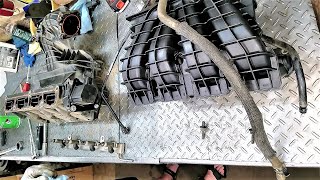
Typical fix: The official and most effective fix is to replace the entire intake manifold assembly. 🎬 Watch this step-by-step guide on replacing the intake manifold. Cleaning the carbon buildup is difficult and often a temporary solution, with the code returning once a small amount of friction reappears.
Est. part cost: $150-$400 - Wiring or Connector Issues ⚪ Low Probability The wiring harness connector to the IMRC actuator can become corroded or damaged from heat and vibration, leading to a poor connection.
How to confirm: Visually inspect the wiring and connector for damage. With the key on, use a multimeter to check the connector pins. According to repair forums, you should find: 5.0V reference on the Yellow/Pink wire, <50mV on the Dark Blue/Dark Green (ground) wire, and ~5V on the Yellow/Dark Blue (signal) wire when unplugged.
Typical fix: Repair the damaged wiring or replace the connector pigtail.
Est. part cost: $15-$30
Rare But Worth Checking
- Faulty Powertrain Control Module (PCM): This is extremely rare. The PCM should only be considered after all other possibilities, including the actuator, manifold, and wiring, have been thoroughly tested and ruled out.
- Weak or Failing Battery: A low voltage condition from a failing battery can sometimes trigger erroneous sensor codes, including P2015. However, this is uncommon and usually indicates an underlying issue with the IMRC system that becomes apparent during voltage fluctuations.
Diagnosis Steps

- Read the code with an OBD-II scanner to confirm P2015 is present.
- Visually inspect the IMRC actuator on the passenger side of the intake manifold. Check its electrical connector and wiring for any obvious damage, corrosion, or loose pins.
- Disconnect the electrical connector and remove the three bolts (typically a mix of 8mm and 10mm heads) holding the actuator to the manifold.
- CRITICAL STEP: With the actuator removed, attempt to manually rotate the plastic linkage on the intake manifold. It should move smoothly through its range of motion with some spring resistance and snap back cleanly. If it is stuck, very stiff, or feels gritty, the intake manifold itself is faulty and needs replacement.
- If the manifold linkage moves freely, the IMRC actuator/sensor assembly is the most likely cause of the problem.
- (Advanced) To rule out wiring issues, use a multimeter on the harness connector with the key on. Check for 5V reference (Yellow/Pink wire), good ground (Dark Blue/Dark Green wire), and 5V on the signal wire (Yellow/Dark Blue wire).
- Replace the faulty component (actuator or the entire manifold assembly).
- Clear the trouble codes with the scanner and perform a test drive, ensuring the engine reaches operating temperature to confirm the repair was successful.
Parts You'll Likely Need

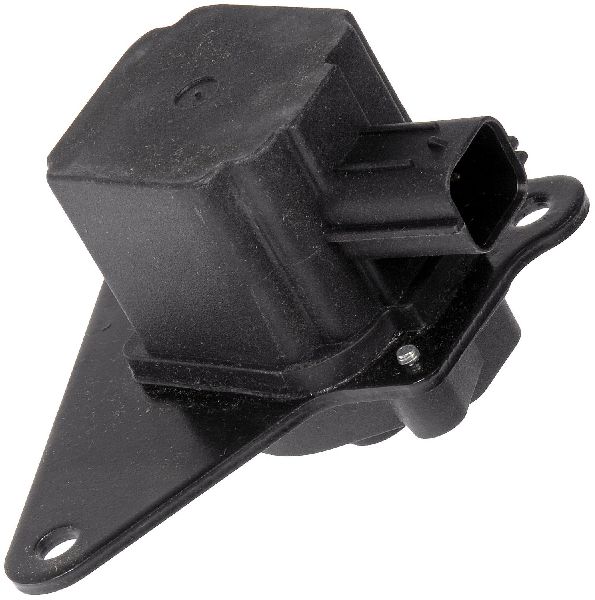
- Intake Manifold Runner Control Valve / Actuator
(OEM #04884549AD)— This is the motor that controls the runner flaps and contains the position sensor that fails, triggering the code. It's the most common failure point when the manifold flaps themselves are not stuck.
Trusted brands: Mopar, Dorman (p/n 911-902), Standard Motor Products
OEM price range: $120-$180
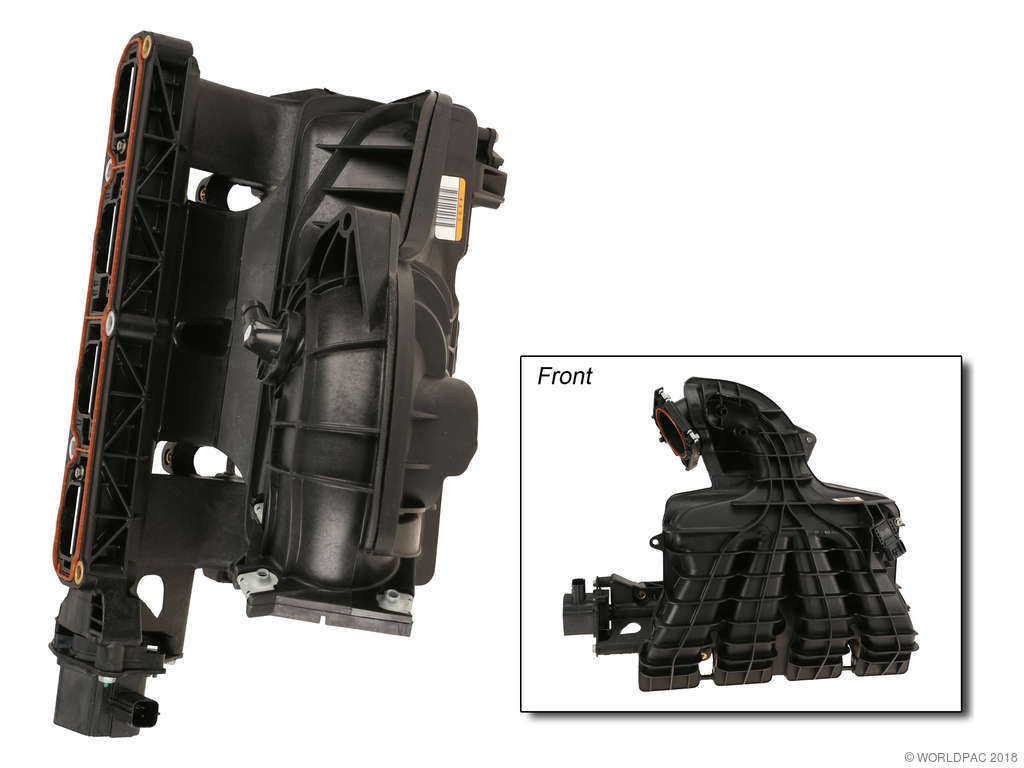
Aftermarket price range: $70-$100 - Intake Manifold Assembly
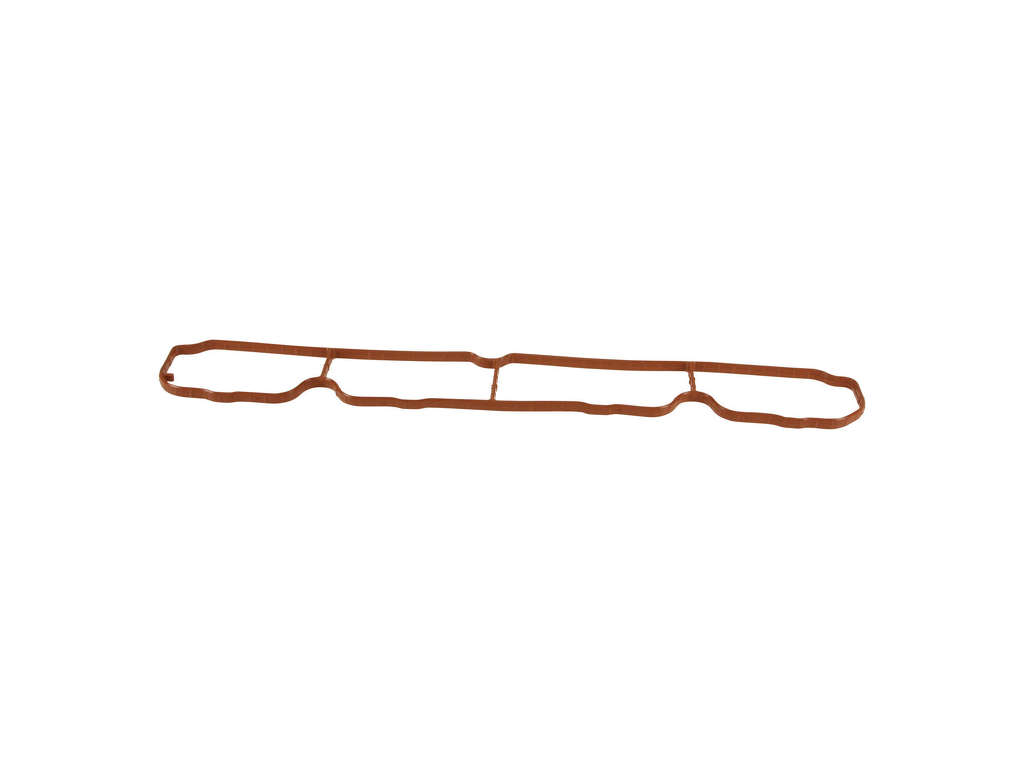
(OEM #04884495AK (supersedes 4884495AD, 4884495AF, 4884495AG, 4884495AH, 4884495AI, 4884495AJ))— Required if the internal runner flaps are stuck due to carbon buildup or breakage. The flaps are not serviced separately, so the entire manifold must be replaced. The Mopar replacement often includes a new actuator, MAP sensor, and gaskets.
Trusted brands: Mopar, Dorman, SKP
OEM price range: $300-$450
Aftermarket price range: $150-$250 - Aftermarket Aluminum Intake Manifold — Some owners opt for a full aluminum aftermarket manifold as a potential upgrade. The metal construction may be less prone to the issues that cause carbon to stick to the plastic runners in the OEM design.
Trusted brands: Various unbranded sellers on eBay/Amazon
Aftermarket price range: $120-$200
Related Codes That Often Appear With This One
- P2004 — This code means 'Intake Manifold Runner Control Stuck Open'. It often appears with P2015 as they both relate to the same system's failure to operate correctly.
- P2016 / P2017 — These codes indicate low or high voltage in the IMRC position sensor circuit, respectively. They point directly to an electrical fault within the sensor/actuator assembly or its wiring.
Technical Service Bulletins (TSBs) & Recalls
- No specific, widely-published Technical Service Bulletin (TSB) from Jeep/Chrysler for code P2015 on the Patriot is known at this time. The issue is primarily addressed through community knowledge and standard diagnostic procedures.
Platform-Specific Known Issues
- Real Owner Story: The Cycle of Failed Fixes: A common journey for owners is documented in forums and videos. An owner with a P2004/P2017 code (related to P2015) first tried replacing the actuator, which worked for about 3 weeks before the code returned. The owner then removed and thoroughly cleaned the intake manifold itself. While the flaps felt much better, there was still a tiny amount of friction. This was enough for the code to return. The problem was only permanently solved by giving in and purchasing a brand new intake manifold assembly, which resolved the issue immediately. This highlights that cleaning is often not enough and replacement is the definitive fix 🎬 See a real-world walkthrough of the manifold replacement process. if the flaps show any signs of binding.
Mechanic-Grade Diagnostic Values
- IMRC Actuator Connector - 5V Reference — expected: 5.0 Volts with key on, engine off. Failure: Significantly lower or no voltage indicates a wiring or PCM issue.
- IMRC Actuator Connector - Sensor Ground — expected: Less than 50 millivolts (mV). Failure: Higher voltage indicates a poor ground connection.
- IMRC Actuator Connector - Signal Wire (unplugged) — expected: ~5.0 Volts with key on, engine off. Failure: No voltage suggests a wiring fault or PCM issue.
- IMRC Position Sensor Live Data Voltage — expected: A smooth sweep from approximately 0.5V to 4.5V as the flaps move from closed to open.. Failure: Voltage that is stuck, erratic, or does not change when the actuator is commanded indicates a sensor or mechanical binding issue.
Scan Tool Commands That Help
- Professional Bidirectional Scanner (e.g., Autel, Launch, Witech) or advanced DIY app (e.g., Jscan): Intake Manifold Runner Control (IMRC) Actuator Test or similar functional test. — Use this command with the engine off to cycle the IMRC actuator motor. This helps determine if the failure is electrical (motor doesn't respond) or mechanical (motor tries to move but can't, or live data shows no position change).
Wiring & Ground Locations
- G110 — In the engine bay, next to the alternator.. This is a known problematic ground point on the Jeep Patriot platform. A poor connection here can cause various intermittent electrical and sensor-related faults, potentially including the P2015 range/performance code, even if the IMRC components are functional.
- IMRC Actuator Connector — On the passenger side of the intake manifold, plugged into the IMRC actuator.. This is the primary connection for power, ground, and signal for the IMRC system. It must be inspected for corrosion or damage and is the main point for electrical testing.
Real Owner Repair Stories
- YouTube channel 'Rust Belt Auto' (2009 Jeep Patriot 2.4L) — Check Engine Light with code P2004 (Stuck Open).
❌ Tried (didn't work) Replacing the IMRC actuator motor. The fix only lasted about 3 weeks before the light returned with codes P2004 and P2017.
✅ What actually fixed it Replacing the entire intake manifold assembly. The mechanic concluded the original problem was the binding flaps inside the manifold, which caused the new actuator to fail prematurely. - Reddit user 'Sweet_Tour83' on r/JeepPatriot (2012 Jeep Patriot Sport) — Check Engine Light with P2015 code appeared immediately after removing the battery to charge it and then reinstalling it. The car also would not start on its own.
❌ Tried (didn't work) Initially seeking a way to just clear the code, assuming it was a glitch from the battery disconnect.
✅ What actually fixed it Replacing the old, weak car battery with a new one. After the new battery was installed, the Check Engine Light and P2015 code did not return. - NHTSA ODI #11497786 — An owner reported that after the intake manifold flow valve and the manifold itself were replaced, the vehicle threw a P2015 code for the same issue only one month later. The owner replaced the valve again three days later, suspecting a faulty part, but the issue persisted.
OEM Part Supersession History
4884495AJ (and earlier versions like AD, AF, AG, AH, AI)→04884495AK— The supersession indicates an updated design by the manufacturer, likely to address material durability or the carbon buildup/binding flap issue, though no official reason is published.
Heads up: The newer part number (04884495AK) is the correct and recommended replacement for all previous versions on the 2007-2017 models.
Diagnostic Flowchart
Used vs. New Parts: Buying Guide for This Vehicle
When a used part is the smart pick: For this specific repair (P2015), using a used part from a junkyard is strongly discouraged. Both the actuator and the intake manifold are high-failure items.
What to inspect on the donor part:
- A used IMRC actuator is an electronic component with unknown remaining life and is a gamble.
- A used intake manifold is highly likely to suffer from the same internal carbon buildup and flap binding issues that cause this code, making it a very risky purchase that will likely not solve the problem long-term.
OEM-only on this vehicle (don't cheap out):
- While not strictly 'OEM-only', using a new Mopar intake manifold assembly (which often includes the actuator) is the highest probability fix.
Aftermarket brands forum-validated for this vehicle:
- Dorman (p/n 911-902 for the actuator) is a widely available aftermarket alternative, though some user reviews report early failures.
- Standard Motor Products (SMP) is another established aftermarket supplier.
Brands owners have reported issues with on this vehicle:
- Be cautious of unbranded, low-cost intake manifold assemblies from online marketplaces, as their quality control and material durability can be questionable.
Real Owner Stories
Aggregated from forums and TSBs cited above. Mileages and costs reflect what owners reported in those sources.
2012 Jeep Patriot Sport
Symptoms: P2015 code and Check Engine Light appeared after removing the battery to charge it. The vehicle would not start on its own before the battery was removed.
What fixed it: Replaced the car battery.
Source hint: Reddit r/JeepPatriot
2008 Jeep Patriot
Symptoms: Owner had a P2004/P2017 code. Replacing the actuator only fixed the issue for 3 weeks. After cleaning the manifold, the code still returned due to a small amount of friction in the flaps.
What fixed it: The problem was only permanently solved by purchasing and installing a brand new intake manifold assembly.
Source hint: YouTube: 'Update on P2004 or P2017 Code - Intake Manifold Runner Control Stuck Open 2008 Jeep Patriot'
2012 Jeep Compass
Symptoms: Vehicle had a P2015 fault code because the internal intake manifold butterfly flaps were stuck.
What fixed it: Manually moved the butterfly flaps with a flathead screwdriver in the slot where the IMRC valve couples, which freed them up and resolved the code.
Source hint: YouTube Comment on 'Aprende Mecánica'
Jeep Patriot Owner
Symptoms: Recurring P2015 code despite multiple repair attempts. The intake manifold flow valve and the manifold itself were replaced, but the code returned just one month later.
What fixed it: The owner attempted replacing the valve again shortly after the code returned, suspecting a faulty replacement part.
Source hint: NHTSA ODI #11497786
Related OBD-II Codes
Frequently Asked Questions
For a P2015 code on my Jeep Patriot, should I replace just the IMRC actuator or the whole intake manifold?
What's the best way to tell if my P2015 code is caused by the actuator or the manifold flaps before buying parts?
Is there an official Jeep Technical Service Bulletin (TSB) for the P2015 code on the Patriot?
What are the correct voltage readings for the IMRC actuator connector on my Jeep Patriot?
My Patriot has a P2015 code. What other vehicles have this same problem?
Besides the Check Engine Light, what other symptoms might I notice with a P2015 code on my Patriot?
Helpful Videos
We Have This Part in Stock


The information in this article is provided for general reference and educational purposes only. Vehicle specifications, procedures, and part compatibility can vary by production date, trim level, and region. Always consult your vehicle's factory service manual and verify part numbers before purchasing or performing repairs. Safety-critical components such as airbags, seat belts, and braking systems should be installed by a qualified professional.
- Jeep Patriot:
- 🧭 Diagnostic Flowchart
- 🎬 Helpful Videos
- 🛍️ Shop This Part
- What's Unique About the 2007-2017 Jeep Patriot
- Symptoms You May Notice
- Most Likely Causes
- Rare But Worth Checking
- Diagnosis Steps
- Parts You'll Likely Need
- Related Codes That Often Appear With This One
- Technical Service Bulletins (TSBs) & Recalls
- Platform-Specific Known Issues
- Mechanic-Grade Diagnostic Values
- Scan Tool Commands That Help
- Wiring & Ground Locations
- Real Owner Repair Stories
- OEM Part Supersession History
- Used vs. New Parts: Buying Guide for This Vehicle
- Real Owner Stories
- 2012 Jeep Patriot Sport
- 2008 Jeep Patriot
- 2012 Jeep Compass
- Jeep Patriot Owner
- Related OBD-II Codes
- Frequently Asked Questions
- 🎟️ Get 5% Off