

P2015 on 2000-2007 Mercedes-Benz C-Class C200 CDI: Swirl Flap Fault Causes and Fixes
On a C200 CDI, code P2015 almost always points to a problem with the intake manifold swirl flaps. The most common failure is a small plastic linkage that breaks or the flaps seizing with carbon. A cheap metal repair kit can fix the linkage, but if the flaps themselves are seized with carbon, the entire intake manifold may need to be cleaned or replaced. This is a very common issue on OM611 and OM646 diesel engines.
- P2015 on your C200 CDI means there's a problem with the intake manifold swirl flaps, not usually the sensor itself.
- The most likely cause is a small, cheap-to-fix plastic linkage arm that has broken.
- The second most likely cause is heavy carbon buildup jamming the flaps, which may require replacing the entire intake manifold.
- The car will drive but will have very poor performance (limp mode) until this issue is fixed.
- Before buying expensive parts, visually inspect the linkage on the side of the intake manifold for obvious breakage.
What's Unique About the 2000-2007 Mercedes-Benz C-Class
On Mercedes CDI engines of this era (like the OM611 and OM646), this code is extremely common. The issue is rarely the sensor itself. The primary weakness is the design of the swirl flap system, where oil vapor from the crankcase ventilation system and soot from the EGR (Exhaust Gas Recirculation) combine to form thick carbon deposits that jam the flaps. Compounding this, the actuator linkage is made of plastic that becomes brittle from engine heat cycles and eventually breaks or wears out, which is the most frequent point of failure. Oil leaks from the turbo inlet seal can also drip directly onto the actuator motor, causing it to short out.
Symptoms You May Notice
- Check Engine Light is on
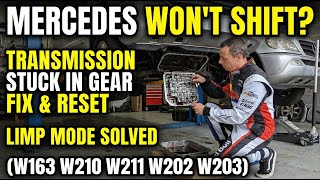
- Vehicle enters 'limp mode' with a rev limit of approximately 3000 RPM 🎬 Watch: How to diagnose and reset Mercedes limp mode.
- Significant loss of engine power and sluggish acceleration
- Poor fuel economy
- Rough or unstable idle
- Increased engine noise or whistling sounds from the intake area
- Replacing the Mass Airflow (MAF) sensor. While a bad MAF can cause performance issues, it will not directly cause a P2015 code.
- Replacing the EGR valve. A faulty EGR contributes to the carbon buildup that causes P2015, but replacing the EGR valve alone will not fix flaps that are already stuck or a linkage that is already broken.
Most Likely Causes
- Broken Intake Manifold Swirl Flap Linkage 🔴 High Probability → Shop Engine Intake Manifold The original linkage is made of plastic that cannot withstand the constant heat cycles and mechanical stress, causing it to become brittle and snap.
How to confirm: Visually inspect the swirl flap actuator motor and linkage arm on the side/bottom of the intake manifold. The arm will be visibly disconnected, broken, or have significant play.
Typical fix: Install an aftermarket metal repair linkage (e.g., from X8R or URO Parts) or replace the entire intake manifold.
Est. part cost: $20-$70 for a repair kit, $300-$600+ for a new manifold. - Seized Swirl Flaps due to Carbon Buildup 🔴 High Probability The combination of EGR soot and oil vapor from the crankcase ventilation system creates a thick sludge that seizes the delicate swirl flaps, preventing movement.
How to confirm: After disconnecting the actuator linkage, try to move the swirl flap connecting rod by hand. If it is very stiff or completely stuck, the flaps are seized. This often requires manifold removal for proper access.
Typical fix: The intake manifold must be removed and thoroughly cleaned with specialized solvents and tools. 🎬 See how to remove and clean the swirl flaps. If cleaning is not feasible or the flaps are damaged, the manifold must be replaced.
Est. part cost: $300-$600+ for a new manifold if cleaning is not successful. - Failed Intake Manifold Runner (Swirl Flap) Actuator Motor 🟡 Medium Probability → Shop Engine Intake Manifold The electric motor works constantly and can burn out, especially if it's straining against sticky flaps or if oil from a leaking turbo inlet seal drips onto it.
How to confirm: Use a diagnostic scan tool (like Mercedes STAR/Xentry) to command the motor to actuate. If the motor does not move or makes grinding noises despite having power and ground, it has failed. Also check the associated fuse (e.g., Fuse 53 or F44 in the engine bay fuse box on some models).
Typical fix: Replace the actuator motor. It is often sold separately from the intake manifold.
Est. part cost: $100-$250
Rare But Worth Checking
- Wiring Harness Damage: The wiring to the actuator motor can become damaged from heat, vibration, or oil contamination, leading to a short or open circuit. This should be checked before replacing the motor itself.
- Faulty Position Sensor: While the code directly names the sensor, it is the least likely part to fail. The sensor is usually integrated into the actuator motor, so it gets replaced with the motor anyway.
Diagnosis Steps
- Connect an OBD-II scanner to confirm the P2015 code is present and check for any other related codes.
- Perform a visual inspection of the intake manifold area. Locate the swirl flap actuator motor (underneath the manifold) and the plastic linkage connecting it to the flaps. Check if this linkage is broken, disconnected, or excessively worn.
- Check the fuse for the intake manifold actuator motor in the engine bay fuse box (can be labeled F53 or F44 depending on the specific model/year).
- If the linkage is intact and the fuse is good, use an advanced scan tool (like Mercedes STAR/Xentry) to monitor live data from the position sensor while commanding the actuator motor to open and close.
- Observe the results: If the motor moves but the sensor value doesn't change correctly, the linkage is likely broken or the flaps are stuck. If the motor doesn't move at all, proceed to check its wiring.
- Check for power and ground at the actuator motor's electrical connector. If power is present but the motor doesn't work, the motor is faulty.
- If the linkage is confirmed broken or the motor is good but the flaps won't move by hand (after disconnecting the linkage), the intake manifold must be removed for either linkage repair, thorough cleaning, or full replacement.
Parts You'll Likely Need
- Intake Manifold Assembly
(OEM #A6460901637, A6460902437)— This is the most comprehensive fix, replacing the manifold, gaskets, and the entire failure-prone swirl flap mechanism. It is required if the flaps themselves are seized and cannot be cleaned, or if the flap housings are worn and leaking.
Trusted brands: Mercedes-Benz (OEM), Pierburg, Febi Bilstein
OEM price range: $500-$800
Aftermarket price range: $300-$500 - Intake Manifold Swirl Flap Linkage Repair Kit — A cost-effective solution that directly replaces the weak plastic linkage arm with a more durable metal version. This is the correct fix if the only problem is the broken linkage and the flaps move freely.
Trusted brands: X8R, URO Parts, Klifex
OEM price range: N/A
Aftermarket price range: $20-$70 - Intake Manifold Runner Actuator Motor
(OEM #A6421500494 (Note: This is for the OM642 V6 but is often cross-referenced; verify correct part for OM646))— Replaced when the motor itself is confirmed to have failed electrically or mechanically, often due to internal wear or external oil contamination.
Trusted brands: Bosch, Pierburg (OEM supplier)
OEM price range: $200-$300
Aftermarket price range: $100-$200
Related Codes That Often Appear With This One
- P2009 — This code for 'Intake Manifold Runner Control Circuit Low' can appear if the actuator motor has an electrical fault or has shorted out.
- P2004, P2006 — These codes also relate to the swirl flaps being stuck in the open (P2006) or closed (P2004) position, often appearing alongside P2015 as the system tries to actuate the flaps and fails.
Platform-Specific Known Issues
- Swirl Flap Delete Modification: A common modification in the owner community is to remove the swirl flaps entirely and seal the holes in the manifold. This permanently eliminates the possibility of flap or linkage failure. However, it requires ECU remapping to prevent error codes. While it improves long-term reliability, it may slightly decrease low-end torque and could potentially cause issues with emissions testing in some regions.
Mechanic-Grade Diagnostic Values
- Actuator Motor (M55) Connector Voltage — expected: Pin 2: +12V (battery voltage), Pin 1: Ground.. Failure: No voltage at Pin 2 indicates a fuse or wiring issue upstream. A blown 15A fuse (F44 or F53) is a known cause.
- Actuator Motor (M55) Control Signal — expected: Pin 3 receives a Pulse Width Modulated (PWM) signal from the ECU, typically around 141 Hz, with a duty cycle from 5% to 95% to control flap position. A static voltage reading may be around 1.2V with key on, engine off.. Failure: No signal or a fixed, non-responsive signal from the ECU could indicate an ECU or wiring fault.
- Position Sensor Signal Voltage — expected: The sensor output voltage should vary smoothly within a range of approximately 0.2V to 4.85V as the flaps move.. Failure: A voltage that is stuck, erratic, or outside of this range will trigger the P2015 code.
- Actuator Motor Resistor Trick — expected: Bridging pins 2 and 3 of the motor connector with a 4.7k Ohm resistor should clear the limp mode.. Failure: This is not a failure indicator, but a diagnostic test. If this trick works, it confirms the fault lies within the motor, linkage, or flaps, and that the ECU and upstream wiring are likely okay.
Hidden / Shadow Codes Worth Checking
- 2513-1: Check component M55 (Inlet port shutoff motor). Positioner stored signals fault. This is a manufacturer-specific code that directly identifies a fault with the swirl flap actuator motor. (see via Mercedes-Benz STAR/Xentry diagnostic system or other advanced European scan tools.)
Scan Tool Commands That Help
- Mercedes STAR/Xentry: Actuate Inlet Port Shutoff Motor — This is a primary diagnostic step. Use this bidirectional command to force the M55 motor to move. Visually observe if the motor, linkage, and flap arm respond. If the motor makes noise but the arm doesn't move, the linkage is broken. If the motor does nothing, check power/ground.
- Mercedes STAR/Xentry: Intake Manifold Adaptation — After replacing the entire intake manifold assembly or the actuator motor/sensor. This function teaches the ECU the new end-stop positions of the swirl flaps. Failure to perform this adaptation can cause the P2015 code to return even with new parts.
Wiring & Ground Locations
- M55 — The swirl flap actuator motor, located on the side of and underneath the intake manifold.. This is the component that physically moves the swirl flaps. Its failure (electrical or mechanical) is a primary cause of P2015.
- M55 Connector — The 4-pin electrical plug on the M55 actuator motor.. This is the critical test point for checking power (Pin 2), ground (Pin 1), and the PWM signal from the ECU (Pin 3). Oil contamination can damage this connector.
- Fuse F53 / F44 — In the engine bay fuse box (SAM). It is typically a 15A fuse.. This fuse supplies power to the M55 actuator motor. An internal short in the motor can cause this fuse to blow, leading to a P2015 code. Always check this fuse before replacing the motor.
Real Owner Repair Stories
- MBClub UK user 'PeteA' (2004 Mercedes-Benz C200 CDI (W203)) — Car constantly going into limp mode (3000 RPM max) with P2015 code.
❌ Tried (didn't work) Refurbished ECU, Refurbished Turbo
✅ What actually fixed it The final fix was twofold: replacing a blown 15A fuse (Fuse 53 in the engine bay fuse box) and replacing the faulty swirl flap actuator motor (M55). The motor had likely shorted internally, blowing the fuse. - MBWorld.org Forums user 'flymech1' (Mercedes ML320 CDI (W164, OM642 engine but same principle)) — Check Engine Light, limp mode (turbo disabled), and P2015 code after the swirl motor became oil-soaked.
❌ Tried (didn't work) N/A, went straight for a workaround.
✅ What actually fixed it As a diagnostic step and temporary fix, the user bridged pins 2 (+12V) and 3 (PWM signal) of the disconnected motor harness connector with a 4.7k Ohm resistor. This tricked the ECU into thinking the motor was functional, which successfully took the car out of limp mode and confirmed the fault was isolated to the swirl flap assembly. - YouTube channel 'LM Auto Repairs' (Mercedes C220 CDI (W203)) — Permanent limp mode, not revving above 3000 RPM, multiple codes present.
❌ Tried (didn't work) Initial diagnosis pointed towards various sensors and actuators.
✅ What actually fixed it After extensive diagnosis showed other components were functioning, the root cause was identified as a faulty integrated circuit (IC) on the main board of the Engine Control Unit (ECU). The ECU itself was repaired by replacing the faulty chip, which resolved the limp mode and communication errors.
OEM Part Supersession History
A6460901637→A6460902437— Part number revision, likely for design improvements to address the common failure points, though specific changes are not documented in public sources.
Model Year Variations Within This Range
- 2000-2004 (Pre-facelift): These models are typically equipped with the OM611 engine. While functionally very similar to its successor, part numbers for the intake manifold and related components should be verified specifically for this engine.
- 2004-2007 (Post-facelift): These models are equipped with the updated OM646 engine. This engine is an evolution of the OM611 and shares the same fundamental swirl flap design and failure modes. The intake manifold part number A6460901637 and its successors are for the OM646.
Diagnostic Flowchart
Used vs. New Parts: Buying Guide for This Vehicle
When a used part is the smart pick: A used intake manifold from a salvage yard is a very common and sensible repair path, given that a new OEM manifold is expensive. This is a good option if you are a DIYer or have a trusted mechanic willing to install used parts.
Donor-vehicle mileage cap: roughly under 80000 miles for the part to have meaningful remaining life.
What to inspect on the donor part:
- CRITICAL: Manually operate the swirl flap linkage. It must move smoothly from end to end with no binding or sticking. If it is stiff, it is already gummed up with carbon.
- CRITICAL: Inspect the plastic linkage arm and all connection points. They must be free of cracks, and the sockets must not be excessively worn or loose.
- Check the spindle ends where the flaps pivot in the manifold housing. Look for signs of black, oily residue, which indicates the internal seals are worn and leaking.
- If possible, look inside the intake ports. While some carbon is normal, avoid manifolds with extremely thick, caked-on deposits.
OEM-only on this vehicle (don't cheap out):
- Engine Control Unit (ECU): If diagnosed as faulty, replacing with a used ECU is complex and requires specialized programming to match the vehicle's immobilizer system.
- Position Sensor: As an edge case revealed, if you are having trouble with an aftermarket manifold, using a genuine OEM position sensor may be required for the ECU to accept the adaptation.
Aftermarket brands forum-validated for this vehicle:
- Pierburg (often the OEM supplier for the manifold and actuator motor)
- Febi Bilstein
- X8R, URO Parts, Klifex (for metal linkage repair kits)
Brands owners have reported issues with on this vehicle:
- Unbranded, no-name complete intake manifold assemblies from online marketplaces can be risky, as they may come with out-of-spec sensors that prevent successful ECU adaptation.
Real Owner Stories
Aggregated from forums and TSBs cited above. Mileages and costs reflect what owners reported in those sources.
2004 Mercedes-Benz C-Class C200 CDI
Symptoms: The car constantly enters limp mode, limiting RPM to 3000, after about five minutes of driving, and the check engine light is on.
What fixed it: The owner did not report the final fix, but other forum users suggested the cause was a common fault with the actuator motor on the manifold or that the flaps/arms were seized or broken.
Source hint: MBClub UK - C200 CDI (2004 203K): Fault Code P2015
2004 Mercedes-Benz C-Class C200 CDI
Symptoms: Vehicle was stuck in limp mode with a maximum engine speed of 3000 RPM.
What fixed it: The owner resolved the issue by replacing a blown 15A fuse (Fuse 53) and the swirl flap actuator motor.
Source hint: MBClub UK - C200 CDI (2004 203K): Fault Code P2015
Mercedes-Benz with OM646 engine
Symptoms: Limp mode caused by a swirl flap system fault.
What fixed it: The owner performed a swirl flap delete by locking the flaps open and installing a 4.7k Ohm resistor to trick the ECU, which prevented the vehicle from entering limp mode.
Source hint: MBWorld.org Forums - Swirl flap removal
Related OBD-II Codes
Frequently Asked Questions
My C200 CDI is in 'limp mode' and won't rev past 3000 RPM. Is this related to the P2015 code?
What is the most common failure that causes P2015 on the 2000-2007 C200 CDI?
Before replacing the whole intake manifold, is there a simpler fix I should check for?
Why do the swirl flaps get stuck on the OM646 engine?
Can I just remove the swirl flaps from my manifold to solve this problem permanently?
Does this P2015 swirl flap issue affect other Mercedes models?
Helpful Videos
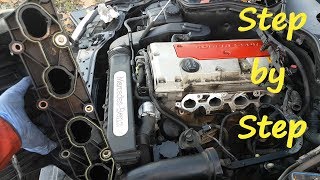
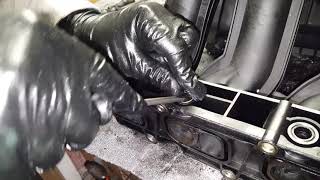
![Jak usunąć klapy kolektora silników Mercedes 2.2 (OM646, OM611) oraz 2.7 (OM647, OM612) [Aditech24]](https://img.youtube.com/vi/Xmqufxn9PAU/mqdefault.jpg)

The information in this article is provided for general reference and educational purposes only. Vehicle specifications, procedures, and part compatibility can vary by production date, trim level, and region. Always consult your vehicle's factory service manual and verify part numbers before purchasing or performing repairs. Safety-critical components such as airbags, seat belts, and braking systems should be installed by a qualified professional.
- Mercedes-Benz C-Class:
- 🧭 Diagnostic Flowchart
- 🎬 Helpful Videos
- What's Unique About the 2000-2007 Mercedes-Benz C-Class
- Symptoms You May Notice
- Most Likely Causes
- Rare But Worth Checking
- Diagnosis Steps
- Parts You'll Likely Need
- Related Codes That Often Appear With This One
- Platform-Specific Known Issues
- Mechanic-Grade Diagnostic Values
- Hidden / Shadow Codes Worth Checking
- Scan Tool Commands That Help
- Wiring & Ground Locations
- Real Owner Repair Stories
- OEM Part Supersession History
- Model Year Variations Within This Range
- Used vs. New Parts: Buying Guide for This Vehicle
- Real Owner Stories
- 2004 Mercedes-Benz C-Class C200 CDI
- 2004 Mercedes-Benz C-Class C200 CDI
- Mercedes-Benz with OM646 engine
- Related OBD-II Codes
- Frequently Asked Questions
- 🎟️ Get 5% Off