

P2096 on 2012-2017 Audi S8: Post-Catalyst Lean Code Causes and Fixes
On the 2012-2017 Audi S8, code P2096 is almost always caused by a faulty Bank 1 (passenger side) post-catalyst oxygen sensor. An official Audi TSB confirms this is the primary cause due to internal sensor contamination. Replacing the sensor, with Bosch being the OEM supplier, is the definitive fix. An OEM-quality part costs around $90-$150.
- Don't overthink it: For a 2012-2017 Audi S8, P2096 almost certainly means you need a new Bank 1 post-catalyst O2 sensor.
- Trust the TSB: Audi has officially documented this issue (TSB 2046611/5), making diagnosis straightforward and advising against replacing the wrong sensor.
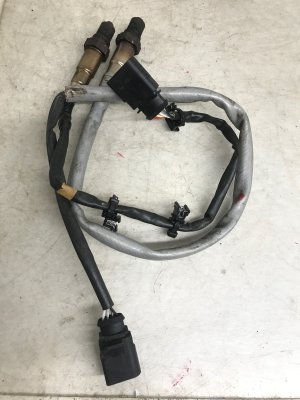
- Buy the right part: The part you need is the 'post-catalyst' or 'downstream' O2 sensor for Bank 1 (passenger side). The Audi part is 4H0906262G; the identical OEM supplier part is Bosch 17324.
- Check for leaks, but expect the sensor to be the issue: A quick visual check for exhaust leaks is wise, but the sensor itself is the highly probable cause of failure.
What's Unique About the 2012-2017 Audi S8
Unlike many vehicles where P2096 can be caused by a variety of issues like exhaust or vacuum leaks, on the Audi 4.0L TFSI engine, the cause is overwhelmingly a faulty post-catalyst O2 sensor itself. Audi issued Technical Service Bulletin (TSB) 2046611/5 which explicitly states the internal reference duct of the sensor becomes contaminated, leading to a false lean reading. The TSB specifically advises replacing only the post-catalyst sensor for the affected bank and to ignore other O2 sensor codes that might appear alongside it, as they are likely phantom codes triggered by the primary fault.
Symptoms You May Notice
- Check Engine Light (MIL) is illuminated.
- Potential for slightly reduced fuel economy.
- In rare cases, a slight hesitation or rough idle may be noticed, but often there are no drivability symptoms.
- The code may appear intermittently, clearing itself and then returning after a few hundred miles of driving.
- Replacing the pre-catalyst (upstream) oxygen sensor. The Audi TSB specifically warns against this, stating the fault lies with the post-catalyst sensor even if other O2 sensor codes are present.
- Replacing fuel injectors or the fuel pump without evidence of a fuel delivery problem.
- Searching for vacuum leaks. While a possible cause on other cars, it's not a primary suspect for this code on the 4.0T engine.
- Assuming the catalytic converter has failed. The O2 sensor should always be the first part replaced for this code, per the TSB.
Most Likely Causes
- Faulty Bank 1 Post-Catalyst Oxygen Sensor 🔴 High Probability → Shop Oxygen Sensor An official Audi TSB (2046611/5) identifies that the sensor's internal reference duct becomes contaminated, causing it to send false lean readings to the ECM. This is a well-documented failure mode on the 4.0T platform.
How to confirm: Confirm the P2096 code with an OBD-II scanner. Given the specific TSB, direct replacement of the sensor is the most common and effective diagnostic step. Technicians on forums like Ross-Tech confirm this is the standard procedure.
Typical fix: Replace the Bank 1 (passenger side) post-catalyst (downstream) oxygen sensor. Bosch is the OEM supplier, and using the Bosch-branded part is a cost-effective alternative to the dealer part.
Est. part cost: $90-$180 - Exhaust Leak ⚪ Low Probability While less common for this specific code on the 4.0T, exhaust components like flex pipes or flange gaskets can develop leaks from corrosion or vibration over time, allowing unmetered oxygen to enter the exhaust stream before the sensor.
How to confirm: Visually inspect the exhaust system from the turbocharger back to the post-catalyst sensor for cracks, rust, or loose flange connections. A smoke test can also be performed to pinpoint small leaks. The TSB instructs technicians to check for leaks but still points to the sensor as the ultimate cause.
Typical fix: Repair the leak by replacing the faulty gasket, flex pipe, or exhaust section.
Est. part cost: $20-$300
Rare But Worth Checking
- Failing Catalytic Converter: → Shop Catalytic Converter While rare, a failing or clogged catalytic converter can sometimes trigger this code. This is usually a last resort after replacing the O2 sensor and verifying there are no exhaust leaks. 🎬 Watch a walkthrough of the catalytic converter removal process. One forum user reported a failed front catalytic converter clogging the second one as the cause.
- Failing High-Pressure Fuel Pump (HPFP): → Shop Fuel Pump In some instances, a failing HPFP can leak fuel into the crankcase. This fuel contamination in the oil can lead to various issues, including repeated O2 sensor failures. An Audi tech may suggest smelling the oil for gasoline as a diagnostic step if O2 sensor codes persist after replacement.
Diagnosis Steps
- Confirm the code P2096 is present using a reliable OBD-II scanner like VCDS by Ross-Tech.
- Acknowledge Audi TSB 2046611/5, which identifies the Bank 1 post-catalyst O2 sensor as the primary culprit due to internal contamination.
- Perform a visual inspection of the exhaust system between the engine and the post-catalyst sensor to check for obvious cracks, rust, or gasket leaks, as recommended by the TSB's guided fault finding.
- If no leaks are found, the most direct course of action is to replace the Bank 1, Sensor 2 (post-catalyst, passenger side) oxygen sensor. 🎬 Watch this step-by-step guide for replacing the S8 O2 sensor.
- The OEM part number is 4H0906262G. The equivalent and more affordable OEM supplier part is Bosch 17324.
- Clear the code and perform a drive cycle to ensure the Check Engine Light does not return. Note that a 'Permanent' code may take several drive cycles to clear on its own.
Parts You'll Likely Need
- Post-Catalyst Oxygen Sensor (Bank 1)
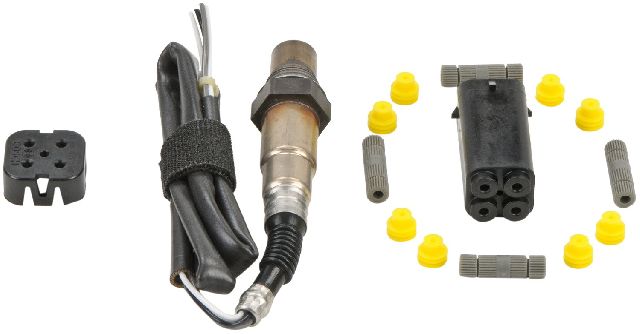
(OEM #4H0906262G)— This is the component identified by Audi's own TSB as the fix for code P2096 on the 4.0T engine. The Bosch part is identical to the genuine Audi part but at a lower cost.
Trusted brands: Bosch (OEM), NTK, Denso
OEM price range: $150-$230
Aftermarket price range: $90-$150
Related Codes That Often Appear With This One
- P2098 — This is the same 'Post Catalyst Fuel Trim System Too Lean' code but for Bank 2 (driver's side). If both appear, it could indicate a common issue or that both sensors are failing around the same time due to age. The TSB covers both codes.
- P2270 — This code means 'O2 Sensor Signal Stuck Lean Bank 1 Sensor 2', which points directly to the same post-catalyst sensor and reinforces the diagnosis of a failed sensor.
- P013F — Stands for 'O2 Sensor Delayed Response - Lean to Rich Bank 1 Sensor 2'. This code often appears with P2096 and further indicates a slow or failing downstream oxygen sensor.
Technical Service Bulletins (TSBs) & Recalls
- Audi TSB 2046611/5 (also listed as 01 19 01): States that for P2096 or P2098, the cause is a contaminated post-catalyst O2 sensor and that only this sensor should be replaced, ignoring other O2 codes.
- Audi TSB 2044668/1: Pertains to similar O2 sensor codes on vehicles with less than 5,000 miles, attributing them to catalytic converter break-in and advising against parts replacement.
Platform-Specific Known Issues
- The wiring for the 4.0T engine can be counter-intuitive. The connector for the Bank 1 (passenger side) post-catalyst O2 sensor is physically located on the driver's side of the engine bay for easier access.
- TSB 2044668/1 notes that on very low mileage vehicles (<5,000 miles), similar codes can be set during the break-in phase of the catalytic converter and advises to simply clear the code without replacing parts.
Mechanic-Grade Diagnostic Values
- Post-Catalyst (Downstream) O2 Sensor Voltage at Idle — expected: A steady voltage of approximately 0.5V to 0.7V on a fully warmed-up engine with a healthy catalytic converter.. Failure: If the downstream sensor's voltage is fluctuating rapidly between 0.1V and 0.9V, similar to an upstream sensor, it indicates the catalytic converter is not working efficiently. If the voltage is stuck low (near 0.1V), it confirms the lean signal that triggers P2096.
- O2 Sensor Heater Resistance — expected: While specific values for the 4.0T are not published, a typical 4-wire O2 sensor heater circuit will have a resistance between 2 and 30 ohms when cold. This test is performed across the two heater wires (often the same color, e.g., white) on the sensor's connector.. Failure: A reading of infinite resistance (open circuit) indicates a burned-out heater element, which would typically set a separate heater circuit fault code but can contribute to incorrect sensor readings during warm-up.
Scan Tool Commands That Help
- VCDS (VAG-COM) by Ross-Tech: Basic Settings - Group 034 (Lambda Control) — After replacing an O2 sensor, running this function can help the ECU quickly re-adapt to the new sensor's readings. While not always mandatory as the system will self-adapt over time, it can expedite the process of confirming the fix and ensuring fuel trims return to normal.
Wiring & Ground Locations
- Bank 1, Sensor 2 (Post-Catalyst) Connector — Counter-intuitively located on the driver's side (Bank 2 side) of the engine bay, near the oil filler cap, for easier access. This is one of two easily accessible connectors in that location.. A technician might waste time searching for the Bank 1 sensor connector on the passenger (Bank 1) side of the vehicle. Knowing it's routed to the driver's side is a critical time-saver. The other connector in this location is for the Bank 2, Sensor 1 (pre-catalyst) sensor.
- Bank 2, Sensor 2 (Post-Catalyst) Connector — Buried on the passenger side (Bank 1 side) of the vehicle, above the inner CV joint heat shield. Access requires removing the passenger side front wheel, fender liner, and the CV axle heat shield.. This is relevant if a technician decides to replace both post-cat sensors at once (for P2096 and P2098). The extreme difference in difficulty between the two sensor connector locations is a major factor in labor time and cost.
Real Owner Repair Stories
- AudiWorld Forums user 'DallasDave' (2016 Audi S8, ~41,000 miles) — Check Engine Light came on. After clearing, it would return a few days later with code P2096.
❌ Tried (didn't work) Clearing the code with a scanner.
✅ What actually fixed it The dealer replaced the Bank 1 post-catalyst oxygen sensor, which permanently resolved the P2096 code. The user confirmed over a year later that the problem had not returned.
OEM Part Supersession History
4H0906262P→4H0906262G— Unspecified, but part revisions are common to improve reliability or address known failure modes, such as the contamination issue described in the TSB.
Heads up: Both parts are considered interchangeable for this application.
Diagnostic Flowchart
Other Known Issues on This Vehicle
Issues unrelated to this code that are worth knowing about as an owner of this generation:
- Clogged Turbocharger Oil Strainer 🔴 High → Shop Turbocharger — Very common. So widespread that Audi issued a recall (NHTSA 22V178000 / Audi code 21H7). Failure can lead to oil starvation and catastrophic turbocharger failure. (Ref: Audi Recall 21H7; TSB 2044640/5)
- PCV / Oil Separator Failure 🟠 Medium — Common failure item. Symptoms include a loud high-pitched whistle from the engine bay, rough idle, and increased oil consumption. Requires significant labor to replace as it's located in the engine's 'hot V'. (Ref: Audi issued a warranty extension for the PCV on some vehicles.)
- Air Suspension Failures 🟠 Medium — Common as the D4 platform ages (around 8-10 years or 80k+ miles). Failures can include leaking air struts/bellows, a faulty valve block, or a worn compressor, leading to a harsh ride and the vehicle sitting unevenly.
- Active Motor Mount Failure 🟡 Low — The electronically controlled engine mounts are known to fail over time, leading to vibrations at idle and fault codes.
Used vs. New Parts: Buying Guide for This Vehicle
When a used part is the smart pick: For this specific repair, a used part is almost never a smart choice. Oxygen sensors are wear-and-tear items with a finite lifespan, and the failure mode on the 4.0T is a known contamination issue. Installing a used sensor is highly likely to mean installing a part that is already failing or has very little life left.
What to inspect on the donor part:
- Not applicable, as used O2 sensors are not recommended.
OEM-only on this vehicle (don't cheap out):
- Oxygen Sensor: While not strictly 'OEM-only', using the OEM supplier (Bosch) or another reputable OE-level brand like NTK or Denso is critical. Cheap, unbranded aftermarket sensors are known to fail quickly or provide inaccurate readings, causing persistent codes.
- Catalytic Converter: If the converter were to fail (a rare cause for this code), an OEM unit is strongly recommended. Aftermarket catalytic converters, especially non-CARB compliant ones, frequently fail to meet the strict efficiency monitoring of German vehicles, leading to catalyst efficiency codes.
Aftermarket brands forum-validated for this vehicle:
- Bosch (OEM Supplier)
- NTK
- Denso
Brands owners have reported issues with on this vehicle:
- Unbranded or 'white-box' sensors from online marketplaces. Users report high failure rates and incorrect readings.
Real Owner Stories
Aggregated from forums and TSBs cited above. Mileages and costs reflect what owners reported in those sources.
2013 Audi S8 — 40680 miles
Symptoms: Check engine light came on shortly after gassing up and driving in heavy rain. The code was P2096, "Post Catalyst Fuel Trim System Too Lean".
What fixed it: The user was advised to try fuel system cleaner, but the thread aligns with the TSB recommendation for sensor replacement.
Source hint: AudiWorld Forums thread titled 'P2096 Check Engine Light - AudiWorld Forums'
2017 Audi S8 plus — 49000 miles
Symptoms: Check Engine Light with P2096 and P2196. The light would come back 5-10 days after being cleared. Also a "veeeery slightly (almost unnoticeable) inconsistent random rough idle".
What fixed it: Replaced the rear O2 sensor on bank 1. The rough idle disappeared and the CEL did not return.
Source hint: AudiWorld Forums thread titled 'O2 sensor on '17 S8 plus - AudiWorld Forums'
2016 Audi S8 — 41000 miles
Symptoms: Check Engine Light (P2096) appeared about four weeks after purchase; clearing the code only worked for a few days before it returned.
What fixed it: Installation of a new O2 sensor.
Source hint: AudiWorld Forums
Related OBD-II Codes
Frequently Asked Questions
Does Audi TSB 2046611/5 apply to my 2012-2017 S8?
I have a very low mileage 2017 S8 with under 5,000 miles and just got a P2096. Should I replace the sensor?
Where is the connector for the Bank 1 post-catalyst O2 sensor located on the 4.0T engine?
Can I use a Bosch sensor instead of the Audi-branded part for my S8?
Should I be worried about other O2 sensor codes if they appear alongside P2096?
Is P2096 related to the turbocharger oil strainer recall on my S8?
Helpful Videos

Used OEM Parts in Stock
New Aftermarket Parts Available

The information in this article is provided for general reference and educational purposes only. Vehicle specifications, procedures, and part compatibility can vary by production date, trim level, and region. Always consult your vehicle's factory service manual and verify part numbers before purchasing or performing repairs. Safety-critical components such as airbags, seat belts, and braking systems should be installed by a qualified professional.
- Audi S8:
- 🧭 Diagnostic Flowchart
- 🎬 Helpful Videos
- 🛍️ Shop This Part
- What's Unique About the 2012-2017 Audi S8
- Symptoms You May Notice
- Most Likely Causes
- Rare But Worth Checking
- Diagnosis Steps
- Parts You'll Likely Need
- Related Codes That Often Appear With This One
- Technical Service Bulletins (TSBs) & Recalls
- Platform-Specific Known Issues
- Mechanic-Grade Diagnostic Values
- Scan Tool Commands That Help
- Wiring & Ground Locations
- Real Owner Repair Stories
- OEM Part Supersession History
- Other Known Issues on This Vehicle
- Used vs. New Parts: Buying Guide for This Vehicle
- Real Owner Stories
- 2013 Audi S8 — 40680 miles
- 2017 Audi S8 plus — 49000 miles
- 2016 Audi S8 — 41000 miles
- Related OBD-II Codes
- Frequently Asked Questions
- 🎟️ Get 5% Off