

P2096 on 2010-2019 Ford Taurus 3.5L EcoBoost: Causes and Fixes for Lean Exhaust
On a 2010-2019 Taurus with the 3.5L EcoBoost, code P2096 is most often caused by an exhaust leak from a cracked rear exhaust manifold (Bank 1) or a faulty downstream oxygen sensor. A thorough inspection for exhaust leaks on the firewall side of the engine is the crucial first step before replacing any parts. Simply replacing the O2 sensor without finding a leak will likely result in the code returning.
- For a P2096 on a 2010-2019 Taurus 3.5L, your first and most important check should be for an exhaust leak on the rear cylinder bank (Bank 1).
- Do not replace any oxygen sensors until you have definitively ruled out exhaust and vacuum leaks.
- Repairs on the rear cylinder bank (Bank 1) are difficult due to tight spacing against the firewall and may be best left to a professional if you are not experienced.
- If code P0171 is also present, the root cause is more likely a vacuum leak or fuel delivery issue, not the O2 sensor itself.
What's Unique About the 2010-2019 Ford Taurus
The primary challenge with this code on the 3.5L V6 Taurus is physical access. Bank 1 is positioned against the firewall, making inspection and replacement of the exhaust manifold and oxygen sensors significantly more difficult than on Bank 2, which faces the radiator. Furthermore, a common failure point on this platform and its mates (like the Ford Flex and Explorer) is a warped or cracked Bank 1 (rear) exhaust manifold. This failure is often attributed to the weight of the turbocharger and an insufficient number of mounting studs on the original manifold design, leading to leaks that directly cause the P2096 code.
Symptoms You May Notice
- Check Engine Light illuminated
- Reduced fuel economy
- Rough idle, particularly if a vacuum leak is the cause
- Failed emissions test
- Audible ticking or hissing sound from the engine bay, indicating an exhaust leak, especially on a cold start.
- Hesitation or stumbling during acceleration.
- Exhaust fumes smell inside the cabin.
- Immediately replacing the downstream O2 sensor without first checking for exhaust leaks. An exhaust leak is a very common cause on this specific vehicle and will cause the code to return even with a new sensor.
- Confusing Bank 1 (firewall side) with Bank 2 (radiator side) and replacing the wrong components.
Most Likely Causes
- Exhaust Leak (Cracked Manifold or Gasket) 🔴 High Probability The rear exhaust manifold (Bank 1) on the transversely mounted 3.5L EcoBoost engine is known to be susceptible to cracking or warping. This is often due to thermal stress and the weight of the turbocharger being supported by a manifold with too few mounting studs in its original design, leading to leaks that introduce unmetered air into the exhaust.
How to confirm: Perform a cold start and listen for a distinct ticking or puffing noise from the rear of the engine bay that may quiet down as the engine warms up. A visual inspection (which is difficult due to location) for soot trails or a smoke test is the definitive way to confirm a leak. Sometimes a broken mounting stud will be found.
Typical fix: Replace the cracked exhaust manifold and the manifold gasket. This is a labor-intensive job due to the manifold's location against the firewall. It is recommended to use updated manifold designs that have better support.
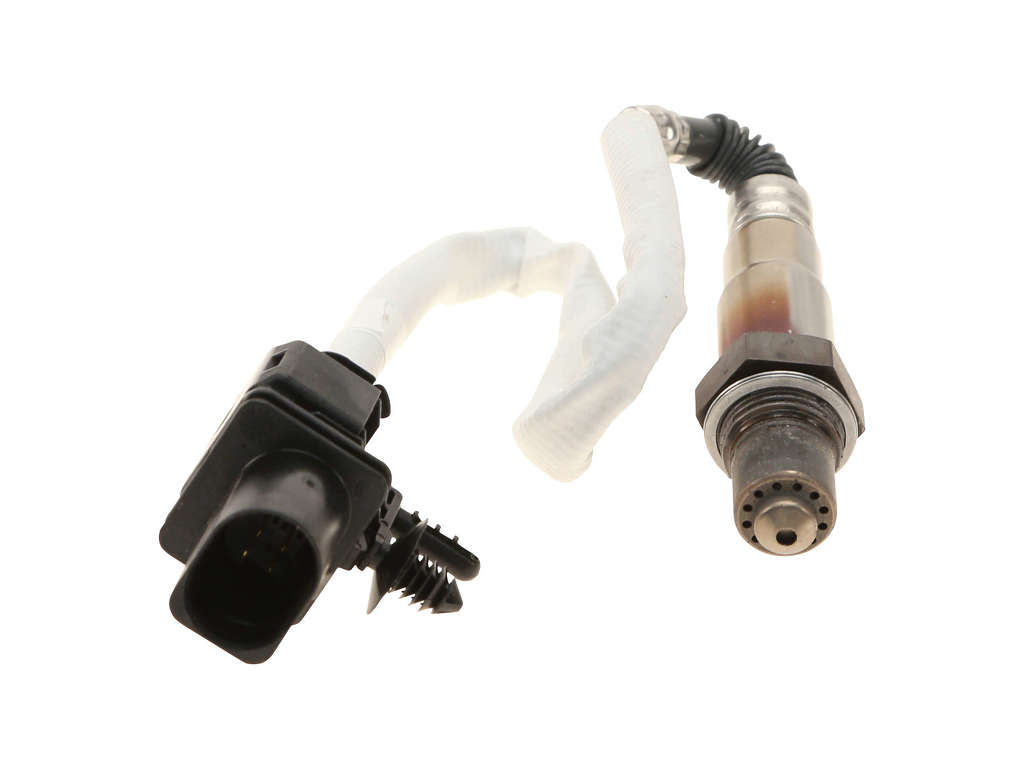
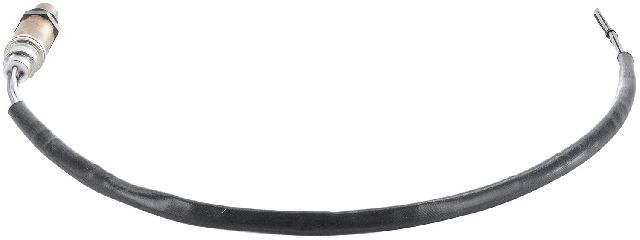
Est. part cost: $150-$400 - Faulty Downstream Oxygen Sensor (Bank 1, Sensor 2) 🟡 Medium Probability → Shop Oxygen Sensor
How to confirm: After confirming no exhaust or vacuum leaks exist, use a scan tool to monitor the voltage of the Bank 1 Sensor 2. A sensor that is slow to respond or has a fixed low voltage reading (near 0.1V) is likely faulty. The sensor should show a relatively steady voltage, typically between 0.45V and 0.7V on a healthy system. Manufacturer bulletin SSM 50230 notes that on similar Ford platforms, this code can be caused by an exhaust gas oxygen sensor seal, requiring an updated sensor.
Typical fix: Replace the Bank 1, Sensor 2 oxygen sensor. Access is tight, so specialized O2 sensor sockets and swivels are recommended. The OEM part number is BH6Z-9G444-A.
Est. part cost: $50-$150 - Faulty Upstream Oxygen Sensor (Bank 1, Sensor 1) ⚪ Low Probability → Shop Oxygen Sensor
How to confirm: A failing upstream (pre-catalyst) sensor can cause incorrect fuel trims that lead to the downstream sensor setting a P2096 code. Analyze scan tool data to see if the upstream sensor is responding erratically, is biased lean, or is not fluctuating rapidly as it should.
Typical fix: Replace the Bank 1, Sensor 1 oxygen sensor.
Est. part cost: $70-$180 - Vacuum Leak ⚪ Low Probability
How to confirm: Listen for a hissing sound at idle. Use a smoke machine to test the intake manifold, vacuum lines, and PCV system to find the source of unmetered air.
Typical fix: Replace the leaking hose, gasket, or component.
Est. part cost: $10-$100
Rare But Worth Checking
- Clogged Catalytic Converter: → Shop Catalytic Converter While not common, a partially restricted catalytic converter can alter exhaust flow and pressure, potentially triggering this code. This would usually be accompanied by a loss of power and, in severe cases, a glowing red converter after running.
- Low Fuel Pressure: A weak fuel pump or clogged filter can create a genuine lean condition. This would typically set other codes as well, such as P0171 (System Too Lean Bank 1), and affect both cylinder banks.
- PCM Software Issue: In some rare cases, outdated Powertrain Control Module (PCM) software can cause false P2096 codes. It's worth checking with a dealership for any available software updates or TSBs related to emissions control if all other causes are ruled out. Manufacturer bulletin SSM 46159 specifically mentions that some vehicles with the 3.5L GTDI engine may exhibit P2096 due to incorrect calibration values setting a system DTC instead of a component-level fault. Additionally, TSB 21-2366 notes that for other EcoBoost models, this code may be due to various software parameters within the PCM.
- Oil Migration: As noted in TSB Bulletin #16-0031 for other Ford EcoBoost engines, a P2096 code may be due to engine oil migrating from the variable camshaft timing (VCT) solenoid into the wiring harness, affecting sensor signals.
Diagnosis Steps
- Scan for any other stored trouble codes. If P0171 is present, prioritize diagnosing vacuum leaks and fuel delivery issues first.
- Perform a thorough inspection for exhaust leaks on Bank 1 (the rear bank, against the firewall). This is the most critical step. Listen for ticking noises on a cold start, which may fade as the engine warms.
- If no obvious leaks are heard, perform a smoke test on the exhaust system to pinpoint any small cracks or gasket failures between the cylinder head and the downstream O2 sensor. Look for soot trails around the manifold flange.
- If no exhaust leaks are found, inspect the intake system for vacuum leaks using a smoke machine or by carefully spraying starter fluid around gasket areas and hoses, listening for a change in engine idle.
- Using a capable scan tool, graph the live data for both the upstream (B1S1) and downstream (B1S2) oxygen sensors. The upstream sensor should fluctuate rapidly between ~0.1V and ~0.9V. The downstream sensor should be relatively steady.
- If the downstream sensor's reading is stuck low (lean, e.g., < 0.2V) and all leaks have been ruled out, the sensor is likely faulty.
- If the upstream sensor's readings are erratic or biased, it may be the root cause, providing incorrect data that leads to the downstream code.
- As a final check, verify fuel pressure is within specification to rule out a fuel delivery problem.
Parts You'll Likely Need
- Exhaust Manifold Gasket (Bank 1)
(OEM #BL3Z-9448-C (supersedes BL3Z-9448-A))— Required when replacing a cracked exhaust manifold or fixing a leak at the cylinder head flange. Part number BL3Z-9448-A has been superseded by BL3Z-9448-C.
Trusted brands: Motorcraft, Fel-Pro
OEM price range: $30-$60
Aftermarket price range: $15-$30 - Downstream Oxygen Sensor (Bank 1, Sensor 2)
(OEM #BH6Z-9G444-A)— This is the sensor that reports the lean condition. It can fail or become contaminated, but should only be replaced after confirming there are no exhaust leaks.
Trusted brands: Motorcraft, Bosch, Denso, NTK
OEM price range: $80-$120
Aftermarket price range: $50-$90 - Upstream Oxygen Sensor (Bank 1, Sensor 1)
(OEM #BL3Z-9F472-A)— A faulty upstream sensor can cause this downstream code. It is a less common but notable cause.
Trusted brands: Motorcraft, Bosch
OEM price range: $100-$150
Aftermarket price range: $70-$110
Related Codes That Often Appear With This One
- P0171 — Indicates a lean condition detected by the *upstream* sensor on Bank 1. If seen with P2096, it strongly suggests a significant vacuum leak or a fuel delivery issue affecting the entire bank, rather than just an exhaust leak post-catalyst.
- P0420 — This code indicates 'Catalyst System Efficiency Below Threshold'. It can appear with P2096 if an exhaust leak or failing sensor has been ignored long enough to damage the catalytic converter.
- P2098 — This is the same lean code but for Bank 2 (front bank). If both P2096 and P2098 are present, the cause is likely a systemic issue like low fuel pressure or a large vacuum leak affecting the whole engine.
Platform-Specific Known Issues
- The rear exhaust manifold (Bank 1) on the 3.5L EcoBoost is prone to cracking, often leading to broken mounting studs, which is a primary cause of P2096 on this vehicle.
- Access to Bank 1 components is severely restricted by the firewall, significantly increasing labor time and difficulty for repairs on the rear manifold or O2 sensors compared to the front-facing Bank 2.
Mechanic-Grade Diagnostic Values
- Downstream O2 Sensor (B1S2) Voltage — expected: Relatively steady between 0.45V and 0.7V on a healthy, warm engine.. Failure: Voltage is stuck low, near 0.1V, indicating a persistent lean reading.
- Long Term Fuel Trim (LTFT) — expected: Ideally close to 0%, but within +/- 10% is generally acceptable.. Failure: The PCM stores code P2096 when long-term corrections to add fuel exceed the maximum limit, typically around +25%.
- Low-Pressure Fuel System — expected: 40-60 PSI at idle.. Failure: Pressure significantly below this range indicates a weak in-tank fuel pump or clogged filter.
- High-Pressure Fuel System (Direct Injection) — expected: Around 500 PSI when cranking, rising to 1,500-2,150 PSI under load for a stock tune.. Failure: Actual pressure lagging more than 200 PSI behind the desired pressure on a scan tool can indicate a failing high-pressure fuel pump (HPFP).
Scan Tool Commands That Help
- Ford IDS (or FORScan): Reset KAM (Keep Alive Memory) — After replacing components like O2 sensors, fuel injectors, or the exhaust manifold, a KAM reset should be performed. This clears all learned adaptive tables for fuel trims and transmission shifting, forcing the PCM to relearn values from a clean slate with the new parts. A simple battery disconnect may not fully clear the memory.
Wiring & Ground Locations
- Main Engine/Transmission Ground Strap — Reported to be located on the transmission case, below the brake booster.. A poor main ground can cause erratic voltage and sensor readings throughout the powertrain system, including for the heated oxygen sensors (HO2S), potentially leading to false codes.
- PCM Engine Harness Ground — A smaller ground wire for the PCM engine harness is located on the engine itself.. This ground is critical for the proper operation of all engine sensors that report to the PCM. A compromised connection can directly impact the accuracy of O2 sensor signals.
Real Owner Repair Stories
- Mustang6G Forum User (EcoBoost Mustang (same engine family)) — Recurring P2096 check engine light.
❌ Tried (didn't work) Replaced spark plugs multiple times, Replaced the downstream O2 sensor, Replaced the low-side fuel pressure sensor
✅ What actually fixed it The final cause was an exhaust leak. The user was advised by their tuner to check for leaks around the turbocharger, which is a common source on EcoBoost engines and directly causes the P2096 code. - NHTSA ODI #11618319 — An owner of a related EcoBoost vehicle reported that after the P2096 code appeared, the engine eventually started misfiring and showed an additional code for a cylinder 2 misfire (P0302).
When the Usual Fixes Don't Work
- While a faulty downstream O2 sensor is a valid cause for P2096, on this specific 3.5L EcoBoost platform, it should be treated with lower priority than an exhaust leak. Numerous owner and technician reports confirm that replacing the O2 sensor first often results in the code returning, because the root cause was a cracked or warped rear exhaust manifold leaking air into the system. The new sensor correctly detects the lean condition caused by the leak. The diagnostic priority must be a thorough inspection for exhaust leaks at the manifold, especially on the firewall side (Bank 1), before any parts are replaced.
OEM Part Supersession History
Various (Original Design Manifold)→Updated Ford Manifold / Aftermarket Designs (e.g., BD Diesel)— The original Gen 1 3.5L EcoBoost exhaust manifold design did not use all available stud locations on the cylinder head, creating a weak point. The weight of the turbocharger and thermal cycling caused the rear-most studs to break and the manifold to warp, causing a leak.
Model Year Variations Within This Range
- 2013-2019: For the 2013 model year refresh, the 3.5L EcoBoost platform began a transition from a Hitachi-based fuel system to a Bosch direct injection system. While functionally similar, diagnostic approaches for fuel pressure or injector issues may differ slightly.
- Post-2016: Later model year 3.5L EcoBoost engines (Gen 2) and their corresponding service parts feature an improved exhaust manifold design with an additional mounting point to prevent the warping and stud breakage common on 2010-2016 models. The cylinder heads were also updated to include the extra mounting hole.
Diagnostic Flowchart
Other Known Issues on This Vehicle
Issues unrelated to this code that are worth knowing about as an owner of this generation:
- Internal Water Pump Failure 🔴 High — Can occur after 60,000 miles. Failure is critical because the pump is driven by the timing chain. A leak can contaminate the engine oil with coolant, leading to catastrophic engine failure if not caught early.
- Power Transfer Unit (PTU) Overheating and Failure 🔴 High — Common on AWD models. The PTU fluid overheats due to proximity to the exhaust, thickens, and leaks out, causing gear and bearing failure. Symptoms include a grinding/whining noise and a burning gear oil or propane-like smell.
- Timing Chain Stretch & Cam Phaser Rattle 🟠 Medium — Often presents as a brief rattle on cold startup. Caused by stretched timing chains or failing VCT phasers. While more documented on the F-150 version, the base engine components are similar. Ford issued TSB 23-2143 for this issue on some 3.5L EcoBoost engines. (Ref: TSB 23-2143)
- Carbon Buildup on Intake Valves 🟠 Medium — As a direct-injection engine, fuel doesn't wash over the intake valves. Over time, oil vapor from the PCV system can bake onto the valves, causing rough idle, stumbling, and reduced performance.
Used vs. New Parts: Buying Guide for This Vehicle
When a used part is the smart pick: A used OEM catalytic converter from a low-mileage, collision-damaged vehicle can be a cost-effective alternative to a new OEM unit, and often more reliable than a new aftermarket converter.
Donor-vehicle mileage cap: roughly under 60000 miles for the part to have meaningful remaining life.
What to inspect on the donor part:
- No visible dents or physical damage to the converter body.
- No rattling sounds when shaken (indicates broken internal substrate).
- Check donor vehicle history to ensure it did not have misfire, rich/lean, or oil consumption issues that could have contaminated the converter.
OEM-only on this vehicle (don't cheap out):
- Exhaust Manifold: Due to the well-documented design flaw of the original part, purchasing a used manifold is highly discouraged as it will likely fail again. Always buy a new, updated OEM or reputable, redesigned aftermarket manifold.
Aftermarket brands forum-validated for this vehicle:
- Oxygen Sensors: NTK, Denso, and Bosch are widely regarded as OEM suppliers or high-quality equivalents that provide reliable performance.
Brands owners have reported issues with on this vehicle:
- Unbranded 'white-box' oxygen sensors should be avoided due to common reports of inaccurate readings, short lifespan, and causing recurring codes.
Real Owner Stories
Aggregated from forums and TSBs cited above. Mileages and costs reflect what owners reported in those sources.
2010-2014 Ford F-150 3.5L EcoBoost
Symptoms: The owner reported getting a P2096 code specifically after installing an aftermarket exhaust system, which altered the exhaust flow and triggered the lean trim code.
What fixed it: The issue was related to changes in exhaust flow logic; the context highlights how aftermarket modifications can trigger this code similarly to the Taurus platform.
Source hint: Ford F150 Forum thread titled 'P2096 Code?'
Related OBD-II Codes
Frequently Asked Questions
Why is the Bank 1 exhaust manifold so prone to causing P2096 on my 3.5L EcoBoost?
I hear a ticking sound on cold starts that goes away later; is this related to P2096?
What is the specific OEM part number for the downstream oxygen sensor on my Taurus?
Does TSB 23-2143 apply to my P2096 code?
Why is the labor cost so high for fixing a Bank 1 issue on this vehicle?
Can a vacuum leak cause this code even if my exhaust is fine?
Helpful Videos

We Have This Part in Stock


The information in this article is provided for general reference and educational purposes only. Vehicle specifications, procedures, and part compatibility can vary by production date, trim level, and region. Always consult your vehicle's factory service manual and verify part numbers before purchasing or performing repairs. Safety-critical components such as airbags, seat belts, and braking systems should be installed by a qualified professional.
- Ford Taurus:
- 🧭 Diagnostic Flowchart
- 🎬 Helpful Videos
- 🛍️ Shop This Part
- What's Unique About the 2010-2019 Ford Taurus
- Symptoms You May Notice
- Most Likely Causes
- Rare But Worth Checking
- Diagnosis Steps
- Parts You'll Likely Need
- Related Codes That Often Appear With This One
- Platform-Specific Known Issues
- Mechanic-Grade Diagnostic Values
- Scan Tool Commands That Help
- Wiring & Ground Locations
- Real Owner Repair Stories
- When the Usual Fixes Don't Work
- OEM Part Supersession History
- Model Year Variations Within This Range
- Other Known Issues on This Vehicle
- Used vs. New Parts: Buying Guide for This Vehicle
- Real Owner Stories
- 2010-2014 Ford F-150 3.5L EcoBoost
- Related OBD-II Codes
- Frequently Asked Questions
- 🎟️ Get 5% Off