

P2097 on 2002-2007 Jeep Liberty 3.7L: Post Catalyst Rich Fuel Trim Causes and Fixes
For a 2002-2007 Jeep Liberty, code P2097 usually points to an exhaust leak before the downstream O2 sensor or a failing downstream O2 sensor on Bank 1 (driver's side). Inspect for leaks first, then consider replacing the sensor.
- P2097 means the downstream O2 sensor on the driver's side (Bank 1) is detecting a rich fuel condition.
- Before replacing any parts, thoroughly inspect the exhaust system for leaks between the engine and the rear O2 sensor.
- The most common fixes are repairing an exhaust leak or replacing the Bank 1, Sensor 2 (downstream) oxygen sensor.
- Use a quality replacement O2 sensor, with NTK being a highly recommended brand for Jeeps.
- Do not replace the expensive catalytic converter unless all other possibilities have been ruled out by proper diagnosis.
What's Unique About the 2002-2007 Jeep Liberty
On the 3.7L PowerTech V6 found in the Jeep Liberty, this code is a straightforward emissions issue without the common software-related complications seen on newer Jeeps. The primary culprits are often mechanical and age-related, such as exhaust system leaks from rusted components or simple failure of the oxygen sensors. Unlike later models that often require a PCM reflash, diagnosis on the KJ Liberty typically focuses on finding physical faults like exhaust leaks or testing the O2 sensors directly.
Symptoms You May Notice
- Check Engine Light is on
- Reduced fuel economy
- Rough or erratic idle
- Hesitation when accelerating
- Strong smell from the exhaust or black smoke
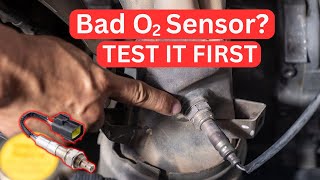
- Replacing the catalytic converter first. The converter is expensive and rarely the direct cause of this specific code. It is usually a symptom of another problem. Always diagnose exhaust leaks and O2 sensors first. 🎬 Watch: Two quick DIY methods to address the P2097 code.
Most Likely Causes
- Exhaust Leak Before the Downstream O2 Sensor 🔴 High Probability → Shop Oxygen Sensor As these vehicles age, exhaust components like manifolds, gaskets, and pipe flanges are prone to rust and corrosion, creating leaks.
How to confirm: Visually inspect the exhaust system from the engine manifold to the downstream O2 sensor for black soot, cracks, or rust holes. Listen for a 'ticking' noise when the engine is cold. A professional smoke test is the most definitive way to find a leak.
Typical fix: Repair the leak. This may involve replacing a gasket, tightening bolts, or welding/replacing a section of the exhaust pipe.
Est. part cost: $10-$150 - Faulty Downstream Oxygen (O2) Sensor (Bank 1, Sensor 2) 🟡 Medium Probability → Shop Oxygen Sensor Oxygen sensors are wear items that degrade over time. High mileage and age make them a common failure point.
How to confirm: Use a scan tool to monitor the live data for the Bank 1 Sensor 2 voltage. A healthy downstream sensor should show a relatively stable voltage. If it's stuck high (above 0.8V) or fluctuating rapidly like the upstream sensor, it is likely faulty. 🎬 See how to monitor O2 sensor live data with a scanner.
Typical fix: Replace the Bank 1, Sensor 2 oxygen sensor. This is located on the driver's side, after the catalytic converter.
Est. part cost: $35-$130 - Faulty Upstream Oxygen (O2) Sensor (Bank 1, Sensor 1) ⚪ Low Probability → Shop Oxygen Sensor A failing upstream sensor can send incorrect data to the PCM, causing an actual rich condition that the downstream sensor then correctly reports.
How to confirm: Analyze live data on a scan tool. If the upstream sensor is slow to respond or has biased readings, it may be the root cause. Swapping the Bank 1 and Bank 2 upstream sensors (if they are identical) and seeing if the code moves to the other bank (P2099) can confirm the issue.
Typical fix: Replace the Bank 1, Sensor 1 oxygen sensor.
Est. part cost: $35-$130 - Leaking Fuel Injector(s) ⚪ Low Probability → Shop Fuel Injector
How to confirm: Monitor fuel trims with a scan tool; a significant negative correction on Bank 1 could indicate excess fuel. A fuel pressure drop test can also point to a leaking injector.
Typical fix: Identify and replace the leaking fuel injector.
Est. part cost: $50-$100 per injector
Rare But Worth Checking
- Failing Catalytic Converter: → Shop Catalytic Converter While this code usually points to issues *before* the converter, a clogged or internally damaged converter can sometimes disrupt exhaust flow and sensor readings, leading to a P2097 code. This should only be considered after all other causes are ruled out.
- High Fuel Pressure: A faulty fuel pressure regulator (which is part of the fuel pump module on this vehicle) can cause the entire system to run rich. This would likely be accompanied by other codes or symptoms.
Diagnosis Steps
- Check for any other stored trouble codes with an OBD-II scanner.
- Visually inspect the exhaust system on the driver's side (Bank 1) for any signs of leaks, such as soot marks, cracks, or audible ticking noises, especially when the engine is cold. Pay close attention to the exhaust manifold and the flange after the catalytic converter.
- Use a scan tool to view live data. Observe the voltage readings for the Bank 1, Sensor 2 (downstream) O2 sensor. It should be relatively steady around 0.45V to 0.7V on a warm engine. If it's stuck high (e.g., >0.8V) or fluctuating wildly, it points to a problem.
- If an exhaust leak is suspected but not visible, perform a smoke test to pinpoint the source.
- If no leaks are found, test the Bank 1, Sensor 2 O2 sensor. If data is inconclusive, consider replacing it, as it's a common failure item.
- If the problem persists, investigate upstream causes like a faulty upstream O2 sensor, leaking fuel injectors, or incorrect fuel pressure.
Parts You'll Likely Need
- Downstream Oxygen Sensor (Bank 1, Sensor 2)
(OEM #56029049AA)— This sensor is located on the driver's side, after the catalytic converter. It is a primary cause of this code when it fails or provides inaccurate readings due to age.
Trusted brands: NTK, Denso, Bosch
OEM price range: $100-$150
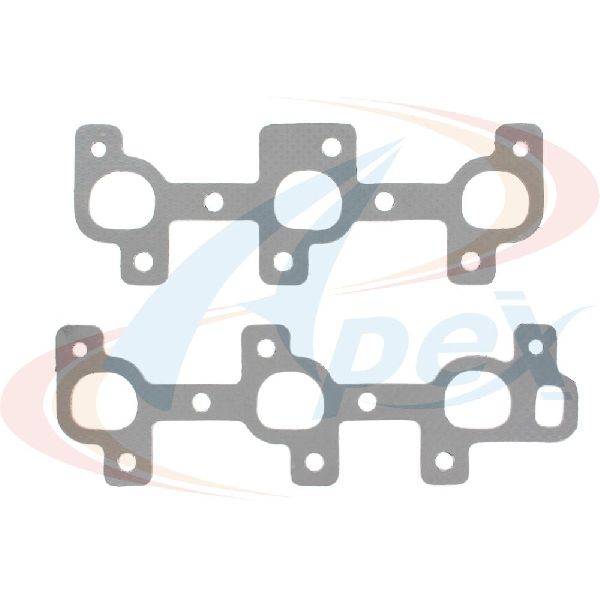
Aftermarket price range: $35-$80 - Exhaust Manifold Gasket — If an exhaust leak is found at the manifold, this gasket will need to be replaced.
Trusted brands: Fel-Pro, Mahle
OEM price range: $20-$40
Aftermarket price range: $10-$25
Related Codes That Often Appear With This One
- P2099 — This is the same code for Bank 2 (passenger side). If both P2097 and P2099 are present, it suggests a systemic issue like high fuel pressure or a major exhaust leak affecting both banks.
- P0172 — This code means 'System Too Rich Bank 1' and is detected by the *upstream* O2 sensor. Seeing it with P2097 strongly indicates an actual rich running condition, likely caused by a leaking fuel injector or bad fuel pressure regulator.
Mechanic-Grade Diagnostic Values
- Fuel Pressure (2005-2007 models) — expected: 407 kPa +/- 34 kPa (59 psi +/- 5 psi). Failure: Pressure significantly above or below this range indicates a faulty pump or regulator.
- Fuel Pressure (2002-2004 models) — expected: 339 kPa +/- 34 kPa (49.2 psi +/- 5 psi) at idle. Failure: Pressure below 44.2 psi or above 54.2 psi at idle points to a fuel delivery issue.
- Downstream O2 Sensor (B1S2) Voltage — expected: Relatively steady voltage between 0.45V and 0.7V on a warm, running engine.. Failure: Voltage stuck high (e.g., > 0.8V) or fluctuating rapidly like an upstream sensor.
- O2 Sensor Heater Circuit Resistance — expected: Below 5.0 ohms. Failure: Resistance above 5.0 ohms indicates an open or high-resistance in the heater control or ground circuit.
Hidden / Shadow Codes Worth Checking
- Mode 6 Data: While not a hidden code, Mode 6 provides non-continuous monitor test results from the PCM, including catalyst efficiency data. A technician can use this to see raw data on how well the catalytic converter is performing before a P0420 code is set, which can give clues if the converter is borderline and contributing to the P2097 reading. (see via Advanced OBD-II scan tool with Mode 6 capability.)
Scan Tool Commands That Help
- Chrysler DRB III / StarSCAN or equivalent: ASD Fuel System Test — To check fuel pressure with the ignition on but engine off. The command actuates the fuel pump relay, allowing for a static pressure test to diagnose a weak pump or leaking injector without the engine running.
- Chrysler DRB III / StarSCAN or equivalent: O2 Heater Test — To actively test the O2 sensor's heater control circuit. When used with a test light connected to the sensor's harness, this command should cause the light to illuminate, confirming the PCM is sending the signal to heat the sensor.
Wiring & Ground Locations
- G102 — Left rear side of the engine compartment.. This is a primary ground point for the powertrain. A 2005 Liberty wiring diagram explicitly lists the Bank 1 Sensor 2 (downstream) oxygen sensor as using this ground. Corrosion or a loose connection here can cause faulty sensor readings, leading directly to a P2097 code.
- G103 — Lower right front of the engine on the 3.7L V6.. This is another critical engine ground. While G102 is the specified ground for the sensor, ensuring all major engine grounds are clean and tight is essential for stable sensor operation.
- Main Engine Ground — Connects the negative battery terminal to the engine block, located behind the oil filter.. This is the primary ground return path for the entire engine. It is reportedly difficult to access. A poor connection here can cause a host of electrical issues, including erratic sensor behavior.
- O2 Sensor Harness — Runs from the PCM, down the engine bay, to the oxygen sensors along the exhaust.. The wiring, especially for the downstream sensor, is susceptible to heat damage from the exhaust or physical damage from road debris. Check for melted insulation, chafing, or corrosion on the connector itself.
OEM Part Supersession History
56029049AA→N/A— N/A
Heads up: This Mopar part number is used for a wide variety of oxygen sensors across many Chrysler, Dodge, and Jeep vehicles and in different positions (upstream/downstream). It is critical to verify with a VIN that this part number is correct for the Bank 1, Sensor 2 (downstream) position on your specific year of Jeep Liberty, as using a sensor designed for a different position, even if it fits, will result in incorrect readings.
Model Year Variations Within This Range
- 2002-2004: These models typically use the JTEC Powertrain Control Module (PCM) with a separate Transmission Control Module (TCM). Fuel pressure specification is lower, around 49.2 psi +/- 5 psi at idle.
- 2005-2007: These models use the newer Next Generation Controller (NGC) PCM, which integrates the transmission control functions. The fuel pressure specification is higher, at 59 psi +/- 5 psi.
- 2006-2007: These models use a hybrid CAN/PCI data bus system. The PCM communicates on the CAN bus, while other body modules use the older PCI bus. This can be relevant for diagnostics, as different modules may need to be accessed via different protocols on an advanced scan tool.
Diagnostic Flowchart
Real Owner Stories
Aggregated from forums and TSBs cited above. Mileages and costs reflect what owners reported in those sources.
2006 Jeep Liberty
Symptoms: Check engine light with code P2097. The owner initially replaced the downstream O2 sensor, but the check engine light remained on after 60 miles of driving.
What fixed it: Replaced the upstream (pre-catalytic converter), bank 1 oxygen sensor. The owner confirmed: 'I drove car for 50 miles and no light'.
Source hint: YouTube comment by 'Let's fix this Ssh1t' on video '2006 jeep liberty ,P2097 BANK 1 oxygen sensor'
2006 JEEP LIBERTY 3.7L — 215000 miles
Symptoms: Check engine light with code P2097 ('fuel trim too high') appeared after a new muffler and tail pipe were installed.
What fixed it: Not reported; owner was seeking diagnostic advice after the code returned following exhaust work.
Source hint: 2CarPros forum thread: 'Jeep Liberty 2006 Jeep Liberty Code P2097'
Related OBD-II Codes
Frequently Asked Questions
What brand of oxygen sensor is recommended for the 2002-2007 Jeep Liberty 3.7L to fix P2097?
Where is the Bank 1 Sensor 2 oxygen sensor located on my 3.7L V6 Liberty?
I hear a ticking noise when my Jeep Liberty's engine is cold. Could this cause the P2097 code?
I replaced the downstream O2 sensor on my Liberty but the P2097 code came back. What else should I check?
How can I test if the upstream O2 sensor is causing the P2097 code on my 3.7L V6?
Helpful Videos
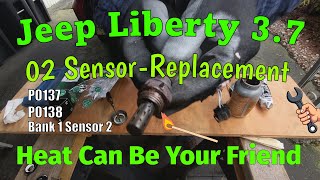
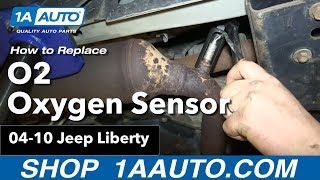
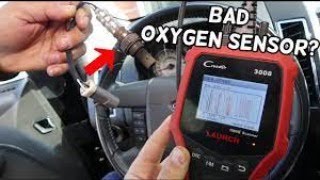
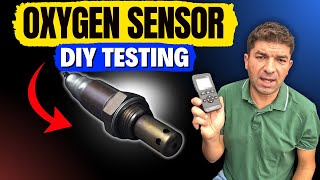
![How to Fix P2097 Engine Code in 4 Minutes [2 DIY Methods / Only $9.84]](https://img.youtube.com/vi/rCwtzRmhMwY/mqdefault.jpg)

We Have This Part in Stock


The information in this article is provided for general reference and educational purposes only. Vehicle specifications, procedures, and part compatibility can vary by production date, trim level, and region. Always consult your vehicle's factory service manual and verify part numbers before purchasing or performing repairs. Safety-critical components such as airbags, seat belts, and braking systems should be installed by a qualified professional.
- Jeep Liberty:
- 🧭 Diagnostic Flowchart
- 🎬 Helpful Videos
- 🛍️ Shop This Part
- What's Unique About the 2002-2007 Jeep Liberty
- Symptoms You May Notice
- Most Likely Causes
- Rare But Worth Checking
- Diagnosis Steps
- Parts You'll Likely Need
- Related Codes That Often Appear With This One
- Mechanic-Grade Diagnostic Values
- Hidden / Shadow Codes Worth Checking
- Scan Tool Commands That Help
- Wiring & Ground Locations
- OEM Part Supersession History
- Model Year Variations Within This Range
- Real Owner Stories
- 2006 Jeep Liberty
- 2006 JEEP LIBERTY 3.7L — 215000 miles
- Related OBD-II Codes
- Frequently Asked Questions
- 🎟️ Get 5% Off