

P2097 on 2017-2019 Volkswagen Passat: Post-Catalyst Rich Fuel Trim Causes and Fixes
On a 2017-2019 Passat, P2097 indicates a rich fuel mixture after the catalytic converter. While the code points to the downstream O2 sensor, the most common culprit is often a failing *upstream* O2 sensor causing the engine to run rich. Other common causes include exhaust leaks near the flex pipe or issues with fuel injectors. Always diagnose both sensors and check for leaks before replacing parts.
- P2097 means the exhaust is too rich after the catalytic converter.
- Do not immediately replace the downstream (rear) O2 sensor. The upstream (front) sensor is a very common cause of this code on VWs.
- Use a scan tool to watch live data from both O2 sensors to correctly diagnose the problem before buying parts.
- Check for exhaust leaks, especially the flex pipe, as this can also trigger the code.
- Ignoring this code will lead to failed emissions tests, poor fuel mileage, and potential damage to the catalytic converter.
What's Unique About the 2017-2019 Volkswagen PASSAT
While P2097 is a generic code, on Volkswagen platforms like the Passat, it presents a classic diagnostic trap. Owners and technicians often replace the downstream O2 sensor because the code definition points to it. However, a very common root cause is a faulty upstream (pre-catalyst) O2 sensor that provides incorrect data, causing the ECM to enrich the fuel mixture. The downstream sensor then accurately reports the rich condition it sees, triggering the P2097 code even though it is functioning correctly. This scenario is frequently discussed in owner forums for VWs with the EA888 engine.
Diagnostic Flowchart
Tap your situation to follow the diagnostic path that matches what you're seeing on this vehicle.
Generation note: The 2017-2019 model years are all part of the North American Passat (NMS) platform. However, the engine changed from the 1.8T EA888 Gen3 in 2017 to the 2.0T EA888 'B-Cycle' engine for 2018 and 2019. The diagnostic principles for this code remain the same across these engines, but specific part numbers for components like oxygen sensors may differ.
Symptoms You May Notice
- Check Engine Light is on
- Reduced fuel economy
- Rough or erratic idle
- Engine hesitation or stumbling during acceleration
- A noticeable smell of gasoline from the exhaust
- Black smoke from the tailpipe in extreme cases
- Engine may be hard to start when hot
- Replacing the downstream (post-catalyst) O2 sensor without first analyzing live data from the upstream sensor. The downstream sensor is often just the messenger, not the cause. 🎬 Watch: A quick breakdown of P2097 causes and fixes.
- Ignoring small exhaust leaks, especially at the flex pipe, which can be difficult to see but are a common cause.
- For modified vehicles, blaming the tune immediately without checking for mechanical faults. However, tunes that disable catalyst monitoring can sometimes cause this code if an O2 spacer is not used or is ineffective.
Most Likely Causes
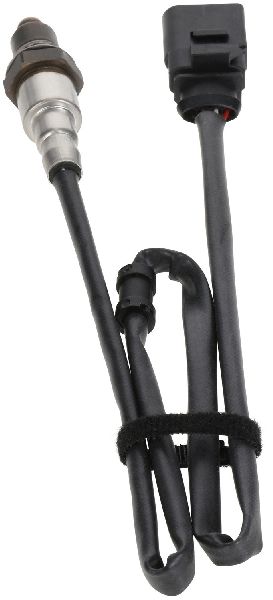
- Faulty Upstream Oxygen Sensor (Pre-Catalyst) 🔴 High Probability → Shop Oxygen Sensor The upstream (Air/Fuel Ratio) sensor is critical for fuel control. When it degrades, it can send inaccurate signals that cause the ECM to over-fuel the engine, leading to a rich condition that the downstream sensor detects. This is widely reported as the most common fix.
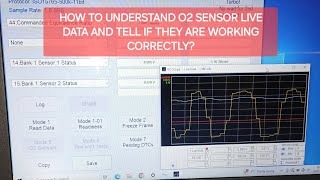
How to confirm: Use a scan tool (like VCDS for VWs) to monitor live data for the Bank 1 Sensor 1 voltage or Lambda values. A healthy sensor fluctuates rapidly. A failing sensor may be slow, biased, or stuck, causing the rich condition. Check measuring blocks for fuel trims; large negative values confirm the ECM is pulling fuel.
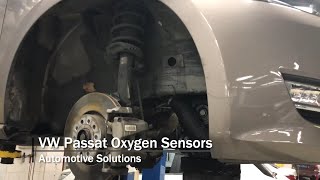
Typical fix: Replace the upstream (pre-catalyst) oxygen sensor. For the 1.8T engine, a common part is the Bosch sensor associated with VW part number 06K906262N. 🎬 See this walkthrough for oxygen sensor location and replacement.
Est. part cost: $70-$250 - Exhaust Leak 🟡 Medium Probability The flex pipe on the downpipe of many VW models is a known weak point that can crack from the stress of engine movement, introducing air into the exhaust stream. Leaks at gaskets or welds between the upstream and downstream sensors can also alter sensor readings and trigger the code.
How to confirm: Visually inspect the exhaust system, especially the braided flex pipe section, for soot marks, cracks, or holes. A professional smoke test is the most effective way to find small leaks. You can also have a helper briefly cover the tailpipe with a rag while the engine is running to build pressure and make leaks more audible.
Typical fix: Repair the leak. This may involve welding a crack, replacing a gasket, or replacing the entire downpipe/flex pipe section.
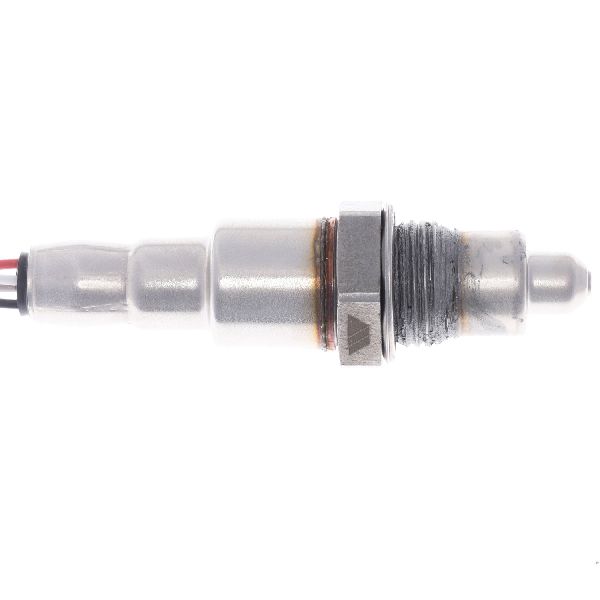
Est. part cost: $10-$400 - Faulty Downstream Oxygen Sensor (Post-Catalyst) 🟡 Medium Probability → Shop Oxygen Sensor The downstream sensor can fail and send a false 'rich' signal (stuck high voltage) to the ECM, even if the fuel mixture is correct. While less common than the upstream sensor failing, it is still a significant possibility.
How to confirm: Monitor the live data for Bank 1 Sensor 2. With a warm, functioning catalytic converter, this sensor's voltage should be relatively stable and steady (typically 0.6V-0.8V). If it's stuck high (e.g., >0.8V) and does not respond to induced lean conditions, the sensor itself is likely faulty.
Typical fix: Replace the downstream (post-catalyst) oxygen sensor.
Est. part cost: $50-$180 - Leaking Fuel Injector(s) ⚪ Low Probability → Shop Fuel Injector Direct injection fuel injectors on the EA888 engine operate under high pressure and can develop leaks over time, either internally (dripping into the cylinder) or externally. This introduces excess fuel that the ECM cannot account for.
How to confirm: Check long-term fuel trims; large negative numbers (e.g., -10% or more) indicate the ECM is trying to compensate for excess fuel. A fuel pressure leak-down test can help identify a leaking injector. Misfire counters on a specific cylinder can also point to a problematic injector.
Typical fix: Identify and replace the faulty fuel injector(s). It is often recommended to replace them as a set.
Est. part cost: $50-$150 per injector
Rare But Worth Checking
- Failing Catalytic Converter: → Shop Catalytic Converter While more commonly associated with code P0420 (Catalyst Efficiency), a chemically contaminated or failing converter can sometimes cause erratic readings on the downstream O2 sensor, potentially triggering P2097.
- High Fuel Pressure: A failing fuel pressure regulator or a faulty high-pressure fuel pump (HPFP) can cause system-wide high pressure, leading to a rich condition that the fuel trims cannot fully correct.
- Intake Manifold Runner Control (IMRC) Issues: → Shop Engine Intake Manifold Though less common for this specific code, issues with the intake manifold runner control system, as detailed in TSBs like 24-18-01 for similar engines, can affect air mixture and potentially contribute to rich conditions.
Diagnosis Steps
- Scan for Codes: Use an OBD-II scanner (VCDS or OBDeleven is recommended for VW) to confirm P2097 is present and check for any other related codes (e.g., P2196, P0172). Note freeze frame data.
- Inspect for Exhaust Leaks: Visually and audibly inspect the exhaust system from the engine to the downstream O2 sensor. Pay close attention to the braided flex pipe section, a common failure point. A smoke test is the definitive method for finding hidden leaks.
- Analyze Live O2 Sensor Data: This is the most critical step. Use a scan tool to graph the voltage of both the upstream 🎬 Watch: How to test O2 sensors and graph live data with VCDS. (Sensor 1) and downstream (Sensor 2) oxygen sensors. A healthy, warm upstream sensor should switch rapidly. A healthy downstream sensor should show a much steadier, flatter voltage.
- Interpret Sensor Data: If the upstream sensor is lazy, stuck, or biased rich, it's the likely cause. If the upstream sensor is switching normally but the downstream sensor is also switching wildly or is stuck high, suspect a bad catalytic converter or a faulty downstream sensor.
- Check Fuel Trims: Observe Short-Term Fuel Trim (STFT) and Long-Term Fuel Trim (LTFT). Consistently high negative values (e.g., -10% or more) confirm the ECM is actively trying to remove fuel to correct a rich condition.
- Test Fuel System: If O2 sensors and exhaust appear normal, investigate the fuel system. Check for leaking fuel injectors and verify fuel pressure is within specification.
- Inspect Wiring: Check the wiring and connectors for both oxygen sensors for any signs of damage, melting, or corrosion. A user on a forum for a similar vehicle melted their O2 sensor wires on the downpipe, causing this code.
Parts You'll Likely Need
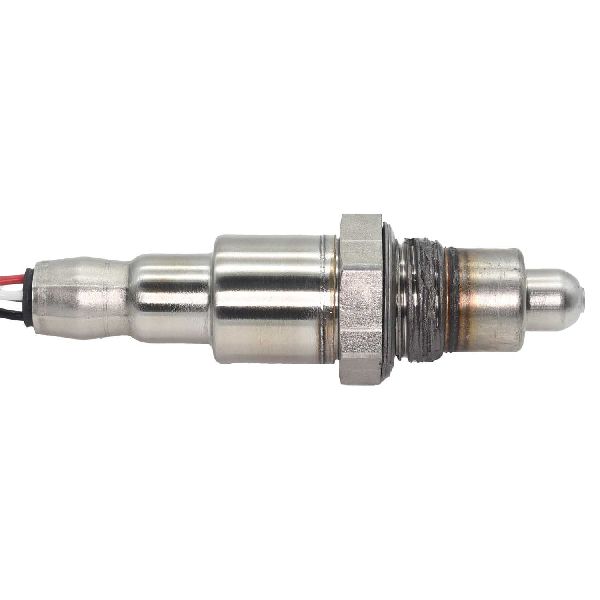
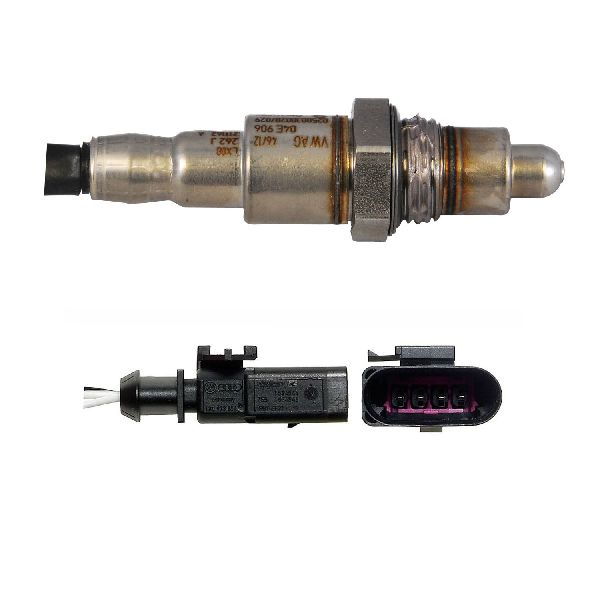
- Upstream Oxygen Sensor (Air/Fuel Ratio Sensor)
(OEM #06K906262N (for 1.8T, verify for your specific vehicle))— This is the most common root cause, as its failure leads to incorrect fueling that triggers the P2097 code downstream.
Trusted brands: Bosch, NGK/NTK, Denso
OEM price range: $180-$250
Aftermarket price range: $70-$150 - Downstream Oxygen Sensor — The sensor itself can fail, sending a false rich signal. It is the second most likely part to be replaced for this code, often after the upstream sensor was already replaced without fixing the issue.
Trusted brands: Bosch, NGK/NTK
OEM price range: $120-$200
Aftermarket price range: $50-$100 - Exhaust Flex Pipe / Downpipe Assembly — The flex pipe is a common failure point for exhaust leaks on this platform, which can skew O2 sensor readings and cause this code.
Related Codes That Often Appear With This One
- P2196 — This code means 'O2 Sensor Signal Stuck Rich (Bank 1, Sensor 1)'. It directly indicates a problem with the upstream sensor, which is a primary cause of P2097.
- P0138 — This code means 'O2 Sensor Circuit High Voltage (Bank 1, Sensor 2)'. It points to the downstream sensor reading a continuously rich signal, which is the direct trigger for P2097.
- P0172 — This code means 'System Too Rich (Bank 1)'. It is a more general rich condition code detected by the upstream sensor, which often leads to the P2097 code being set by the downstream sensor.
Technical Service Bulletins (TSBs) & Recalls
- VIN4APIN20190805: Customer states MIL-on with P2097 (Note: This is a generic complaint log, not a specific diagnostic TSB).
- While not directly for P2097, TSB 24-18-01 discusses intake manifold runner faults on similar EA888 engines, which can affect air/fuel mixture and are a potential, though rare, contributing factor.
Platform-Specific Known Issues
- A Volkswagen Technical Service Bulletin (TSB), #VIN4APIN20190805, lists P2097 as a potential code that may cause the Malfunction Indicator Lamp (MIL) to illuminate on 2019 Passat models, confirming its occurrence on this platform. [Bulletin #VIN4APIN20190805]
- The EA888 engine's exhaust flex pipe is a frequent source of leaks that can trigger this code. Owners often report hearing a louder exhaust note on acceleration as the primary symptom before the check engine light appears.
Mechanic-Grade Diagnostic Values
- Upstream O2 Sensor (Narrowband/Wideband) Voltage — expected: Fluctuates rapidly between 0.1V and 0.9V (for narrowband sensors). Wideband sensors will show Lambda values fluctuating around 1.0.. Failure: Voltage is stuck high (e.g., >0.9V), low (<0.1V), or responds very slowly to throttle changes.
- Downstream O2 Sensor Voltage (at idle, warm engine) — expected: Relatively stable voltage, typically between 0.4V and 0.8V.. Failure: Voltage fluctuates wildly similar to the upstream sensor (indicates bad catalytic converter) or is stuck high (>0.8V), indicating a rich condition or failed sensor.
- High-Pressure Fuel Pump (HPFP) Rail Pressure — expected: OEM maximum operating pressure is 200 bar (approx. 2900 PSI). The system is regulated by the N276 valve on the pump itself.. Failure: Pressure that significantly deviates from the specified value requested by the ECM, or pressure that does not build quickly, could indicate a failing pump or sensor (G247).
- Low-Pressure Fuel Pump (LPFP) Pressure — expected: At idle, the reading should be approximately 5.0 bar +/- 0.5 bar. The pump provides between 4 to 7 bar depending on ECM request.. Failure: Pressure below 4.0 bar at idle or a high LPFP duty cycle (90%+) under load can indicate a weak in-tank pump, which can starve the HPFP.
Scan Tool Commands That Help
- VCDS (VAG-COM): Measuring Value Blocks (MVB) / Advanced Measuring Values — Essential for logging and graphing live data from both upstream (Bank 1 Sensor 1) and downstream (Bank 1 Sensor 2) O2 sensors simultaneously. Also used to monitor short-term and long-term fuel trims, and specified vs. actual fuel rail pressure.
- VCDS (VAG-COM) or OBDeleven: Clear All DTCs — After a repair is performed, all codes must be cleared. A specific procedure may be needed, such as clearing codes, cycling the ignition, and then performing a test drive under specific conditions to see if the code returns.
Wiring & Ground Locations
- Ground Connection on Cylinder Head — A primary ground point is located directly on the cylinder head.. The oxygen sensors and other critical engine sensors rely on a clean ground path. A corroded or loose ground on the cylinder head can introduce electrical noise and cause incorrect sensor readings, potentially leading to fuel trim codes like P2097.
- Ground Strap, Battery to Body — Main ground strap connecting the battery's negative terminal to the vehicle's chassis.. The integrity of the entire vehicle's ground system starts here. Degradation of this primary strap can cause widespread, intermittent electrical issues, including sensor malfunctions.
- Transmission/Engine Ground Connection — A ground strap connecting the engine/transmission assembly to the vehicle body/frame.. Ensures the engine block has a solid ground reference. A faulty strap here can lead to similar issues as a bad cylinder head ground, affecting sensor readings.
- O2 Sensor Connectors — The upstream and downstream O2 sensor connectors are located in the engine bay, typically clipped to the firewall or engine block. The wires route down along the exhaust.. Wiring can become melted or damaged from contact with hot exhaust components, causing a short or open circuit that mimics a sensor failure. Visual inspection is critical.
Real Owner Repair Stories
- Ross-Tech Forums user 'Mikeysentra' (2015 Passat 1.8T) — Rough idle for 15-20 seconds on a cold start, then smooths out. Check Engine Light on.
❌ Tried (didn't work) The user was seeking advice before throwing parts at the car.
✅ What actually fixed it The user reported having three codes simultaneously: P2097 (Post Catalyst Fuel Trim Too Rich), P2196 (O2 Sensor Signal Stuck Rich B1S1), and P2270 (O2 Sensor Signal Stuck Lean B1S2). While the final fix was not posted in the thread, the combination of codes strongly points to a primary failure of the upstream O2 sensor (P2196) causing the system to run rich, which is then reported by the downstream sensor (P2097). The P2270 code was likely an intermittent or contradictory reading during the fault condition.
OEM Part Supersession History
06K906262N→Not explicitly stated, but this part number is for the 1.8T engine. The 2.0T B-Cycle engine in 2018-2019 models uses a different part.— Part specific to the 1.8T EA888 Gen3 engine used in the 2017 Passat.
Heads up: Part number 06K906262N is listed for the 2017 Passat 1.8T. It is crucial to verify the correct part number for the 2018-2019 2.0T engine, as they are not interchangeable.6K906262AF, 6K906262CC→06K-906-262-CR— Part number updates and revisions by the manufacturer.
Heads up: This supersession applies to the front oxygen sensor for the 2.0L gas engine in Passat models from late 2014 through 2018, showing the evolution of the part. Always verify by VIN.
Model Year Variations Within This Range
- 2017 vs 2018-2019: The engine changed from the 1.8T EA888 Gen3 (2017) to the 2.0T EA888 Gen3-B 'B-Cycle' (2018-2019). While diagnostic principles for P2097 are the same, the physical part numbers for components like oxygen sensors and the high-pressure fuel pump may differ. For example, the 1.8T uses upstream O2 sensor 06K906262N, while the 2.0T may use a different part number.
Helpful Videos
![How to Fix VOLKSWAGEN P2097 Engine Code in 4 Minutes [2 DIY Methods / Only $9.53]](https://img.youtube.com/vi/6SzCQNtNi38/mqdefault.jpg)

We Have This Part in Stock



The information in this article is provided for general reference and educational purposes only. Vehicle specifications, procedures, and part compatibility can vary by production date, trim level, and region. Always consult your vehicle's factory service manual and verify part numbers before purchasing or performing repairs. Safety-critical components such as airbags, seat belts, and braking systems should be installed by a qualified professional.
- Volkswagen PASSAT:
- 🧭 Diagnostic Flowchart
- 🎬 Helpful Videos
- 🛍️ Shop This Part
- What's Unique About the 2017-2019 Volkswagen PASSAT
- Symptoms You May Notice
- Most Likely Causes
- Rare But Worth Checking
- Diagnosis Steps
- Parts You'll Likely Need
- Related Codes That Often Appear With This One
- Technical Service Bulletins (TSBs) & Recalls
- Platform-Specific Known Issues
- Mechanic-Grade Diagnostic Values
- Scan Tool Commands That Help
- Wiring & Ground Locations
- Real Owner Repair Stories
- OEM Part Supersession History
- Model Year Variations Within This Range
- 🎟️ Get 5% Off