

P2099 on 2015 Jeep Grand Cherokee: Post-Catalyst Rich Fuel Trim (Bank 2) Causes and Fixes
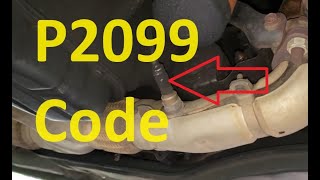
On a 2015 Grand Cherokee, P2099 often points to a needed PCM software update, not a bad part. Before replacing anything, check with a Jeep dealer for TSBs #18-098-16 and #18-036-15 REV-A. If software is current, suspect an exhaust leak (especially on Hemi engines) or a faulty Bank 2 downstream oxygen sensor.
- For a 2015 Grand Cherokee, P2099 is very often caused by a software issue. Always check for TSBs with a dealer before buying parts.
- If the software is current, the most likely causes are an exhaust leak or a failing downstream oxygen sensor on the driver's side.
- Do not ignore this code. Driving for too long with a rich condition can lead to costly damage to the catalytic converter.
- Bank 2 on a Jeep Grand Cherokee is the driver's side of the engine.
What's Unique About the 2015-2015 Jeep GRAND CHEROKEE
Unlike many vehicles where this code immediately suggests a bad oxygen sensor, the 2015 Grand Cherokee is known for having overly sensitive PCM software. Jeep issued Technical Service Bulletins (TSBs) to recalibrate the system, which often resolves the P2099 code without any part replacement. Therefore, the first step for this specific vehicle should always be to check if these crucial software updates have been performed before proceeding with costly parts replacement.
Diagnostic Flowchart
Tap your situation to follow the diagnostic path that matches what you're seeing on this vehicle.
Symptoms You May Notice
- Check Engine Light is on
- Decreased fuel economy
- Rough idle or engine hesitation
- Reduced engine performance or sluggish acceleration
- A noticeable smell of gasoline or black smoke from the exhaust
- Ticking noise from the engine bay, especially when cold (if caused by an exhaust manifold leak)
- Replacing the oxygen sensor without first checking for required PCM software updates. This is a common mistake on this specific vehicle, leading to the code returning.
- Replacing the O2 sensor when the actual problem is an exhaust leak ahead of the sensor. The leak introduces oxygen, which can trick the PCM into creating a rich condition.
Most Likely Causes
- PCM Software Requires Update 🔴 High Probability The original PCM software calibration was overly sensitive and could falsely trigger fuel trim codes. Jeep released updates to correct this known issue, which addresses a list of codes including P2099.
How to confirm: Contact a Jeep dealership with your Vehicle Identification Number (VIN) and ask them to check if TSB #18-098-16 or #18-036-15 REV-A are open for your vehicle.
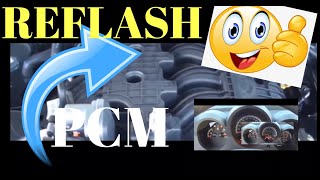
Typical fix: A Jeep dealer or qualified shop needs to reflash the Powertrain Control Module (PCM) with the updated software. 🎬 Watch: How to reflash a Jeep PCM for software updates. The cost can range from under $100 to over $200 depending on the dealer.
Est. part cost: $0 - Faulty Downstream Oxygen Sensor (Bank 2, Sensor 2) 🟡 Medium Probability → Shop Oxygen Sensor O2 sensors are wear items that degrade over time, leading to inaccurate readings. Contamination from oil, coolant, or fuel additives can also cause premature failure.
How to confirm: Use a scan tool to monitor the live voltage data from the Bank 2 downstream O2 sensor. A healthy sensor on a warm engine at idle should show a relatively stable voltage. If it's stuck high (above 0.8V) or fluctuating rapidly like an upstream sensor, it's likely faulty.
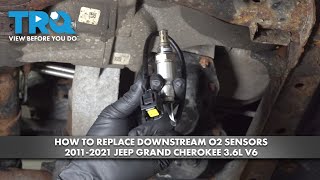
Typical fix: Replace the Bank 2, Sensor 2 oxygen sensor. This is the sensor located on the driver's side, after the catalytic converter. Soaking the sensor threads with penetrating oil beforehand 🎬 See this walkthrough for replacing the downstream O2 sensor. is highly recommended.
Est. part cost: $50-$120 - Exhaust System Leak 🟡 Medium Probability Leaks can occur at gaskets or weld seams. On 5.7L Hemi models, broken exhaust manifold bolts are a notorious issue (the 'Hemi tick'), especially the rear-most bolts, causing a leak near the cylinder head. This allows outside air into the exhaust, skewing O2 sensor readings.
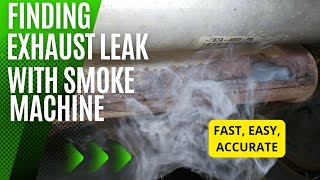
How to confirm: Visually inspect the exhaust system from the engine to the tailpipe for any signs of black soot trails, cracks, or holes, paying close attention to the manifold. A smoke test is the most effective way to pinpoint hard-to-see leaks. 🎬 Watch: How to find exhaust leaks using a smoke machine.
Typical fix: Repair the leak by replacing the faulty gasket, tightening bolts, or welding the cracked component. For broken manifold bolts, the broken stud must be extracted and replaced.
Est. part cost: $20-$200 - Leaking Fuel Injector(s) on Bank 2 ⚪ Low Probability → Shop Fuel Injector
How to confirm: Perform a fuel injector balance test or a leak-down test. A simpler method is to check the spark plugs on Bank 2 (driver's side cylinders); if they are black and sooty, it's a strong sign of a rich condition in those cylinders, pointing to a fuel delivery issue.
Typical fix: Replace the leaking fuel injector(s) and their seals.
Est. part cost: $70-$150 per injector
Rare But Worth Checking
- Failing Catalytic Converter: → Shop Catalytic Converter While less common, a failing or clogged catalytic converter can alter exhaust flow and cause incorrect readings from the downstream O2 sensor, sometimes triggering a P2099 code.
- High Fuel Pressure: A faulty fuel pressure regulator can cause system-wide high pressure, leading to a rich condition on both banks. This would likely trigger P2097 (Bank 1 Rich) as well.
- Vacuum Leak: A significant vacuum leak in the air intake system can allow unmetered air into the engine, causing the PCM to overcompensate by adding excess fuel, which can lead to a P2099 code.
Diagnosis Steps
- Check for TSBs: Before any other step, call a Jeep dealership with your VIN to see if software updates from TSB #18-098-16 or #18-036-15 REV-A are pending. If so, this is the most likely and often simplest fix.
- Scan for Other Codes: Use an OBD-II scanner to check for any other stored codes that could provide more clues (e.g., misfire codes, MAF sensor codes, or codes for the other bank).
- Inspect for Exhaust Leaks: Carefully inspect the entire exhaust system on Bank 2 (driver's side) for cracks, holes, or bad gaskets, especially around the manifold and catalytic converter. Look for black soot trails. A smoke test is the most reliable method to find small leaks.
- Analyze O2 Sensor Live Data: Use a scan tool to watch the voltage of the Bank 2, Sensor 2 (downstream) O2 sensor. At a steady RPM on a warm engine, it should hold a fairly stable voltage. If it's stuck high (consistently >0.8V) or switching erratically like an upstream sensor, the sensor is a prime suspect.
- Inspect Spark Plugs: Remove and inspect the spark plugs from Bank 2. If they are black and sooty, it confirms a real rich condition, pointing towards issues like leaking fuel injectors rather than just a sensor error.
- Check Fuel System: If a true rich condition is confirmed, investigate causes like leaking fuel injectors or a faulty fuel pressure regulator.
Parts You'll Likely Need
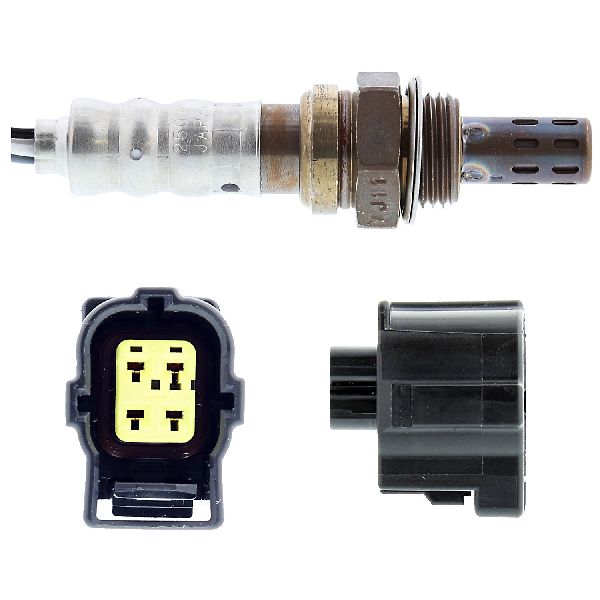
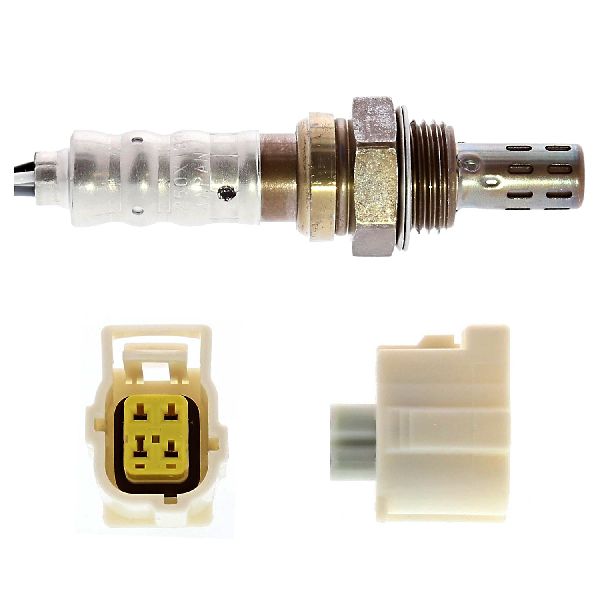
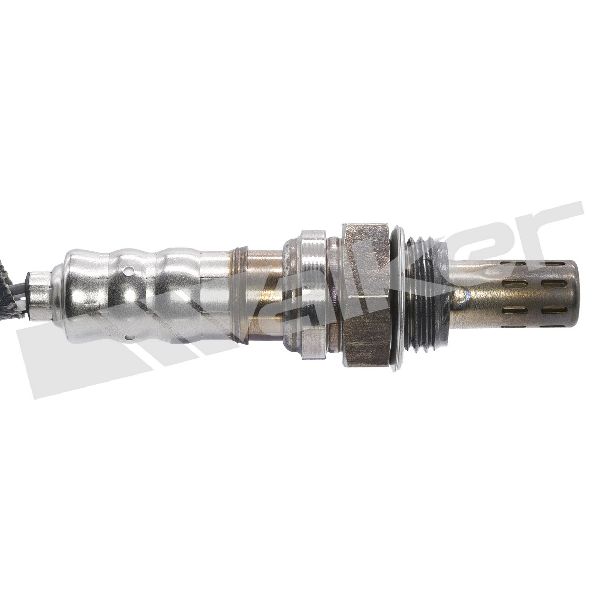
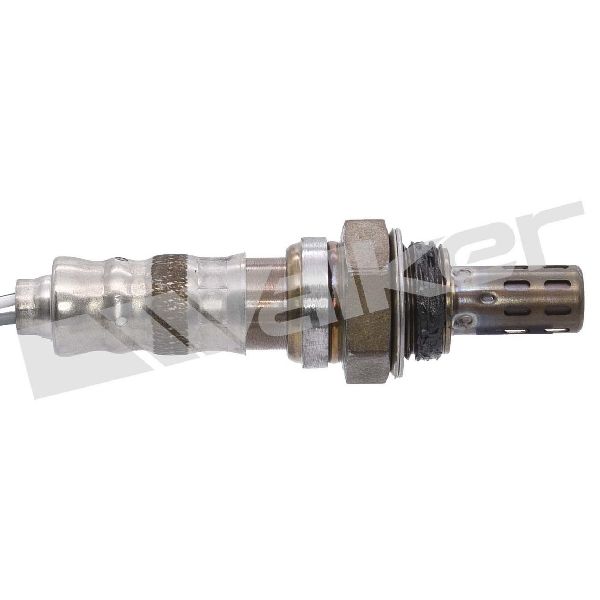
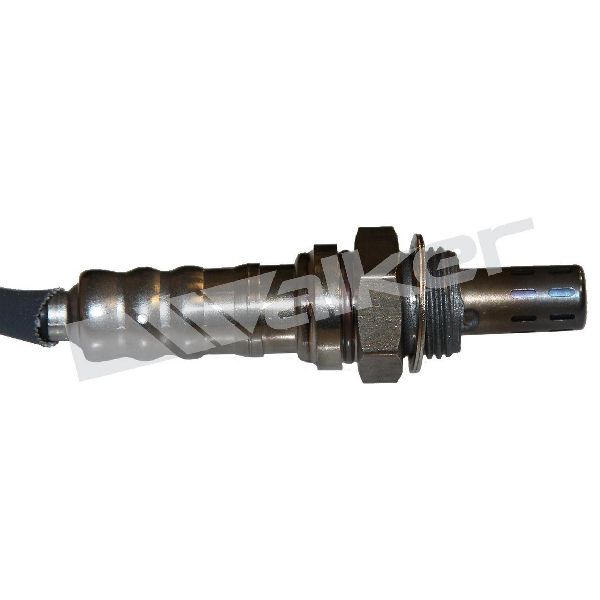
- Downstream Oxygen Sensor (Bank 2)
(OEM #Mopar 56029050AA (confirm with VIN))— This sensor is the source of the reading. If it fails, it will send incorrect data to the PCM. This should only be replaced after confirming the PCM software is up-to-date and no exhaust leaks are present.
Trusted brands: Mopar, NTK, Denso, Bosch
OEM price range: $100-$180
Aftermarket price range: $50-$120 - Exhaust Manifold Gasket — If an exhaust leak is found at the manifold, a new gasket will be required to seal it properly after repair.
Trusted brands: Fel-Pro, Mopar, Walker Exhaust
OEM price range: $20-$50
Aftermarket price range: $10-$30
Related Codes That Often Appear With This One
- P2097 — This is the equivalent 'rich' code for Bank 1 (passenger side). If both appear, it points towards a systemic issue like a PCM software glitch, high fuel pressure, or a faulty Mass Airflow (MAF) sensor.
- P2098 — This is the 'lean' code for Bank 2. Seeing opposite codes (P2099 and P2098) can indicate a confused PCM, often pointing back to the need for a software update as mentioned in the TSBs.
- P0300, P0302, P0304, P0306 — These are misfire codes (random or for cylinders 2, 4, 6 on Bank 2). A severe rich condition can foul spark plugs and cause misfires on the affected bank.
Technical Service Bulletins (TSBs) & Recalls
- 18-098-16: Recommends a PCM software update to address P2099 and other fuel trim codes. [⭐ MANUFACTURER TSB — highest authority]
- 18-036-15 REV-A: Also recommends a PCM software update for P2099 and a list of related diagnostic trouble codes. [⭐ MANUFACTURER TSB — highest authority]
Platform-Specific Known Issues
- The PCM on 2015 models is known to have overly sensitive parameters for fuel trim faults, making a software update a very common fix for P2099.
- For models with the 5.7L Hemi engine, broken exhaust manifold bolts are a frequent cause of exhaust leaks that can trigger this code. The resulting sound is often called the 'Hemi tick'.
Mechanic-Grade Diagnostic Values
- Downstream O2 Sensor Voltage (at idle, warm engine) — expected: Relatively stable voltage between 0.4V and 0.6V.. Failure: Voltage is consistently stuck high (above 0.8V) or fluctuates rapidly like an upstream sensor (0.1V to 0.9V).
- Fuel Pressure (3.6L Pentastar V6) — expected: Approximately 58 psi.. Failure: Significantly higher pressure could indicate a faulty fuel pressure regulator, causing a rich condition.
- O2 Sensor Heater Circuit Resistance — expected: Refer to a service manual for the exact specification, but a reading should be present.. Failure: An open circuit (infinite resistance) or a short circuit (near zero resistance) indicates a failed heater element within the sensor.
Scan Tool Commands That Help
- wiTECH (or equivalent professional scanner): O2 Sensor Test / Fuel System Test — After checking for TSBs and exhaust leaks, this function can be used to actively test the O2 sensor's response and monitor live fuel trim data to confirm if the sensor is reporting a true rich condition or is faulty itself.
Wiring & Ground Locations
- Bank 2 O2 Sensor Wiring — The Bank 2 (driver's side) downstream O2 sensor is located after the catalytic converter. The wiring harness runs up towards the engine.. Wiring can be damaged by heat from the exhaust or road debris. A short or open in the signal wire, heater circuit, or ground can cause incorrect readings, triggering P2099. The heater circuit wires are typically the same color (e.g., two black wires).
- Engine Ground Strap — On the 3.6L V6, a key ground strap is located on the passenger side of the engine, connecting to the block near or under the alternator.. A poor ground connection can cause a variety of electrical issues and incorrect sensor readings. While not a direct cause of P2099, ensuring all engine grounds are clean and tight is a crucial step in diagnosing any electrical fault.
- G104 Ground Point (WJ Model Reference) — On older Grand Cherokee (WJ) models, a ground point labeled G104 on the engine block was responsible for the O2 sensors and A/C clutch.. While specific to the WJ, this illustrates that Jeep often bundles O2 sensor grounds with other components on a single engine block stud. A wiring diagram for the 2015 WK2 is needed to confirm the exact point (e.g., G103, G104), but checking grounds on the engine block, particularly on the driver's side, is critical.
Real Owner Repair Stories
- JeepGarage Forum User (2015 Jeep Grand Cherokee Altitude, 3.6L V6) — Check engine light with code P2099.
❌ Tried (didn't work) The user was advised by others to avoid immediately replacing the O2 sensor.
✅ What actually fixed it The user confirmed with a dealer that a software update (TSB) was available. The PCM reflash resolved the code.
OEM Part Supersession History
56029050AA→This part number remains active but has a very wide and sometimes confusing application history.— N/A
Heads up: Part 56029050AA is listed for many Chrysler/Dodge/Jeep vehicles from as early as 2004 up to the 2010s, serving as both upstream and downstream sensor in different applications. For a 2015 Grand Cherokee, it is critical to confirm the correct part number for the specific location (Bank 2, downstream) using the VIN, as a generic search for this P/N may yield a sensor with the wrong cable length or connector for this specific model year.
Helpful Videos

We Have This Part in Stock


The information in this article is provided for general reference and educational purposes only. Vehicle specifications, procedures, and part compatibility can vary by production date, trim level, and region. Always consult your vehicle's factory service manual and verify part numbers before purchasing or performing repairs. Safety-critical components such as airbags, seat belts, and braking systems should be installed by a qualified professional.
- Jeep GRAND CHEROKEE:
- 🧭 Diagnostic Flowchart
- 🎬 Helpful Videos
- 🛍️ Shop This Part
- What's Unique About the 2015-2015 Jeep GRAND CHEROKEE
- Symptoms You May Notice
- Most Likely Causes
- Rare But Worth Checking
- Diagnosis Steps
- Parts You'll Likely Need
- Related Codes That Often Appear With This One
- Technical Service Bulletins (TSBs) & Recalls
- Platform-Specific Known Issues
- Mechanic-Grade Diagnostic Values
- Scan Tool Commands That Help
- Wiring & Ground Locations
- Real Owner Repair Stories
- OEM Part Supersession History
- 🎟️ Get 5% Off