

P2101 on 2004-2007 Buick Rainier: Throttle Actuator Fault Causes and Fixes
On a 2004-2007 Buick Rainier, P2101 almost always means the electronic throttle body is the problem, causing 'Reduced Engine Power' mode. The most likely fix is thoroughly cleaning the throttle body bore and plate of heavy carbon buildup. If that fails, the throttle body assembly needs replacement. A throttle 'relearn' procedure is required after either service, which can often be done without a scan tool.
- P2101 on a Buick Rainier will almost certainly activate the 'Reduced Engine Power' warning, making the vehicle very slow to accelerate.
- The first, cheapest, and most common fix is to remove and thoroughly clean the throttle body to remove carbon buildup.
- If cleaning does not work, the entire throttle body assembly needs to be replaced.
- After cleaning or replacing the throttle body, a simple 'relearn' procedure (involving idling the engine) is mandatory to restore normal idle speed.
What's Unique About the 2004-2007 Buick Rainier
The Buick Rainier shares its GMT360 platform with the Chevrolet Trailblazer and GMC Envoy, and all are well-known for throttle body issues leading to this code. The problem is often not a sudden electronic failure, but a gradual buildup of carbon and oil residue from the PCV (Positive Crankcase Ventilation) system inside the throttle body. This grime makes the throttle plate sticky, forcing the actuator motor to work harder until it can't meet the PCM's commands, triggering the P2101 code and the 'Reduced Engine Power' mode. The issue is so prevalent that GM issued Technical Service Bulletin (TSB) PIP4578B, which directly addresses P2101 on high-mileage vehicles caused by this carbon buildup.
Symptoms You May Notice
- Reduced Engine Power light illuminated
- Check Engine Light on
- Vehicle will not accelerate properly (limp mode)
- Unstable or rough idle
- Hesitation or stumbling when accelerating
- Engine may stall at low speeds or when coming to a stop
- Delayed throttle response
- Shaking or vibrating engine at idle
- Replacing the Accelerator Pedal Position (APP) sensor. P2101 specifically points to a performance issue at the throttle body motor, not the pedal sensor. A faulty APP sensor would generate its own set of codes (e.g., P2138, P2135).
Most Likely Causes
- Dirty/Sticking Throttle Body 🔴 High Probability → Shop Fuel Injection Throttle Body The PCV system on the LL8 and LM4 engines routes oil vapor and combustion byproducts back into the intake, which builds up as carbon/sludge on the throttle plate and bore over time. This is the most common cause of P2101 on the GMT360 platform.
How to confirm: Remove the air intake duct from the throttle body and visually inspect for a thick, black ring of carbon where the throttle plate closes. The plate may feel sticky or slow to move when pushed open by hand (with the engine off). Forum users on GMTNation and TrailVoy have posted many before-and-after pictures showing significant buildup.
Typical fix: Remove the throttle body from the intake manifold for a thorough cleaning with specialized throttle body cleaner and a soft brush. Clean both sides of the throttle plate and the entire bore until all carbon is removed. Do not use abrasive tools.
Est. part cost: $5-$15 - Failed Throttle Body Assembly 🟡 Medium Probability → Shop Fuel Injection Throttle Body The electronic motor and integrated position sensors within the throttle body can wear out over time, especially if the motor has been strained by a sticky throttle plate for an extended period. This leads to an internal failure that cleaning cannot fix.
How to confirm: If a thorough cleaning does not resolve the code and symptoms, the assembly itself is the next likely point of failure. A scan tool can monitor commanded vs. actual throttle position; a large, persistent discrepancy after cleaning points to a bad throttle body.
Typical fix: Replace the entire throttle body assembly. This is a bolt-on part. A throttle relearn procedure is mandatory after replacement.
Est. part cost: $150-$400 - Wiring or Connector Issue ⚪ Low Probability The engine harness is subjected to heat and vibration, which can cause wires to fray or pins in the connector to become loose or corroded over time. The harness section near the throttle body is a common area for inspection.
How to confirm: With the engine idling, carefully wiggle the wiring harness and connector at the throttle body. If this action causes the engine to stumble or enter 'Reduced Engine Power' mode, a wiring fault is likely. Visually inspect the connector for corrosion or backed-out pins. Some owners report success by slightly twisting the male pins on the throttle body to ensure a tighter connection.
Typical fix: Repair the damaged section of the wiring harness or replace the connector pigtail. Ensure a secure connection. In some rare cases, adding a redundant ground strap has resolved persistent issues.
Est. part cost: $15-$50
Rare But Worth Checking
- Faulty Powertrain Control Module (PCM): → Shop Engine Control Module (ECM) This is very uncommon. Before condemning the PCM, all other possibilities (throttle body, wiring) must be exhaustively ruled out. A TSB for newer GM models notes that diagnostics can sometimes incorrectly point to the ECM when the throttle body is the real issue.
- Internally Shorted Fan Clutch: On the GMT360 platform, a failing electronic fan clutch can sometimes short out the 5-volt reference circuit, which is shared by other sensors, including the throttle body. As a diagnostic step, some mechanics will disconnect the fan clutch electrical connector to see if the P2101 code disappears.
Diagnosis Steps
- Scan the PCM for P2101 and any other related codes. Note if codes like P1516 or P0068 are also present.
- Turn the ignition off. Disconnect the air intake duct from the throttle body.
- Visually inspect the throttle body bore and plate for heavy carbon buildup. This is the most common cause.
- If dirty, remove the four 10mm bolts holding the throttle body to the intake manifold. Disconnect the electrical connector.
- Thoroughly clean the throttle body using a dedicated throttle body cleaner and a soft brush or rag. Do not use a metal brush or damage the throttle plate coating. Ensure the throttle plate moves freely.
- Reinstall the throttle body and reconnect all components.
- Perform the Throttle Relearn Procedure (No Scan Tool Method): Start the engine and let it idle in Park for 3 minutes. The idle may be high at first. After 3 minutes, shut the engine off for 60 seconds. Restart the engine and let it idle in Park for another 3 minutes. The idle should now settle to normal. The relearn is complete.
- If the code returns after cleaning, inspect the wiring harness and connector leading to the throttle body. Check for chafed wires, corrosion on pins, or a loose connection. Wiggle the harness with the engine running to see if it triggers the fault.
- As a more advanced step, disconnect the electronic fan clutch connector to rule it out as a source of electrical interference. If the code disappears, the fan clutch may be the root cause.
- If cleaning, wiring inspection, and other diagnostics do not solve the issue, replacement of the throttle body assembly is the most likely solution.
Parts You'll Likely Need
- Throttle Body Assembly (4.2L I6)
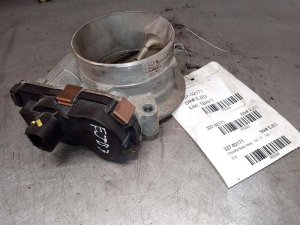
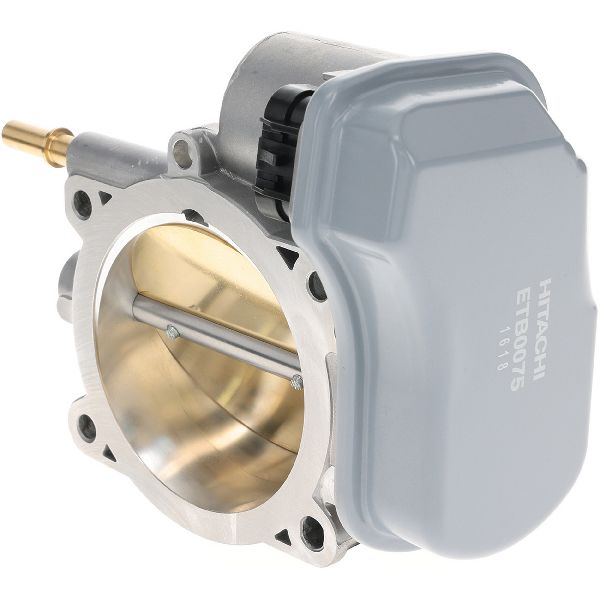
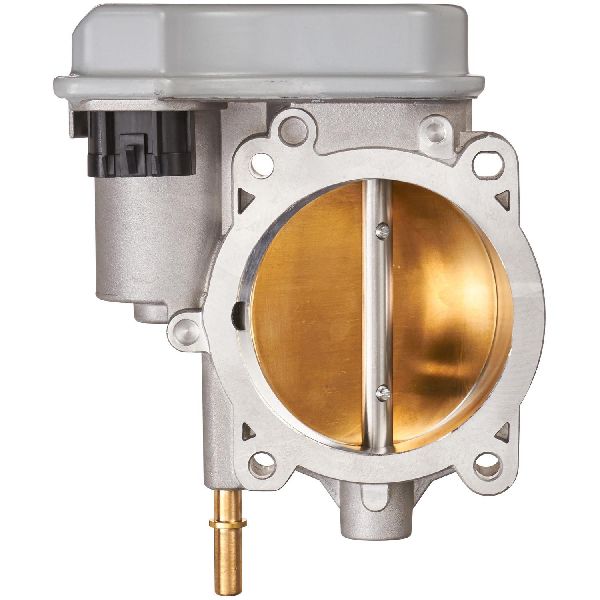
(OEM #ACDelco 217-2296 (GM 12568580))— If cleaning fails to resolve the sticky throttle plate or if the internal motor/sensors have failed, the entire unit must be replaced. This is the most common hard-part failure for P2101.
Trusted brands: ACDelco, Bosch, Hitachi, Delphi
OEM price range: $250-$350
Aftermarket price range: $150-$250 - Throttle Body Assembly (5.3L V8)
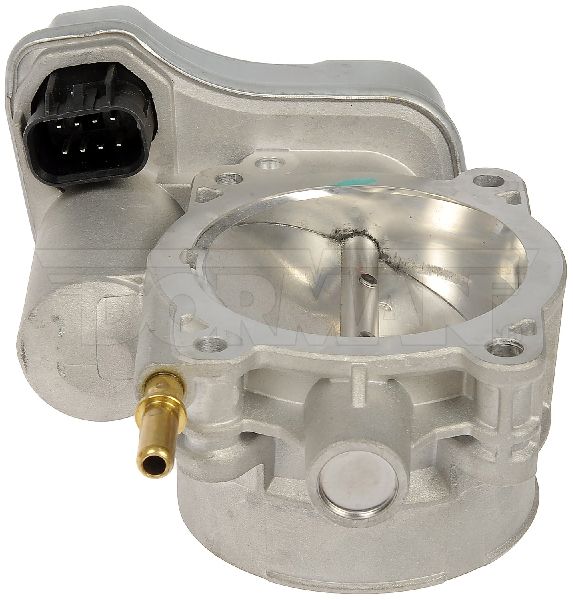
(OEM #ACDelco 12679524 (replaces 12580760, 12572658))— The V8 engine uses a different throttle body. If cleaning fails, the entire assembly is replaced to fix the internal electronic or mechanical fault.
Trusted brands: ACDelco, Bosch, Standard Motor Products
OEM price range: $300-$450
Aftermarket price range: $180-$300 - Throttle Body Cleaner — This is required for the most common and least expensive fix: cleaning the carbon buildup from the throttle body.
Trusted brands: CRC, Berryman, Gumout
OEM price range: $10-$15
Aftermarket price range: $5-$10
Related Codes That Often Appear With This One
- P1516 — This is a GM-specific code that is very similar to P2101, indicating a mismatch between the commanded and actual throttle position ('TAC Module Throttle Actuator Position Performance'). They often appear together and are both mentioned in TSB PIP4578B.
- P2110 — This code means 'Throttle Actuator Control System - Forced Limited RPM' and is set as a direct result of P2101, confirming the PCM has put the vehicle into limp mode.
- P0068 — Indicates a mismatch between the MAF/MAP sensor readings and the throttle position. A sticky throttle plate can cause this correlation fault, as the airflow doesn't match what the PCM expects for the given throttle angle.
Technical Service Bulletins (TSBs) & Recalls
- PIP4578B: This TSB is highly relevant. It states that on high-mileage vehicles, carbon buildup in the throttle body can cause idle surges, reduced power mode, and set DTCs including P2101, P1516, and P0068. It confirms that cleaning the throttle body and performing an idle learn reset is the correct procedure.
- PIP5660: For newer GM trucks, this TSB discusses P2101 caused by internal throttle body contamination, advising replacement if wiring is confirmed to be good, which reinforces the diagnostic path for the Rainier.
Platform-Specific Known Issues
- Owner Experience: A user on a Suburban forum (with a similar GM TAC system) fixed their P2101 code after discovering they had accidentally left a cleaning rag inside the intake tube after servicing the throttle body, which completely blocked airflow and triggered the fault.
- Real-World Fix: On a Trailblazer, a user on YouTube fixed their 'Reduced Engine Power' light by first thoroughly cleaning the throttle body. When the problem persisted, they replaced the throttle body assembly, which permanently resolved the P1516 and P2101 codes.
- Diagnostic Tip: On the GMT360 platform, a failing electronic fan clutch can sometimes short out the 5-volt reference circuit, which is shared by other sensors, including the throttle body. As a diagnostic step, some mechanics will disconnect the fan clutch electrical connector to see if the P2101 code disappears.
Mechanic-Grade Diagnostic Values
- Throttle Actuator Control (TAC) Motor Resistance — expected: 5 to 15 Ohms between the two motor control pins.. Failure: Infinite resistance (open circuit) or zero resistance (short circuit) indicates a failed motor.
- Throttle Position Sensor (TPS) 1 Resistance (4.2L I6) — expected: Approximately 2.6k to 3.4k Ohms, depending on which pins are tested (A&G or C&G). The resistance should change smoothly as the throttle plate is manually opened and closed.. Failure: An open circuit (OL), a short (0 Ohms), or readings that jump erratically indicate a failed sensor.
- Throttle Body Connector Voltage Drop — expected: Less than 0.5V drop between the PCM supply voltage and the voltage measured at the motor connector with the ignition on.. Failure: A voltage drop greater than 0.5V suggests high resistance in the wiring or a bad connector.
- Throttle Body Connector Pinout (4.2L I6, 2006-2007) — expected: Pin A: TPS 2 Signal. Pin B: 5V Reference (from PCM). Pin C: TPS 1 Signal. Pin D: Low Reference (Ground). Pin E: TAC Motor Control 1. Pin F: Not Used. Pin G: TAC Motor Control 2.. Failure: Absence of 5V reference, no ground on the low reference pin, or open/short on signal/control wires when tested against a wiring diagram.
Scan Tool Commands That Help
- Tech2 or equivalent professional scan tool: Throttle Position (TP) Angle — Use this to monitor the 'Commanded TP Angle' vs. the 'Actual TP Angle' in the live data list. A significant, persistent discrepancy between the two values after a cleaning procedure strongly points to a failed throttle body assembly.
- Tech2 or equivalent professional scan tool: TAC Motor Control / Actuator Test — This bidirectional command allows the technician to directly command the throttle plate to open to specific percentages (e.g., 10%, 25%, 50%). If the throttle plate fails to move as commanded or the scanner shows an error, it confirms a fault in the TAC motor or its circuit, bypassing the pedal and PCM logic.
- Tech2 or equivalent professional scan tool: Idle Learn Reset / Throttle Relearn — This function is used after replacing the throttle body to reset the learned idle values stored in the PCM. While a manual relearn often works, using the scan tool function is the official and most reliable method to ensure the PCM correctly calibrates to the new part.
Wiring & Ground Locations
- G101 / G106 — G101 is located at the left front of the engine on the lower block. It often jumpers to G106, located on the front center of the frame cross rail, under the crank pulley.. This ground point is critical as it serves the Engine Control Module (ECM) and Transmission Control Module (TCM). A poor connection here can cause a host of seemingly unrelated issues, including erratic behavior from the TAC system due to unstable PCM operation.
- G103 (V8) / G104 (I6) — On V8 models, G103 is on the front of the passenger side cylinder head. On I6 models, a key ground (often cited as G104) is on the rear of the driver's side cylinder head. Another G103 on some models is on the cowl, above the brake booster.. These grounds are for the main engine harness and various sensors. Corrosion or a loose connection at the cylinder head ground is a known cause of intermittent electronic issues on the GMT360 platform. Verifying this ground is clean and tight is a crucial step when diagnosing electronic faults like P2101.
- Throttle Body Connector (X107) — The 8-pin electrical connector that plugs directly into the electronic throttle body assembly.. This is the single most important connection for the entire TAC system. All power, ground, and signal wires for the dual throttle position sensors and the actuator motor pass through this connector. Corrosion, backed-out pins, or chafed wires right at the connector are a common point of failure.
Real Owner Repair Stories
- GMTNation Forum Member (2009 Chevrolet Trailblazer 4.2L I6) — Idle issues, seeking to replace throttle body due to a bad throttle position sensor.
❌ Tried (didn't work) Concerned about relearn procedures causing issues after replacement.
✅ What actually fixed it A forum moderator confirmed that for the I6 engine, a relearn is not typically required beyond disconnecting the battery or pulling the PCM fuses for at least 30 minutes to reset the PCM's learned values. This is different from the V8 engines which may require a more involved procedure. - YouTube video by 'Fixed! Daily' (2007 Chevrolet Suburban 5.3L V8) — P2101 code, 'Reduced Engine Power' light illuminated.
❌ Tried (didn't work) Initial diagnosis pointed to a throttle body issue.
✅ What actually fixed it The owner had previously cleaned the throttle body but accidentally left a cleaning rag inside the air intake tube, completely blocking airflow. Removing the rag and clearing the codes with a scan tool resolved the issue instantly. This serves as a reminder to ensure the intake path is clear after service.
OEM Part Supersession History
12572658, 12580760→12679524— Standard part evolution, likely for improved reliability or manufacturing efficiency.
Heads up: These part numbers are for the 5.3L V8 engine. While they may be physically similar, they are not interchangeable with the 4.2L I6 throttle body (GM 12568580). Using the wrong part will result in calibration issues and persistent codes.
Model Year Variations Within This Range
- 2006-2007: The wiring for the Throttle Actuator Control (TAC) system, including the throttle body and accelerator pedal, is different from the 2002-2005 models. Using a wiring diagram for the wrong year range will lead to incorrect diagnosis.
Diagnostic Flowchart
Other Known Issues on This Vehicle
Issues unrelated to this code that are worth knowing about as an owner of this generation:
- Failing Instrument Cluster Stepper Motors 🟠 Medium — Very common across all GMT360s. Gauges (speedometer, tachometer, etc.) become erratic, get stuck, or stop working entirely. Typically occurs after 50,000 miles. (Ref: No recall, but it is a widely known failure. Repair services replace all stepper motors with upgraded units.)
- Faulty Electronic Fan Clutch 🔴 High — Common failure. Can cause a loud roaring noise from the engine bay (stuck on) or overheating at idle (stuck off). Failure can happen at any mileage.
- Erratic or Failed Fuel Level Sending Unit 🟠 Medium — Extremely common. The fuel gauge will read empty when full, fluctuate wildly, or get stuck. This is due to a faulty sensor on the fuel pump module inside the tank.
- Cracked Exhaust Manifold (4.2L I6) 🟠 Medium — A frequent issue on the LL8 engine, causing a ticking noise that is most noticeable on a cold start and may quiet down as the engine warms up.
- Failed Driver's Door Master Window Switch Module 🟡 Low — Common enough to warrant a recall. Water can enter the module, causing corrosion, intermittent operation of windows/locks, and in rare cases, a fire risk. (Ref: NHTSA Recalls: 12V313000, 14V286000, 15V201000)
- AFM Lifter Failure (2005-2007 5.3L V8) 🔴 High — A significant issue on the 5.3L V8s with Active Fuel Management (AFM). A lifter can become stuck or collapse, causing a persistent misfire (e.g., P0300) and a distinct ticking noise. Repair is labor-intensive and expensive.
Used vs. New Parts: Buying Guide for This Vehicle
When a used part is the smart pick: A used throttle body from a junkyard can be a cost-effective option if the failure on your vehicle is confirmed to be a complete electronic failure of the motor or sensors, and not just carbon buildup. It is a gamble, as the used part may have its own wear or carbon issues.
Donor-vehicle mileage cap: roughly under 80000 miles for the part to have meaningful remaining life.
What to inspect on the donor part:
- Check the throttle plate and bore for excessive carbon. A thick, black ring indicates it will need a thorough cleaning before installation.
- Manually move the throttle plate (with power off). It should move smoothly with firm spring tension and no sticking or grinding.
- Inspect the electrical connector pins. Avoid any units with bent, corroded, or damaged pins.
- If possible, get the VIN of the donor vehicle to ensure it's from a compatible year range and engine type.
Aftermarket brands forum-validated for this vehicle:
- ACDelco (OEM)
- Bosch
- Hitachi
- Standard Motor Products (SMP)
Brands owners have reported issues with on this vehicle:
- Unbranded, no-name units from online marketplaces are a significant risk. Forum discussions often contain stories of these parts failing quickly or being dead-on-arrival. While cheaper, they often lead to repeated repairs.
Real Owner Stories
Aggregated from forums and TSBs cited above. Mileages and costs reflect what owners reported in those sources.
Chevrolet Trailblazer (GMT360 Platform Mate)
Symptoms: 'Reduced Engine Power' light illuminated, with codes P1516 and P2101 present.
What fixed it: The owner first tried thoroughly cleaning the throttle body. When the problem persisted, replacing the entire throttle body assembly permanently resolved the issue.
Source hint: Real-World Fix on a Trailblazer (cited in vehicle_specific_issues)
High-Mileage GM Truck (e.g., Buick Rainier) — ~145000 miles
Symptoms: Vehicle experienced idle surges, went into reduced power mode, and set DTCs P2101, P1516, and P0068.
What fixed it: The correct procedure was to thoroughly clean the carbon buildup from the throttle body and then perform an idle learn reset.
Source hint: TSB PIP4578B
GM Suburban (similar TAC system)
Symptoms: Vehicle triggered a P2101 fault code due to a complete blockage of airflow.
What fixed it: The owner discovered they had accidentally left a cleaning rag inside the air intake tube after servicing the throttle body. Removing the rag fixed the problem.
Source hint: Owner Experience on a Suburban forum (cited in vehicle_specific_issues)
Related OBD-II Codes
Frequently Asked Questions
What is the very first thing I should do if my 2005 Rainier goes into 'Reduced Engine Power' mode with code P2101?
Is there an official GM Technical Service Bulletin (TSB) for the P2101 code on my Buick Rainier?
Do I need an expensive scan tool to perform the throttle relearn after cleaning it?
I cleaned the throttle body but the P2101 code came back. What should I check next?
Could a problem with my fan clutch cause a P2101 throttle body code?
My friend's Chevy Trailblazer had the same P2101 problem. Is this common across similar GM SUVs?
Used OEM Parts in Stock
New Aftermarket Parts Available




The information in this article is provided for general reference and educational purposes only. Vehicle specifications, procedures, and part compatibility can vary by production date, trim level, and region. Always consult your vehicle's factory service manual and verify part numbers before purchasing or performing repairs. Safety-critical components such as airbags, seat belts, and braking systems should be installed by a qualified professional.
- Buick Rainier:
- 🧭 Diagnostic Flowchart
- 🛍️ Shop This Part
- What's Unique About the 2004-2007 Buick Rainier
- Symptoms You May Notice
- Most Likely Causes
- Rare But Worth Checking
- Diagnosis Steps
- Parts You'll Likely Need
- Related Codes That Often Appear With This One
- Technical Service Bulletins (TSBs) & Recalls
- Platform-Specific Known Issues
- Mechanic-Grade Diagnostic Values
- Scan Tool Commands That Help
- Wiring & Ground Locations
- Real Owner Repair Stories
- OEM Part Supersession History
- Model Year Variations Within This Range
- Other Known Issues on This Vehicle
- Used vs. New Parts: Buying Guide for This Vehicle
- Real Owner Stories
- Chevrolet Trailblazer (GMT360 Platform Mate)
- High-Mileage GM Truck (e.g., Buick Rainier) — ~145000 miles
- GM Suburban (similar TAC system)
- Related OBD-II Codes
- Frequently Asked Questions
- 🎟️ Get 5% Off