

P2111 on 2009-2016 Ford E-Series 6.8L V10: Throttle Stuck Open Causes and Fixes
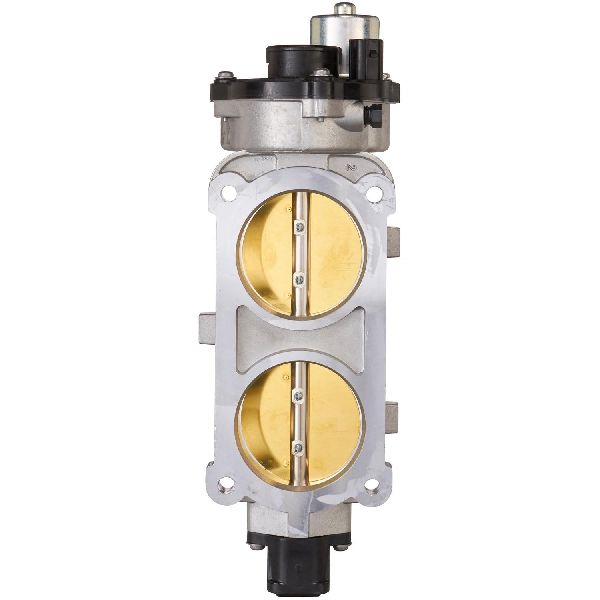
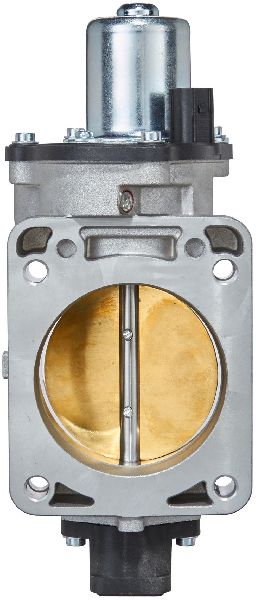
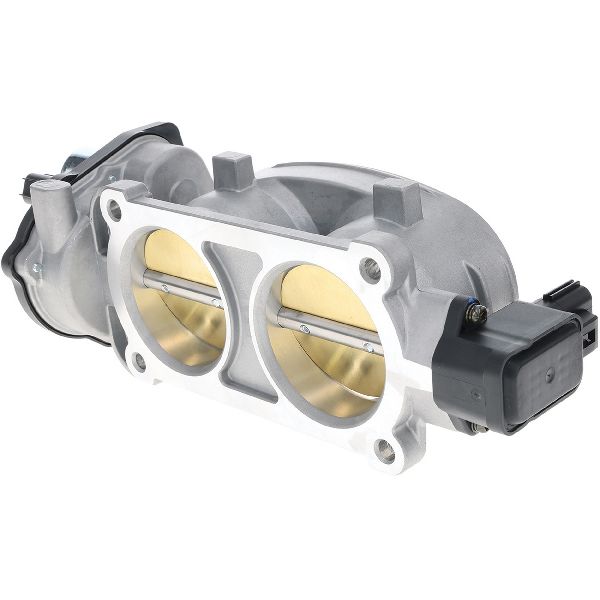
This code means the electronic throttle body is stuck open. The most common fix is to either thoroughly clean the throttle body of carbon buildup or replace the entire throttle body assembly. The PCM will put the van in 'limp mode'. Expect to pay $150-$400 for a new Motorcraft throttle body, part number 9C9Z-9E926-A (TB-4).
- P2111 means the throttle is stuck open, and your van is in a safety 'limp mode'.
- Before buying any parts, spend $10 on throttle body cleaner and thoroughly clean the throttle plate and bore. This fixes the problem in many cases, especially on RVs after storage.
- If cleaning doesn't work, the entire throttle body assembly needs to be replaced. The correct Motorcraft part is TB-4.
- Do not drive the vehicle with this code. It is a serious safety issue.
- After cleaning or replacement, perform the throttle relearn procedure to ensure proper idle and performance.
What's Unique About the 2009-2016 Ford E-Series
The 6.8L V10 in the E-Series is a workhorse engine often found in heavy-duty applications like RVs and shuttle buses. These vehicles can experience long periods of idling or specific driving cycles that contribute to carbon buildup in the throttle body. A forum post for a 2015 E-450 with this engine showed a P2111 code after the vehicle sat for an extended period over winter, which can sometimes allow moisture or fuel deposits to cause the throttle plate to stick. Manufacturer service bulletin SSM 50597 notes that in some Ford vehicles, P2111 can be triggered by water or ice buildup in the intake manifold behind the throttle body. The issue is almost always with the throttle body itself rather than a more complex system failure.
Symptoms You May Notice
- Check Engine Light and/or a 'wrench' icon on the dashboard.
- Vehicle enters 'limp home mode' with drastically reduced engine power.
- Engine starts but stalls after a few seconds.
- Unresponsive or delayed throttle pedal ('dead pedal').
- High idle speed, even when parked.
- Rough or surging idle.
- Replacing the accelerator pedal position (APP) sensor. While the APP sensor is part of the overall system, P2111 specifically points to a problem at the throttle body itself (the actuator not matching the command), not the driver's input from the pedal.
Most Likely Causes
- Dirty or Binding Throttle Body 🔴 High Probability → Shop Fuel Injection Throttle Body Heavy-duty use, long idle times, and extended storage (common in RVs) can accelerate carbon and oil vapor buildup from the PCV system, causing the throttle plate to stick.
How to confirm: Remove the air intake tube connected to the throttle body. Visually inspect the throttle bore and the edges of the throttle plate for a thick, black layer of carbon. Manually (with the engine off) push the plate open and see if it moves smoothly or feels sticky and fails to snap shut.
Typical fix: Thoroughly clean the throttle body bore and plate with a dedicated, sensor-safe throttle body cleaner and a soft brush or cloth. Do not spray cleaner directly into the electronic components. Re-install and perform a throttle relearn procedure. 🎬 Watch: How to fix code P2111 and perform the calibration procedure.
Est. part cost: $10-$20 for cleaner - Failed Throttle Body Assembly 🟡 Medium Probability → Shop Fuel Injection Throttle Body The internal electric motor or, more commonly, the plastic gears within the throttle actuator can wear out, strip, or fail, preventing the unit from closing the throttle plate correctly. The integrated Throttle Position Sensor (TPS) can also fail.
How to confirm: If the throttle body is perfectly clean and the plate still sticks or doesn't respond correctly to a scan tool's actuator test, the unit has failed internally. A scan tool may show a discrepancy between the commanded throttle position and the actual throttle position; for example, a commanded position of 5% while the actual position reads 22% indicates a sticking plate. This is the next logical step after cleaning fails to solve the problem.
Typical fix: Replace the entire electronic throttle body assembly. It is sold as a single unit with the motor and sensors integrated. The Motorcraft part is TB-4.
Est. part cost: $150-$400 - Wiring or Connector Issue ⚪ Low Probability
How to confirm: Inspect the wiring harness and the connector plug at the throttle body for any signs of corrosion, bent pins, or damaged wires from heat or chafing. Pay close attention to the red locking tab on the connector, which can be brittle. Wiggle the connector with the engine running to see if it affects idle.
Typical fix: Repair the damaged section of wire or clean/replace the connector pigtail.
Est. part cost: $15-$50 for a pigtail connector
Rare But Worth Checking
- Faulty Powertrain Control Module (PCM): → Shop Engine Control Module (ECM) This is extremely rare. The PCM should only be considered a potential cause after all other possibilities, including the throttle body and wiring, have been definitively ruled out.
Diagnosis Steps
- Verify the code with a reliable OBD-II scanner. Note any other codes present, especially P2104 or P2112.
- Turn the vehicle off. Remove the air intake ducting from the throttle body.
- Visually inspect the inside of the throttle body for heavy carbon buildup. Check if the throttle plate is physically jammed or sticky.
- Regardless of appearance, thoroughly clean the throttle body bore and plate with sensor-safe throttle body cleaner and a soft cloth or brush. Ensure the plate can move freely from fully closed to fully open.
- Inspect the throttle body electrical connector. Be careful with the small red locking tab, as it can be brittle and easy to damage. Check for corrosion, moisture, or damaged pins/wires.
- Reassemble the intake. Clear the codes. Perform a throttle body relearn procedure. One common method is to turn the key to 'ON' (engine off), slowly press the accelerator pedal to the floor and slowly release it, then turn the key off. Another method involves letting the engine idle for one minute, then turning the A/C on and letting it idle for another minute, then putting it in drive (with foot on brake) and idling for a final minute.
- Clear the codes and start the engine. If the code returns immediately, or if cleaning provided no improvement, the throttle body assembly has likely failed internally and needs to be replaced.
Parts You'll Likely Need
- Electronic Throttle Body Assembly
(OEM #9C9Z-9E926-A (Motorcraft TB-4). Supersedes: 9C9Z-9E926-B, 9C9Z-9E926-C, 6C3Z-9E926-AA, 5C3Z-9E926-BA.)— This is the most common repair when cleaning does not solve the issue. The internal motor, plastic gears, or integrated position sensor fail, requiring replacement of the whole unit.
Trusted brands: Motorcraft, Standard Motor Products (SMP), Hitachi, Dorman
OEM price range: $250-$400
Aftermarket price range: $150-$250 - Throttle Body Gasket — It is recommended to replace the gasket when the throttle body is removed for cleaning or replacement to prevent vacuum leaks. Fel-Pro part 61420 is a common example.
Trusted brands: Fel-Pro, Victor Reinz, Motorcraft
OEM price range: $10-$20
Aftermarket price range: $5-$15
Related Codes That Often Appear With This One
- P2104 — P2104 (Throttle Actuator Control System - Forced Idle) is often set along with P2111. It indicates that the PCM has actively taken control and is forcing the engine to idle as a fail-safe measure because of the fault detected by P2111.
- P2112 — P2112 (Throttle Actuator Control System - Stuck Closed) is the opposite fault. Seeing both codes, or having one appear after trying to fix the other, can indicate an erratic or failing throttle body assembly.
Technical Service Bulletins (TSBs) & Recalls
- TSB 10-21-6: Issued October 25, 2010, this TSB addresses DTCs P2111 and P2112, or fluctuating/low idle speeds, for various 2010-2011 Ford vehicles, including the 2010 E-150 and E-250 with the 4.6L engine. While the 6.8L V10 is not explicitly listed, the bulletin's existence for the same chassis and model year for electronic throttle body issues indicates a known pattern of problems with the component family. The fix involves replacing the throttle body.
- SSM 46085: Issued September 21, 2016, this is a special service message that revises the diagnostic procedure in the official service manual for electronic throttle bodies, indicating that certain data PIDs should not be used for diagnosis.
- SSM 50597: Issued March 16, 2022, this bulletin notes that DTCs P2111, P2112, and/or P2119 may be due to water or ice buildup in the intake manifold behind the throttle body.
Platform-Specific Known Issues
- On a 2015 E-450 based motorhome, an owner reported that after sitting for the winter, the engine would start and immediately stall, with no throttle response, triggering code P2111. The owner's first step, recommended by forum members, was to remove and clean the throttle body, which is a very common scenario for RVs that are stored for long periods.
Mechanic-Grade Diagnostic Values
- Throttle Actuator Control (TAC) Motor Resistance — expected: Approximately 2 to 25 Ohms between the two motor pins at the throttle body connector (with connector unplugged).. Failure: A reading of infinite resistance (open circuit) or zero resistance (short circuit) indicates a failed motor.
- Scan Tool Live Data: Commanded vs. Actual Throttle Position — expected: The 'Throttle Position Actual' PID should closely match the 'Throttle Position Commanded' PID.. Failure: A significant discrepancy, such as a commanded position of 5% while the actual position reads 22%, points to a physically sticking throttle plate that is not responding to PCM commands.
- Throttle Actuator Control (TAC) Module Voltage — expected: Normal operating voltage range is typically between 0.5V and 4.5V.. Failure: Voltage readings outside this range can trigger the code.
- Power Supply to Throttle Controller — expected: A steady +12V DC with the key in the 'run' position.. Failure: No voltage or an intermittent voltage suggests a wiring or fuse issue upstream of the throttle body.
Scan Tool Commands That Help
- Ford IDS / Forscan / High-End Bidirectional Scanner: Throttle Body Actuator Test — Use this function to command the throttle plate to open and close while observing its physical movement and live data. If the plate fails to move as commanded, it confirms a fault in the throttle body assembly (motor, gears) or a physical obstruction, assuming wiring is intact.
- Ford IDS / Forscan / High-End Bidirectional Scanner: KAM (Keep Alive Memory) Reset — This function should be performed after replacing the throttle body or disconnecting the battery. It clears the PCM's learned adaptive values for idle and throttle position, forcing it to relearn with the new component. Failure to do this can result in a persistent high idle or incorrect throttle response after the repair.
Wiring & Ground Locations
- Throttle Body Connector — The electrical connector on the front of the electronic throttle body assembly.. This is the single point of failure for all power and signal to the throttle actuator motor and position sensors. The connector itself, its pins, and the red locking tab (which is known to be brittle) are critical inspection points.
- PCM Power and Ground Circuits — Various points connecting to the Powertrain Control Module (PCM), typically located in the engine bay on the passenger side cowl or near the firewall.. While a direct throttle body ground isn't typically specified, the PCM controls the throttle by grounding the coil circuits. A poor PCM ground can cause a host of erratic electronic issues, including throttle control faults. Verifying main PCM grounds is a crucial step in advanced diagnostics if the throttle body and its direct wiring check out.
Real Owner Repair Stories
- Ford Truck Enthusiasts Forum (2015 E-450 Motorhome with 6.8L V10) — After sitting over the winter, the engine would start briefly and then shut down after about one second. There was no response from the throttle pedal. The only code was P2111.
❌ Tried (didn't work) The owner first sought advice before attempting repairs.
✅ What actually fixed it The strong consensus from other owners was that the first and most likely fix was to remove and thoroughly clean the throttle body, as long periods of storage can cause the plate to get stuck with deposits. This was presented as the standard first step before considering replacement. - Ford Truck Enthusiasts Forum (2004-2008 Ford F-150 (similar ETC system)) — Intermittent limp mode (P2104) and P2111. The engine would suddenly cut power to idle, requiring a restart to function normally.
❌ Tried (didn't work) The user wanted to avoid replacing the throttle body without definitive proof.
✅ What actually fixed it The user used an AutoEnginuity scanner to log 'Commanded Throttle Actuator Control' vs. 'Actual Throttle Position'. The log showed the actual position was 22% when the commanded position was only 5%, proving the plate was physically sticking. This data confirmed the need to service or replace the throttle body, moving beyond guesswork.
Documented NHTSA Reports
- An owner reported in NHTSA ODI #11417597 that their vehicle went into fail-safe mode in traffic with no engine power due to code P2111; they successfully resolved the issue by cleaning the throttle body and MAF sensor with a $10 spray cleaner.
- NHTSA ODI #10953906 describes a vehicle that would not accelerate and triggered code P2111, which was fixed by replacing the throttle body with part AT4Z-9E926-B.
- According to NHTSA ODI #10910652, a dealer diagnosed codes P2111 and P2112 and performed a PCM reprogram following instructions for recall 16B32.
- NHTSA ODI #11021311 reports a vehicle that lost throttle response and showed codes P2112 and P2111; the owner attempted a recalibration test by turning the key on and pressing the pedal down slowly.
OEM Part Supersession History
5C3Z-9E926-BA, 6C3Z-9E926-AA→9C9Z-9E926-A (also seen as 9C9Z-9E926-B/C)— Part revisions for improved reliability or manufacturing changes.
Heads up: The listed part numbers are generally considered interchangeable for the 6.8L V10 application within this year range. However, always verify the part number with the vehicle's VIN when purchasing.
Model Year Variations Within This Range
- 2009-2016: The electronic throttle control system and the 3-valve 6.8L V10 engine design were stable and consistent throughout this period for the E-Series. No significant year-to-year variations that would alter the diagnosis or repair of code P2111 have been noted.
Diagnostic Flowchart
Used vs. New Parts: Buying Guide for This Vehicle
When a used part is the smart pick: A used OEM throttle body from a low-mileage donor vehicle can be a cost-effective option, especially if the budget is tight. Given that the failure mode is often electronic or involves worn internal gears, a used part is a gamble but can be successful. It is generally a better choice than a cheap, new, no-name aftermarket part.
Donor-vehicle mileage cap: roughly under 75000 miles for the part to have meaningful remaining life.
What to inspect on the donor part:
- Verify the donor vehicle's mileage. Lower is always better.
- Inspect the throttle bore for excessive carbon buildup. A relatively clean bore may indicate a well-maintained engine.
- Manually actuate the throttle plate (if possible). It should move smoothly with no sticking or binding and snap back firmly.
- Check the electrical connector for any signs of corrosion, bent pins, or heat damage.
OEM-only on this vehicle (don't cheap out):
- Electronic Throttle Body
Aftermarket brands forum-validated for this vehicle:
- Motorcraft (OEM)
- Standard Motor Products (SMP)
- Hitachi
Brands owners have reported issues with on this vehicle:
- Unbranded or 'white-box' parts from online marketplaces are frequently cited as unreliable, with a high rate of early failure. Several sources strongly recommend using an OEM part to avoid repeat repairs.
Real Owner Stories
Aggregated from forums and TSBs cited above. Mileages and costs reflect what owners reported in those sources.
2015 E-450 motorhome (6.8L V-10)
Symptoms: After sitting over the winter, the engine speed hunted up and down, then it would only start briefly before shutting down after about a second. The throttle pedal was unresponsive. The only code was P2111.
What fixed it: The owner's first step, recommended by forum members, was to remove and clean the throttle body.
Source hint: Ford Truck Enthusiasts Forums
NHTSA ODI #11417597
Symptoms: The vehicle entered fail-safe mode while in the passing lane, resulting in a total loss of engine power. Diagnostic scan revealed code P2111 for a throttle body stuck open.
What fixed it: The owner cleaned the throttle body and MAF sensor using an inexpensive two-pack of spray cleaner, which restored vehicle function.
Source hint: NHTSA ODI
Related OBD-II Codes
Frequently Asked Questions
My 2015 E-450 motorhome is showing a P2111 code after sitting all winter. Is this a common problem?
Should I clean the throttle body first, or just replace it to fix P2111?
What is the Ford/Motorcraft part number for the replacement throttle body on the 6.8L V10?
Does TSB 10-21-6 apply to my 6.8L V10 E-Series for code P2111?
How do I perform the throttle body relearn procedure on my Ford E-Series?
I have an F-350 with the 6.8L V10, not an E-Series. Is this P2111 information still relevant?
Helpful Videos
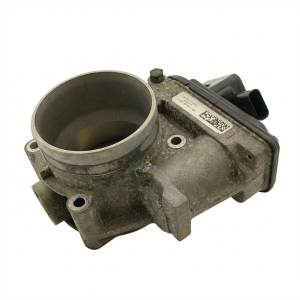
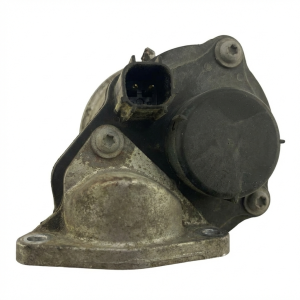
Used OEM Parts in Stock
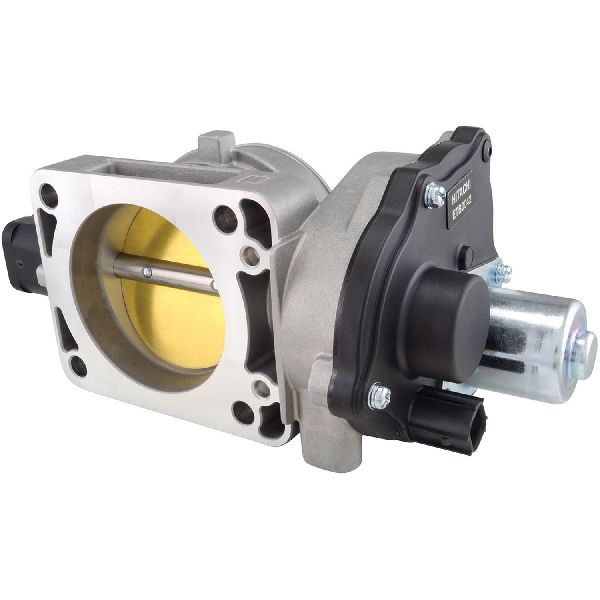
New Aftermarket Parts Available


The information in this article is provided for general reference and educational purposes only. Vehicle specifications, procedures, and part compatibility can vary by production date, trim level, and region. Always consult your vehicle's factory service manual and verify part numbers before purchasing or performing repairs. Safety-critical components such as airbags, seat belts, and braking systems should be installed by a qualified professional.
- Ford E-Series:
- 🧭 Diagnostic Flowchart
- 🎬 Helpful Videos
- 🛍️ Shop This Part
- What's Unique About the 2009-2016 Ford E-Series
- Symptoms You May Notice
- Most Likely Causes
- Rare But Worth Checking
- Diagnosis Steps
- Parts You'll Likely Need
- Related Codes That Often Appear With This One
- Technical Service Bulletins (TSBs) & Recalls
- Platform-Specific Known Issues
- Mechanic-Grade Diagnostic Values
- Scan Tool Commands That Help
- Wiring & Ground Locations
- Real Owner Repair Stories
- Documented NHTSA Reports
- OEM Part Supersession History
- Model Year Variations Within This Range
- Used vs. New Parts: Buying Guide for This Vehicle
- Real Owner Stories
- 2015 E-450 motorhome (6.8L V-10)
- NHTSA ODI #11417597
- Related OBD-II Codes
- Frequently Asked Questions
- 🎟️ Get 5% Off