

P2111 on 2010-2012 Ford Fusion 2.5L: Throttle Body Failure Causes and Fixes
On a 2010-2012 Fusion, code P2111 almost always means the electronic throttle body has failed, causing a sudden loss of power ('limp mode'). The fix is to replace the entire throttle body assembly, which is a common DIY repair costing about $80-$150 for the part.
- P2111 on a 2010-2012 Fusion means the electronic throttle body has failed; this is a very common and well-documented issue.
- Do not drive the vehicle. It is unsafe due to the sudden and severe loss of power.
- The correct fix is to replace the entire throttle body assembly. Do not waste time or money trying to clean it.
- This is a beginner-friendly DIY repair that can be completed in under an hour with basic tools, costing around $85 for an aftermarket part.
- After replacing the part, you must perform a simple, tool-free 'relearn' procedure using the accelerator pedal and ignition key.
What's Unique About the 2010-2012 Ford Fusion
This is a notoriously common failure on many Ford vehicles from this era using the 2.5L engine, including the Fusion, Escape, and Mercury Milan. The issue was so widespread that Ford issued a Customer Satisfaction Program (13N03) that extended the warranty on the electronic throttle body (ETB) to 10 years or 150,000 miles. The program documentation confirms the failure is due to 'contamination on the internal motor contacts of the Throttle Body, resulting in intermittent electrical connectivity'. While this program has expired for 2010-2012 models, it confirms that the failure is almost always the throttle body itself due to internal electronic faults, not a dirty plate or other components. Internal Ford technician discussions from 2012 confirm the part was being replaced frequently to fix the issue, even when no codes were stored.
Symptoms You May Notice
- Sudden and severe loss of engine power
- Vehicle enters 'limp home mode'
- Wrench light appears on the dashboard
- Check Engine Light is on
- Unresponsive or sluggish accelerator pedal
- Vehicle may stall
- Radiator fan runs at maximum speed continuously while the engine is on.
- Replacing the Accelerator Pedal Position (APP) sensor. A failing pedal sensor would set its own specific codes (e.g., P2135, P2138) and does not cause P2111 on this vehicle.
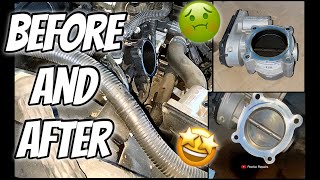
- Cleaning the throttle body. While cleaning a dirty throttle body can solve some issues, for the P2111 code on this specific Ford, the problem is almost always an internal electronic failure, making cleaning ineffective. A Reddit user notes that while cleaning is good maintenance, for P2111, '99% it's time for... changing the throttle body.'
Most Likely Causes
- Defective Electronic Throttle Body (ETB) Assembly 🔴 High Probability → Shop Fuel Injection Throttle Body A well-documented design flaw involving contamination of internal motor contacts led to high failure rates, prompting a warranty extension program (13N03) from Ford. This issue affects a wide range of Ford products using the same ETB.
How to confirm: Given the high probability, diagnosis often involves simply replacing the part when code P2111 is present with the classic 'limp mode' symptoms. NHTSA ODI #10629027 notes that diagnostic tests for this issue often return P2111 alongside P2119, confirming an internal failure of the throttle position sensor within the assembly. Other causes are rare enough that replacing the ETB is the most cost-effective first step. As one technician noted in a forum, 'Just put ETB on it will fix it. I have several doing this exact same thing and TB fixed em all.'
Typical fix: Replace the entire electronic throttle body assembly. Cleaning is not recommended as the failure is typically electronic, not due to dirt. A Reddit user with a 2016 Fusion experiencing the same P2111/P2112 codes confirmed a successful repair: 'got part for 85$. Took less than 30 mins to install. Plug and play.'
Est. part cost: $80-$150
Rare But Worth Checking
- Wiring Harness or Connector Issue: Check for visible damage, corrosion, or loose connections at the throttle body connector before replacing the part. This is a quick and free check.
- Powertrain Control Module (PCM) Fault: → Shop Engine Control Module (ECM) This is extremely rare and should only be considered after a new throttle body fails to resolve the issue.
Diagnosis Steps
- Confirm the presence of code P2111 using an OBD-II scanner. Note if P2112 is also present. As documented in NHTSA ODI #10543321, it is often necessary to retrieve the P2111 code while the vehicle is still in "limp home" mode, as restarting the car may temporarily restore power.
- Inspect the wiring harness and connector going to the electronic throttle body for any obvious signs of damage, corrosion, or looseness.
- Given the extremely high failure rate of this part on this vehicle, the most common and accepted diagnostic step is to replace the electronic throttle body assembly.
- After replacement, clear the codes with the scanner.
- Perform the throttle body relearn procedure.
- Test drive the vehicle to ensure the issue is resolved.
Parts You'll Likely Need
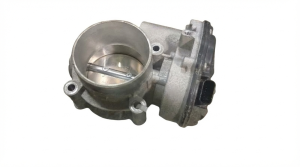
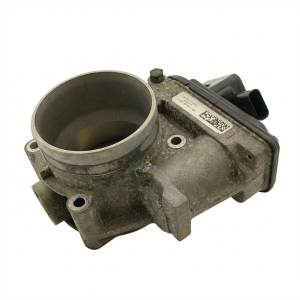
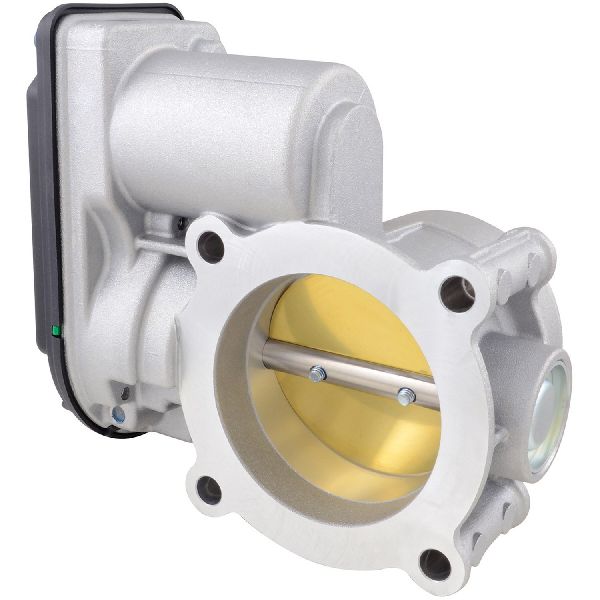
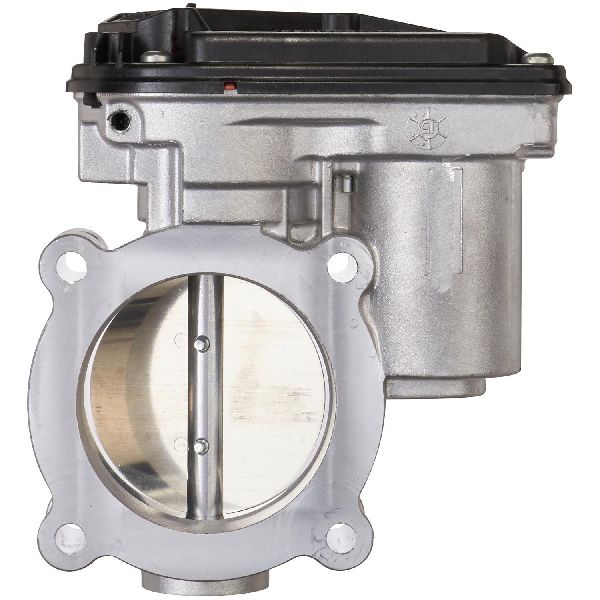
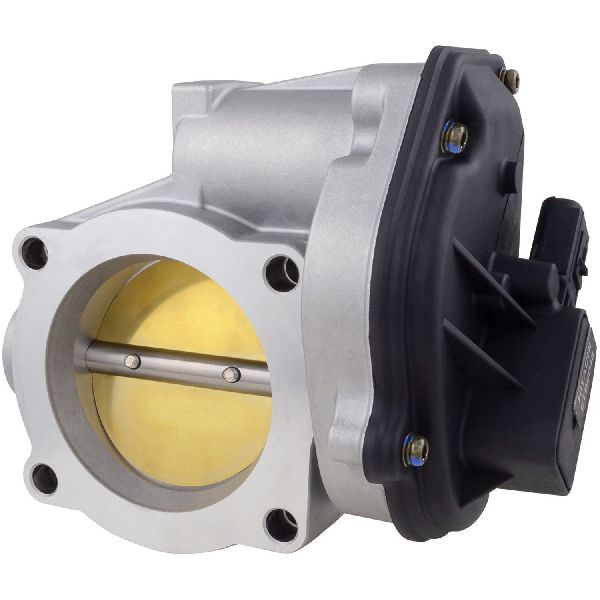
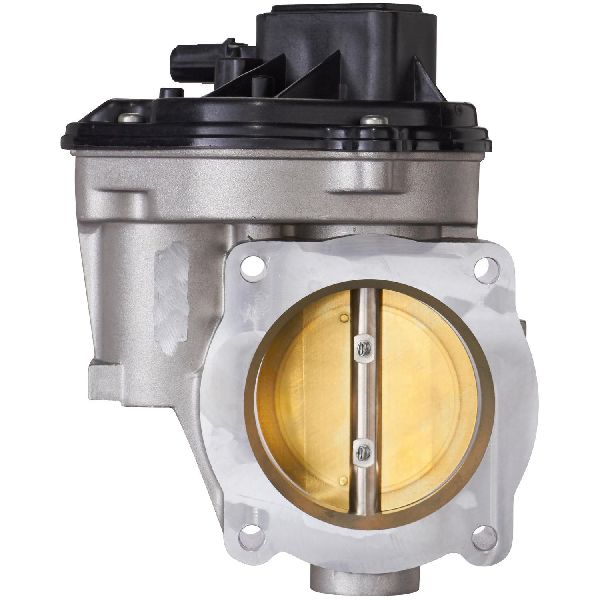
- Electronic Throttle Body Assembly
(OEM #DS7Z-9E926-D)— This is the root cause of code P2111 in nearly all cases for this vehicle due to a known manufacturing defect in the internal electronics.
Trusted brands: Motorcraft, Bosch, Standard Motor Products, Dorman
OEM price range: $180-$310
Aftermarket price range: $75-$150
Related Codes That Often Appear With This One
- P2112 — This code means 'Throttle Actuator Control System - Stuck Closed' and is caused by the exact same internal electronic failure of the throttle body. It is very common for both P2111 and P2112 to appear together.
Technical Service Bulletins (TSBs) & Recalls
- Customer Satisfaction Program 13N03 - Extended warranty coverage for the electronic throttle body due to high failure rates.
- ASI-32332 - Acknowledges intermittent loss of RPM or acceleration with wrench light and possible P2111/P2112 codes.
- Recall 15S18 - Addresses sudden loss of electric power steering assist.
- TSB 10B15 - Addresses transmission shift quality issues.
Platform-Specific Known Issues
- Ford's Customer Satisfaction Program 13N03 was created specifically to address the high number of throttle body failures on the 2010-2013 Fusion and other models. This program extended the original warranty to 10 years or 150,000 miles, confirming the widespread nature of the problem. The program has since expired for these model years.
- Some owners reported frustration with the warranty program, as dealers required the fault (and wrench light) to be active at the time of diagnosis to authorize a free repair, which was difficult with an intermittent problem that often cleared after restarting the vehicle.
Mechanic-Grade Diagnostic Values
- Throttle Actuator Control (TAC) Motor Resistance — expected: 2 to 25 Ohms between the two motor pins (TACM+ and TACM-).. Failure: A reading of infinite resistance (open circuit) or zero resistance (short circuit) indicates a failed motor.
- ETCREF (Reference Voltage) at ETB Connector — expected: 5.0 Volts (+/- 0.5V) with key on, engine off.. Failure: No voltage or voltage significantly outside the 4.5-5.5V range points to a PCM or wiring fault.
- ETCRTN (Return/Ground) at ETB Connector — expected: Near 0 Ohms resistance to a known good chassis ground.. Failure: High resistance indicates a bad ground connection from the PCM.
- Scan Tool: Commanded vs. Actual Throttle Position — expected: The 'TP_ACT' PID should track the 'TP_CMD' PID almost perfectly.. Failure: A discrepancy greater than 2-3% between commanded and actual position while operating the pedal indicates a sticking plate or failing sensor/motor.
Scan Tool Commands That Help
- Ford IDS / Forscan / High-End Bidirectional Scanner: Throttle Body Actuator Test — Use this function to command the throttle plate to specific angles (e.g., 10%, 25%, 50%) while observing its physical movement and live data. If the plate fails to move as commanded, it confirms a fault in the throttle body assembly itself, assuming wiring is intact.
- Ford IDS / Forscan / High-End Bidirectional Scanner: KAM (Keep Alive Memory) Reset — This function should be performed after replacing the throttle body to clear learned adaptive values. This is more effective than a simple battery disconnect and forces the PCM to relearn idle and throttle trims from a clean slate with the new part.
Wiring & Ground Locations
- Electronic Throttle Body Connector (6-pin) — On the throttle body itself, where the engine wiring harness connects.. This is the single point of connection for all power, ground, and signal wires for the throttle body. A wiring diagram snippet for the 2.5L Fusion identifies the pins as: ETCREF (Reference Voltage), ETCRTN (Return), TACM- (Motor Control), TACM+ (Motor Control), TPS2-PS, and TPS1-NS (Position Sensors). Testing voltage and resistance at these pins is the primary electrical diagnostic step.
- G102 — Left rear of the engine compartment.. This is a major engine compartment ground point. The PCM and its associated sensor circuits rely on clean grounds. A corroded or loose G102 could cause erratic voltage signals in the throttle control system.
- G103 / G101 — Left front of the engine compartment, near the strut tower.. Another critical chassis ground in the engine bay. For the 2012 model, this is listed as 'left front of engine compt'. A poor connection here can affect numerous systems controlled by the PCM, including the electronic throttle body.
Real Owner Repair Stories
- ScannerDanner Forum via Go-Parts analysis (2014 Ford Fusion 2.5L (similar design)) — Engine surging, multiple throttle-related codes including P2111, P0122, P0223, P2101.
❌ Tried (didn't work) Initial visual inspection showed nothing obvious.
✅ What actually fixed it Advanced diagnostics found the 5V reference circuit (ETCREF) had a resistive short to ground (reading 1.4k ohms instead of a healthy >10k ohms). The fix was tracing the wiring harness between the PCM and throttle body to find and repair the shorted wire, not replacing the throttle body. - YouTube user comment / Go-Parts case study (2015 Ford Escape (shares ETB design)) — Sudden loss of power ('crawl mode'), unresponsive throttle, P2111 code stored.
❌ Tried (didn't work) Simply replacing the part and clearing codes may not be enough.
✅ What actually fixed it Replacing the throttle body assembly followed by a full PCM reset. The reset was performed by disconnecting the negative battery cable and jumping the disconnected negative cable to the positive battery terminal for 5-10 minutes. This forces a complete memory clear and relearn, which resolved the code and improved transmission shifting.
Documented NHTSA Reports
- An owner reported in NHTSA ODI #11363878 that their vehicle was barely able to pull off the road in a construction zone when P2111 appeared, noting frustration that the 13N03 program did not cover their specific situation.
- NHTSA ODI #10861194 describes a vehicle stalling five times during a 10-minute drive on city streets due to code P2111, occurring with less than 68,000 miles on the odometer.
- According to NHTSA ODI #10638257, a driver experienced no throttle response at 30mph followed by a stall and a Check Engine Light; the remedy was replacing the faulty throttle body and erasing the codes.
OEM Part Supersession History
9L8Z-9E926-A→DS7Z-9E926-A, then DS7Z-9E926-D— Part revisions to improve reliability and address the internal contamination flaw.
Heads up: The newer DS7Z-9E926-D part is fully backward compatible with vehicles that originally used the 9L8Z-9E926-A part. The physical housing may have a different engineering number cast into it, such as 9L8E-9F991-BC, but the fit and function are the same for this application.
Diagnostic Flowchart
Other Known Issues on This Vehicle
Issues unrelated to this code that are worth knowing about as an owner of this generation:
- Electric Power Steering Failure 🔴 High — A prevalent issue for 2010-2012 models, where power steering assist can be lost suddenly while driving, increasing crash risk at low speeds. (Ref: Recall 15S18 / NHTSA 15V-340)
- Harsh/Slipping Automatic Transmission 🟠 Medium — Some owners of 2010 models, particularly those built in late 2009, reported harsh shifts, slipping, or hesitation from a rolling stop. This was often attributed to the 6F35 transmission's valve body. (Ref: TSB 10B15, TSB 11-12-10)
- Faulty Door Latches 🟠 Medium — Part of a massive series of recalls affecting many Ford models. A component within the door latch can break, potentially preventing the door from latching securely or causing it to open while the vehicle is in motion. (Ref: Recalls 15S16, 20S15)
- Leaking Valve Cover Gasket 🟡 Low — The gasket for the plastic valve cover can dry out over time and cause oil leaks. This is a common maintenance item, especially at higher mileage.
- Failed Passenger Side Motor Mount 🟡 Low — The hydraulic passenger-side motor mount is a common failure point, leading to significant vibration and a rattling noise felt in the cabin, especially at idle and during acceleration.
Used vs. New Parts: Buying Guide for This Vehicle
When a used part is the smart pick: A used throttle body is a significant gamble for this specific vehicle and code. The failure is due to a known internal design defect, not simple wear. A used part should only be considered as a temporary, budget-constrained measure when the part is extremely cheap and the buyer accepts the high risk of it failing again shortly.
What to inspect on the donor part:
- Verify the part number or engineering number (e.g., 9L8E-9F991-BC) matches the original.
- Inspect the connector pins for corrosion or damage.
- Check for a clean throttle plate and bore, which may indicate better engine maintenance.
- Ask about the donor vehicle's reason for being salvaged; a front-end collision is preferable to an unknown engine issue.
Aftermarket brands forum-validated for this vehicle:
- Motorcraft (OEM)
- Bosch
- Hitachi
- Standard Motor Products (SMP)
- Dorman OE FIX (specifically claims to have an improved internal seal to prevent the original failure mode)
Brands owners have reported issues with on this vehicle:
- Unnamed, no-brand parts from online marketplaces should be avoided due to the critical safety nature of this component.
Real Owner Stories
Aggregated from forums and TSBs cited above. Mileages and costs reflect what owners reported in those sources.
2010 Ford Fusion 2.5L
Symptoms: The vehicle experienced a P2111 code indicating a problem with the throttle actuator control. After driving it following a part replacement, the code continued to reappear.
What fixed it: Replacement of the electronic throttle body assembly followed by a recalibration (relearn) procedure.
Source hint: YouTube comment from ThePeoplesGarage
2016 Ford Fusion
Symptoms: Sudden power loss with P2111 and P2112 codes present.
What fixed it: Owner replaced the throttle body assembly themselves; the install took less than 30 minutes and was 'plug and play'.
Cost: $85-$85
Source hint: Reddit r/fordfusion thread 'Has anyone experienced this with their fusion?'
2013 Ford Fusion 2.5L
Symptoms: No acceleration and a 'See Manual' warning appeared. The issue temporarily disappeared after turning the car off and back on.
What fixed it: Installation of a new throttle body assembly.
Source hint: Reddit r/fordfusion thread 'Strange Occurrence'
2010 Ford Fusion
Symptoms: Sudden power loss while driving. The fault was intermittent, meaning the wrench light and codes would erase after restarting the engine, making dealer verification difficult.
What fixed it: Replacement of the Electronic Throttle Body (ETB).
Source hint: Ford Truck Enthusiasts Forums thread '2009-12: Extended Throttle Body warranty may be useless'
Related OBD-II Codes
Frequently Asked Questions
Is the throttle body failure on my 2010-2012 Ford Fusion covered under a warranty extension?
Can I just clean the throttle body to fix the P2111 code on my 2.5L Fusion?
Why did my radiator fan start running at maximum speed when the wrench light came on?
Why won't my Ford dealer honor the 13N03 warranty program for my intermittent P2111 code?
Is there a specific procedure I need to follow after replacing the throttle body myself?
Are there other major recalls I should be aware of for the 2010-2012 Fusion?
Helpful Videos

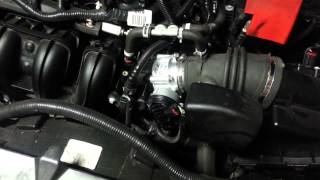
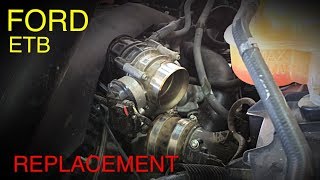
Used OEM Parts in Stock
New Aftermarket Parts Available


The information in this article is provided for general reference and educational purposes only. Vehicle specifications, procedures, and part compatibility can vary by production date, trim level, and region. Always consult your vehicle's factory service manual and verify part numbers before purchasing or performing repairs. Safety-critical components such as airbags, seat belts, and braking systems should be installed by a qualified professional.
- Ford Fusion:
- 🧭 Diagnostic Flowchart
- 🎬 Helpful Videos
- 🛍️ Shop This Part
- What's Unique About the 2010-2012 Ford Fusion
- Symptoms You May Notice
- Most Likely Causes
- Rare But Worth Checking
- Diagnosis Steps
- Parts You'll Likely Need
- Related Codes That Often Appear With This One
- Technical Service Bulletins (TSBs) & Recalls
- Platform-Specific Known Issues
- Mechanic-Grade Diagnostic Values
- Scan Tool Commands That Help
- Wiring & Ground Locations
- Real Owner Repair Stories
- Documented NHTSA Reports
- OEM Part Supersession History
- Other Known Issues on This Vehicle
- Used vs. New Parts: Buying Guide for This Vehicle
- Real Owner Stories
- 2010 Ford Fusion 2.5L
- 2016 Ford Fusion
- 2013 Ford Fusion 2.5L
- 2010 Ford Fusion
- Related OBD-II Codes
- Frequently Asked Questions
- 🎟️ Get 5% Off