

P2112 on 2011-2023 Dodge Durango 3.6L: Causes and Fixes for a Stuck Throttle
P2112 on a Dodge Durango with the 3.6L V6 almost always points to a failed electronic throttle body. The vehicle will likely enter 'limp mode' with a flashing lightning bolt on the dash. Replacing the entire throttle body assembly is the most common fix. Cleaning the unit rarely provides a long-term solution for this specific code.
- P2112 on a 3.6L Durango means the throttle body is stuck closed.
- The most common symptom is a sudden loss of power ('limp mode') and a flashing red lightning bolt on the dash.
- The most probable fix is replacing the entire electronic throttle body assembly; cleaning is rarely a permanent fix for this code.
- After replacement, a 'throttle relearn' procedure is necessary, which can often be done without special tools by following a specific sequence of key cycles and pedal presses.
What's Unique About the 2011-2023 Dodge Durango
The 3.6L Pentastar V6, used across a vast range of Chrysler, Dodge, Jeep, and Ram vehicles, is known for throttle body failures that trigger this code. The most common symptom is the vehicle suddenly entering "limp mode," where acceleration is severely restricted, accompanied by a flashing red lightning bolt on the dashboard, which is the Electronic Throttle Control (ETC) warning light. While carbon buildup can cause issues, on this platform, the failure is frequently electronic and internal to the throttle body assembly itself—due to a failed motor, stripped plastic gears, or bad position sensors—meaning cleaning it often doesn't solve the problem.
Generation note: The 2011-2023 Dodge Durango is part of the third generation (WD). While the core engine and throttle body design are consistent, part numbers have been updated over the years. The latest OEM part number is generally considered the most reliable. Always verify the part number for your specific model year before purchasing a replacement.
Symptoms You May Notice
- Vehicle enters "limp mode" (severely reduced engine power)
- Flashing red lightning bolt on the dashboard (Electronic Throttle Control warning light)
- Check Engine Light is on
- Poor or no acceleration
- Unresponsive throttle pedal
- Engine may stall or fail to start
- Rough or unstable idle
- Replacing the accelerator pedal position (APP) sensor. While the APP sensor is part of the throttle control system, P2112 specifically points to a problem at the throttle body itself, not the pedal. A pedal issue would typically set different codes.
Most Likely Causes
- Failed Electronic Throttle Body 🔴 High Probability → Shop Fuel Injection Throttle Body The electronic motor, internal plastic gears, or position sensors integrated into the throttle body assembly are a very common failure point on the 3.6L Pentastar engine. This is a well-documented issue across many owner forums for all vehicles with this engine.
How to confirm: With the engine off, remove the air intake hose from the throttle body. Have a helper turn the ignition to 'On' (without starting) and slowly press the gas pedal. Observe if the throttle plate moves smoothly. If it's stuck, moves erratically, or makes grinding noises, the unit has failed.
Typical fix: Replace the entire throttle body assembly. After replacement, a throttle relearn procedure is required.
Est. part cost: $100-$250 - Wiring or Connector Issue 🟡 Medium Probability The wiring harness to the throttle body is located in the engine bay and is subject to heat and vibration, which can lead to chafing, broken wires, or corrosion in the connector pins over time.
How to confirm: Visually inspect the wiring harness and connector going to the throttle body for any signs of damage, corrosion, or loose pins. Use a multimeter to check for proper voltage (typically a 5V reference) and ground at the connector according to the vehicle's service manual.
Typical fix: Repair the damaged section of the wiring harness or clean/replace the connector.
Est. part cost: $10-$100 - Heavy Carbon Buildup ⚪ Low Probability While less common than electronic failure for a 'stuck closed' fault on this platform, carbon from the PCV system can build up around the throttle plate, physically preventing it from moving freely. This is more likely to cause a 'stuck open' or erratic idle issue.
How to confirm: Remove the air intake hose and visually inspect the throttle body bore and plate for thick black carbon deposits that could restrict movement.
Typical fix: Clean the throttle body bore and plate with a dedicated throttle body cleaner and a soft cloth or brush. Do not spray cleaner directly into the electronic components.
Est. part cost: $5-$15
Rare But Worth Checking
- Faulty Powertrain Control Module (PCM): This is very rare. The PCM should only be considered after all other possibilities, including the throttle body and wiring, have been exhaustively tested and ruled out. A PCM failure will usually be accompanied by other diagnostic codes.
Diagnosis Steps
- Check for other DTCs with a quality OBD-II scanner. Address any power supply or sensor reference voltage codes (like P0642) first.
- Visually inspect the throttle body connector for damage, corrosion, or loose pins.
- Remove the air intake tube from the throttle body.
- With the ignition in the 'On' position (engine off), have a helper slowly press and release the accelerator pedal.
- Watch the throttle plate. It should open and close smoothly in response to the pedal. If it doesn't move, moves erratically, or makes grinding noises, the throttle body is faulty.
- If the plate appears to move correctly, check for heavy carbon buildup that might be causing it to stick intermittently.
- If the throttle body and its movement seem fine, the next step is to inspect the wiring harness between the throttle body and the PCM for continuity and shorts.
Parts You'll Likely Need
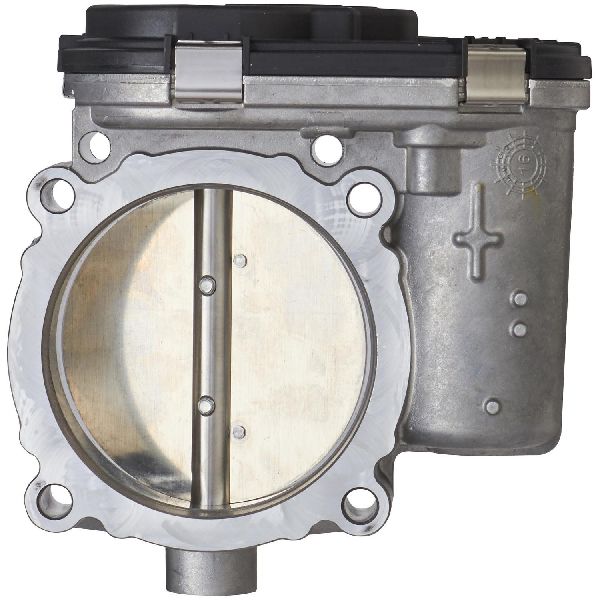
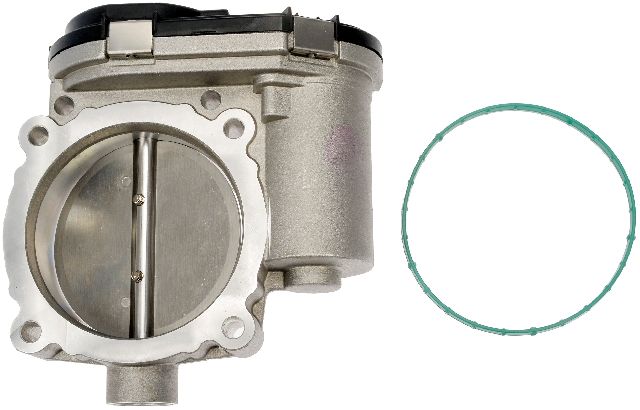
- Electronic Throttle Body Assembly
(OEM #05184349AF (supersedes 5184349AB, 5184349AC, 5184349AD, 5184349AE))— This is the most common cause of P2112. The internal electronics or plastic gears fail, requiring replacement of the entire unit.
Trusted brands: Mopar, Dorman, Hitachi
OEM price range: $180-$250
Aftermarket price range: $100-$180
Related Codes That Often Appear With This One
- P2111 — This code means 'Throttle Actuator Control System - Stuck Open.' It's the counterpart to P2112 and indicates a failure within the same throttle body assembly.
- P2110 — This code, 'Throttle Actuator Control System - Forced Limited RPM,' is often set as a direct result of P2111 or P2112, as the PCM intentionally puts the engine into limp mode.
- P0642 — This code, 'Sensor Reference Voltage 'A' Circuit Low,' can sometimes appear if another sensor on the same 5-volt reference circuit (like an oil pressure sensor) shorts out, causing the throttle position sensor to malfunction.
Platform-Specific Known Issues
- A widespread issue on the 3.6L Pentastar V6 engine involves the vehicle suddenly entering 'limp mode' with the Electronic Throttle Control (ETC) 'lightning bolt' light flashing, which is almost always resolved by replacing the throttle body.
- Owner Experience: Sudden Limp Mode: A common story on forums like DodgeForum.com involves driving normally when the ETC light begins flashing and the vehicle abruptly loses all acceleration, forcing the driver to pull over. Cycling the ignition may temporarily clear the fault, but it typically returns quickly until the throttle body is replaced.
- Throttle Relearn Procedure (No Tools Required): After replacing the throttle body, a relearn procedure is necessary. This can be done without a scan tool: 1. Turn the ignition to 'ON' (engine off) for 10 seconds. 2. Slowly press the accelerator pedal all the way to the floor and then slowly release it. 3. Turn the ignition 'OFF' for at least 10 seconds. 4. Start the engine and let it idle for a few minutes to complete the calibration.
Mechanic-Grade Diagnostic Values
- 5-Volt Reference at Throttle Body Connector — expected: 4.5V to 5.2V with Key On, Engine Off.. Failure: Voltage is significantly below 4.5V or is absent, indicating a wiring issue, a short on the circuit (e.g., from a bad oil pressure sensor), or a PCM fault.
- Throttle Position Sensor (TPS) 'A' Signal Voltage — expected: Sweeps smoothly from ~0.5V-0.7V (closed throttle) to ~4.3V-4.5V (wide-open throttle) with key on, engine off.. Failure: Voltage is stuck, does not sweep smoothly, or has dead spots.
- Throttle Position Sensor (TPS) 'B' Signal Voltage — expected: Mirrors TPS 'A' but sweeps in the opposite direction, e.g., from ~4.3V (closed throttle) down to ~0.7V (wide-open throttle).. Failure: Voltage does not mirror TPS 'A' or is stuck.
- Resistance of ETC Motor Windings — expected: A low resistance value, typically 3-10 ohms, between the two ETC motor pins on the throttle body.. Failure: An open circuit (infinite resistance) or a short to ground indicates a failed motor inside the throttle body.
- Wiring Harness Continuity to Ground — expected: Resistance should be below 5.0 Ohms for the main ETC circuits between the PCM and throttle body connector.. Failure: Resistance above 5.0 Ohms indicates a break or corrosion in the wire.
Scan Tool Commands That Help
- wiTECH (or equivalent professional scanner): ETC RELEARN — This is a mandatory service function to run after replacing the throttle body. It calibrates the new part by teaching the PCM the closed, wide-open, and limp-home positions of the new throttle plate.
- wiTECH (or equivalent professional scanner): Throttle Follower Test — This is a live data test that graphs the commanded versus actual throttle position sensor (TPS1 and TPS2) voltages. It is used to confirm if the throttle plate is physically sticking or if the sensors are failing to report its position accurately. A large discrepancy between commanded and actual position confirms a fault.
Wiring & Ground Locations
- Throttle Body Connector (6-pin) — Directly on the electronic throttle body, where the engine wiring harness connects.. This is the primary connection point for all power, ground, and signal wires that control the throttle. Testing for 5V reference, ground, and signal integrity at these pins is a critical diagnostic step. A common pinout is Pin 4: 5V Reference, Pin 3: Sensor Ground.
- Harness Chafe Point — The wiring harness near the throttle body can rub against a metal A/C line.. A documented case showed that the ETC motor negative wire chafed through at this location, causing an open circuit and triggering P2112. This mimics a failed throttle body but is a wiring issue.
- Oil Pressure Sensor Connector — Located under the intake manifolds on the 3.6L Pentastar, near the oil filter housing.. The oil pressure sensor shares the same 5V reference circuit as the throttle position sensor. A common failure is for oil to leak into this sensor's connector, causing a short that brings down the entire circuit. This will set throttle body codes like P2112 and P0642, even though the throttle body itself is not the root cause.
Real Owner Repair Stories
- DodgeForum.com user (Dodge truck (platform similar to Durango)) — Vehicle in limp mode, would not accelerate, P2112 code present.
❌ Tried (didn't work) Replacing the throttle body, Resetting the PCM
✅ What actually fixed it Found the ETC motor negative wire was open (broken) where the harness was rubbing against a metal A/C line. Splicing in a new section of wire resolved the issue completely. - Dodge Owner Report (NHTSA ODI #10566510) — An owner reported that the ETC light and code P2112 came on while entering an expressway at 65 MPH. The vehicle went into "limp mode," causing the vehicle to jerk severely.
OEM Part Supersession History
5184349AB, 5184349AC, 5184349AD, 5184349AE→05184349AF— Standard part revision and improvement over time to increase reliability and address failure modes of earlier versions.
Model Year Variations Within This Range
- 2011-2013: These early models of the third generation were equipped with a 5-speed automatic transmission paired with the 3.6L V6.
- 2014-2023: Starting with the 2014 model year facelift, the 3.6L V6 was paired with a more modern and efficient 8-speed automatic transmission. While the throttle body issue remains consistent, drivetrain behavior and diagnostics could be slightly different.
Diagnostic Flowchart
Other Known Issues on This Vehicle
Issues unrelated to this code that are worth knowing about as an owner of this generation:
- Cracked Oil Filter Housing/Cooler Assembly 🔴 High — Very common across all model years. The plastic housing becomes brittle from engine heat cycles and develops cracks, leading to significant oil and/or coolant leaks into the engine valley. (Ref: TSB #09-008-15 addresses leakage for 2014 models, but the problem is widespread. TSB 25-001-24 also discusses unnecessary replacement for minor leaks.)
- Rocker Arm / Lifter Failure ('Pentastar Tick') 🔴 High — Very common, especially on earlier engines (approx. 2011-2016). Needle bearings in the rocker arms fail, causing a distinct ticking sound, metal debris in the oil, and potential camshaft damage. (Ref: TSB 09-002-14 REV. B was issued for early models, sometimes leading to cylinder head replacement. A class-action lawsuit was filed regarding this issue.)
- Totally Integrated Power Module (TIPM) Failure 🔴 High → Shop Fuse Box — Common on 2011-2013 models. The internal fuel pump relay fails, causing no-start or stalling conditions. Other electrical gremlins like random horn/wiper activation are also symptoms. (Ref: A recall was issued for the fuel pump relay, but TIPM failures can manifest in many other ways.)
- Uconnect System Errors 🟡 Low — Owners report the infotainment screen freezing or displaying an error message that blocks all functions, including the backup camera.
Used vs. New Parts: Buying Guide for This Vehicle
When a used part is the smart pick: Given the extremely high failure rate of the electronic components within the throttle body, purchasing a used unit from a junkyard is NOT recommended for this specific repair. The risk of the used part failing shortly after installation is very high, and the labor involved makes it a poor economic choice.
What to inspect on the donor part:
- Not applicable, as used parts are not advised for this repair.
OEM-only on this vehicle (don't cheap out):
- Electronic Throttle Body Assembly
Aftermarket brands forum-validated for this vehicle:
- Mopar (OEM)
- Hitachi (Often the OEM supplier)
- Dorman (Has a reputation for re-engineering parts to fix original flaws, but quality can be variable)
Brands owners have reported issues with on this vehicle:
- No-name, unbranded parts from online marketplaces. Forum discussions consistently warn against the cheapest options as they often fail quickly, sometimes within weeks, leading to repeat repairs.
Real Owner Stories
Aggregated from forums and TSBs cited above. Mileages and costs reflect what owners reported in those sources.
2011 Dodge Durango 3.6L V6
Symptoms: Electronic Throttle Control (ETC) light and stalling.
What fixed it: Cleaning provided a temporary fix, but replacement of the throttle body was the ultimate solution.
Source hint: DurangoForumz.com thread titled '2011 Durango ETC light and stall'
2011-2023 Dodge Durango 3.6L V6
Symptoms: Driving normally when the ETC light begins flashing and the vehicle abruptly loses all acceleration, forcing the driver to pull over. Cycling the ignition may temporarily clear the fault.
What fixed it: Replacing the throttle body.
Source hint: Owner Experience: Sudden Limp Mode
2014 Dodge Durango 3.6L V6
Symptoms: Oil cooler leaking (noted as a separate critical issue while discussing Pentastar engine reliability).
What fixed it: Replacing the oil filter housing/cooler assembly.
Source hint: BobIsTheOilGuy.com - A thread titled '2014 Dodge Durango 3.6L oil cooler leaking'
Dodge Owner Report (NHTSA ODI #11500665)
Symptoms: Vehicle would not accelerate and showed codes P2118, P2072, P2112, P2110, and P2101.
What fixed it: A technician recommended addressing the electronic throttle control system and motor as all codes dealt with those components.
Related OBD-II Codes
Frequently Asked Questions
My 2011 Durango is stalling and showing a red lightning bolt; is this related to the TIPM recall?
Do I need a professional scan tool to calibrate the new throttle body on my 3.6L Pentastar?
Is the P2112 code on my Durango caused by the common 'Pentastar Tick'?
Could an oil leak from my 2014 Durango's oil filter housing cause this throttle code?
Can I just clean the throttle body on my 3.6L V6 to fix P2112?
Helpful Videos
Used OEM Parts in Stock
New Aftermarket Parts Available



The information in this article is provided for general reference and educational purposes only. Vehicle specifications, procedures, and part compatibility can vary by production date, trim level, and region. Always consult your vehicle's factory service manual and verify part numbers before purchasing or performing repairs. Safety-critical components such as airbags, seat belts, and braking systems should be installed by a qualified professional.
- Dodge Durango:
- 🧭 Diagnostic Flowchart
- 🎬 Helpful Videos
- 🛍️ Shop This Part
- What's Unique About the 2011-2023 Dodge Durango
- Symptoms You May Notice
- Most Likely Causes
- Rare But Worth Checking
- Diagnosis Steps
- Parts You'll Likely Need
- Related Codes That Often Appear With This One
- Platform-Specific Known Issues
- Mechanic-Grade Diagnostic Values
- Scan Tool Commands That Help
- Wiring & Ground Locations
- Real Owner Repair Stories
- OEM Part Supersession History
- Model Year Variations Within This Range
- Other Known Issues on This Vehicle
- Used vs. New Parts: Buying Guide for This Vehicle
- Real Owner Stories
- 2011 Dodge Durango 3.6L V6
- 2011-2023 Dodge Durango 3.6L V6
- 2014 Dodge Durango 3.6L V6
- Dodge Owner Report (NHTSA ODI #11500665)
- Related OBD-II Codes
- Frequently Asked Questions
- 🎟️ Get 5% Off