

P2112 on 2009-2012 Ford Escape 2.5L: Throttle Body Stuck Closed Causes and Fixes
On a 2009-2012 Ford Escape, code P2112 almost always means the electronic throttle body has failed. This is a very common, well-documented issue. The only reliable fix is to replace the entire throttle body assembly, which costs about $70-$150 for the part and is a DIY-friendly repair. After replacement, a simple idle relearn procedure is necessary.
- P2112 on a 2009-2012 Escape is a critical safety issue that requires immediate attention.
- The cause is almost certainly a failed electronic throttle body; this is a very common and well-known defect for this vehicle.
- Do not waste time or money on just cleaning the throttle body; the problem is internal and electronic, requiring full replacement for a permanent fix.
- The repair is straightforward and can be performed by a DIYer with basic tools in about an hour.
- After replacing the part, perform an idle relearn procedure, which can typically be done by disconnecting the battery for 15-20 minutes and then allowing the engine to idle.
What's Unique About the 2009-2012 Ford Escape
The failure of the electronic throttle body (ETB) is a widespread and notorious issue for the second-generation Ford Escape and its platform mates. The problem was so common that it prompted an NHTSA investigation (PE13003) and led Ford to issue a Customer Satisfaction Program (13N03), which extended the warranty on the part to 10 years or 150,000 miles. That program has since expired for all affected models. The root cause is officially cited as contamination on the internal motor contacts of the throttle body, which results in intermittent electrical connectivity and prevents the throttle plate from responding correctly. Due to this internal electronic failure, replacement, not cleaning, is the only long-term solution.
Symptoms You May Notice
- Sudden and severe loss of acceleration
- Vehicle enters 'limp mode' with speed limited to around 20 mph
- Wrench light illuminated on the dashboard
- Check Engine Light is on
- Unresponsive or sluggish throttle pedal
- Rough or unstable idle
- Engine stalling when coming to a stop or attempting to accelerate
- Replacing the Accelerator Pedal Position (APP) Sensor. The APP sensor tells the computer how far the pedal is pressed, but P2112 indicates a failure at the throttle body itself, which is not responding to the computer's command.
- Performing an extensive cleaning service. While heavy carbon buildup can cause issues, the common failure on this specific vehicle is internal and electronic. Cleaning alone will not fix the faulty contacts and the problem will likely return quickly, 🎬 Watch: How to remove and clean the throttle body as confirmed by numerous owner experiences.
Most Likely Causes
- Failed Electronic Throttle Body (ETB) Assembly 🔴 High Probability → Shop Fuel Injection Throttle Body This is a well-documented, widespread defect on this platform due to contamination of internal electrical contacts, leading to Ford's Customer Satisfaction Program 13N03. The failure is internal to the sealed unit.
How to confirm: Confirm code P2112 is present, often with P2111. Use a scan tool to monitor live data; the 'Commanded Throttle Angle' will not match the 'Actual Throttle Position' when the gas pedal is pressed. A discrepancy of more than 6 degrees will trigger the code. Given the extremely high failure rate, if the code is present and wiring is intact, the ETB is the confirmed culprit.
Typical fix: Replace the entire electronic throttle body assembly. Cleaning is not a reliable long-term fix for this specific failure mode as the fault is electronic, not just carbon buildup.
Est. part cost: $70-$150
Rare But Worth Checking
- Wiring Harness or Connector Issue: While the throttle body itself is the most common culprit, it's worth visually inspecting the connector at the throttle body for corrosion, damage, or backed-out pins before replacing the part.
- PCM (Powertrain Control Module) Fault: This is extremely rare for this specific code. The PCM should only be considered as a potential cause after a new, known-good throttle body fails to resolve the issue and wiring is confirmed to be good.
Diagnosis Steps
- Use an OBD-II scanner to confirm that P2112 is the active or stored code. Note any other codes, especially P2111.
- Turn the ignition off and visually inspect the electrical connector and wiring going to the electronic throttle body for any obvious damage, corrosion, or loose connections.
- If possible, use a scan tool with live data capability. With the Key On, Engine Off (KOEO), observe the 'TP_CMD' (Commanded Throttle Position) and 'TP_ACT' (Actual Throttle Position) PIDs. As you slowly press the accelerator pedal, these values should track each other closely. A large discrepancy confirms the fault.
- Given the extremely high failure rate of this part on this vehicle, if the code P2112 is present and the wiring looks okay, the most logical and time-effective step is to replace the electronic throttle body assembly.
- After replacement, perform a throttle body relearn/idle trim reset. This can usually be accomplished by disconnecting the negative battery terminal for 15-20 minutes, reconnecting it, and then letting the engine idle for 10-15 minutes to allow the PCM to relearn idle values. 🎬 See how to fix the wrench light and restore throttle response
Parts You'll Likely Need
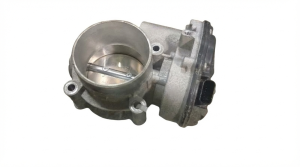
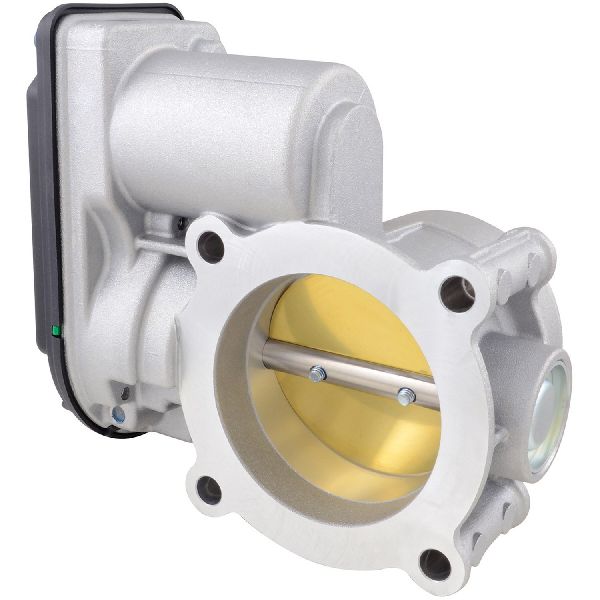
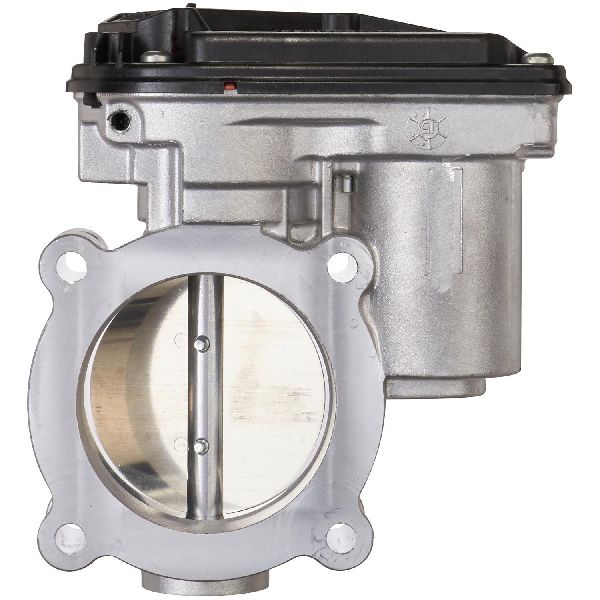
- Electronic Throttle Body Assembly
(OEM #DS7Z-9E926-D)— This is the root cause of code P2112 in the vast majority of cases for this vehicle. The original parts were prone to internal electronic failure. The part number listed is the updated, backward-compatible replacement that supersedes older parts like 9L8Z-9E926-A and DS7Z-9E926-A.
Trusted brands: Motorcraft, Bosch, Hitachi, A-Premium
OEM price range: $120-$180
Aftermarket price range: $70-$150
Related Codes That Often Appear With This One
- P2111 — P2111 is 'Throttle Actuator Control System - Stuck Open'. These codes often appear together or intermittently as the throttle body electronics fail, causing it to get stuck in both open and closed positions at different times.
- P2135 — P2135 is 'Throttle/Pedal Position Sensor/Switch A/B Voltage Correlation'. This code can be triggered by the same internal electronic failure within the throttle body that causes P2112.
Technical Service Bulletins (TSBs) & Recalls
- Customer Satisfaction Program 13N03 - Extended warranty coverage for electronic throttle body failure due to contamination of internal motor contacts.
- TSB 10-21-6 - Addresses DTCs P2111 and P2112, or fluctuating idle, on various 2010-2011 Ford models including the Escape with the 2.5L engine.
- OASIS-SSM 32170 - A manufacturer service message noted in NHTSA ODI #10552753 regarding diagnostic codes P2111 and P2112 and the requirement to replace the throttle body and reset the Keep Alive Memory (KAM).
Platform-Specific Known Issues
- Ford Customer Satisfaction Program 13N03 was issued to address this widespread problem by extending the warranty on the throttle body to 10 years or 150,000 miles. This program has now expired for all 2009-2012 models, making it an owner-funded repair.
- An NHTSA investigation, Preliminary Evaluation PE13-003, was launched into the 2009-2013 Ford Escape, Fusion, and Milan for stalling and surging issues directly related to the failure of the electronic throttle body, which can trigger codes P2111 and P2112.
- NHTSA ODI Investigation #PE13003 notes that approximately 50 percent of claims are associated with diagnostic trouble codes P2111 (Stuck Open) and P2112 (Stuck Closed) due to ETB motor failure.
Mechanic-Grade Diagnostic Values
- VREF (Voltage Reference) at Throttle Body Connector — expected: Approximately 5.0 Volts (typically 4.8V - 5.2V) with Key On, Engine Off.. Failure: Voltage is significantly lower than 5.0V or is absent, indicating a wiring or PCM issue.
- Ground Circuit at Throttle Body Connector — expected: Less than 5 ohms of resistance to a known good chassis ground.. Failure: High resistance or an open circuit, indicating a bad ground connection.
- Throttle Position Sensor (TP) Signal Voltage — expected: Two sensors with opposing sweeps. One sweeps from ~0.5-1.0V (closed) to ~4.5V (open), while the other sweeps from ~4.5V (closed) to ~0.5-1.0V (open).. Failure: Voltage readings that are jumpy, have drop-outs, or do not move smoothly when the throttle is slowly opened and closed. A power or ground issue to the sensors can be ruled out if they still move in opposite directions.
- P2112 Fault Trigger Condition (Scan Tool PID) — expected: The actual throttle angle (TP_ACT) should closely match the commanded throttle angle (TP_CMD).. Failure: The PCM flags code P2112 if the measured throttle angle is more than 6 degrees lower than the commanded angle.
Scan Tool Commands That Help
- Ford IDS (or FORScan): Datalogger - Graph PIDs: TP_CMD, TP_ACT, TP1, TP2 — Use this to visually confirm a discrepancy between the commanded throttle position and the actual position reported by the sensors. Graphing the PIDs makes it easy to spot the glitch that triggers the fault.
- Ford IDS (or FORScan): KAM (Keep Alive Memory) Reset — This should be performed after installing a new throttle body. It is a more thorough reset than just disconnecting the battery and forces the PCM to clear all learned adaptive strategies and recalibrate for the new part immediately.
Wiring & Ground Locations
- Electronic Throttle Body Connector — The 6-pin electrical connector located directly on the electronic throttle body assembly at the front of the engine.. This is the single point of connection for all power, ground, and signal wires for the throttle body. Corrosion, backed-out pins, or harness damage here is a primary alternative cause to a failed ETB unit.
- G101 — On the rear of the engine for the 2.5L model.. This is a primary engine ground. A poor connection here can cause erratic sensor readings and low voltage conditions across multiple engine components, including the throttle body.
- G110 — On the left rear of the engine compartment for the 2.5L model.. This is another critical engine bay ground point. Verifying it is clean and tight is a key diagnostic step for any electronic fault code before replacing parts.
Real Owner Repair Stories
- YouTube - Brian's Mobile 1 (2010 Ford Escape) — Drivability concern with power loss. Initially misdiagnosed as a transmission slip or vacuum leak. Eventually, the gas pedal went completely dead and code P2111 (Stuck Open) was logged, confirming the throttle body issue.
❌ Tried (didn't work) Initial diagnosis focused on evap codes and O2 sensor codes., A second attempt at diagnosis was hampered by a dead battery which cleared codes and created numerous false system faults.
✅ What actually fixed it The vehicle came back a third time with a confirmed throttle body code (P2111). The electronic throttle body was replaced with an aftermarket unit from O'Reilly, which resolved the limp mode and power loss issue. The new part did not require a special scan tool relearn procedure. - NHTSA ODI #10552753 — An owner reported that at 34,646 miles, the dealer performed tests for codes P2111 and P2112, which resulted in the replacement of the throttle body and a KAM reset.
- NHTSA ODI #10568554 — A driver experienced a failure where diagnostic codes P0685 and P2112 were present, requiring the replacement of the throttle body and motor assembly.
OEM Part Supersession History
9L8Z-9E926-A→DS7Z-9E926-A, then DS7Z-9E926-D— The original parts were prone to internal electronic failure due to contamination of the motor contacts, which was the subject of Ford's Customer Satisfaction Program 13N03. The subsequent parts are updated designs to improve reliability.
Heads up: The latest part, DS7Z-9E926-D, is fully backward-compatible for all 2009-2012 Ford Escapes with the 2.5L and 3.0L engines.
Diagnostic Flowchart
Other Known Issues on This Vehicle
Issues unrelated to this code that are worth knowing about as an owner of this generation:
- 6F35 Transmission Failure 🔴 High — Widespread issue, can occur under 100,000 miles. Symptoms include harsh shifting, slipping, shuddering, and complete failure. (Ref: No recall, but subject of a class-action lawsuit.)
- Electric Power Steering (EPS) Failure 🔴 High — Common failure resulting in a sudden loss of power steering assist, making the vehicle difficult to steer at low speeds. (Ref: NHTSA Recall 14V284000 (Ford Recall 14S05) was issued to update software and, if needed, replace the torque sensor or steering column.)
- Rear Shock Tower Rust 🔴 High — Very common in rust belt regions. The upper shock mount area on the passenger side (and sometimes driver side) rusts completely, causing the shock to detach. (Ref: No recall, but repair panels are widely available from aftermarket suppliers like Dorman (p/n 924-358).)
- PCM Failure due to Ignition Coil Short 🟠 Medium — A shorted ignition coil can send excessive voltage back to the PCM, damaging the coil driver circuit and causing persistent misfires (P030x, P035x codes).
- HVAC Blend Door Actuator Failure 🟡 Low — Very common failure causing a clicking or ticking sound from the dashboard and an inability to control cabin temperature or airflow direction.
Used vs. New Parts: Buying Guide for This Vehicle
When a used part is the smart pick: A used throttle body is NOT recommended for this repair. The failure is a well-known design defect with a high failure rate even on low-mileage vehicles. The cost of a new, reliable aftermarket part is low enough that the risk and labor of installing a used part (which may fail quickly) is not worth the small savings.
Donor-vehicle mileage cap: roughly under 30000 miles for the part to have meaningful remaining life.
What to inspect on the donor part:
- If you must buy used, get it from a vehicle with the lowest possible mileage.
- Ensure there is a warranty or return policy.
- Visually inspect the connector pins for any corrosion or damage.
- Avoid parts that show signs of heavy carbon buildup, as this may indicate high mileage or poor engine health.
Aftermarket brands forum-validated for this vehicle:
- Motorcraft (OEM)
- Bosch
- Standard Motor Products (SMP)
- Dorman
Brands owners have reported issues with on this vehicle:
- Unnamed, no-brand parts from online marketplaces without a warranty should be avoided due to the critical safety nature of this component.
Documented NHTSA Reports
NHTSA ODI #10548225
Symptoms: Wrench light came on with no throttle control and erratic idle. Codes P2111 and P2112 were present. The owner reported almost being rear-ended due to the sudden loss of power.
NHTSA ODI #11099930
Symptoms: Sudden loss of power while driving at speeds of 55 mph or higher. The check engine light illuminated with codes P2112, P0443, and C1963.
Real Owner Stories
Aggregated from forums and TSBs cited above. Mileages and costs reflect what owners reported in those sources.
2010 Ford Escape 2.5L — 82000 miles
Symptoms: Suddenly started having issues with running properly. It started just cutting off or slowing down to barely over an idle. After stopping and starting the engine again it would run fine for a short period of time.
What fixed it: The dealer diagnosed it as a failed throttle body and replaced it under Customer Satisfaction Program 13N03.
Cost: $0
Source hint: Ford Truck Enthusiasts Forums
2009 Ford Escape 2.5L
Symptoms: Wrench light after driving for a little bit. Code comes back as P2112 throttle actuator stuck closed.
What fixed it: Replacement of the throttle body assembly.
Source hint: Ford Escape P2112 Throttle Actuator Stuck Closed (YouTube Comment)
2010 Ford Escape
Symptoms: Classic limp mode failure with sudden loss of power and illumination of both wrench and check engine lights.
What fixed it: Replacement of the electronic throttle body.
Source hint: Reddit r/MechanicAdvice (2021-10-22)
2010 Ford Fusion 2.5L
Symptoms: Identical power loss issues, eventually logging P2111 and P2112.
What fixed it: Replacement of the throttle body assembly.
Source hint: Yesterday's Tractors Forum (2013-06-14)
2010-2012 Ford Fusion
Symptoms: Throttle body failure requiring replacement after the 13N03 program expired.
What fixed it: DIY throttle body replacement (15 minutes of labor).
Cost: $60
Source hint: Reddit r/fordfusion (2020-01-21)
Related OBD-II Codes
Frequently Asked Questions
Is the throttle body repair on my 2010 Ford Escape covered under a warranty extension?
Can I just clean the throttle body on my 2.5L Escape to fix the P2112 code?
Does TSB 10-21-6 apply to my 2011 Ford Escape with the 2.5L engine?
Why did my Escape suddenly lose power and display a wrench light?
Is there a specific part I should look for to fix the P2112 'Stuck Closed' error?
What is the 'relearn' procedure required after replacing the throttle body on a 2009-2012 Escape?
Helpful Videos
Used OEM Parts in Stock
New Aftermarket Parts Available


The information in this article is provided for general reference and educational purposes only. Vehicle specifications, procedures, and part compatibility can vary by production date, trim level, and region. Always consult your vehicle's factory service manual and verify part numbers before purchasing or performing repairs. Safety-critical components such as airbags, seat belts, and braking systems should be installed by a qualified professional.
- Ford Escape:
- 🧭 Diagnostic Flowchart
- 🎬 Helpful Videos
- 🛍️ Shop This Part
- What's Unique About the 2009-2012 Ford Escape
- Symptoms You May Notice
- Most Likely Causes
- Rare But Worth Checking
- Diagnosis Steps
- Parts You'll Likely Need
- Related Codes That Often Appear With This One
- Technical Service Bulletins (TSBs) & Recalls
- Platform-Specific Known Issues
- Mechanic-Grade Diagnostic Values
- Scan Tool Commands That Help
- Wiring & Ground Locations
- Real Owner Repair Stories
- OEM Part Supersession History
- Other Known Issues on This Vehicle
- Used vs. New Parts: Buying Guide for This Vehicle
- Documented NHTSA Reports
- NHTSA ODI #10548225
- NHTSA ODI #11099930
- Real Owner Stories
- 2010 Ford Escape 2.5L — 82000 miles
- 2009 Ford Escape 2.5L
- 2010 Ford Escape
- 2010 Ford Fusion 2.5L
- 2010-2012 Ford Fusion
- Related OBD-II Codes
- Frequently Asked Questions
- 🎟️ Get 5% Off