

P2112 on 2012-2018 Ford Focus 1.0L EcoBoost: Throttle Body Stuck Closed Causes and Fixes
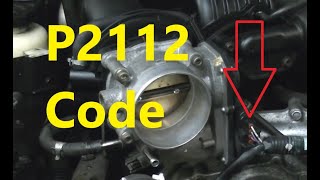
On a 2012-2018 Ford Focus with the 1.0L EcoBoost engine, code P2112 almost always means the electronic throttle body has failed. This triggers a dangerous 'limp mode' with severe power loss. The fix is to replace the throttle body assembly, which costs around $100-$200 for the part and is a DIY-friendly job. For 2012-2014 models, it's also critical to inspect the engine wiring harness for chafing, per TSB 18-2062, before replacing parts.
- P2112 on a 1.0L EcoBoost Focus is a critical code that makes the car unsafe to drive due to entering a severe 'limp mode'.
- The cause is almost certainly a failed electronic throttle body; cleaning it will not fix the internal electronic fault.
- For 2012-2014 models, always inspect the engine wiring harness for chafing near the intake manifold before replacing any parts, as outlined in TSB 18-2062.
- The replacement is a straightforward DIY job for most home mechanics, taking about an hour.
What's Unique About the 2012-2018 Ford Focus
The third-generation Ford Focus, particularly models from 2012-2018, is well-documented for having a high failure rate of the electronic throttle body. The problem became so widespread that Ford initiated a Customer Satisfaction Program (13N03), extending the warranty on the throttle body to 10 years or 150,000 miles. The failure is typically due to contamination of the internal motor contacts, causing intermittent electrical connectivity that cannot be resolved by simply cleaning the throttle plate.
Symptoms You May Notice
- Sudden and severe loss of engine power
- Vehicle enters 'limp mode' (fail-safe mode)
- Check Engine Light is illuminated
- Wrench light is illuminated on the dashboard
- Poor or no acceleration
- Engine may stall or fail to start
- Unresponsive throttle pedal
- Engine RPM limited (e.g., will not exceed 900 RPM)
- Replacing the Accelerator Pedal Position (APP) Sensor. The P2112 code specifically points to a discrepancy at the throttle body itself, not the pedal sending the command.
- Cleaning the throttle body. While a dirty throttle body can cause other issues, the P2112 code on this Focus is almost always due to an internal electronic failure that cleaning cannot fix. Owners and technicians widely confirm that replacement is the only reliable solution.
Most Likely Causes
- Failed Electronic Throttle Body Assembly 🔴 High Probability → Shop Fuel Injection Throttle Body This is a well-documented, widespread issue for this Focus generation, acknowledged by Ford's Customer Satisfaction Program 13N03. The failure is typically internal to the electronic motor and sensors due to contamination on the motor contacts, not due to external dirt or carbon buildup.
How to confirm: With the engine off and key on, have a helper press the accelerator pedal while you observe the throttle plate. If it doesn't move or moves erratically, the throttle body has failed. A scan tool can also monitor commanded vs. actual throttle position, which will show a significant discrepancy.
Typical fix: Replace the entire electronic throttle body assembly and the corresponding gasket. After replacement, a throttle body relearn procedure is required. This often involves disconnecting the battery for 15 minutes or letting the car idle for a period after reaching operating temperature.
Est. part cost: $100 - $250 - Chafed or Damaged Engine Wiring Harness 🟡 Medium Probability Ford issued Technical Service Bulletin (TSB) 18-2062 for 2012-2014 Focus models. It notes that the engine wiring harness can rub against the intake manifold near the throttle body, causing wires to short out. This TSB applies to vehicles built on or before Feb 4, 2014 (automatic) or Feb 19, 2014 (manual).
How to confirm: Carefully inspect the wiring harness that runs over the top of the engine and connects to the throttle body. Look for any signs of rubbing, chafing, exposed copper wires, or damage to the loom, particularly near the intake manifold. The repair procedure in the TSB involves lifting the harness near ground G103 to get a better view of the chafing area.
Typical fix: Repair the damaged wires using the solder method and add a small amount of extra wire to maintain proper length. Protect the harness with convoluted tubing or high-quality electrical tape (like Coroplast) to prevent future chafing. In severe cases, a section of the harness or the entire harness may need replacement.
Est. part cost: $5 - $50 for repair materials
Rare But Worth Checking
- Powertrain Control Module (PCM) Failure: This is extremely rare. Before condemning the PCM, all other possibilities, especially the throttle body and wiring, must be exhaustively ruled out. A PCM failure would likely present with multiple other unrelated codes and communication issues.
Diagnosis Steps
- Read the codes: Use an OBD-II scanner to confirm P2112 is present and note any other codes, such as P2111 or P2135, which further point to a throttle body fault.
- Inspect the Engine Wiring Harness (2012-2014 models): This is a crucial first step for early Mk3 models, per TSB 18-2062. Carefully check the harness for any signs of chafing or damage, especially where it passes near the intake manifold and throttle body. Repair any damaged wires found.
- Test Throttle Body Actuation: With the intake tube removed for visibility, turn the key to the 'On' position (engine off). Have a helper slowly press and release the accelerator pedal. The throttle plate should open and close smoothly. If it doesn't move, moves erratically, or makes grinding noises, the throttle body is faulty.
- Check for Power and Ground: If you have a multimeter, check for proper voltage and ground at the 6-pin throttle body connector to rule out a wiring issue upstream of the component.
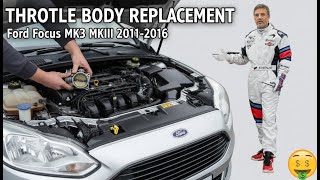
- Replace the Throttle Body: If the wiring is intact and the throttle body fails the actuation test, replacement is the next step. It is typically held on by four bolts and is a relatively simple replacement.
- Perform a Throttle Body Relearn: After installing the new part, it's good practice to perform a throttle body relearn procedure. This can sometimes be done by disconnecting the battery for 15 minutes, or by letting the engine idle for several minutes, followed by a short drive with varied speeds. A more robust method is to cycle the ignition: turn the key to 'ON' (engine off) for 10 seconds, then 'OFF' for 10 seconds, and repeat this cycle before starting the engine.
Parts You'll Likely Need
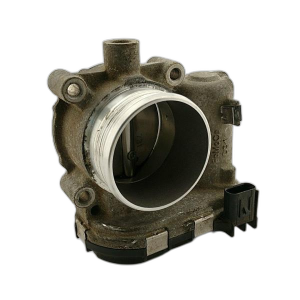
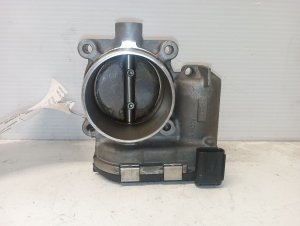
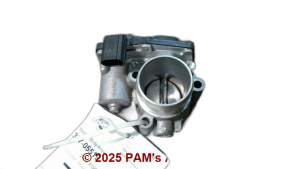
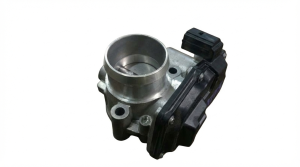
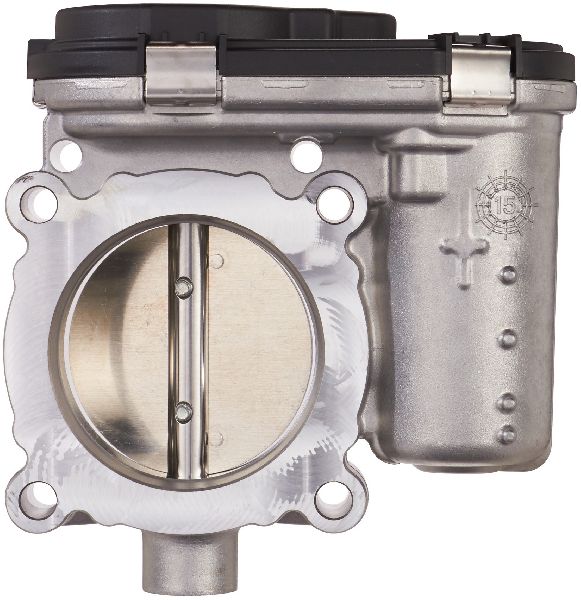
- Electronic Throttle Body Assembly
(OEM #CM5Z-9E926-D (supersedes CM5Z-9E926-B and CM5G-9F991-GA))— This is the most common failure point for the P2112 code on this specific vehicle due to a known design flaw with its internal electronics.
Trusted brands: Motorcraft, Bosch, VDO, Hitachi
OEM price range: $180-$250
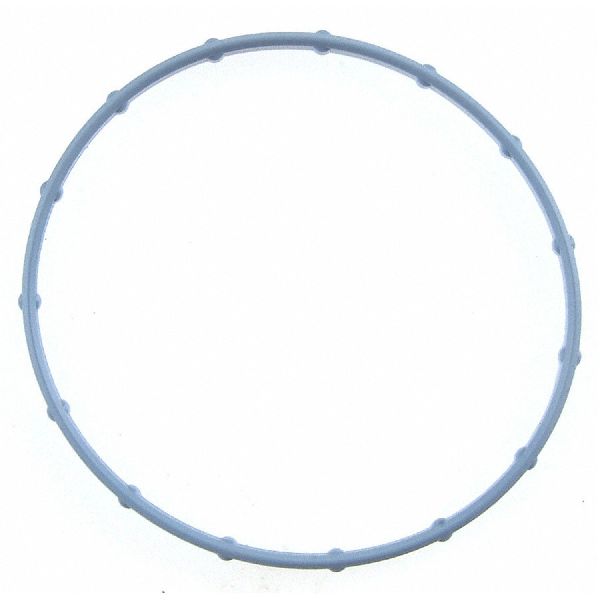
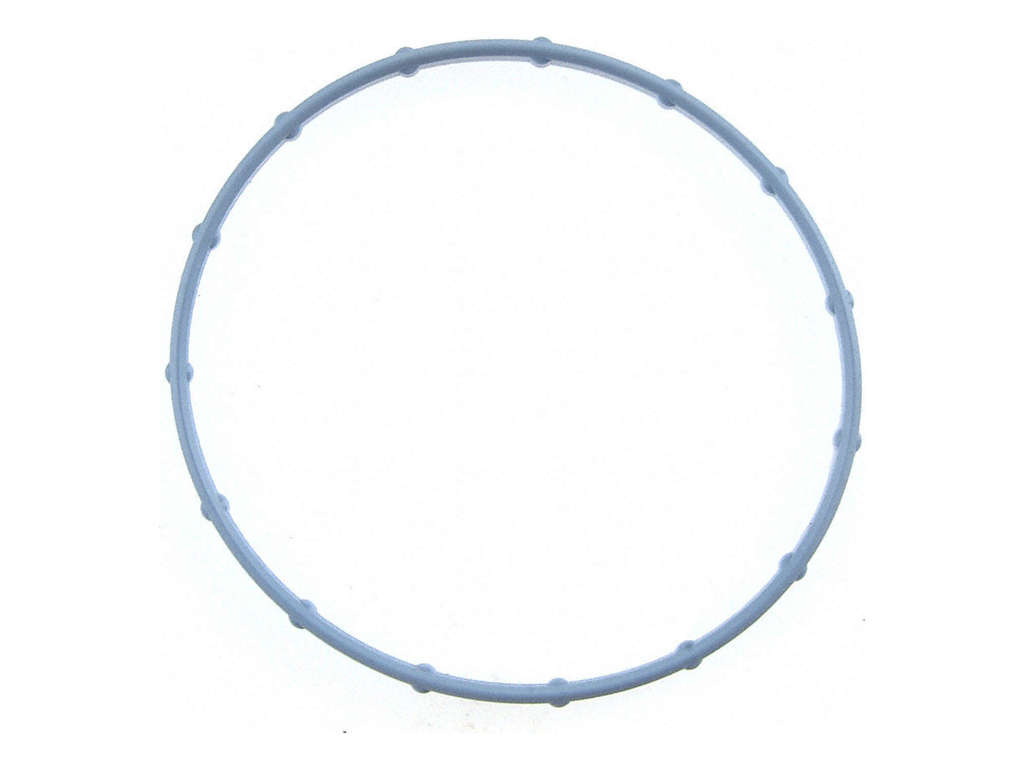
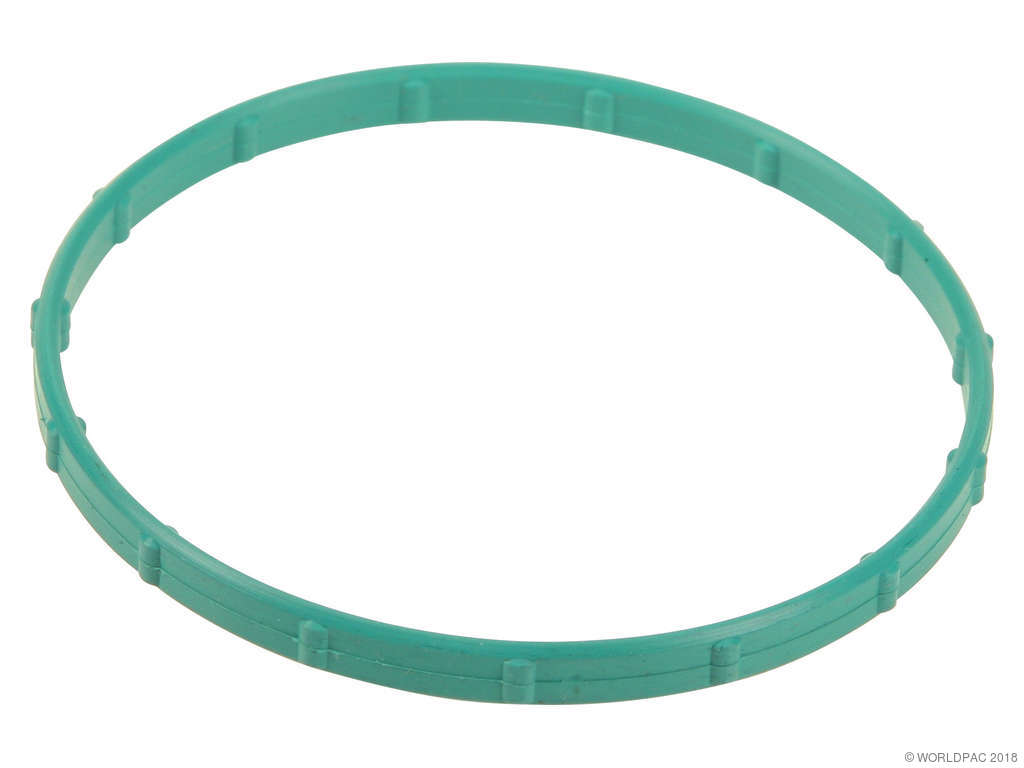
Aftermarket price range: $100-$180 - Throttle Body Gasket — The gasket should always be replaced when the throttle body is removed to ensure there are no vacuum leaks.
Trusted brands: Motorcraft, Fel-Pro, Mahle, Victor Reinz
OEM price range: $5-$15
Aftermarket price range: $3-$10
Related Codes That Often Appear With This One
- P2111 — This code for 'Throttle Actuator Control System - Stuck Open' often appears with P2112 as they both indicate a general failure of the electronic throttle body assembly. Both codes are mentioned in TSBs related to this issue.
- P2135 — This code for 'Throttle/Pedal Position Sensor/Switch 'A'/'B' Voltage Correlation' can be triggered by the same internal throttle body electronic failure that causes P2112. It points to a disagreement between the two internal position sensors.
Technical Service Bulletins (TSBs) & Recalls
- Bulletin #TSB18-2062: Addresses potential for a chafed engine wiring harness on 2012-2014 models causing various drivability codes, including P2112, P0122, P0222, P0320, P0322, P0327, P0332, P0344, P0369, P06A7, P060D, P061C, P1336, P1674, P2111, P2127 and/or P2135.
- 13N03: This is a Customer Satisfaction Program, not a TSB, that extended the warranty on the throttle body due to a high rate of internal electronic failure.
Platform-Specific Known Issues
- Ford Customer Satisfaction Program 13N03 was issued due to the high number of throttle body failures on these vehicles, extending the original warranty to 10 years or 150,000 miles. While now expired for most vehicles, it confirms the prevalence of the issue.
- TSB 18-2062 highlights a known issue on 2012-2014 models where the engine wiring harness can chafe on the intake manifold, causing this code among others.
Scan Tool Commands That Help
- Ford IDS (Integrated Diagnostic Software): PCM Reset / Clear All Faults — After replacing the throttle body, this function in the IDS is used to clear the PCM's adaptive memory tables before performing the idle relearn procedure.
- Ford IDS (Integrated Diagnostic Software): Datalogger - PID Monitoring (TP1, TP2, Commanded Throttle Angle) — To diagnose the fault, a technician uses the datalogger to simultaneously view the two throttle position sensor voltages (TP1, TP2) and compare them to the PCM's commanded throttle angle. A discrepancy where the sensor readings do not follow the commanded angle indicates a faulty throttle body.
- FORScan: Throttle Body Relearn — Aftermarket tools like FORScan often have a specific service function to initiate the throttle body relearn procedure, which commands the PCM to sweep the throttle plate and learn the new end-stop positions after a replacement.
Wiring & Ground Locations
- G103 — Located at the left rear of the engine compartment, on the cowl, often above the brake booster.. TSB 18-2062, which addresses the wiring harness chafing issue, specifically mentions inspecting the harness near ground G103. A poor ground connection here or damaged wires nearby can disrupt signals to and from the PCM, potentially causing throttle control faults.
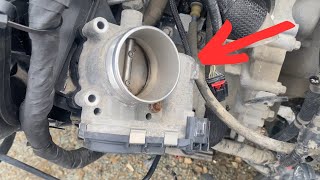
- Throttle Body Connector — The 6-pin electrical connector directly on the electronic throttle body assembly.. This is the primary connection point for power, ground, and signal wires for the throttle motor and position sensors. All voltage and resistance tests are performed at this connector's pins. Checking for corrosion or damage here is a key diagnostic step.
Real Owner Repair Stories
- Reddit r/FordFocus (2012-2014 Ford Focus SE) — Multiple error codes, unresponsive gas pedal, vehicle entering limp mode.
✅ What actually fixed it The owner discovered the engine wiring harness had rubbed through against the intake manifold, severing several wires. The fix was to solder the damaged wires and protect the harness, as described in TSB 18-2062. - YouTube channel DJ AUTOMOTIVE (2016 Ford Focus EcoBoost) — P2112 code present, violent shaking, no throttle response, vehicle repeatedly enters fail-safe mode after ignition cycle.
❌ Tried (didn't work) Clearing codes (code immediately returned)
✅ What actually fixed it Live data showed the throttle position sensors (TP1 and TP2) were being affected by the plate's position. Visual inspection (key-on, engine-off) confirmed the throttle plate was not sweeping correctly. The entire throttle body assembly was replaced, which resolved all symptoms. - NHTSA ODI #10648538 — An owner reported experiencing sudden power loss multiple times in a 20-minute span. A diagnostic check revealed code P2112 for a throttle body stuck open, noting that the manufacturer is aware of these electronic failures.
Documented NHTSA Reports
- NHTSA ODI #10513400 describes widespread community discussion and documentation regarding the P2112 code and throttle body failures on enthusiast forums like focusfanatics.com.
- NHTSA ODI #10648538 confirms that the P2112 code is often associated with a "throttle body stuck open" condition and notes that these failures are electronic in nature.
OEM Part Supersession History
CM5Z-9E926-A, CM5Z-9E926-B→CM5Z-9E926-D— Standard part revision and improvement by the manufacturer to address known failure modes.
Heads up: The newest revision (D) is backwards compatible with vehicles that used the A and B revisions.
Model Year Variations Within This Range
- 2012-2014: These earlier models are specifically called out in TSB 18-2062 for the wiring harness chafing issue. While the throttle body can still fail, the harness must be inspected first on these model years.
- 2015-2018: For the facelifted Focus models from 2015 onwards, Ford introduced minor changes to the 1.0L EcoBoost engine, including revised coolant hoses. While the throttle body issue persists, the wiring harness chafe is less commonly reported for these later years.
Diagnostic Flowchart
Other Known Issues on This Vehicle
Issues unrelated to this code that are worth knowing about as an owner of this generation:
- Timing Belt Degradation ('Wet Belt') 🔴 High — Can occur from 60,000 miles onward, especially with extended oil change intervals. The belt-in-oil design can lead to rubber particles clogging the oil pump pickup, causing oil starvation and catastrophic engine failure. (Ref: NHTSA investigation opened for timing belt failures.)
- Cracked Coolant 'Degas' Hose 🔴 High — Common on earlier models (pre-2014). The original plastic coolant hose from the expansion tank becomes brittle from heat, cracks, and causes rapid coolant loss, leading to engine overheating and severe damage. (Ref: Ford issued a field service action (FSA 4S615) to replace the hose with an upgraded part.)
- DPS6 'PowerShift' Automatic Transmission Failure 🔴 High — Extremely common on non-1.0L models, but a major platform issue. Affects 2.0L models with the DPS6 automatic transmission. Characterized by shuddering, hesitation, rough shifting, and complete failure due to faulty clutches and control modules. (Ref: Subject of multiple lawsuits and warranty extensions.)
- Faulty Canister Purge Valve 🟠 Medium — Widespread across 2012-2018 models. A sticking purge valve can cause stalling, rough idling, hard starting, and an inaccurate fuel gauge. (Ref: Recalls 18V735000 and 19V515000 (Primarily for 2.0L engine but affects platform).)
- Failing Door Latches 🟠 Medium — Common across the 2012-2018 generation. A faulty spring inside the door latch can break, preventing the door from latching securely or causing it to open while driving. (Ref: Subject of multiple recalls.)
Used vs. New Parts: Buying Guide for This Vehicle
When a used part is the smart pick: Given the extremely high failure rate of this specific part due to an internal design flaw, purchasing a used throttle body is NOT recommended. The risk of the used part failing soon after installation is very high. New aftermarket or OEM parts are the only reliable solution.
What to inspect on the donor part:
- Not applicable, as used parts are not advised for this repair.
OEM-only on this vehicle (don't cheap out):
- While not strictly OEM-only, using a reputable brand is critical. The OEM Motorcraft part is the safest bet, but well-regarded aftermarket manufacturers are also a viable option.
Aftermarket brands forum-validated for this vehicle:
- Dorman
- Standard Motor Products (SMP)
- A1 Cardone
Brands owners have reported issues with on this vehicle:
- Unnamed, no-brand parts from online marketplaces should be avoided due to the critical nature of this component and the high likelihood of premature failure.
Real Owner Stories
Aggregated from forums and TSBs cited above. Mileages and costs reflect what owners reported in those sources.
2015 Ford Focus 1.0L EcoBoost — ~150000 miles
Symptoms: Hit limp mode where the engine would not exceed 900 RPM and the wrench light appeared on the dashboard.
What fixed it: Replacement of the throttle body assembly under the guidelines of Customer Satisfaction Program 13N03.
Source hint: Reddit (r/Ford) thread titled 'Does anyone here have experience with consumer satisfaction program 13N03?'
2012-2018 Ford Focus
Symptoms: Sudden power loss and the vehicle entering limp mode with P2112 and related codes.
What fixed it: Replacing the entire electronic throttle body assembly.
Source hint: Ford Focus Club (focusfanatics.com) threads regarding P2112 and sudden power loss.
Related OBD-II Codes
Frequently Asked Questions
Does the Ford Customer Satisfaction Program 13N03 cover my 2012-2018 Focus throttle body replacement?
My 2013 Focus is showing P2112 and won't go over 900 RPM. Is there a specific TSB for this?
Can I just clean the carbon buildup to fix P2112 on my 1.0L EcoBoost?
What is the 'wrench light' on my dashboard indicating alongside the P2112 code?
Is there a specific repair method recommended for the wiring harness issue on 2012-2014 models?
Do I need to do anything special after replacing the throttle body assembly?
Helpful Videos
Used OEM Parts in Stock
New Aftermarket Parts Available


The information in this article is provided for general reference and educational purposes only. Vehicle specifications, procedures, and part compatibility can vary by production date, trim level, and region. Always consult your vehicle's factory service manual and verify part numbers before purchasing or performing repairs. Safety-critical components such as airbags, seat belts, and braking systems should be installed by a qualified professional.
- Ford Focus:
- 🧭 Diagnostic Flowchart
- 🎬 Helpful Videos
- 🛍️ Shop This Part
- What's Unique About the 2012-2018 Ford Focus
- Symptoms You May Notice
- Most Likely Causes
- Rare But Worth Checking
- Diagnosis Steps
- Parts You'll Likely Need
- Related Codes That Often Appear With This One
- Technical Service Bulletins (TSBs) & Recalls
- Platform-Specific Known Issues
- Scan Tool Commands That Help
- Wiring & Ground Locations
- Real Owner Repair Stories
- Documented NHTSA Reports
- OEM Part Supersession History
- Model Year Variations Within This Range
- Other Known Issues on This Vehicle
- Used vs. New Parts: Buying Guide for This Vehicle
- Real Owner Stories
- 2015 Ford Focus 1.0L EcoBoost — ~150000 miles
- 2012-2018 Ford Focus
- Related OBD-II Codes
- Frequently Asked Questions
- 🎟️ Get 5% Off