

P2112 on 2007-2011 Toyota Camry: Throttle Stuck Closed Causes and Fixes
P2112 on a 2007-2011 Camry means the electronic throttle body is stuck closed, causing the car to enter a low-power 'limp mode'. The most common fix is to thoroughly clean the throttle body of carbon buildup. If cleaning doesn't work, the throttle body assembly needs to be replaced.
- P2112 on a 2007-2011 Camry will put the car in a dangerous, low-power 'limp mode'.
- The most likely cause is carbon buildup inside the throttle body, which can be fixed with a simple and inexpensive cleaning.
- Start by cleaning the throttle body before spending money on parts.
- If cleaning doesn't work, the entire throttle body assembly needs to be replaced.
What's Unique About the 2007-2011 Toyota Camry
The XV40 generation Camry (2007-2011), particularly models with the 2.4L 2AZ-FE engine, uses a reliable but susceptible Electronic Throttle Control System (ETCS-i). Over time, carbon and oil vapor from the PCV (Positive Crankcase Ventilation) system can build up in the throttle body, physically restricting the butterfly valve's movement. While wiring or computer issues are possible, this code on this specific Camry generation is most frequently a simple mechanical problem of the throttle plate being gummed up with deposits. This issue is common enough that it is a well-documented problem across multiple platforms using the 2AZ-FE engine.
Symptoms You May Notice
- Check Engine Light is on
- Vehicle enters 'limp mode' with severely limited engine power and acceleration
- Engine may stall, especially when trying to accelerate from a stop
- Rough or erratic idle
- Unresponsive throttle pedal
- Hesitation when accelerating from a stop, which may be a precursor to the code setting
- Engine RPMs may fluctuate on their own
- Replacing the Accelerator Pedal Position (APP) sensor. A faulty APP sensor would set different trouble codes (e.g., P2138). The P2112 code specifically points to a problem at the throttle body itself, where the ECM's command is not being carried out correctly.
Most Likely Causes
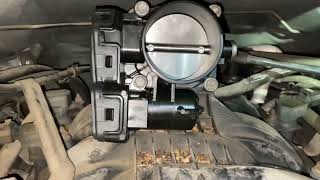
- Dirty Throttle Body 🔴 High Probability → Shop Fuel Injection Throttle Body Carbon and oil vapor from the PCV system can accumulate in the throttle bore over time, physically preventing the throttle plate from opening. This is a very common issue on the 2AZ-FE engine.
How to confirm: Remove the air intake hose from the throttle body and visually inspect the throttle plate and bore for black, sticky carbon deposits. Attempt to move the plate by hand (with ignition off); it should move smoothly and not feel sticky or gritty.
Typical fix: Thoroughly clean the throttle body plate and bore using a dedicated throttle body cleaner safe for electronic components and a soft cloth or brush. Ensure the ignition is off and preferably disconnect the battery before cleaning.
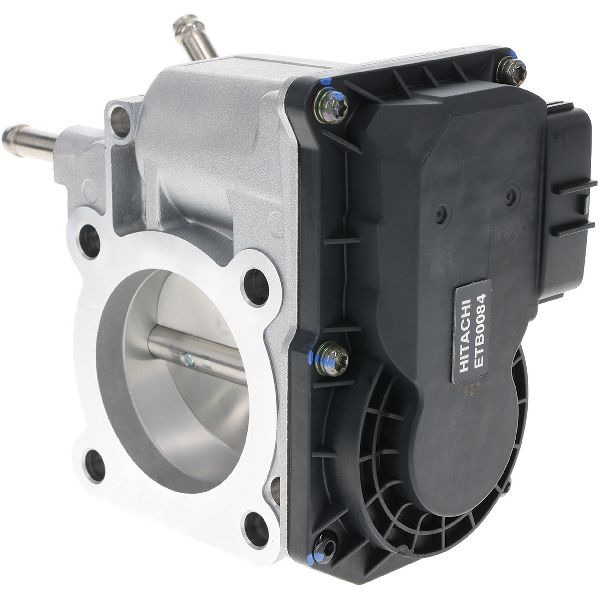
Est. part cost: $5-$15 for cleaner - Failed Throttle Body Assembly 🟡 Medium Probability → Shop Fuel Injection Throttle Body The internal electric motor or gears within the throttle body assembly can fail from wear and tear, preventing it from opening the throttle plate. This is often seen on higher mileage vehicles.
How to confirm: If a thorough cleaning does not resolve the code, and the wiring is confirmed to be good, the internal motor is the likely cause. You can test the resistance between the motor terminals (M+ and M-); the spec is typically 0.3 to 100 ohms. A reading outside this range indicates failure. This requires replacing the entire assembly as the motor is not typically serviced separately.
Typical fix: Replace the entire throttle body assembly.
Est. part cost: $150-$450
Rare But Worth Checking
- Wiring or Connector Issue: The wiring harness leading to the throttle body can become damaged, or the connector pins can corrode, leading to a loss of signal. Visually inspect the harness for any signs of fraying, pinching, or corrosion at the connector. NHTSA ODI #10501145 notes a case where P2112 appeared alongside P2102, suggesting a throttle actuator control motor circuit low condition.
- Powertrain Control Module (PCM) Failure: In very rare cases, the PCM itself can fail, sending incorrect signals or misinterpreting the feedback from the throttle body. This should only be considered after all other possibilities have been exhausted.
- Blown Fuse: A blown fuse related to the ETCS-i system can cause a complete loss of power to the throttle body, triggering this code. One owner of a 2008 Camry with P2112 found the issue was a blown 10A fuse. Always check relevant fuses before replacing expensive components. 🎬 See: Diagnosing a Camry P2112 with no throttle response
Diagnosis Steps
- Check for any other stored trouble codes to get a full picture of the issue.
- Check fuses related to the electronic throttle control system.
- Visually inspect the wiring harness and connector at the throttle body for damage or corrosion.
- Remove the air intake hose connected to the throttle body.
- Inspect the throttle plate and bore for heavy carbon buildup. Check if the plate is physically stuck.
- If carbon is present, disconnect the negative battery terminal. Then, clean the throttle body thoroughly with a cleaner specifically designed for electronic throttle bodies and a soft rag. Manually move the plate to clean all surfaces.
- Reconnect the battery. Clear the code with a scanner. Start the engine; it may run rough for a moment as it burns off the cleaner.
- Let the engine idle for several minutes to allow the computer to perform an idle relearn procedure. A test drive may be required for the ECU to fully adapt.
- If the code returns after cleaning, test the throttle motor resistance. If it's out of spec, the throttle body assembly is likely faulty and requires replacement.
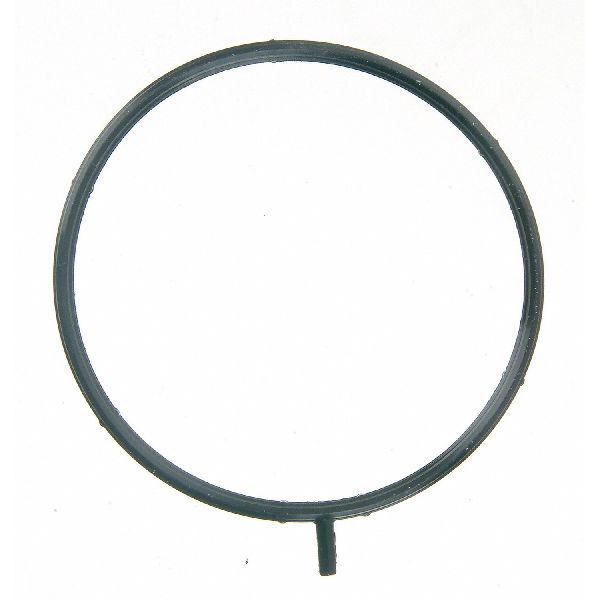
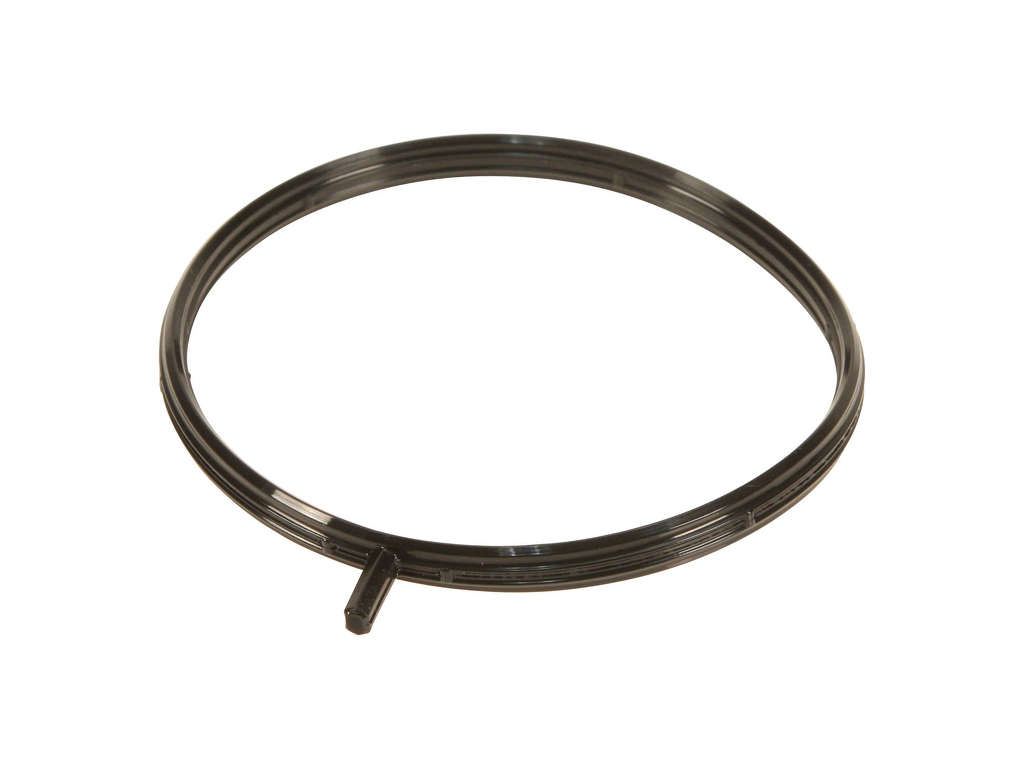
- When replacing the throttle body, always use a new gasket to prevent vacuum leaks.
Parts You'll Likely Need
- Throttle Body Assembly
(OEM #22030-0H031)— If cleaning the original throttle body does not resolve the issue, the internal motor has likely failed, requiring the replacement of the entire assembly.
Trusted brands: Toyota (OEM), Aisin, Denso, Maxpeedingrods
OEM price range: $350-$500
Aftermarket price range: $130-$300 - Throttle Body Gasket
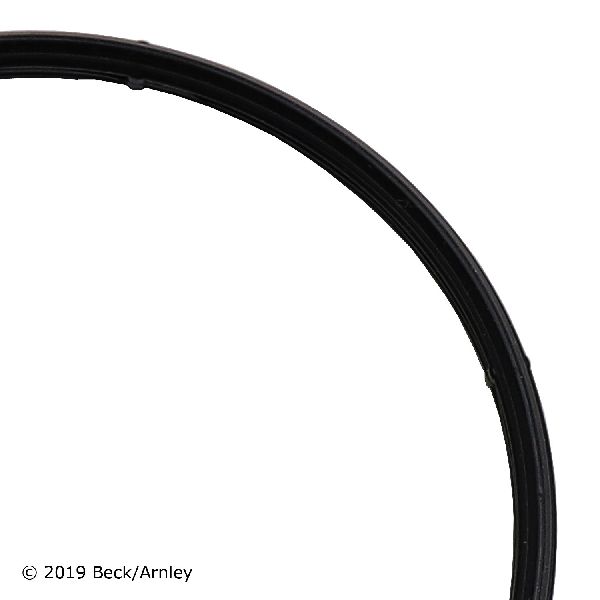
(OEM #22271-0D051)— The gasket between the throttle body and the intake manifold should always be replaced when the throttle body is removed to prevent vacuum leaks.
Trusted brands: Toyota (OEM), Fel-Pro (p/n 61445), Mahle (p/n G32143), Beck/Arnley
OEM price range: $5-$15
Aftermarket price range: $3-$10
Related Codes That Often Appear With This One
- P2111 — This code means 'Throttle Actuator Control System - Stuck Open'. It's common to see both codes if the throttle body is failing intermittently or has a severe range of motion issue caused by either debris or a failing motor.
- P2119 — This code means 'Throttle Actuator Control Throttle Body Range/Performance'. It often appears with P2111 or P2112 because the physical obstruction (carbon) or failing motor that causes the 'stuck' condition also causes a general performance error.
Technical Service Bulletins (TSBs) & Recalls
- T-SB-0187-09: While for the earlier 2004-2005 Camry, this TSB addresses MIL 'ON' with DTC P2111 and/or P2112, indicating a history of similar throttle body issues in the Camry line. The fix involved replacing the throttle body assembly.
Platform-Specific Known Issues
- Idle Relearn Procedure: After cleaning or replacing the throttle body and reconnecting the battery, the engine idle may be high or erratic. The ECU needs to relearn the idle trim. To do this, start the car and let it warm up to operating temperature in Park. Then, let it idle for 5-10 minutes without touching the throttle. This usually allows the ECU to adjust. If not, a few drive cycles may be required.
Mechanic-Grade Diagnostic Values
- Throttle Body Motor Resistance — expected: 0.3 to 100 Ω at 20°C (68°F). Failure: A reading outside this range (e.g., open circuit or short) indicates a failed internal motor.
- Accelerator Pedal Position Sensor #1 Voltage (VPA) — expected: 0.5 to 1.1 V (pedal released) | 2.5 to 4.5 V (pedal fully depressed). Failure: Voltage that is stuck, erratic, or doesn't sweep smoothly indicates a faulty APP sensor, though this typically sets other codes.
- Accelerator Pedal Position Sensor #2 Voltage (VPA2) — expected: 1.2 to 2.0 V (pedal released) | 3.4 to 5.0 V (pedal fully depressed). Failure: Voltage that doesn't correlate with VPA or is out of range. The ECM uses two sensors for redundancy.
Scan Tool Commands That Help
- Toyota Techstream: Active Test: Control the Throttle Actuator — This is the definitive test to confirm a failed throttle body. With the key on and engine off, this command directly orders the throttle plate to open to specific angles. If the plate does not move or moves erratically while being commanded, the throttle body assembly is faulty. This isolates the component and rules out issues with the pedal sensor or wiring.
- Toyota Techstream: Data List: THROTTLE POS vs. THROTTLE POS #1 — Use this to monitor the commanded throttle position versus the actual reported position in real-time. A large discrepancy between the two values when pressing the accelerator indicates the throttle plate is not responding to the ECM's command, which is the direct trigger condition for P2112.
Wiring & Ground Locations
- Throttle Body Connector — The 6-pin electrical connector on the electronic throttle body assembly itself.. This is the single point of connection for the throttle motor (pins M+ and M-) and the dual throttle position sensors (VTA1, VTA2). Corrosion or a loose connection here can directly cause P2112.
- Engine Ground Strap — A primary ground strap connects from the engine (often on or near the valve cover) to the chassis, typically near the passenger side strut tower.. A poor engine ground can cause a variety of erratic electronic issues, including incorrect sensor readings and insufficient power to actuators like the throttle body motor. While not a primary cause, it should be checked for corrosion and tightness if other electrical issues are present.
Real Owner Repair Stories
- CamryForums.com user (2005 Toyota Camry 2.4L) — Check Engine Light on, random stalling while driving, car enters limp mode.
❌ Tried (didn't work) Cleaning the throttle body with carb cleaner.
✅ What actually fixed it The user was advised by the forum community that the problem was almost certainly a failed throttle body motor, not the TPS sensor. The ultimate fix, though not explicitly stated by the original poster in the final post, was implied to be the replacement of the entire throttle body assembly, which is the standard repair procedure when cleaning fails. - NHTSA ODI #10308325 — An owner reported stalling twice, once on railroad tracks and once on a highway off-ramp. A dealership test found code P2112 indicating the throttle was stuck closed, and the mechanic determined the throttle body motor was the cause, requiring replacement of the assembly.
- NHTSA ODI #10971915 — An owner reported that after working their way off an interstate highway, they used a code reader and found P2112 (Throttle Actuator Control System-Stuck Closed). The car ran okay temporarily after erasing the DTC.
- NHTSA ODI #11097725 — In a cross-manufacturer reference for the same make, an owner reported receiving code P2112 (Throttle Actuator 'A' Stuck Closed) specifically after cleaning the throttle body and replacing an air/fuel ratio oxygen sensor.
OEM Part Supersession History
22030-28070, 22030-28071, 22030-0H030→22030-0H031— Standard part updates for improved reliability or manufacturing changes.
Model Year Variations Within This Range
- 2007-2009: These models primarily used the 158-hp 2.4L 2AZ-FE 4-cylinder engine. This engine is widely known for potential oil consumption issues, which can contribute to faster carbon buildup in the throttle body.
- 2010-2011: These models received the updated 169-hp 2.5L 2AR-FE 4-cylinder engine. While still an electronic throttle body design, this engine has a different reputation and is not known for the same oil consumption issues as the 2AZ-FE, potentially leading to a lower incidence of P2112 caused by extreme carbon buildup. The throttle body part number is different for this engine.
Diagnostic Flowchart
Other Known Issues on This Vehicle
Issues unrelated to this code that are worth knowing about as an owner of this generation:
- Excessive Oil Consumption (2.4L 2AZ-FE Engine) 🔴 High — Very common in 2007-2009 models. Caused by defective piston ring design. Can lead to engine failure if oil level is not monitored frequently. (Ref: Warranty Enhancement Program ZE7 (T-SB-0094-11) was issued to replace pistons/rings, but the program has expired.)
- Melting / Sticky Dashboard 🟠 Medium — Widespread issue in hot climates where the dashboard material degrades, becoming sticky, shiny, and prone to cracking. (Ref: Warranty Enhancement Program ZE6 was issued to replace affected dashboards, but the program has expired.)
- Transmission Shutter or Hesitation 🟠 Medium — Some models, particularly early in the generation, can exhibit a hesitation or shudder when shifting, especially at low speeds. Often related to old fluid or torque converter issues.
- Water Pump Leaks 🟡 Low — Both the 4-cylinder and V6 engines can develop slow coolant leaks from the water pump as they age. Look for dried pink or white residue near the pump.
Used vs. New Parts: Buying Guide for This Vehicle
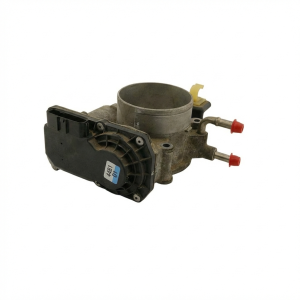
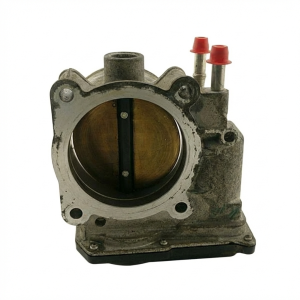
When a used part is the smart pick: A used OEM throttle body from a reputable salvage yard is a very reasonable and cost-effective repair strategy for this vehicle, especially if the failure is electronic (bad motor) rather than due to neglect/carbon. The failure rate is not excessively high, so a low-mileage used part is a good value.
Donor-vehicle mileage cap: roughly under 80000 miles for the part to have meaningful remaining life.
What to inspect on the donor part:
- Check for a clean throttle plate and bore. Heavy, thick carbon suggests the donor car may have had other engine issues.
- Ensure the electrical connector pins are clean, straight, and free of corrosion.
- Manually move the throttle plate (with power off); it should move smoothly with spring tension and without any gritty or binding feeling.
- If possible, get the VIN of the donor car to verify mileage and model year compatibility.
Aftermarket brands forum-validated for this vehicle:
- Aisin (often the original OEM supplier)
- Denso (often the original OEM supplier)
- Hitachi
- Standard Motor Products (SMP)
Brands owners have reported issues with on this vehicle:
- Unbranded, no-name parts from online marketplaces should be avoided, as their internal electronics and sensor calibration may not meet OEM specifications, leading to idle or performance issues.
Real Owner Stories
Aggregated from forums and TSBs cited above. Mileages and costs reflect what owners reported in those sources.
2008 Toyota Camry
Symptoms: When hitting the gas, there is no response. The RPMs go up a little bit on their own. The car has a code for the throttle body.
What fixed it: Replaced a blown 10A fuse for the throttle body.
Source hint: YouTube comment cited in owner_reports: '2008 Toyota Camry p2112 throttle body no respond'
2009 Toyota Camry 2.4L SE
Symptoms: Bad RPM stutter and hesitation. Upon inspection, the throttle valve was observed to open in slow, stuttering steps.
What fixed it: Replacing the throttle body assembly.
Source hint: ToyotaNation Forum - '2AZ-FE (Camry 2009 2.4L SE) Throttle Body ports' (Dec 4, 2014)
2005 Toyota Camry
Symptoms: Experienced code P2112 with random stalling and the vehicle entering limp mode.
What fixed it: Throttle body replacement after cleaning failed.
Source hint: CamryForums.com - 'p2112 cel code' (Oct 15, 2011)
Related OBD-II Codes
Frequently Asked Questions
Does TSB-0187-09 apply to my 2007-2011 Toyota Camry?
Is there a specific engine in the 2007-2011 Camry that is more prone to P2112?
My 2008 Camry has a P2112 code but the throttle body looks clean. What else should I check?
Why is my Camry idling roughly after I cleaned the throttle body to fix the P2112 code?
Can I just replace the TPS sensor on my 2007-2011 Camry to fix P2112?
Are there other major issues I should watch for on my 2007-2009 Camry while fixing this?
Helpful Videos
Used OEM Parts in Stock
New Aftermarket Parts Available


The information in this article is provided for general reference and educational purposes only. Vehicle specifications, procedures, and part compatibility can vary by production date, trim level, and region. Always consult your vehicle's factory service manual and verify part numbers before purchasing or performing repairs. Safety-critical components such as airbags, seat belts, and braking systems should be installed by a qualified professional.
- Toyota Camry:
- 🧭 Diagnostic Flowchart
- 🎬 Helpful Videos
- 🛍️ Shop This Part
- What's Unique About the 2007-2011 Toyota Camry
- Symptoms You May Notice
- Most Likely Causes
- Rare But Worth Checking
- Diagnosis Steps
- Parts You'll Likely Need
- Related Codes That Often Appear With This One
- Technical Service Bulletins (TSBs) & Recalls
- Platform-Specific Known Issues
- Mechanic-Grade Diagnostic Values
- Scan Tool Commands That Help
- Wiring & Ground Locations
- Real Owner Repair Stories
- OEM Part Supersession History
- Model Year Variations Within This Range
- Other Known Issues on This Vehicle
- Used vs. New Parts: Buying Guide for This Vehicle
- Real Owner Stories
- 2008 Toyota Camry
- 2009 Toyota Camry 2.4L SE
- 2005 Toyota Camry
- Related OBD-II Codes
- Frequently Asked Questions
- 🎟️ Get 5% Off