

P2112 on 2009-2012 Toyota RAV4 2.5L: Throttle Actuator Stuck Closed Causes and Fixes
On a 2009-2012 RAV4 with the 2.5L engine, code P2112 means the electronic throttle body is stuck closed, causing the vehicle to enter a low-power 'limp mode'. The most common fix is to thoroughly clean the carbon buildup from the throttle plate and bore. If cleaning doesn't work, the throttle body assembly needs to be replaced. A cleaning is very low cost, while a replacement part costs between $150 and $550.
- P2112 on your RAV4 means the throttle plate is stuck closed, which will trigger a 'limp mode' with very little power.
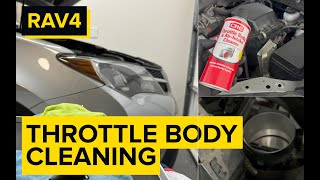
- Before buying any parts, your first step should always be to remove the intake hose and thoroughly clean the throttle body with a dedicated cleaner.
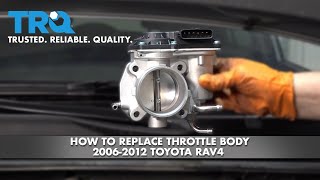
- If cleaning doesn't solve the problem, the entire throttle body assembly needs to be replaced.
- Remember to perform an idle relearn procedure after cleaning or replacing the throttle body for smooth operation.
What's Unique About the 2006-2012 Toyota RAV4
The 2009-2012 RAV4 uses the 2AR-FE 2.5L engine, which features Toyota's Electronic Throttle Control System with intelligence (ETCS-i). While generally reliable, this system's primary point of failure leading to a P2112 code is physical obstruction. Carbon and oil residue from the PCV system can accumulate in the throttle body, causing the throttle plate to stick. The ECM's response is aggressive: it immediately cuts power to the throttle motor, allows a return spring to hold the throttle plate at a fixed minimal angle (around 6°), and puts the vehicle into a fail-safe mode to prevent unpredictable behavior.
Generation note: The 2006-2012 year range covers the entire third generation (XA30) of the RAV4. However, the specified 2AR-FE 2.5L engine was only available in the 2009, 2010, 2011, and 2012 model years. The 2006-2008 models used a different 4-cylinder engine (2.4L 2AZ-FE) which has a similar, but distinct, throttle body system and its own set of common problems, notably higher oil consumption. This guide is specific to the 2009-2012 models with the 2.5L engine.
Symptoms You May Notice
- Check Engine Light is on
- Vehicle enters 'limp mode' with drastically reduced engine power
- Extremely slow or sluggish acceleration
- Unresponsive throttle pedal
- Engine may stall when trying to accelerate from a stop
- Engine will not rev up, or starts and then immediately stalls
- Replacing the Accelerator Pedal Position (APP) sensor. The P2112 code specifically points to a problem at the throttle body actuator, not the pedal sensor that sends the driver's command. A faulty APP sensor would typically set different codes (e.g., P2120-P2134).
Most Likely Causes
- Carbon Buildup in Throttle Body 🔴 High Probability → Shop Fuel Injection Throttle Body Oil vapor and carbon from the Positive Crankcase Ventilation (PCV) system can accumulate around the throttle plate and bore over time, creating a sticky residue that prevents the plate from moving freely. This is the most common cause for P2112 on this engine.
How to confirm: Remove the air intake hose from the throttle body and visually inspect for a black, tar-like substance around the throttle plate and where it meets the bore. The plate should move smoothly when pushed open by hand (with the ignition off). If it feels sticky, gummy, or requires force to move, it needs cleaning.
Typical fix: Thoroughly clean the throttle body bore and plate with a dedicated throttle body cleaner and a soft, lint-free cloth or non-abrasive brush. Do not spray directly on the electrical connector. Manually move the plate to clean all surfaces. A new throttle body gasket is recommended upon reinstallation. Afterwards, an idle relearn procedure may be necessary.
Est. part cost: $5-$25 (for cleaner and a new gasket) - Failed Throttle Body Assembly 🟡 Medium Probability → Shop Fuel Injection Throttle Body The internal electric motor that actuates the throttle plate can fail due to wear or internal corrosion from moisture intrusion. The integrated position sensors can also wear out, providing incorrect data to the ECM. This is the next logical point of failure if cleaning does not resolve the issue. In NHTSA ODI #10308325, a technician confirmed that a throttle body motor was the cause of a P2112 code, requiring a full assembly replacement.
How to confirm: If the throttle body is perfectly clean and free of obstructions but still sets the P2112 code (especially if accompanied by P2102 or P2103), the assembly itself is likely faulty. A diagnostic scan tool can monitor the commanded vs. actual throttle position, which will show a discrepancy.
Typical fix: Replace the entire throttle body assembly. This is typically a bolt-on procedure requiring the transfer of coolant lines on some models.
Est. part cost: $150-$550 - Wiring or Connector Issue ⚪ Low Probability
How to confirm: Inspect the wiring harness and connector going to the throttle body for any signs of damage, corrosion, or loose pins. Wiggle the harness while monitoring live data on a scan tool to see if the throttle position signal fluctuates.
Typical fix: Repair the damaged section of the harness or clean/replace the connector. Apply dielectric grease to the connector pins to prevent future corrosion.
Est. part cost: $10-$100
Rare But Worth Checking
- Faulty Engine Control Module (ECM): This is extremely rare. The ECM should only be considered after all other possibilities, including the throttle body and wiring, have been definitively ruled out. It often presents with multiple other unrelated codes.
- Blown ETCS Fuse: A simple but sometimes overlooked cause. Check the fuse box in the engine bay for a fuse labeled 'ETCS' (typically 10A). A blown fuse will cut power to the throttle actuator motor.
Diagnosis Steps
- Verify the code P2112 is present using an OBD-II scanner. Check for any other codes and note them. Troubleshoot electrical circuit codes like P2102/P2103 first.
- Check the 10A 'ETCS' fuse in the engine bay fuse box to ensure it is not blown.
- Inspect the air intake system between the air filter and throttle body for any obstructions.
- Remove the intake hose from the throttle body. Visually inspect the throttle plate and bore for heavy carbon buildup.
- If dirty, clean the throttle body thoroughly using a dedicated throttle body cleaner and a soft, lint-free rag or non-abrasive brush. Do not use harsh tools. Manually move the plate to clean all surfaces.
- It is highly recommended to replace the throttle body gasket during reassembly to prevent vacuum leaks.
- After cleaning, reconnect everything. Perform an idle relearn procedure. A common method is to warm the engine, turn it off, turn the key to 'ON' (without starting) then 'OFF' twice, then start the engine and let it idle in Drive (with e-brake on) for 5-10 minutes until the idle stabilizes. Alternatively, simply letting the engine idle for 10-15 minutes may be sufficient.
- If the code returns after cleaning, inspect the electrical connector and wiring at the throttle body for damage, corrosion, or loose connections.
- If the wiring is okay and the throttle body is clean, the throttle body assembly itself has likely failed and needs to be replaced.
Parts You'll Likely Need
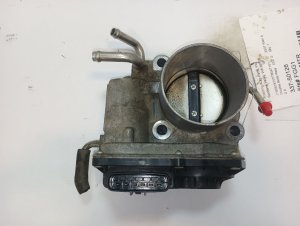
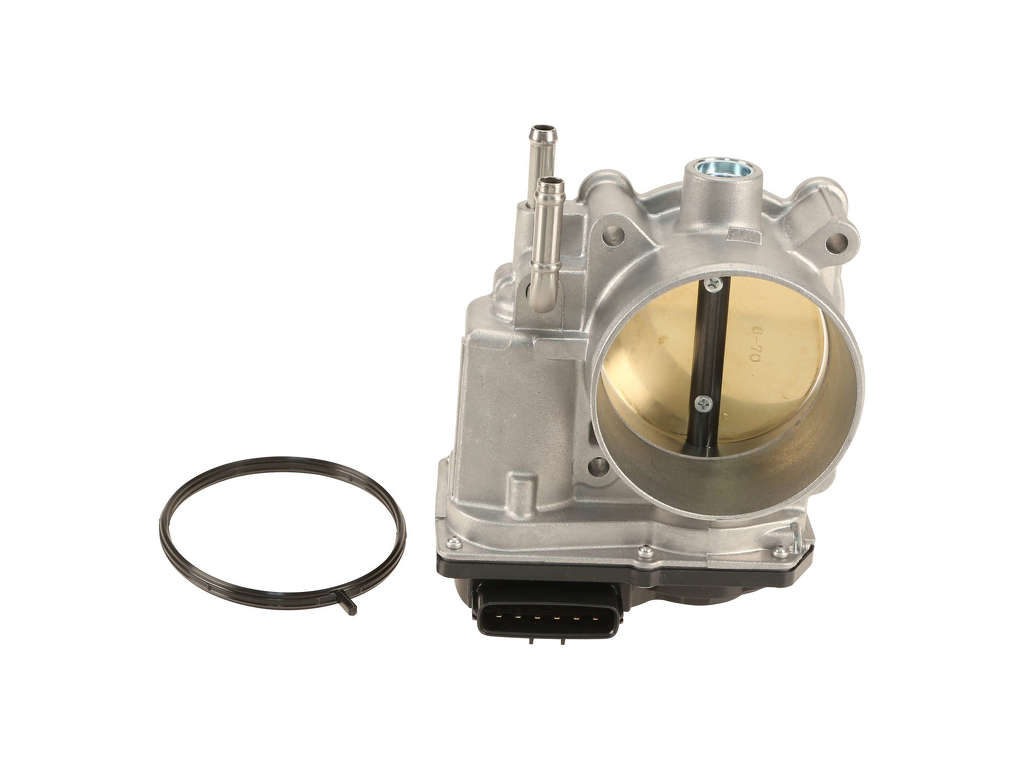
- Throttle Body Assembly
(OEM #22030-0V010)— If cleaning the original part does not fix the issue, the internal motor or sensors have failed, requiring a complete replacement. This part number replaces/supersedes 22030-36010.
Trusted brands: Toyota (OEM), Aisin, Denso
OEM price range: $320-$550
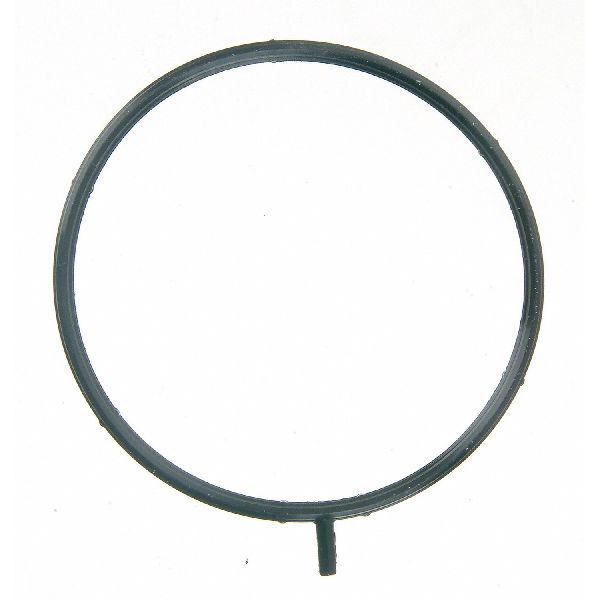
Aftermarket price range: $150-$300 - Throttle Body Gasket
(OEM #22271-0V010)— Should be replaced whenever the throttle body is removed for cleaning or replacement to ensure there are no vacuum leaks upon reinstallation.
Trusted brands: Toyota (OEM), Fel-Pro, Mahle
OEM price range: $10-$20
Aftermarket price range: $5-$10 - Throttle Body Cleaner — This is the required solvent for the most common fix, which is cleaning carbon buildup from the throttle plate and bore.
Trusted brands: CRC, Gumout
Aftermarket price range: $5-$15
Related Codes That Often Appear With This One
- P2111 — This code is for 'Throttle Actuator Control System - Stuck Open'. It's the sister code to P2112 and indicates a problem with the same component, just failing in the opposite direction.
- P2102 — This code means 'Throttle Actuator Control Motor Circuit Low'. It can appear alongside P2112 if there is an electrical issue, like a short or a failing motor, within the throttle body assembly. NHTSA ODI #10501145 notes these two codes appearing together, suggesting a circuit fault.
- P2103 — This code means 'Throttle Actuator Control Motor Circuit High'. It points to an electrical fault in the throttle body motor circuit and strongly suggests a failing throttle body assembly rather than just a cleaning issue.
Technical Service Bulletins (TSBs) & Recalls
- T-SB-0023-15 (Rev2): While not for P2112, this is a critical TSB for the 2013-2015 RAV4 (and by extension, a known issue for the platform) addressing a torque converter shudder. It involves replacing the torque converter and updating ECM logic.
Platform-Specific Known Issues
- This issue appears to be more prevalent on vehicles that are frequently used for short trips. The engine may not reach full operating temperature long enough to burn off the oil and fuel vapors from the PCV system, leading to accelerated carbon buildup in the throttle body.
Mechanic-Grade Diagnostic Values
- Throttle Body Motor Resistance — expected: 0.3 to 100 Ω at 20°C (68°F). Failure: Resistance is outside the specified range, indicating a faulty internal motor.
- Throttle Body Connector Pin 5 (VC) Voltage — expected: 4.5 - 5.5V (with ignition ON). Failure: No voltage indicates a wiring issue or problem with the ECM's 5V reference circuit.
- Throttle Body Connector Pin 3 (E2) to Chassis Ground — expected: Continuity (Near 0 Ω). Failure: High resistance indicates a poor sensor ground, which can cause incorrect sensor readings.
- Throttle Position Sensor #1 (VTA1) Voltage — expected: 0.5V - 1.1V at throttle fully closed; 3.3V - 4.9V at throttle fully open.. Failure: Voltage is stuck, erratic, or does not sweep smoothly as the throttle is opened.
- Throttle Position Sensor #2 (VTA2) Voltage — expected: 2.1V - 3.1V at throttle fully closed; 4.6V - 5.0V at throttle fully open.. Failure: Voltage is stuck, erratic, or does not sweep smoothly as the throttle is opened. The two sensor voltages must change in a correlated manner.
- Throttle Body Mounting Bolt Torque — expected: 10 Nm (7 ft-lbf). Failure: N/A. This is an assembly specification to prevent vacuum leaks or damage.
Hidden / Shadow Codes Worth Checking
- N/A: Toyota's diagnostic strategy for the ETCS system does not typically use proprietary 'shadow' or 'hidden' codes. Instead, it relies on standard P-codes (like P2111, P2102, P2103) in conjunction with detailed freeze-frame data to specify the nature of the fault (stuck open, stuck closed, circuit low/high). A professional scan tool like Techstream is used to interpret this comprehensive data. (see via N/A)
Scan Tool Commands That Help
- Toyota Techstream: Active Test for Throttle Control — After confirming the throttle body is clean, this test allows a technician to command the throttle motor to open to specific angles. By observing the 'Throttle Position No. 1' and 'No. 2' live data PIDs during the test, you can confirm if the motor is physically responding and if the position sensors are accurately reporting the movement, which helps isolate a bad motor from a bad sensor or wiring.
- Toyota Techstream: Utility / All Readiness — After performing a repair (like cleaning or replacing the throttle body) and clearing the DTCs, this function is used to check the status of the system's readiness monitors. A 'pass' or 'complete' status for the ETCS monitor after a drive cycle helps confirm the fix was successful.
- Toyota Techstream: Reset Memory / ETCS Relearn — This function should be performed after replacing the throttle body assembly. It clears the ECM's learned values for the old throttle plate's idle position and forces it to relearn the values for the new component. Skipping this step can lead to an unstable or high idle.
Wiring & Ground Locations
- Throttle Body Connector (E26) — Directly on the electronic throttle body assembly, where the engine harness connects.. This 6-pin connector provides all power, ground, and signal paths for the throttle motor and dual position sensors. Corrosion or a loose pin here is a direct cause of failure. Pin 3 (E2) is the dedicated sensor ground, and Pin 5 (VC) is the 5V reference.
- Ground Point E1 — Located in the passenger cabin, behind the left-side kick panel.. This is a major body ground point that serves multiple systems, including circuits related to the Engine Control Module (ECM). A loose or corroded E1 ground can cause a host of difficult-to-diagnose electronic issues, including erratic sensor behavior that could potentially contribute to ETCS faults.
- Engine Ground Straps — Key grounds for the engine harness are typically located on the valve cover, bolting to the chassis near the strut tower, and on the side of the cylinder head.. A poor engine-to-chassis ground can cause the throttle actuator motor to receive insufficient voltage or create ground offsets for the position sensors, leading to malfunction and triggering P2112.
Real Owner Repair Stories
- PriusChat Forum Member (Toyota Prius (similar ETCS logic)) — Car entered limp mode, showing P2112 - Throttle Actuator Control System Stuck Closed. The owner also noted that the MPG display would sometimes incorrectly read 99 MPG, which was a symptom of the engine being locked at idle while the car was being propelled by the hybrid battery.
❌ Tried (didn't work) Initially misdiagnosed as a hybrid battery fan issue due to other symptoms.
✅ What actually fixed it The problem was resolved by replacing the entire throttle body assembly with one from a known-good donor vehicle. This confirmed the fault was internal to the throttle body itself. - RAV4World Forum Discussions (paraphrased) (2011 Toyota RAV4 3.5L V6 (2GR-FE, similar ETCS)) — Vehicle would suddenly enter limp mode with Check Engine and VSC lights on, but only after reaching full operating temperature after a period of driving. Code P2111 (Stuck Open) was stored.
❌ Tried (didn't work) Testing the throttle body when the engine was cold showed no faults.
✅ What actually fixed it Replacing the entire throttle body assembly. An internal electronic component within the assembly was failing due to heat soak. This is a classic example of a thermal failure that can be missed if diagnosis is only performed on a cold engine.
OEM Part Supersession History
22030-36010→22030-0V010— Standard part revision and update by the manufacturer.
Diagnostic Flowchart
Other Known Issues on This Vehicle
Issues unrelated to this code that are worth knowing about as an owner of this generation:
- Torque Converter Shudder 🟠 Medium — Common enough to warrant a TSB. Occurs intermittently under light throttle between 25-50 mph. (Ref: T-SB-0023-15)
- Intermediate Steering Shaft Clunk 🟡 Low — A common annoyance on higher-mileage 3rd-gen RAV4s, often heard as a clunk or pop at low speeds or when turning. (Ref: Related TSB EG010-07 exists for earlier models but the issue persists.)
- Water Trapped in Doors 🟡 Low — Reported across multiple model years, where blocked drain holes at the bottom of the doors cause water to accumulate, leading to a 'sloshing' sound. (Ref: A TSB (T-SB-0084-21) was issued for later generations, but the underlying design issue is reported by owners of this generation as well.)
- Unintended Acceleration Recalls 🔴 High — The 2009-2012 models were part of a massive Toyota recall concerning potential accelerator pedal entrapment by floor mats and sticky pedal mechanisms. (Ref: Multiple safety recalls were issued and should be verified as completed.)
Used vs. New Parts: Buying Guide for This Vehicle
When a used part is the smart pick: A used OEM throttle body from a reputable salvage yard can be a cost-effective choice, especially if the failure is confirmed to be the electronic motor or sensors and not just carbon buildup. Since cleaning is the first step, a used part is typically considered only when the original has failed electrically.
Donor-vehicle mileage cap: roughly under 80000 miles for the part to have meaningful remaining life.
What to inspect on the donor part:
- Verify the donor vehicle's mileage; lower is always better.
- Inspect the connector pins for any signs of corrosion or damage.
- Check the throttle plate for any scoring or damage that indicates more than just carbon buildup.
- Ask about the salvage yard's return policy or warranty in case the electronic components are also faulty.
OEM-only on this vehicle (don't cheap out):
- While not strictly 'OEM-only', the throttle body is a critical component. Using a genuine Toyota, Aisin, or Denso part (Aisin and Denso are often the original equipment manufacturers) is highly recommended for reliability and proper communication with the ECM.
Aftermarket brands forum-validated for this vehicle:
- Aisin
- Denso
- Standard Motor Products
- Dorman
Brands owners have reported issues with on this vehicle:
- Avoid unbranded, 'white-box' parts from online marketplaces, as their internal electronics may not meet OEM specifications for response time and durability, potentially causing persistent issues or premature failure.
Real Owner Stories
Aggregated from forums and TSBs cited above. Mileages and costs reflect what owners reported in those sources.
2005 Scion tC 2.4L
Symptoms: Check Engine Light is on with codes P2103 and P2112.
What fixed it: Replacement of the throttle body assembly.
Source hint: ScionLife.com - 'Check Engine Light P2103 P2112'
2005 Toyota Camry 2.4L
Symptoms: Check Engine Light (CEL) with code P2112.
What fixed it: The issue was diagnosed as a common throttle body failure requiring cleaning or replacement.
Source hint: CamryForums.com - 'p2112 cel code'
Documented NHTSA Reports
Toyota Camry Owner Report
Symptoms: An owner reported that after working their way off an interstate highway, they found code P2112 (Throttle Actuator Control System-Stuck Closed) had been set. Erasing the code allowed the car to run normally temporarily.
Source hint: NHTSA ODI #10971915
Toyota Tacoma Owner Report
Symptoms: An owner experienced an issue with the ETCS throttle body, receiving code "P2112 Throttle Actuator 'A' Stuck Closed" after replacing an oxygen sensor and cleaning the throttle body.
Source hint: NHTSA ODI #11097725
Related OBD-II Codes
Frequently Asked Questions
Is there a TSB for the P2112 code on my 2006-2012 RAV4?
Why is my RAV4 more prone to P2112 when I only drive short distances?
Can I just clean the throttle body on my 2.5L 2AR-FE, or do I need to replace it?
What is the 'ETCS' fuse, and should I check it for a P2112 code?
Does the 2009-2012 RAV4 have any recalls that could affect throttle response?
Is the throttle body on my RAV4 the same as the one on a Toyota Highlander or Sienna?
Helpful Videos

Used OEM Parts in Stock
New Aftermarket Parts Available


The information in this article is provided for general reference and educational purposes only. Vehicle specifications, procedures, and part compatibility can vary by production date, trim level, and region. Always consult your vehicle's factory service manual and verify part numbers before purchasing or performing repairs. Safety-critical components such as airbags, seat belts, and braking systems should be installed by a qualified professional.
- Toyota RAV4:
- 🧭 Diagnostic Flowchart
- 🎬 Helpful Videos
- 🛍️ Shop This Part
- What's Unique About the 2006-2012 Toyota RAV4
- Symptoms You May Notice
- Most Likely Causes
- Rare But Worth Checking
- Diagnosis Steps
- Parts You'll Likely Need
- Related Codes That Often Appear With This One
- Technical Service Bulletins (TSBs) & Recalls
- Platform-Specific Known Issues
- Mechanic-Grade Diagnostic Values
- Hidden / Shadow Codes Worth Checking
- Scan Tool Commands That Help
- Wiring & Ground Locations
- Real Owner Repair Stories
- OEM Part Supersession History
- Other Known Issues on This Vehicle
- Used vs. New Parts: Buying Guide for This Vehicle
- Real Owner Stories
- 2005 Scion tC 2.4L
- 2005 Toyota Camry 2.4L
- Documented NHTSA Reports
- Toyota Camry Owner Report
- Toyota Tacoma Owner Report
- Related OBD-II Codes
- Frequently Asked Questions
- 🎟️ Get 5% Off