

P2122 on 2007-2014 Chevrolet Suburban: Accelerator Pedal Sensor Causes and Fixes
On a 2007-2014 Suburban, P2122 almost always means the accelerator pedal assembly has failed or has a bad electrical connection. This triggers 'Reduced Engine Power' mode. Inspect the connector wiring first (per a GM TSB), but expect to replace the pedal assembly for about $70-$150 for the part.
- P2122 on a 2007-2014 Suburban will cause the 'Reduced Engine Power' mode, making the vehicle unsafe to drive in normal traffic.
- The most critical first step is to check the electrical connector at the accelerator pedal for loose pins or corrosion, as per GM TSB PIP3783D, before buying any parts.
- If the wiring is secure, the problem is almost certainly the accelerator pedal assembly itself, which is a simple, inexpensive DIY replacement.
- Ensure you purchase the correct pedal assembly for your vehicle (with or without adjustable pedals).
What's Unique About the 2007-2014 Chevrolet SUBURBAN
For this specific generation of Suburban and its GM truck siblings on the GMT900 platform (Tahoe, Silverado, Sierra, Yukon, Escalade), the P2122 code is very frequently caused by a poor electrical connection at the accelerator pedal itself. General Motors released a Technical Service Bulletin (PIP3783D) acknowledging that poor terminal tension in the wiring harness connector is a common culprit, causing intermittent voltage drops that trigger the code. This makes a thorough inspection of the connector and wiring a critical first step before replacing the pedal assembly, which is otherwise the most common fix.
Diagnostic Flowchart
Tap your situation to follow the diagnostic path that matches what you're seeing on this vehicle.
Symptoms You May Notice
- "Reduced Engine Power" message on the dashboard
- "Service Stabilitrak" or "Service Traction Control" message
- Check Engine Light is on
- Severely limited acceleration or no throttle response.
- Engine is stuck at idle speed
- Intermittent loss of power that may come and go
- Vehicle may hesitate or stall.
- Sudden high idle (e.g., 3000 RPM) after a hot restart, as the system struggles with sensor data.
- Throttle Body: Drivers may assume a lack of acceleration is due to the throttle body. However, P2122 specifically points to a fault in the pedal sensor circuit, not the throttle body motor or its sensors. While throttle body codes like P2135 can sometimes appear alongside P2122, the pedal-related codes should be addressed first. 🎬 Watch this video to see how to fix these common codes.
Most Likely Causes
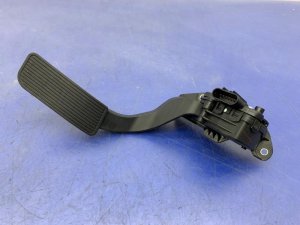
- Faulty Accelerator Pedal Position (APP) Sensor Assembly 🔴 High Probability → Shop Accelerator Pedal Assembly The APP sensor is an electronic component that wears out over time and with use, especially in vehicles over 100,000 miles. It is integrated into the pedal assembly and cannot be replaced separately.
How to confirm: Using a scan tool, observe the live data for APP Sensor 1. The voltage should sweep smoothly from ~0.5V to ~4.5V as you press the pedal. If it's stuck low (e.g., under 0.4V), reads erratically, or doesn't respond, the sensor is bad.
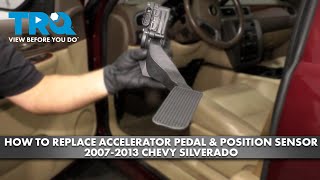
Typical fix: Replace the entire accelerator pedal assembly. This is a simple DIY job involving two 10mm bolts and one electrical connector. 🎬 See this step-by-step walkthrough for replacing the pedal assembly.
Est. part cost: $70-$150 - Poor Wiring Connection at the APP Sensor 🟡 Medium Probability GM issued TSB #PIP3783D specifically for this issue, citing 'poor terminal tension' in the APP sensor connector on this platform. The terminals can become loose or corroded, causing an intermittent signal.
How to confirm: With the key on and engine off, monitor the APP sensor voltage on a scan tool while wiggling the connector and wiring harness 🎬 Watch a mechanic diagnose and fix the reduced engine power message. at the pedal. If the voltage jumps or the code appears/disappears, the connection is faulty.
Typical fix: Inspect the female terminals in the connector for being spread too far apart. They can sometimes be re-tensioned with a pick tool. If corroded or damaged, replace the connector pigtail (e.g., ACDelco PT2628).
Est. part cost: $20-$40
Rare But Worth Checking
- Damaged Wiring Harness: A wire for the APP sensor circuit could be chafed and shorting to ground somewhere between the pedal and the engine computer. This is less common than a connector issue but possible, especially if aftermarket accessories have been installed under the dash.
- Faulty Powertrain Control Module (PCM): → Shop Engine Control Module (ECM) This is extremely rare. The PCM should only be suspected after the pedal assembly, connector, and all related wiring have been definitively ruled out.
- Aftermarket Floor Mats: A thick or improperly placed aftermarket floor mat can physically obstruct the accelerator pedal from returning to its true idle position. This can cause the sensor to report a voltage that, while not 'low', is unexpected by the PCM at idle, sometimes leading to related codes or erratic behavior.
Diagnosis Steps
- Connect an OBD-II scanner and confirm P2122 is present. Note any other codes, especially P2127 or P2138, as they strongly point to the pedal assembly or its connector.
- Access live data on the scanner and view the voltage readings for 'APP Sensor 1' and 'APP Sensor 2'.
- With the key on (engine off), slowly press and release the accelerator pedal. Both voltage readings should increase and decrease smoothly. For P2122, APP Sensor 1 will likely be stuck at a very low voltage (e.g., <0.4V) or not respond.
- While watching the live data, gently wiggle the wiring harness connector at the top of the accelerator pedal. If the voltage reading for Sensor 1 changes, normalizes, or causes the code to set/clear, the issue is a poor connection.
- If the wiggle test indicates a wiring fault, disconnect the connector (with ignition off) and visually inspect the female terminals for corrosion, damage, or being spread too wide (poor tension). Also check for any pushed-out pins.
- If the wiring and connector appear to be in good condition and the voltage reading remains consistently low, the accelerator pedal assembly itself is the most likely cause of the failure.
- Before replacing an expensive PCM, you can perform a continuity test on the signal wire between the pedal connector and the PCM connector to rule out a wire break in the harness.
- Check that no aftermarket floor mats are interfering with the pedal's travel.
Parts You'll Likely Need
- Accelerator Pedal Assembly with Sensor
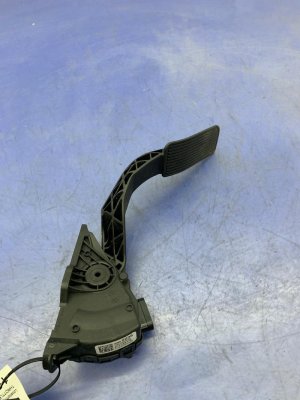
(OEM #25832864 (with adjustable pedals), 22741799 (without adjustable pedals))— This is the most common failure part for code P2122. The sensor is integrated into the pedal assembly and is not sold separately. Note that models with and without adjustable pedals use different parts.
Trusted brands: ACDelco (GM Genuine Parts), Dorman, Standard Motor Products
OEM price range: $130-$150
Aftermarket price range: $70-$100 - APP Sensor Connector Pigtail
(OEM #ACDelco PT2628 / Dorman 645-800)— If the wiggle test confirms a bad connection and re-tensioning the pins doesn't work, replacing the connector pigtail is the correct repair.
Trusted brands: ACDelco, Dorman
OEM price range: $30-$45
Aftermarket price range: $20-$30
Related Codes That Often Appear With This One
- P2127 — This code indicates a low voltage fault on the second APP sensor ('E' circuit). Since both sensors are in the same assembly and share a connector, they often fail together or are affected by the same wiring issue.
- P2138 — This code indicates a correlation error between APP Sensor 1 and APP Sensor 2. The PCM throws this code when the signals from the two sensors don't match, which happens if one sensor fails and sends a low voltage signal (triggering P2122) while the other reads correctly.
- P2135 — This is a Throttle Position Sensor correlation code. While it points to the throttle body, it can be triggered as a secondary fault when the PCM receives irrational data from the accelerator pedal, causing confusion between the driver's request (pedal) and the throttle's actual position.
Technical Service Bulletins (TSBs) & Recalls
- PIP3783D: Addresses multiple APP sensor codes including P2122, P2127, and P2138. Advises technicians to inspect the accelerator pedal position circuits for poor terminal tension at the component connector and intermediate connectors (like X109) before replacing parts.
Platform-Specific Known Issues
- As documented in GM Technical Service Bulletin #PIP3783D, these vehicles are known to have issues with poor terminal tension in the accelerator pedal's electrical connector, which can mimic the symptoms of a failed sensor.
- Some owners have noted that aftermarket replacement pedal assemblies from brands like Standard Motor Products appear to be a more robust, updated design compared to the original factory part.
Mechanic-Grade Diagnostic Values
- APP Sensor 1 Voltage (Scan Tool) — expected: Approx. 0.46V to 4.75V, sweeping smoothly with pedal movement.. Failure: Voltage is stuck low (below 0.46V), does not change, or has dropouts when the pedal is pressed.
- APP Sensor 2 Voltage (Scan Tool) — expected: Approx. 0.32V to 2.6V, sweeping smoothly with pedal movement.. Failure: Voltage is stuck, does not change, or reads outside the expected range.
- 5-Volt Reference at APP Connector — expected: 4.8V - 5.2V between the 5V reference pin and ground.. Failure: Voltage below 4.8V indicates high resistance in the wiring or a fault in the ECM.
- Low Reference Circuit Resistance — expected: Less than 5 ohms between the low reference circuit terminal at the APP connector and a known good ground.. Failure: Resistance greater than 5 ohms indicates an open or high resistance in the ground circuit for the sensor.
- Wiring Harness Continuity — expected: Less than 1 ohm of resistance on the signal wire from the APP connector to the corresponding ECM pin.. Failure: Resistance greater than 1 ohm, or an open circuit (OL), indicates a broken wire in the harness.
Wiring & Ground Locations
- X109 Connector — On the left side of the engine compartment, located below the underhood fuse block.. This is a major intermediate harness connector that the APP sensor circuits pass through. GM TSB #PIP3783D specifically identifies it as a potential location for corrosion, poor connection, or backed-out terminals that can cause intermittent APP sensor codes like P2122.
- X205 Connector — Located inside the vehicle, under the Instrument Panel Upper Trim Panel (the dashboard top cover).. Similar to X109, this is another intermediate connector for the APP sensor circuits. The TSB recommends inspecting it for issues if no fault is found at the pedal or at X109.
- G103 / G106 Grounds — G103 is on the cowl above the brake booster. G106 is on the front center of the frame cross rail.. The APP sensor relies on a clean ground path (low reference circuit) to the ECM. While the sensor has dedicated low reference wires, overall vehicle grounding integrity is crucial. A corroded main ground like G106 can cause floating voltages and unpredictable electronic issues throughout the vehicle.
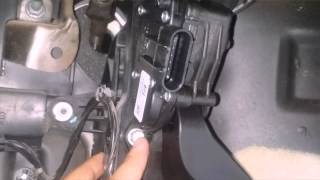
- APP Sensor Connector — At the top of the accelerator pedal assembly, under the driver's side dashboard.. This is the most common point of failure due to loose or spread terminals, as identified in TSB #PIP3783D. A 'wiggle test' on this connector while monitoring live data is the primary diagnostic step.
Real Owner Repair Stories
- ScannerDanner Forum User (GM Truck with APP sensor correlation codes (P2138, often seen with P2122)) — Drivability issues, scan tool data showed APP sensor signal dropping to 0V intermittently.
❌ Tried (didn't work) Initial observation of scan tool data was misleading, as a scope showed the signal was not actually dropping out completely.
✅ What actually fixed it The 5V reference line to APP sensor 1 only had 4.6 volts due to high resistance. A wiring repair was performed in the harness, which was accessed by removing the inner fender well. The fix was confirming the quality of the 5V reference, not just its presence. - YouTube user 'siivmt' (2006 Volkswagen Jetta (demonstrates a common drive-by-wire issue)) — Intermittent limp mode with EPC light, code P2122.
❌ Tried (didn't work) Replacing the accelerator pedal assembly with a new part. The problem returned after a week.
✅ What actually fixed it A previously repaired splice in the wiring harness between the pedal and the ECM had failed. The technician found the bad splice, removed it, and properly soldered the wires with heat shrink tubing to create a durable connection. - Car Talk Community User (2007 Nissan Versa) — Lagging acceleration, stalling, and code P2122.
❌ Tried (didn't work) Replacing the accelerator pedal/sensor assembly., Performing the accelerator pedal relearn procedure.
✅ What actually fixed it The problem persisted after replacing the pedal, indicating the root cause was in the wiring or connector, not the sensor itself. The final advice and likely solution was to thoroughly inspect the wiring harness and connector for faults.
OEM Part Supersession History
15101848, 15847349→25832864— Part has been updated by the manufacturer.
Heads up: This part is for models WITH adjustable pedals.15884323→22741799— Part has been updated by the manufacturer.
Heads up: This part is for models WITHOUT adjustable pedals.
Helpful Videos
We Have This Part in Stock

The information in this article is provided for general reference and educational purposes only. Vehicle specifications, procedures, and part compatibility can vary by production date, trim level, and region. Always consult your vehicle's factory service manual and verify part numbers before purchasing or performing repairs. Safety-critical components such as airbags, seat belts, and braking systems should be installed by a qualified professional.
- Chevrolet SUBURBAN:
- 🧭 Diagnostic Flowchart
- 🎬 Helpful Videos
- 🛍️ Shop This Part
- What's Unique About the 2007-2014 Chevrolet SUBURBAN
- Symptoms You May Notice
- Most Likely Causes
- Rare But Worth Checking
- Diagnosis Steps
- Parts You'll Likely Need
- Related Codes That Often Appear With This One
- Technical Service Bulletins (TSBs) & Recalls
- Platform-Specific Known Issues
- Mechanic-Grade Diagnostic Values
- Wiring & Ground Locations
- Real Owner Repair Stories
- OEM Part Supersession History
- 🎟️ Get 5% Off