

P2123 on 2007-2014 Cadillac Escalade ESV: Causes and Fixes for Circuit High Input
This code almost always points to a wiring issue at the accelerator pedal, not a failed pedal itself. Before buying parts, inspect the connector and wiring for loose terminals, as noted in GM Technical Service Bulletin #PIP3783D. This is often a no-cost or low-cost fix involving tightening connector pins.
- P2123 on a 2007-2014 Escalade is most often a wiring problem, not a bad part.
- Always inspect the electrical connector at the accelerator pedal for loose pins before considering replacement of the pedal assembly, as per TSB #PIP3783D.
- Symptoms include a Check Engine Light and a "Reduced Engine Power" message, which severely limits vehicle performance.
- Driving is possible but not recommended; the vehicle should be taken for repair to avoid being stranded or causing a hazard in traffic.
What's Unique About the 2007-2014 Cadillac ESCALADE ESV
For this generation of GM trucks and SUVs (GMT900 platform), including the Escalade, the most common cause for P2123 is not the accelerator pedal assembly failing, but rather a poor electrical connection. GM issued a specific Technical Service Bulletin (TSB #PIP3783D) to address this exact issue, pointing technicians to check for poor terminal tension in the APP sensor's wiring harness connector before replacing any parts. This makes a thorough wiring inspection the most critical first step, a fact corroborated by numerous owner experiences in online forums.
Diagnostic Flowchart
Tap your situation to follow the diagnostic path that matches what you're seeing on this vehicle.
Symptoms You May Notice
- Service Engine Soon / Check Engine Light is on
- "Reduced Engine Power" message disp 🎬 Watch: How to fix the Reduced Engine Power message on GM trucks.layed on the instrument cluster
- Poor or no accelerator pedal response
- Vehicle is stuck in a low-power "limp mode"
- Hesitation or erratic acceleration
- Vehicle may stall or not start
- Replacing the accelerator pedal assembly without first inspecting the wiring harness connector. The TSB clearly indicates the connector is the most likely failure point, and replacing the pedal will not fix a wiring issue.
Most Likely Causes
- Poor Terminal Tension at APP Sensor Connector 🔴 High Probability This is a known issue documented by GM in TSB #PIP3783D for this specific vehicle platform. The female terminals in the plastic connector can loosen over time, causing an intermittent or poor connection. This is the most frequently cited real-world fix on owner forums.
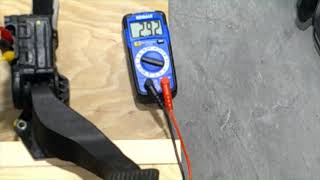
How to confirm: With the key on, engine off, gently wiggle the wiring harness connector at the accelerator pedal assembly while a scan tool monitors the APP sensor 1 voltage. 🎬 See a demonstration of testing the pedal with a scan tool. If the voltage reading is erratic or jumps to its maximum value (around 5.0V), the connection is faulty. Another method is to visually inspect the female terminals in the connector to see if they look spread apart or pushed back.
Typical fix: Using a small pick tool, carefully bend the female pin connectors within the harness to ensure a tighter fit on the male pins of the pedal assembly. Applying a small amount of dielectric grease can help prevent future corrosion. If terminals are too damaged, replacing the connector pigtail is necessary.
Est. part cost: $0-$40 - Damaged Wiring Harness 🟡 Medium Probability The wiring runs near the driver's footwell and can be susceptible to damage from kicking, floor mats, or corrosion from water entry. In some cases, a broken ground wire near the firewall has been found to be the cause.
How to confirm: Visually inspect the wires leading to the accelerator pedal for any signs of chafing, breaks, or corrosion. Perform a continuity test on the APP sensor 1 signal, reference, and ground circuits between the pedal and the PCM. A user on Chevroletforum.com found a broken ground wire just inside the firewall was the cause of their P2123 code.
Typical fix: Repair the damaged section of wire. This may involve soldering in a new piece of wire and protecting it with heat shrink. Ensure ground connections are clean and secure.
Est. part cost: $5-$25 - Failed Accelerator Pedal Position (APP) Sensor Assembly ⚪ Low Probability → Shop Accelerator Pedal Assembly While the sensor can fail, it is often misdiagnosed. The wiring is a more common point of failure on this platform. The APP sensor is integrated into the accelerator pedal assembly and is not sold separately.
How to confirm: If wiring and connector checks pass, and a scan tool shows the APP sensor 1 voltage is stuck high and does not change when the pedal is pressed, the sensor itself has likely failed internally.
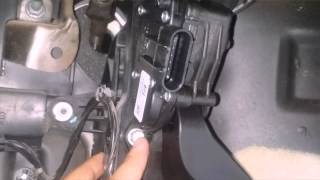
Typical fix: Replace the entire accelerator pedal assembly. This involves removing two 10mm bolts and disconnecting the electrical plug. 🎬 Watch this walkthrough on how to replace the accelerator pedal assembly.
Est. part cost: $60-$150
Rare But Worth Checking
- Powertrain Control Module (PCM) Fault: This is extremely rare. Before condemning the PCM, all other possibilities, especially wiring and connectors, must be exhaustively ruled out. A PCM failure might also be accompanied by other, unrelated trouble codes.
Diagnosis Steps
- Read all stored DTCs with an OBD-II scanner. Note all codes present, especially P2138 or other APP sensor codes.
- Use the scanner's live data function to monitor the voltage for APP Sensor 1 and APP Sensor 2.
- With the key on and engine off, observe the APP Sensor 1 voltage. For P2123, it will likely be stuck at a high value (e.g., 4.9-5.0V).
- Locate the accelerator pedal assembly and its electrical connector under the driver's side dashboard.
- CRITICAL STEP: Gently wiggle the connector and its wiring harness while watching the live voltage data. If the voltage changes or drops to a normal reading, you have confirmed a connection issue at the connector.
- Disconnect the battery. Unplug the connector and inspect the female terminals for being spread too far apart, pushed back, or corroded. Compare them to the male pins on the pedal assembly.
- If terminals appear loose, use a terminal pick tool to carefully tighten them. Reconnect and re-test. If this fixes the issue, consider adding dielectric grease to the connector.
- If no issue is found at the connector, perform a continuity and short-to-voltage test on the signal wire (often a Dark Blue wire on these models) for APP Sensor 1 between the pedal connector and the PCM connector.
- If all wiring and connectors are confirmed to be in good condition, the accelerator pedal assembly is the most likely faulty component and should be replaced.
Parts You'll Likely Need
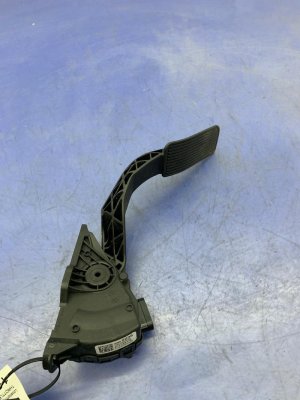
- Accelerator Pedal Assembly
(OEM #25832864)— This is the part to replace if the internal APP sensor has failed, but only after ruling out wiring issues. The sensor is integrated into the pedal assembly.
Trusted brands: ACDelco (GM Genuine), Delphi, Standard Motor Products
OEM price range: $100-$180
Aftermarket price range: $60-$120 - APP Sensor Connector Pigtail
(OEM #ACDelco PT2712)— This is used to replace the vehicle-side connector if the terminals are damaged, corroded, or have lost tension, which is a very common cause of P2123.
Trusted brands: ACDelco, Dorman (645-595), Standard Motor Products (S-1479)
OEM price range: $30-$50
Aftermarket price range: $15-$30
Related Codes That Often Appear With This One
- P2122 — This code is for 'APP Sensor 1 Circuit Low Input'. It can appear with P2123 if the connection is highly intermittent, causing both high and low voltage faults.
- P2138 — This code indicates a correlation error between APP Sensor 1 and APP Sensor 2. It is frequently triggered alongside P2123 because the PCM sees that the two sensors are not agreeing, which is a primary symptom of one sensor's circuit failing.
- P2120, P2125, P2127, P2128 — These are all related APP sensor circuit codes mentioned in TSB #PIP3783D. Their presence together strongly points to the common wiring or connector issue affecting the entire pedal assembly.
Technical Service Bulletins (TSBs) & Recalls
- PIP3783D: Addresses intermittent SES light, Reduced Engine Power messages, and various APP sensor DTCs including P2123. The primary recommendation is to inspect the APP sensor circuits for poor terminal tension before replacing any parts.
Platform-Specific Known Issues
- A known high-frequency issue is poor terminal tension in the APP sensor connector, as documented by GM in TSB #PIP3783D. This should always be the first inspection point.
- Some owners have found that a broken ground wire, not directly at the pedal connector but further up the harness near the firewall, can also cause this code.
Mechanic-Grade Diagnostic Values
- APP Sensor 1 Signal Voltage (Dark Blue Wire) — expected: Approx. 0.88V - 1.0V at rest (pedal up), sweeping smoothly up to approx. 4.5V at wide-open throttle (pedal down).. Failure: A voltage reading stuck high (above 4.8V) will trigger P2123. Any erratic jumps or dropouts when wiggling the harness indicate a connection issue.
- APP Sensor 2 Signal Voltage (Light Blue Wire) — expected: Approx. 0.45V at rest (pedal up), sweeping smoothly up to approx. 2.5V at wide-open throttle (pedal down).. Failure: While not directly for P2123, an incorrect reading on this sensor will often set a correlation code like P2138 alongside P2123.
- 5-Volt Reference at APP Connector — expected: Approx. 5.0V with key on, engine off.. Failure: Significantly lower or no voltage indicates a problem with the PCM or the wiring between the PCM and the APP connector.
- Ground Circuit at APP Connector — expected: Less than 100mV (0.1V) when back-probing with the sensor connected and key on.. Failure: High voltage on the ground circuit indicates a poor ground connection, which can cause floating voltage readings on the signal circuits.
Scan Tool Commands That Help
- Tech2Win (pre-2013) / GDS2 (2013+): Data Display > ECM > Engine Data — This is the primary diagnostic function. It allows for real-time monitoring of 'Accelerator Pedal Position Sensor 1 Voltage' and 'Accelerator Pedal Position Sensor 2 Voltage' to confirm the fault and verify the repair.
- Tech2Win / GDS2: Clear DTCs — Used after a repair has been completed to clear the P2123 code from the ECM's memory. A test drive is required to confirm the code does not return.
Wiring & Ground Locations
- APP Sensor Connector — Directly on the top of the accelerator pedal assembly, under the driver's side dashboard.. This is the most common point of failure due to poor terminal tension, as cited in TSB #PIP3783D. The 'wiggle test' is performed here.
- APP Sensor 1 Signal Wire — Typically a Dark Blue wire in the harness running to the APP sensor connector.. This specific wire carries the voltage signal that the PCM is reading as too high. It must be tested for shorts to voltage and continuity back to the PCM.
- G218 Ground — A primary body and module ground located under the driver's side of the instrument panel, often near the A-pillar and sometimes obscured by the dash insulator mat.. TSB PIT5405C identifies a poor connection at G218 as a cause for numerous strange electrical issues, including module communication loss. While not specific to P2123, a faulty ground for the Body Control Module (BCM) can create unpredictable electrical noise and voltage issues that could affect sensor readings. This is a critical check if simple wiring repairs fail.
Real Owner Repair Stories
- Chevrolet Forum user 'EinST' (2006 Chevrolet Trailblazer (similar GMT platform wiring)) — P2123 code after aftermarket radio installation.
❌ Tried (didn't work) Initial diagnosis often points to the pedal or connector.
✅ What actually fixed it The user reported finding and repairing a broken ground circuit wire for the APP sensor located just inside the firewall, not at the connector itself. - DuramaxDiesels.com forum user (GM Duramax Truck (LBZ)) — P2123, unresponsive pedal.
❌ Tried (didn't work) Replacing the accelerator pedal assembly made the code go away for two days before it returned.
✅ What actually fixed it The issue returned in very cold weather, strongly suggesting the root cause was a wiring or connection problem sensitive to temperature and contraction, rather than the pedal component itself. The final fix pointed towards a wiring harness issue.
"I Checked Everything" — The Actual Cause
- In cases where continuity tests on the wiring harness pass and the pedal/connector have been replaced, the root cause can be voltage 'cross-talk' from an adjacent wire within the harness. This happens when insulation is compromised deep inside the loom, causing one wire's voltage to bleed into the APP signal wire. This won't be found with a simple continuity test. A confirmed fix in a similar scenario was to abandon the compromised signal wire and run a new, separate wire from the PCM connector to the sensor connector.
OEM Part Supersession History
15101848, 15847349→25832864— Standard part revision and consolidation by the manufacturer.
Heads up: When ordering a replacement accelerator pedal assembly, using 25832864 is recommended as it is the latest revision for this application.N/A→ACDelco PT2712 / GM 13584094— This is the service part number for the connector pigtail.
Model Year Variations Within This Range
- 2007-2012/2013 vs 2013-2014: The factory diagnostic software used by dealers differs. Earlier models in this range use the Tech2 (or Tech2Win software emulator), while the later models (approx. 2013+) use the Global Diagnostic System 2 (GDS2). The diagnostic principles are the same, but the user interface for the technician will be different.
Helpful Videos
We Have This Part in Stock

The information in this article is provided for general reference and educational purposes only. Vehicle specifications, procedures, and part compatibility can vary by production date, trim level, and region. Always consult your vehicle's factory service manual and verify part numbers before purchasing or performing repairs. Safety-critical components such as airbags, seat belts, and braking systems should be installed by a qualified professional.
- Cadillac ESCALADE ESV:
- 🧭 Diagnostic Flowchart
- 🎬 Helpful Videos
- 🛍️ Shop This Part
- What's Unique About the 2007-2014 Cadillac ESCALADE ESV
- Symptoms You May Notice
- Most Likely Causes
- Rare But Worth Checking
- Diagnosis Steps
- Parts You'll Likely Need
- Related Codes That Often Appear With This One
- Technical Service Bulletins (TSBs) & Recalls
- Platform-Specific Known Issues
- Mechanic-Grade Diagnostic Values
- Scan Tool Commands That Help
- Wiring & Ground Locations
- Real Owner Repair Stories
- "I Checked Everything" — The Actual Cause
- OEM Part Supersession History
- Model Year Variations Within This Range
- 🎟️ Get 5% Off