

P2123 on 2007-2011 GMC Sierra: Accelerator Pedal Sensor Circuit Causes and Fixes
On a 2007-2011 GMC Sierra, code P2123 almost always indicates a problem with the accelerator pedal assembly or its wiring connector, triggering 'Reduced Engine Power' mode. The most common fix is replacing the entire accelerator pedal assembly, but first inspect the connector for loose pins as noted in a GM Technical Service Bulletin. In some cases, a broken wire or corrosion under the dash or fuse box can also be the cause.
- P2123 on a 2007-2011 Sierra means the accelerator pedal sensor is sending a voltage signal that is too high.
- This code will almost certainly put the truck into 'Reduced Engine Power' mode, making it unsafe for normal driving.
- Before replacing any parts, inspect the 6-pin wiring connector at the gas pedal for loose or corroded terminals, a known issue on these trucks.
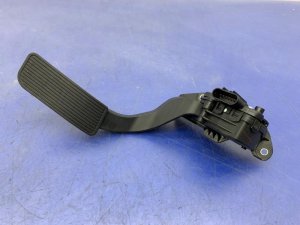
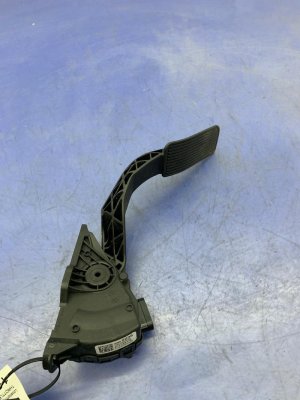
- The most common fix is replacing the accelerator pedal assembly (OEM Part #25832864), which is a simple DIY task.
- If the pedal and connector are good, check for water intrusion and corrosion in other harness connectors in the driver's kick panel.
What's Unique About the 2007-2011 Gmc SIERRA
For this generation of GM trucks (GMT900 platform), a very common cause for P2123 and related codes is poor electrical contact in the accelerator pedal's wiring harness connector. GM issued a Technical Service Bulletin (TSB #PIP3783D) specifically highlighting "poor terminal tension" as a frequent culprit. This means that before you rush to replace the pedal itself, a careful inspection and re-tensioning of the connector pins is a critical first step. Additionally, these trucks can suffer from water intrusion in the driver's kick panel, which corrodes main harness connectors and can mimic a failed pedal sensor.
Diagnostic Flowchart
Tap your situation to follow the diagnostic path that matches what you're seeing on this vehicle.
Symptoms You May Notice
- Service Engine Soon / Check Engine Light is on
- "Reduced Engine Power" message displayed on the driver information center
- Poor or no throttle response
- Limited acceleration and vehicle speed (limp mode)
- Disabled StabiliTrak or traction control system
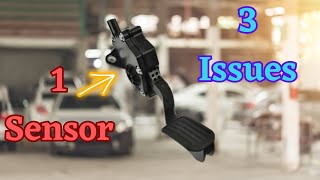
- Rough engine running 🎬 Watch: Common symptoms of a failing accelerator pedal sensor
- Replacing the Throttle Body. P2123 points specifically to the accelerator pedal circuit, which tells the computer what the driver wants. A throttle body issue would set different codes, such as P1516 or P2135. While cleaning a dirty throttle body is good maintenance, it will not fix a P2123 code.
Most Likely Causes
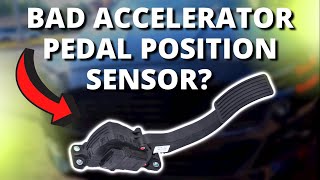
- Failed Accelerator Pedal Position (APP) Sensor Assembly 🔴 High Probability → Shop Accelerator Pedal Assembly The electronic sensors are integrated into the pedal assembly and are a common failure point over time due to internal wear. This wear causes the internal electronics to send erratic or out-of-range voltage signals. The sensors are not sold separately from the pedal assembly.
How to confirm: Using a scan tool, monitor the live data for APP Sensor 1 and APP Sensor 2. The voltage for Sensor 1 (often the 'D' circuit) will be stuck high (near 5V) or will not change smoothly as you press the pedal. The two sensors should have inverse or corresponding smooth voltage sweeps; a jumpy or stuck reading on one indicates failure.
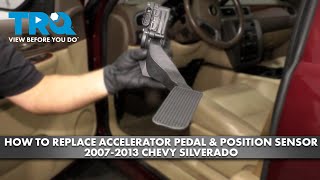
Typical fix: Replace the entire accelerator pedal assembly. This is a simple DIY job requiring only basic hand tools and about 30 minutes.
Est. part cost: $60-$150 - Poor Terminal Tension at APP Sensor Connector 🔴 High Probability This is a well-documented issue for this platform, as cited in GM TSB #PIP3783D. The female terminals in the 6-pin connector can loosen over time, causing a poor connection and high resistance, which the ECM interprets as a high voltage signal.
How to confirm: Visually inspect the 6-pin connector at the accelerator pedal. Wiggle the connector while observing live data on a scan tool to see if the voltage reading for APP Sensor 1 changes erratically. Check for any backed-out pins or signs of corrosion. A special tool can be used to test pin tension, or a technician may use a pick to carefully tighten the female terminals.
Typical fix: Carefully re-tension the female terminals with a terminal pick tool. If the connector is damaged, melted, or the terminals cannot be reliably tightened, replace the connector pigtail. Applying dielectric grease after cleaning can help prevent future corrosion.
Est. part cost: $15-$40 - Damaged Wiring Harness ⚪ Low Probability Wires can chafe against brackets or other components in the dashboard area or engine bay, leading to a short to power or an open circuit. In one documented case, a broken ground wire for the APP sensor circuit just inside the firewall was the culprit. In another, a wire was found to be bleeding voltage from another circuit, requiring a new wire to be run directly to the ECM.
How to confirm: Perform a continuity and circuit integrity test on the signal (Dark Blue wire), 5-volt reference, and ground (Brown wire) circuits between the APP sensor connector and the ECM. A load test using a headlight bulb can verify the wire's ability to carry current, not just show continuity.
Typical fix: Repair the specific damaged section of wire following proper soldering and heat-shrinking procedures. In severe cases, a new wire may need to be run from the connector to the ECM.
Est. part cost: $5-$20
Rare But Worth Checking
- Corrosion in other harness connectors (Fuse box, Kick Panel): As documented in TSB 07-06-04-019F, water intrusion can corrode major connectors, such as the IP-to-body harness in the driver's kick panel or connectors under the underhood fuse box. This can cause a loss of ground or 5V reference to the pedal, triggering the code. This should be investigated if the pedal and its direct connector are confirmed to be good.
- Faulty Engine Control Module (ECM): This is extremely rare and should only be considered after all other possibilities, including wiring and the sensor itself, have been exhaustively ruled out. An ECM failure would typically be accompanied by other, unrelated trouble codes.
Diagnosis Steps
- Read all stored DTCs with an OBD-II scanner. Note all codes present, especially P2138, P2122, or P2127/P2128.
- Using the scanner's live data function, monitor the voltage of 'APP Sensor 1' and 'APP Sensor 2'.
- With the key on and engine off, slowly press and release the accelerator pedal. Both voltage readings should change smoothly and in correlation with each other. P2123 suggests Sensor 1 will be stuck high (near 5V) or read erratically.
- Turn the vehicle off. Locate the accelerator pedal assembly and carefully disconnect its 6-pin electrical connector. This involves pulling out a gray or red locking tab first.
- Inspect the connector terminals (both on the harness and the pedal) for corrosion, damage, or backed-out pins. As per TSB PIP3783D, pay close attention to the tension of the female pins in the harness connector.
- If connector terminals are loose, use a pick tool to carefully re-tension them. Clean with electrical contact cleaner and apply dielectric grease before reconnecting. 🎬 Watch: How to fix the 'Reduced Engine Power' message
- If the connector looks good and terminals are tight, the most likely cause is the pedal assembly itself. Replace the accelerator pedal assembly.
- After replacement, a throttle relearn procedure may be required. This can sometimes be accomplished by starting and idling the engine for 3 minutes, turning it off for 1 minute, and idling again for 3 minutes.
- If the problem persists after replacing the pedal, inspect other major harness connectors for corrosion, particularly in the driver's side kick panel and under the fuse box, especially if there are signs of water leaks.
- Perform a detailed circuit integrity test on the wiring between the pedal connector and the ECM to check for shorts or opens.
Parts You'll Likely Need
- Accelerator Pedal Assembly
(OEM #25832864)— This is the most common fix. The APP sensors are integrated into the pedal assembly and are not sold separately. This part fails electronically, causing the high voltage reading. Part number 25832864 is a common replacement that supersedes older numbers like 15101848 and 15847349.
Trusted brands: ACDelco, GM Genuine Parts, Dorman, Standard Motor Products
OEM price range: $100-$150
Aftermarket price range: $60-$100 - Accelerator Pedal Connector Pigtail
(OEM #ACDelco PT2712)— Needed if the original connector is damaged or the terminals have lost tension and cannot be repaired, as is common on these trucks. This allows you to splice in a new connector with fresh terminals.
Trusted brands: ACDelco, Dorman (645-595), Standard Motor Products (S-1479)
OEM price range: $20-$40
Aftermarket price range: $10-$30
Related Codes That Often Appear With This One
- P2138 — This code indicates a correlation error between the two APP sensors (Sensor 1 vs. Sensor 2). It's very common to see with P2123 because if one sensor reads high while the other reads normally, the ECM flags the mismatch.
- P2122 — This is the opposite code, for 'APP Sensor 'D' Circuit Low Input'. Seeing both P2122 and P2123 can indicate a very erratic sensor or a wiring connection that is intermittently shorting and opening.
- P2127 / P2128 — These are the low and high input codes for the second APP sensor ('E' circuit). Seeing these along with P2123 could point to a problem with the entire connector, a shared power/ground circuit, or a major wiring issue like corrosion in a junction block.
Technical Service Bulletins (TSBs) & Recalls
- PIP3783D: States that a Service Engine Soon lamp or Reduced Engine Power message with various APP sensor codes (including P2123) may be caused by poor terminal tension in the accelerator pedal position circuits.
- 07-06-04-019F: Details issues caused by water intrusion and corrosion in the main IP-to-body harness connector, which can lead to APP sensor codes.
Platform-Specific Known Issues
- As per TSB #PIP3783D, these trucks are known to have issues with poor terminal tension in the accelerator pedal position sensor connector, which can set codes P2120, P2122, P2123, P2125, P2127, P2128, and/or P2138.
- A separate TSB (07-06-04-019F) notes that water intrusion causing corrosion in the main instrument panel-to-body harness connector can also cause these symptoms and is often misdiagnosed as a bad pedal.
Mechanic-Grade Diagnostic Values
- APP Sensor 1 ('D' Circuit) Signal Voltage — expected: 0.32V - 4.75V, sweeping smoothly with pedal movement.. Failure: Code P2123 is set when voltage is greater than 4.75V for more than 0.4 seconds.
- 5-Volt Reference Circuit Voltage at APP Connector — expected: 4.8 - 5.2 Volts (Key On, Engine Off). Failure: Voltage below 4.8V or above 5.2V indicates a short or open in the reference circuit or a faulty ECM.
- Low Reference Circuit Resistance at APP Connector — expected: Less than 5 ohms between the low reference terminal and a good chassis ground.. Failure: Resistance greater than 5 ohms indicates an open or high resistance in the ground circuit.
- APP Sensor Signal Voltage on Scan Tool (Harness Disconnected) — expected: Less than 0.1 Volts. Failure: Voltage greater than 0.1V indicates the signal wire is shorted to voltage.
Scan Tool Commands That Help
- Manual Procedure (No Tool): Idle Relearn Procedure — After replacing the accelerator pedal, disconnecting the battery, or cleaning the throttle body, this procedure helps the ECM relearn the idle position. Start and idle the engine in park for 3 minutes, turn the engine off for 60 seconds, then restart and idle for another 3 minutes.
Wiring & Ground Locations
- APP Connector Pins — 6-pin connector at the accelerator pedal assembly.. P2123 relates to APP Sensor 1. Pin E (often a Dark Blue wire) is the signal for Sensor 1. Pin D is the 5V reference for Sensor 1. Pin F is the low reference (ground) for Sensor 1.
- G103 — On the front of the passenger side cylinder head.. This is a primary engine ground. Poor contact here can cause erratic sensor readings and various electrical issues.
- G104 — On the rear of the passenger side cylinder head, near the firewall.. This ground serves multiple functions including the VCM and instrument panel. A fault here can cause unpredictable electrical problems that could be misdiagnosed as a sensor failure.
- X205 Connector — Main harness connector located behind the upper instrument panel/dash trim.. In a documented case, a loose X205 connector caused open circuits for the APP sensor, triggering P2123 after the pedal and its direct connector were ruled out.
Real Owner Repair Stories
- YouTube user/mechanic (GMC/Chevy Truck (GMT900 platform)) — Reduced Engine Power, codes P0123, P1516, P2119, P2135.
❌ Tried (didn't work) Replacing the accelerator pedal assembly, Replacing the throttle body
✅ What actually fixed it The signal wire for the throttle position sensor was found to be bleeding voltage from another circuit. The mechanic abandoned the compromised wire in the harness and ran a new, separate wire directly from the sensor connector to the ECM, which resolved the issue. - Chevrolet Forum User (GMC/Chevy Truck (GMT900 platform)) — Reduced Engine Power, P2123 code.
❌ Tried (didn't work) Initial inspection of pedal and connector.
✅ What actually fixed it The ground circuit wire for the APP sensor was found to be broken just inside the firewall. Repairing the broken ground wire fixed the problem.
"I Checked Everything" — The Actual Cause
- While a smoke test is not applicable, a common diagnostic dead-end occurs when the pedal assembly and its connector test good. In one such case, the actual cause was found to be voltage bleeding into the APP sensor signal wire from an adjacent circuit within the main harness. Standard continuity tests did not catch this. The fix required running a completely new wire from the pedal connector to the ECM to bypass the faulty harness section.
When the Usual Fixes Don't Work
- While replacing the accelerator pedal assembly is the most common fix, there are notable cases where this does not solve the problem. Technicians and owners have reported chasing the issue after a new pedal failed to resolve the P2123 code. In one instance, the root cause was corrosion in the main body harness connector located in the driver's kick panel due to a water leak, a problem completely separate from the pedal itself. In another complex case, the pedal's signal wire was picking up stray voltage from another circuit within the harness; the only solution was to run a new, dedicated wire from the pedal to the engine computer. These examples underscore the importance of following the TSBs and performing full circuit integrity checks before and after replacing parts.
OEM Part Supersession History
15101848, 15847349→25832864— Standard part revision and consolidation by the manufacturer.
Heads up: No incompatibility is noted. The replacement part 25832864 is a direct fit and does not require special programming for this vehicle range.
Helpful Videos
We Have This Part in Stock

The information in this article is provided for general reference and educational purposes only. Vehicle specifications, procedures, and part compatibility can vary by production date, trim level, and region. Always consult your vehicle's factory service manual and verify part numbers before purchasing or performing repairs. Safety-critical components such as airbags, seat belts, and braking systems should be installed by a qualified professional.
- Gmc SIERRA:
- 🧭 Diagnostic Flowchart
- 🎬 Helpful Videos
- 🛍️ Shop This Part
- What's Unique About the 2007-2011 Gmc SIERRA
- Symptoms You May Notice
- Most Likely Causes
- Rare But Worth Checking
- Diagnosis Steps
- Parts You'll Likely Need
- Related Codes That Often Appear With This One
- Technical Service Bulletins (TSBs) & Recalls
- Platform-Specific Known Issues
- Mechanic-Grade Diagnostic Values
- Scan Tool Commands That Help
- Wiring & Ground Locations
- Real Owner Repair Stories
- "I Checked Everything" — The Actual Cause
- When the Usual Fixes Don't Work
- OEM Part Supersession History
- 🎟️ Get 5% Off