

P2123 on 2007-2014 GMC Yukon XL: Causes and Fixes for Reduced Power
This code almost always points to a problem with the Accelerator Pedal Position (APP) sensor assembly or its wiring. The most common fix is replacing the entire accelerator pedal assembly. Before replacing it, inspect the wiring connector for loose pins or corrosion, as this is a known issue documented by a GM TSB.
- P2123 on a 2007-2014 Yukon XL means the gas pedal sensor circuit has a high voltage fault, which will likely put your truck in 'Reduced Engine Power' mode.
- Before buying parts, carefully inspect the 6-pin electrical connector at the gas pedal for loose pins or corrosion, as this is a known GM issue (TSB #PIP3783D).
- The most common repair is to replace the entire accelerator pedal assembly, which is a simple DIY job that takes less than an hour.
- Do not mistake this for a throttle body problem; the code points directly to the accelerator pedal circuit.
- The correct OEM part number for the pedal assembly is 25832864, which replaces older versions.
What's Unique About the 2007-2014 Gmc YUKON XL
On this generation of GM trucks and SUVs (GMT900 platform), the primary cause for accelerator pedal sensor codes is well-documented. GM issued a Technical Service Bulletin (TSB #PIP3783D) that specifically calls out "poor terminal tension" in the APP sensor's 6-pin electrical connector as a frequent culprit for codes like P2123. This means that while the pedal sensor itself can fail, a simple wiring or connector issue is often the root cause, leading to the common "Reduced Engine Power" message that many owners experience. This issue is shared across many platform mates like the Chevrolet Tahoe, Silverado, and Cadillac Escalade.
Diagnostic Flowchart
Tap your situation to follow the diagnostic path that matches what you're seeing on this vehicle.
Symptoms You May Notice
- "Reduced Engine Power" message on the dashboard.
- Check Engine Light is on.
- Poor, delayed, or no throttle response.
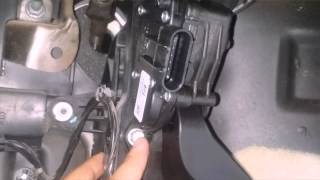
- Vehicle will not accelerate properly and is stuck at a low speed. 🎬 See this video for a walkthrough of all possible remedies.
- Unstable or high engine idle.
- "Stability Control Disabled" message may appear simultaneously.
- Replacing the throttle body. The throttle body is commanded by the ECM based on pedal input. While throttle body issues can cause similar symptoms (and sometimes an aftermarket throttle body can cause issues), codes like P2123 point specifically to the accelerator pedal sensor circuit, not the throttle body itself.
Most Likely Causes
- Failed Accelerator Pedal Position (APP) Sensor Assembly 🔴 High Probability → Shop Accelerator Pedal Assembly The electronic sensors within the pedal assembly are a common failure point over time due to wear, leading to incorrect voltage signals. It is a widely reported issue on owner forums.
How to confirm: Use a scan tool to monitor the live data for "APP Sensor 1 Voltage". If the voltage is stuck high (typically above 4.75V) and does not change as you press the pedal, the sensor has failed. A normal reading should sweep smoothly from about 0.46V to 4.75V.
Typical fix: The entire accelerator pedal assembly must be replaced. It is sold as a single unit with the sensors integrated and is held on by two bolts. 🎬 Watch: How to replace the pedal sensor on a Yukon Denali.
Est. part cost: $60-$150 - Poor Terminal Tension or Corrosion at the APP Sensor Connector 🟡 Medium Probability This is a known issue documented in GM Technical Service Bulletin #PIP3783D. The female terminals in the 6-pin connector can loosen over time, causing a poor connection and a high resistance fault that the ECM interprets as high voltage.
How to confirm: Visually inspect the wiring harness connector at the accelerator pedal. Check for loose or backed-out pins, and any signs of green or white corrosion. Wiggle the connector while monitoring sensor voltage on a scan tool to see if the reading fluctuates, which would indicate a bad connection.
Typical fix: Clean the connector terminals and apply dielectric grease. If terminal tension is poor, the terminals may need to be carefully re-tensioned or the connector pigtail replaced.
Est. part cost: $5-$30 - Damaged Wiring Harness ⚪ Low Probability Wires can become chafed, broken, or shorted between the pedal assembly and the Engine Control Module (ECM). A user on a Chevrolet forum found the ground circuit wire was broken just inside the firewall, causing this code. Another technician found a signal wire was shorting to another wire within the harness, requiring a new wire to be run.
How to confirm: Perform a continuity and resistance test on the APP Sensor 1 signal circuit (Dark Blue wire), 5-volt reference circuit, and low reference circuit between the pedal connector and the ECM connector.
Typical fix: Repair the specific section of damaged wire. In some cases, a new wire may need to be run directly from the APP connector to the ECM.
Est. part cost: $1-$10
Rare But Worth Checking
- Faulty Engine Control Module (ECM): This is very rare. The ECM should only be considered after all other possibilities, including the pedal sensor and all related wiring, have been thoroughly tested and ruled out.
- Poor Ground Connections: A loose or corroded main ground connection on the engine block or frame can cause a variety of electrical issues, including APP sensor codes. One owner on a Tahoe/Yukon forum fixed their issue by cleaning the ground wires on the frame under the driver's side door.
Diagnosis Steps
- Connect an OBD-II scanner and confirm P2123 is present. Check for any other related codes, especially P2138.
- Observe the live data for "APP Sensor 1 Voltage" on the scanner. According to service manuals, a normal reading sweeps between approximately 0.46V and 4.75V. P2123 will set when the voltage is stuck high (above 4.75V).
- Turn the ignition off and locate the accelerator pedal assembly under the dashboard.
- Disconnect the 6-pin electrical connector from the pedal assembly. Inspect the connector and the pins on the sensor for any signs of corrosion, moisture, or damage. Ensure all pins are straight and fully seated.
- Following the guidance from TSB #PIP3783D, check for poor terminal tension. A pin that feels loose when re-connecting is a likely culprit.
- If the connector looks good, test the circuits at the harness connector. With the key on, you should find 5 volts on the two reference circuits and a good ground on the two low reference circuits.
- If the wiring and connector are confirmed to be good, the APP sensor assembly is the most likely cause of the fault.
- Replace the accelerator pedal assembly, which is typically held on by two 10mm bolts. Clear the codes, and perform a test drive to ensure the problem is resolved.
Parts You'll Likely Need
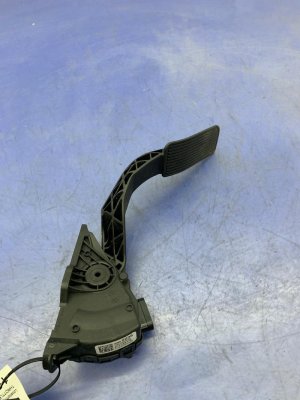
- Accelerator Pedal Assembly with Sensor
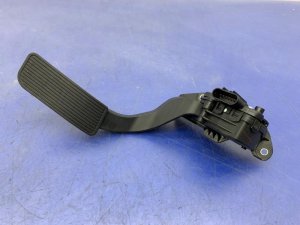
(OEM #25832864)— This is the most common fix for P2123. The sensors are integrated into the pedal assembly and are not sold separately. This part number is the genuine GM part and also replaces older numbers 15847349 and 15101848.
Trusted brands: ACDelco, GM Genuine Parts, Standard Motor Products, Dorman
OEM price range: $90-$150
Aftermarket price range: $60-$110 - APP Sensor Connector Pigtail — If the connector itself is damaged or the terminals have lost tension and cannot be repaired, replacing the pigtail is necessary.
Trusted brands: ACDelco, Dorman
OEM price range: $25-$40
Aftermarket price range: $15-$30
Related Codes That Often Appear With This One
- P2138 — This code indicates a correlation error between the two separate sensors (APP1 and APP2) in the pedal assembly. It is very common to see this with other APP sensor circuit codes as the ECM compares their signals for safety.
- P2122 — This is the opposite of P2123, indicating low voltage on the same sensor circuit (APP1). Seeing both could suggest an intermittent wiring problem.
- P2127 — This indicates a low voltage fault on the second pedal sensor (APP2).
- P2128 — This indicates a high voltage fault on the second pedal sensor (APP2).
Technical Service Bulletins (TSBs) & Recalls
- PIP3783D: Mentions that codes P2120, P2122, P2123, P2125, P2127, P2128, and/or P2138 can be caused by poor terminal tension in the Accelerator Pedal Position circuits. This is the most relevant TSB for this specific code.
Platform-Specific Known Issues
- A known issue, documented in TSB #PIP3783D, is poor terminal tension in the accelerator pedal position sensor's electrical connector, which can cause intermittent high resistance and trigger this code.
- Some owners on forums report that cleaning chassis and engine ground points resolved their recurring 'Reduced Engine Power' issues, even when codes pointed to the APP sensor.
Mechanic-Grade Diagnostic Values
- APP Sensor 1 Signal Voltage (DTC Trigger) — expected: < 4.75V. Failure: Voltage is more than 4.75V.
- 5-Volt Reference Circuit Voltage at Harness Connector — expected: 4.8-5.2 Volts. Failure: Voltage is less than 4.8V (indicates open/short to ground) or greater than 5.2V (indicates short to voltage).
- Low Reference Circuit Resistance at Harness Connector — expected: Less than 5 ohms. Failure: Resistance is greater than 5 ohms, indicating an open or high resistance in the ground circuit.
- APP Sensor Signal Voltage on Scan Tool (Harness Disconnected) — expected: Less than 0.1 Volts. Failure: Voltage is greater than 0.1V, indicating the signal circuit is shorted to a voltage source.
Scan Tool Commands That Help
- Manual Procedure: Accelerator Pedal Released Position Learning — Must be performed after the APP sensor or ECM harness connector is disconnected. Turn ignition ON for at least 2 seconds, then OFF for at least 10 seconds; repeat the cycle. This allows the ECM to learn the pedal's released position.
- Tech2 / GDS2: Idle Learn Reset — While not directly for the P2123 code, if the throttle body was cleaned or replaced as a misdiagnosis, its idle position must be relearned. This can be initiated via the scan tool's special functions menu.
Wiring & Ground Locations
- APP Connector (6-Pin) — At the top of the accelerator pedal assembly.. This is the primary connection point for the sensor. Per TSB PIP3783D, it's a known failure point for poor terminal tension. Pin E (Dark Blue wire) is the APP Sensor 1 signal circuit that sets P2123.
- G103 — On the front of the passenger side (right) cylinder head.. This is a major engine ground point. While not the direct ground for the APP sensor's low reference, a poor connection here can introduce electrical noise and voltage offsets that affect multiple sensors, including the APP.
- G104 — On the left rear corner of the engine, mounted to the left cylinder head.. This is another critical engine ground. The ECM and its sensors rely on clean ground paths. Verifying the integrity of G103 and G104 is a key step when diagnosing persistent, hard-to-trace electrical faults.
- G300 — Under the vehicle on a body mount, near the driver's side door area.. A forum user reported fixing their recurring APP sensor issues by cleaning a frame ground under the driver's side door; G300 is a likely candidate for this location.
Real Owner Repair Stories
- Tahoe Yukon Forum (2007-2014 GM SUV) — Recurring 'Reduced Engine Power' message, APP sensor codes.
❌ Tried (didn't work) Replacing the accelerator pedal assembly.
✅ What actually fixed it The owner cleaned the main ground wires attached to the frame located under the driver's side door. This resolved the voltage-related codes that the new pedal did not fix. - Chevrolet Forum (Similar GM Truck Platform) — P2123 code, 'Reduced Engine Power'.
❌ Tried (didn't work) Initial diagnostics focused on the pedal sensor itself.
✅ What actually fixed it A broken ground wire for the APP sensor circuit was discovered just inside the firewall. Repairing the broken wire resolved the code.
"I Checked Everything" — The Actual Cause
- The equivalent for this electronic fault is 'circuit tests okay but problem persists'. This often happens due to the issue described in TSB #PIP3783D: poor terminal tension. A technician may test the circuit with a multimeter and find continuity is good at that moment. However, under driving conditions (vibration, temperature changes), the loose terminal can briefly lose contact, causing a high-resistance spike that the ECM reads as a high voltage signal, setting code P2123. The fault is intermittent and only present when the connection is physically disturbed.
When the Usual Fixes Don't Work
- While replacing the accelerator pedal assembly is the most common fix, there are documented cases where this does not solve the problem. The most notable counter-evidence points to issues with the vehicle's ground system. In one instance, an owner replaced the pedal but the 'Reduced Engine Power' light returned; the ultimate solution was cleaning corroded ground points on the vehicle's frame under the driver's door. This highlights that the pedal sensor circuit is sensitive to the overall electrical health of the vehicle, and grounding issues can mimic a failed sensor.
OEM Part Supersession History
15101848, 15847349→25832864— Standard part revision and consolidation by GM.
Heads up: These part numbers are for vehicles with power-adjustable pedals. Ensure the correct pedal type is ordered. No programming is required after installation.
Helpful Videos
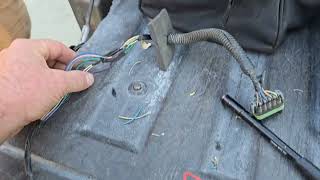
We Have This Part in Stock

The information in this article is provided for general reference and educational purposes only. Vehicle specifications, procedures, and part compatibility can vary by production date, trim level, and region. Always consult your vehicle's factory service manual and verify part numbers before purchasing or performing repairs. Safety-critical components such as airbags, seat belts, and braking systems should be installed by a qualified professional.
- Gmc YUKON XL:
- 🧭 Diagnostic Flowchart
- 🎬 Helpful Videos
- 🛍️ Shop This Part
- What's Unique About the 2007-2014 Gmc YUKON XL
- Symptoms You May Notice
- Most Likely Causes
- Rare But Worth Checking
- Diagnosis Steps
- Parts You'll Likely Need
- Related Codes That Often Appear With This One
- Technical Service Bulletins (TSBs) & Recalls
- Platform-Specific Known Issues
- Mechanic-Grade Diagnostic Values
- Scan Tool Commands That Help
- Wiring & Ground Locations
- Real Owner Repair Stories
- "I Checked Everything" — The Actual Cause
- When the Usual Fixes Don't Work
- OEM Part Supersession History
- 🎟️ Get 5% Off