

P2125 on 2007-2014 Chevrolet Tahoe: Causes and Fixes for Reduced Power
On a 2007-2014 Tahoe, code P2125 almost always triggers the 'Reduced Engine Power' message and points to a faulty Accelerator Pedal Position (APP) sensor or its wiring. Replacing the entire pedal assembly is the most common fix, costing around $100-$150 for an OEM part and is a simple DIY job. Before replacing, always inspect the connector at the pedal for loose pins, as this is a known issue cited in a GM TSB.
- P2125 on a 2007-2014 Tahoe is a specific code for the second sensor in the accelerator pedal assembly.
- The most common symptoms are a 'Reduced Engine Power' warning and a non-responsive gas pedal.
- Always inspect the wiring and connector at the pedal first, as a GM TSB points to this as a common problem.
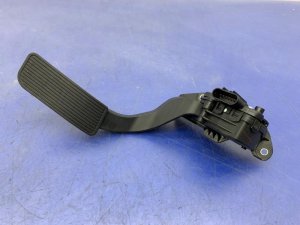
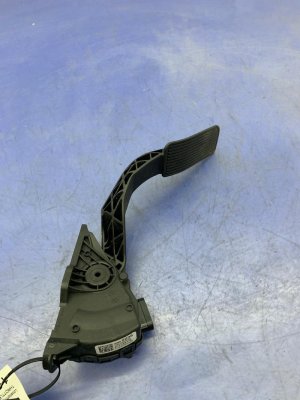
- The most frequent repair is replacing the entire accelerator pedal assembly (OEM #25832864), which is a simple, plug-and-play job with no programming required.
- Do not mistake this for a throttle body problem; P2125 points directly to the pedal assembly.
What's Unique About the 2007-2014 Chevrolet TAHOE
On this generation of Tahoe (GMT900), issues with the accelerator pedal assembly are very common. General Motors issued a specific Technical Service Bulletin (TSB #PIP3783D) that directly addresses this code, pointing technicians to inspect for poor electrical terminal tension at the accelerator pedal's connector. This suggests that a wiring or connection issue is just as likely as a complete part failure, a key diagnostic hint for this platform. Forum discussions frequently cite fixing the connector or replacing the pedal assembly as the definitive solution.
Diagnostic Flowchart
Tap your situation to follow the diagnostic path that matches what you're seeing on this vehicle.
Symptoms You May Notice
- "Reduced Engine Power" message displayed on the instrument cluster.
- "Service StabiliTrak" and "Service Traction Control" messages may also appear.
- Check Engine Light is on.
- Poor, delayed, or no throttle response.
- Vehicle may feel sluggish or hesitate on acceleration.
- Unstable or rough idle, or stalling when coming to a stop.
- Inability to accelerate past a certain low speed (e.g., 20-40 mph).
- Replacing the throttle body. The throttle body has its own position sensor (TPS), but P2125 specifically relates to the sensor at the accelerator pedal. While symptoms can be similar, P2125 points to the pedal, not the throttle body. Many owners have replaced the throttle body only to have the problem persist.
Most Likely Causes
- Faulty Accelerator Pedal Position (APP) Sensor Assembly 🔴 High Probability → Shop Accelerator Pedal Assembly The electronic sensors integrated into the pedal assembly are a known high-failure item on this platform, with countless owner reports confirming replacement fixed the issue.
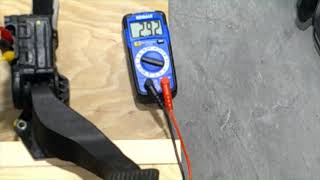
How to confirm: Using a scan tool, monitor the live data for APP Sensor 1 and APP Sensor 2. If Sensor 2's voltage is erratic, stuck, or doesn't respond smoothly as you press the pedal, the assembly is bad. A good sensor should show a smooth voltage sweep. 🎬 Watch: How to test your pedal with a glitched example.
Typical fix: Replace the entire accelerator pedal assembly. It is a single unit that includes the integrated sensors. This is a common DIY repair that takes less than 30 minutes. 🎬 See this step-by-step guide to replacing the pedal assembly.
Est. part cost: $95-$150 - Poor Wiring Connection at the APP Sensor 🔴 High Probability GM issued TSB #PIP3783D specifically for this issue, citing poor terminal tension in the connector as a primary cause for this code. The connector is in the driver's footwell and can be disturbed by feet, floor mats, or moisture.
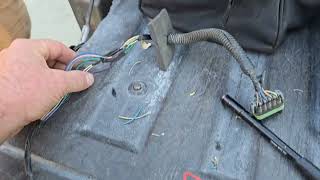
How to confirm: Visually inspect the connector at the accelerator pedal. Wiggle the connector while monitoring live sensor data on a scan tool to see if the voltage reading changes. Check for loose, bent, or corroded pins. A 'terminal drag test' with a spare pin can confirm if the female terminals have lost their grip.
Typical fix: Clean the connector terminals and apply dielectric grease. If terminal tension is poor, the connector pigtail may need to be replaced. Some owners have had success simply zip-tying the connector tightly to ensure a firm connection. 🎬 Watch: A quick fix for the Reduced Engine Power message.
Est. part cost: $10-$30 - Damaged Wiring Harness 🟡 Medium Probability The wiring harness can rub against chassis components, brackets, or the firewall over time, causing wires to break or short out. Wires can break inside the insulation near the connector from repeated flexing, making the damage invisible.
How to confirm: Perform a continuity test on the wires running from the APP sensor connector to the Powertrain Control Module (PCM). Gently pull on individual wires at the connector; a broken wire may stretch or pull out completely.
Typical fix: Repair the specific broken or shorted wire(s) in the harness using solder and heat shrink for a durable repair.
Est. part cost: $5-$20
Rare But Worth Checking
- Water Intrusion in Dash Connectors: For the related code P2138, GM has noted that water leaking into the instrument panel-to-body harness connectors (in the driver's side footwell) can cause corrosion and short circuits, leading to pedal sensor faults. This is a plausible, though less common, cause for P2125 as well. Other GM service bulletins mention water leaks in the plenum/cowl area as a source of water in the driver's footwell.
- Faulty Powertrain Control Module (PCM): → Shop Engine Control Module (ECM) This is very rare. Before condemning the PCM, all other possibilities (sensor, wiring, connections) must be exhaustively ruled out.
Diagnosis Steps
- Read the trouble codes with an OBD-II scanner. Confirm P2125 is present and note any other codes, especially P2138 or P2120.
- As per TSB #PIP3783D, first inspect the electrical connector at the accelerator pedal. Disconnect it and check for loose connections, corrosion, backed-out pins, or signs of water intrusion.
- With the key on and engine off, use a scan tool to view live data for 'APP Sensor 1' and 'APP Sensor 2'.
- Slowly press and release the accelerator pedal. Both sensor voltage readings should change smoothly. APP Sensor 1 typically sweeps from ~0.9V (idle) to ~2.4V (full throttle), while APP Sensor 2 sweeps from ~3.1V (idle) to ~2.6V (full throttle). The key is a smooth transition without spikes or dropouts.
- For P2125, you are looking for a problem with Sensor 2. If its voltage is stuck, jumps erratically, or is outside the expected range (typically <0.24V or >4.49V), the sensor is the primary suspect.
- If the voltage readings are erratic when you wiggle the connector or harness, the problem is in the wiring. Gently tug on each wire at the connector to check for an internal break.
- If the connector and wiring appear solid and the sensor signal is still bad, replace the accelerator pedal assembly.
- After replacement, clear the codes and perform a test drive to ensure the issue is resolved. No reprogramming is typically needed for this part.
Parts You'll Likely Need
- Accelerator Pedal Assembly with Sensor
(OEM #25832864)— This is the most common fix. The sensor is integrated into the pedal assembly and is not sold separately. Failure of the internal electronics is the typical cause of P2125. This part number supersedes older numbers 15847349 and 15101848.
Trusted brands: ACDelco (GM Genuine), Dorman (Aftermarket alternative, part # 699-105), Standard Motor Products
OEM price range: $95-$140
Aftermarket price range: $60-$95
Related Codes That Often Appear With This One
- P2138 — This code indicates a correlation error between APP Sensor 1 and Sensor 2. It is often set alongside P2125 because a fault in one sensor causes its signal to disagree with the other.
- P2120 — This code points to a fault in the APP Sensor 1 circuit. It can appear with P2125 if there is a widespread wiring or power supply issue affecting the entire pedal assembly.
- P1125 — This is another manufacturer-specific code related to the APP system, often triggered under similar fault conditions.
Technical Service Bulletins (TSBs) & Recalls
- PIP3783D: Addresses multiple APP sensor codes, including P2125, caused by poor terminal tension in the APP sensor electrical connector. This is the most relevant TSB for this specific code on this platform.
Platform-Specific Known Issues
- A GM Technical Service Bulletin (PIP3783D) specifically highlights that codes P2120, P2122, P2123, P2125, P2127, P2128, and/or P2138 can be caused by poor terminal tension at the accelerator pedal connector, leading to a 'Reduced Engine Power' message.
- Owners on forums frequently report that simply unplugging, cleaning, and securely re-plugging the pedal connector can temporarily or permanently fix the issue, pointing to the connection quality as a weak point.
- Some owners have found that a broken ground wire on the passenger side of the engine can cause a host of throttle-related codes and 'Reduced Engine Power' events, as it can affect the sensor reference voltages.
Mechanic-Grade Diagnostic Values
- APP Sensor 2 Voltage (Key On, Engine Off) — expected: Starts at ~3.1V at rest and sweeps down to ~2.6V at full pedal press.. Failure: Voltage is less than 0.235V or more than 4.487V. Any spikes, glitches, or non-smooth movement during the sweep indicates a fault.
- APP Sensor 5-Volt Reference Circuit Voltage — expected: Between 4.5V and 5.2V at the sensor connector.. Failure: Voltage is outside the expected range, indicating a problem with the PCM or the wiring between the PCM and the sensor.
- APP Sensor Connector Pinout (6-Pin Connector) — expected: Pin 1: APP1 5V Ref, Pin 2: APP1 Low Ref, Pin 3: APP1 Signal, Pin 4: APP2 5V Ref, Pin 5: APP2 Low Ref, Pin 6: APP2 Signal.. Failure: Testing the wrong pins will lead to incorrect diagnosis. P2125 relates to the circuit on Pin 6 (APP2 Signal).
Wiring & Ground Locations
- G103 — On the front of the passenger side (right) cylinder head.. This is a primary engine ground. A poor connection here can cause fluctuating reference voltages for various sensors, including the APP sensor, leading to erroneous codes.
- G104 — On the rear of the driver side (left) cylinder head.. This is another critical engine ground. Like G103, corrosion or looseness at this point can create electrical noise and sensor signal problems that mimic a component failure.
- APP Sensor Connector — Directly attached to the top of the accelerator pedal assembly in the driver's footwell.. This is the most common point of failure besides the sensor itself, as cited by TSB #PIP3783D. It is susceptible to being kicked, moisture from wet feet, and floor mat interference.
- X1 Connector at ECM — The Engine Control Module (ECM) is located in the engine compartment, typically on the driver's side. X1 is one of the main harness connectors to the module.. The APP sensor circuits terminate at the ECM. While less common, checking for pin tension and corrosion here is a valid step if issues persist after checking the pedal-side connector.
Real Owner Repair Stories
- YouTube channel 'Chevy, Buick, Pontiac p1125 p2125 p2138 Reduced Engine Power WATCH THIS FIRST!!' (GM Vehicle with 3.8L V6 (similar drive-by-wire system)) — Reduced Engine Power message, codes P1125, P2125, P2138.
❌ Tried (didn't work) Replaced the throttle body (used, then put original back on)., Replaced the accelerator pedal assembly.
✅ What actually fixed it Found multiple broken wires inside the wiring harness loom where it had been rubbing against the valve cover. The insulation was intact, hiding the breaks. Repairing the broken wires with heat shrink and protecting the harness from future rubbing resolved all codes and symptoms.
OEM Part Supersession History
15101848, 15847349→25832864— Standard part revision and consolidation by the manufacturer.
Heads up: The replacement part 25832864 is the correct service part for the entire 2007-2014 generation and is a direct replacement for the older numbers.
Helpful Videos
We Have This Part in Stock

The information in this article is provided for general reference and educational purposes only. Vehicle specifications, procedures, and part compatibility can vary by production date, trim level, and region. Always consult your vehicle's factory service manual and verify part numbers before purchasing or performing repairs. Safety-critical components such as airbags, seat belts, and braking systems should be installed by a qualified professional.
- Chevrolet TAHOE:
- 🧭 Diagnostic Flowchart
- 🎬 Helpful Videos
- 🛍️ Shop This Part
- What's Unique About the 2007-2014 Chevrolet TAHOE
- Symptoms You May Notice
- Most Likely Causes
- Rare But Worth Checking
- Diagnosis Steps
- Parts You'll Likely Need
- Related Codes That Often Appear With This One
- Technical Service Bulletins (TSBs) & Recalls
- Platform-Specific Known Issues
- Mechanic-Grade Diagnostic Values
- Wiring & Ground Locations
- Real Owner Repair Stories
- OEM Part Supersession History
- 🎟️ Get 5% Off