

P2125 on 2007-2014 GMC Yukon XL: Accelerator Pedal Circuit Fault Causes & Fixes
On a 2007-2014 GMC Yukon XL, code P2125 is most often caused by a faulty accelerator pedal position (APP) sensor, which is integrated into the pedal assembly. A wiring issue at the sensor connector is also a common culprit. Expect to pay $80-$150 for a new pedal assembly, which is a straightforward DIY replacement.
- P2125 on a Yukon XL points directly to a fault with the accelerator pedal's secondary sensor circuit ('E' circuit).
- The most common symptom is the "Reduced Engine Power" message appearing on the dash, which severely limits acceleration.
- Before replacing the pedal assembly (the most common fix), inspect the electrical connector at the pedal for loose pins or corrosion, as this is a known issue documented by GM in TSB PIP3783D.
- The repair is simple and involves replacing the entire pedal assembly with basic hand tools; no computer reprogramming is needed.
- Do not confuse this with a throttle body problem, which will set different trouble codes, although some owners report overlapping issues.
What's Unique About the 2007-2014 Gmc YUKON XL
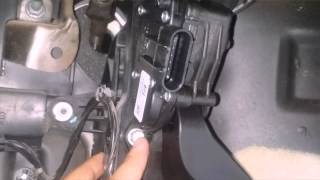
For this generation of GMC trucks and SUVs (GMT900 platform), issues with the accelerator pedal position (APP) sensor and its related wiring are well-documented. A General Motors Technical Service Bulletin (TSB #PIP3783D) specifically points to poor terminal tension in the APP sensor's electrical connector as a primary cause for P2125 and related codes. This means that before replacing the pedal itself, a thorough inspection of the connector and wiring is critical, as a simple connector repair could solve the problem. 🎬 Watch this first to understand how wiring causes these codes. This issue is shared across the GMT900 platform, affecting the Chevrolet Tahoe, Suburban, Silverado, and Cadillac Escalade.
Diagnostic Flowchart
Tap your situation to follow the diagnostic path that matches what you're seeing on this vehicle.
Symptoms You May Notice
- "Reduced Engine Power" message on the dashboard.
- Check Engine Light (Service Engine Soon light) is on.
- Poor or no throttle response; pedal feels dead.
- Vehicle will not accelerate properly and is stuck at a low speed. 🎬 Watch: How to fix the Reduced Engine Power message.
- Engine may hesitate or stall, especially when first pressing the gas pedal.
- The issue may be intermittent, happening more frequently in cold weather or only at startup.
- Replacing the throttle body. The trouble codes for the accelerator pedal (P2125, P2138, etc.) are distinct from throttle body codes. While a bad throttle body can also cause 'Reduced Engine Power', it will set different codes (like P1516 or P2135). However, some owners have reported replacing the throttle body fixed their issue, especially when dealing with aftermarket parts that cause signal conflicts.
Most Likely Causes
- Faulty Accelerator Pedal Position (APP) Sensor Assembly 🔴 High Probability → Shop Accelerator Pedal Assembly The electronic sensors integrated into the pedal assembly are a common failure point on this platform, leading to codes like P2138 and P2125. Over time, the internal potentiometers wear out, causing erratic signals.
How to confirm: Use a scan tool to monitor the live data for APP Sensor 1 and APP Sensor 2. As you press the pedal, both voltage readings should change smoothly. For APP Sensor 2 (Circuit E), the voltage should sweep cleanly without any spikes or dropouts. If the reading is erratic, frozen, or doesn't change, the sensor is bad.
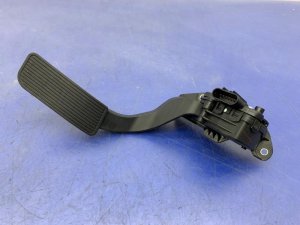
Typical fix: Replace the entire accelerator pedal assembly. The sensor is not sold separately. This is a simple DIY job requiring only basic hand tools. 🎬 See this step-by-step walkthrough for replacing the pedal assembly.
Est. part cost: $80-$150 - Poor Connection or Damaged Wiring at the APP Sensor 🟡 Medium Probability GM issued TSB #PIP3783D specifically for this issue, noting that poor terminal tension at the APP sensor connector can cause intermittent signal loss and trigger this code. The harness is also in the footwell, where it can be exposed to moisture, corrosion, or physical damage from feet or misplaced floor mats. A YouTube video shows a 2003 Tahoe with identical codes where mice had chewed through the harness near the firewall grommet, causing the failure.
How to confirm: Visually inspect the APP sensor connector for corrosion, backed-out pins, or damaged wires. With the engine running and a scan tool monitoring APP sensor voltage, gently wiggle the connector and harness to see if it triggers the fault or causes the voltage to fluctuate.
Typical fix: Clean the connector terminals and apply dielectric grease. If terminal tension is poor, the terminals may need to be re-crimped or the connector pigtail replaced. Pigtail connectors are widely available (e.g., Dorman 645-595, ACDelco PT2712).
Est. part cost: $15-$40
Rare But Worth Checking
- Faulty Powertrain Control Module (PCM): → Shop Engine Control Module (ECM) This is extremely rare and should only be considered after all other possibilities, including wiring and the sensor itself, have been exhaustively ruled out. A PCM failure can cause P2125, but it's much more likely to be the pedal or wiring.
- Poor Ground Connections: On the Tahoe/Yukon forums, owners report that various electrical issues, including 'Reduced Engine Power' mode, can be caused by corroded or loose ground wires, particularly the main grounds under the driver's side door area.
Diagnosis Steps
- Read all stored fault codes with an OBD-II scanner. Note any other codes present, especially P2138.
- Observe the live data from APP Sensor 1 and APP Sensor 2. The voltage for APP Sensor 2 should be between 0.24V and 4.49V. Confirm that the signal is erratic, stuck, or non-responsive when the pedal is pressed slowly to the floor and back.
- Perform a wiggle test. While watching the live data, gently move the wiring harness at the accelerator pedal connector and along its path to the firewall. If the voltage spikes or drops out, a wiring issue is present.
- Visually inspect the accelerator pedal connector for pushed-out pins, corrosion, or damage. Check for moisture in the footwell.
- Following the guidance of TSB #PIP3783D, carefully check the terminal tension within the connector. A loose-fitting terminal is a known cause of this code.
- If the wiring and connector are confirmed to be in good condition, the accelerator pedal assembly is the most likely cause of the fault.
- Replace the accelerator pedal assembly. It is typically held on by two T30 Torx or 10mm bolts. No special programming is required for the new part on this vehicle.
Parts You'll Likely Need
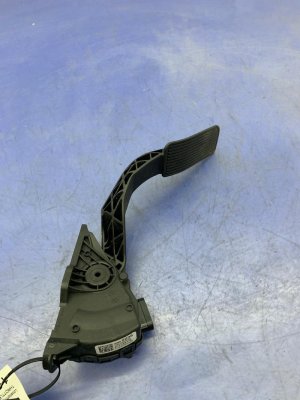
- Accelerator Pedal Assembly with Sensor
(OEM #25832864)— This is the most common failure part for code P2125. The sensor is integrated into the pedal and must be replaced as a complete unit. This part number is confirmed to fit the 2007-2014 Yukon XL and its platform mates. It may supersede older part numbers like 15101848 and 15847349.
Trusted brands: ACDelco, Dorman, Standard Motor Products, NGK
OEM price range: $110-$150
Aftermarket price range: $80-$120 - APP Sensor Connector Pigtail
(OEM #ACDelco PT2712 / GM 88988944)— If the wiring connector is damaged or the terminals have lost tension, replacing the pigtail is the correct repair. This is a 6-pin connector.
Trusted brands: ACDelco, Dorman (645-595), Standard Motor Products
OEM price range: $30-$45
Aftermarket price range: $15-$30
Related Codes That Often Appear With This One
- P2138 — This code indicates a voltage correlation problem between APP Sensor 1 and Sensor 2. It is very commonly seen with P2125, as both point to a fault in the same assembly or its wiring.
- P2120, P2122, P2123, P2127, P2128 — These are all circuit-specific fault codes for the accelerator pedal position sensor. The TSB #PIP3783D groups them all together as being caused by the same potential wiring or sensor issues.
Technical Service Bulletins (TSBs) & Recalls
- PIP3783D: Advises technicians to inspect Accelerator Pedal Position (APP) sensor circuits for poor terminal tension when DTCs P2120, P2122, P2123, P2125, P2127, P2128, and/or P2138 are present. This is the primary manufacturer document for this specific issue.
Platform-Specific Known Issues
- A GM Technical Service Bulletin (PIP3783D) was issued for a range of APP sensor codes, including P2125, on 2007-2014 Yukon models. The bulletin highlights that poor terminal tension at the sensor or ECM connectors is a likely cause and recommends inspecting and re-crimping terminals before replacing parts.
- Owners on the 'Tahoe Yukon Forum' frequently discuss the 'Reduced Engine Power' message. One user noted that after experiencing the issue intermittently, checking grounds and battery voltage is a good first step, as these trucks are sensitive to voltage issues.
Mechanic-Grade Diagnostic Values
- APP Sensor 2 Signal Voltage (Pin A, Dark Blue wire) — expected: Signal voltage should be low at rest and increase as the pedal is depressed.. Failure: Voltage is less than 0.24V or more than 4.49V, or the reading is erratic, has spikes, or dropouts when the pedal is moved.
- APP Sensor 2 5-Volt Reference (Pin B, Gray wire) — expected: 4.8V to 5.2V with key on, engine off.. Failure: Voltage is outside the expected range, indicating a problem with the ECM or wiring.
- APP Sensor 2 Low Reference (Pin C, Black wire) — expected: Less than 3 ohms of resistance to a known good ground.. Failure: High resistance (greater than 3 ohms) indicates an open or poor ground connection.
- APP Sensor 1 Signal Voltage (Pin F, Light Blue wire) — expected: Signal voltage is high at rest and decreases as the pedal is depressed (opposite of Sensor 2).. Failure: Voltage does not sweep smoothly or correlates incorrectly with Sensor 2, often setting P2138.
Scan Tool Commands That Help
- Tech2 / GDS2: Throttle/Idle Learn Reset — This function is not strictly required after replacing the accelerator pedal, as the ECM typically adapts on its own. However, performing this reset can be beneficial if driveability issues or codes persist after a repair, as it clears learned values related to the entire throttle control system.
Wiring & Ground Locations
- G103 / G104 — G103 is on the front of the passenger side cylinder head. G104 is on the rear of the driver's side cylinder head.. These are primary engine block grounds. A poor connection at these points can cause a host of sensor-related issues, including incorrect reference voltages for the APP sensor circuits.
- G303 / G304 — Located on the frame rail under the vehicle, typically beneath the driver's and passenger's door areas.. These frame grounds are highly exposed to road salt and moisture, making them extremely prone to corrosion. A bad ground here is a known, but often overlooked, cause of intermittent 'Reduced Engine Power' messages and APP sensor codes.
- ECM Connectors (X1/X2) — Located on the Powertrain Control Module (PCM/ECM), which is typically mounted near the driver's side firewall in the engine bay.. Similar to the TSB for the pedal connector, the pins for the APP sensor circuits can become loose or corroded at the ECM side, causing an identical failure. This should be checked if replacing the pedal and pigtail does not resolve the code.
- IP-to-Body Harness Connector — Located in or around the driver's side kick panel area, inside the cabin.. GM issued a separate TSB (07-06-04-019F) specifically for code P2138, noting that water intrusion into this connector is a common cause. Since P2125 is closely related, this connector is a key inspection point, especially if there are signs of a water leak from the A-pillar or sunroof drains.
Real Owner Repair Stories
- YouTube channel 'Pine Hollow Auto Diagnostics' (2007 Cadillac Escalade (GMT900 Platform)) — Reduced Engine Power message, codes P2125 and P2138.
❌ Tried (didn't work) Initial assumption was a bad pedal or connector.
✅ What actually fixed it Using an oscilloscope, the technician found the APP Sensor 2 signal was dropping out. The cause was found to be two wires in the harness that had chafed through their insulation about 8 inches away from the pedal connector, causing a wire-to-wire short. The harness was repaired. - Tahoe Yukon Forum (2007 Chevrolet Tahoe) — Intermittent P2125 and P2138 codes, Reduced Engine Power.
❌ Tried (didn't work) Replaced the accelerator pedal assembly.
✅ What actually fixed it The owner traced the issue to a corroded ground wire on the frame located under the driver's side door (likely G303). Cleaning the ground connection point to bare metal and re-securing it permanently solved the problem. - YouTube video regarding a 2005 Equinox (demonstrates a common diagnostic path) (2005 Chevrolet Equinox) — Codes P1125, P2125, P2138.
❌ Tried (didn't work) Replaced throttle body., Replaced accelerator pedal assembly.
✅ What actually fixed it After replacing common parts failed to fix the issue, the problem was diagnosed as a faulty Powertrain Control Module (PCM). Replacing the PCM and having it programmed to the vehicle resolved the codes.
When the Usual Fixes Don't Work
- While replacing the accelerator pedal assembly is the most common fix for P2125, it is not a guaranteed solution. Multiple owner and technician reports confirm that the code can persist after pedal replacement. In these cases, the actual root cause was often found in the wiring. Documented successful repairs that did NOT involve the pedal include: repairing a corroded frame ground under the driver's door, fixing chafed wires within the harness loom near the engine, and cleaning water corrosion out of an intermediate body-to-dash harness connector. These examples highlight the importance of performing a thorough wiring and ground circuit diagnosis before committing to part replacement.
OEM Part Supersession History
15101848, 15847349→25832864— Part has been updated by the manufacturer over time.25832864→84533623— Further part revision by the manufacturer.
Heads up: While 84533623 is listed as a newer replacement in some catalogs, 25832864 remains the most widely referenced and available service part for this generation. Both should be compatible.
Helpful Videos
We Have This Part in Stock

The information in this article is provided for general reference and educational purposes only. Vehicle specifications, procedures, and part compatibility can vary by production date, trim level, and region. Always consult your vehicle's factory service manual and verify part numbers before purchasing or performing repairs. Safety-critical components such as airbags, seat belts, and braking systems should be installed by a qualified professional.
- Gmc YUKON XL:
- 🧭 Diagnostic Flowchart
- 🎬 Helpful Videos
- 🛍️ Shop This Part
- What's Unique About the 2007-2014 Gmc YUKON XL
- Symptoms You May Notice
- Most Likely Causes
- Rare But Worth Checking
- Diagnosis Steps
- Parts You'll Likely Need
- Related Codes That Often Appear With This One
- Technical Service Bulletins (TSBs) & Recalls
- Platform-Specific Known Issues
- Mechanic-Grade Diagnostic Values
- Scan Tool Commands That Help
- Wiring & Ground Locations
- Real Owner Repair Stories
- When the Usual Fixes Don't Work
- OEM Part Supersession History
- 🎟️ Get 5% Off