

P2127 on 2007-2014 Cadillac Escalade ESV: Causes and Fixes for Reduced Power
On a 2007-2014 Escalade, P2127 is almost always caused by a poor electrical connection at the accelerator pedal sensor, as noted in GM TSB #PIP3783D. Before replacing the expensive pedal assembly, thoroughly inspect the wiring harness connector for loose terminals. This issue is common across the GMT900 platform (Tahoe, Yukon, Silverado). If the pedal is faulty, a new ACDelco assembly (PN 22742315) costs between $80 and $150.
- Code P2127 on your Escalade will trigger the 'Reduced Engine Power' mode, making the vehicle unsafe to drive in normal traffic.
- Before you buy any parts, follow GM's own advice from TSB #PIP3783D and thoroughly inspect the electrical connector at the accelerator pedal for loose or corroded pins.
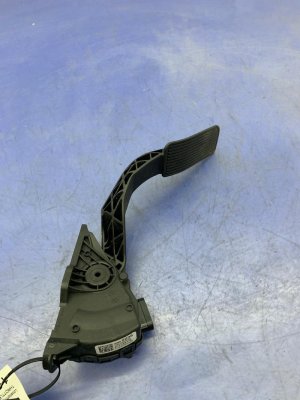
- The most common part to fail is the entire accelerator pedal assembly, which contains the non-serviceable sensor.
- Replacing the accelerator pedal assembly is a straightforward DIY job that requires basic tools and about 30-60 minutes.
- A new pedal assembly does not require any special programming or relearn procedure on this vehicle.
What's Unique About the 2007-2014 Cadillac ESCALADE ESV
For this generation of Cadillac Escalade and its GM siblings (Tahoe, Yukon, Silverado), the most well-documented cause for P2127 is not a failed sensor, but a poor electrical connection. General Motors issued Technical Service Bulletin #PIP3783D specifically advising technicians to check for poor terminal tension in the wiring connectors for the Accelerator Pedal Position (APP) sensor before replacing any parts. The bulletin also points to inspecting other harness connectors like C109/X109 (under the fuse block) and C205/X205 (under the instrument panel trim) for issues. This suggests the connectors or wiring are a more common failure point than the pedal assembly itself.
Diagnostic Flowchart
Tap your situation to follow the diagnostic path that matches what you're seeing on this vehicle.
Symptoms You May Notice
- "Reduced Engine Power" message on the driver information center.
- Check Engine Light (Malfunction Indicator Lamp) is on.
- "Service StabiliTrak" and "Traction Control Off" messages may also appear.
- Poor, delayed, or non-existent throttle response.
- Vehicle will not accelerate properly or at all.
- Hesitation or stuttering when accelerating from a stop.
- Intermittent nature; the problem may disappear and then return after minutes, days, or even months.
- Replacing the throttle body. The code P2127 specifically relates to the accelerator pedal sensor circuit, not the throttle body position sensor. While throttle body issues can also cause reduced power, they will set different codes (like P2135). Some owners have replaced the throttle body with no success in fixing P2127.
Most Likely Causes
- Poor Terminal Tension at APP Sensor Connector 🔴 High Probability This is a known issue documented by GM in TSB #PIP3783D for this specific vehicle platform. The female pins in the 6-pin connector can lose their grip on the male pins of the sensor over time due to vibration and heat cycles, causing intermittent low voltage readings.
How to confirm: Visually inspect the connector for loose or backed-out pins. Use a set of terminal test probes to check the tension of each pin in the accelerator pedal connector. A "wiggle test" on the harness while monitoring sensor voltage on a scan tool can also reveal intermittent connection issues; owners report the issue can be triggered by hitting bumps.
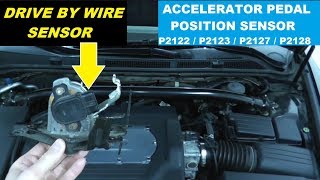
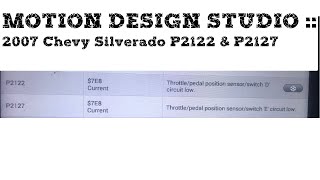
Typical fix: If terminal tension is poor, the affected terminals may need to be carefully re-tensioned or replaced. In many cases, replacing the connector pigtail (e.g., Dorman 645-595) is the most robust repair. 🎬 Watch: How to fix P2122 and P2127 wiring issues TSB #PIP3783D also suggests inspecting intermediate connectors C109/X109 and C205/X205 for similar issues.
Est. part cost: $20-$40 for a connector pigtail - Faulty Accelerator Pedal Position (APP) Sensor Assembly 🟡 Medium Probability → Shop Accelerator Pedal Assembly The internal potentiometers of the sensor can wear out or fail, causing an internal short or open that results in a low voltage signal. While less common than the connector issue, it is a frequent point of failure and the go-to replacement part.
How to confirm: If wiring and connectors are confirmed to be good, use a scan tool to monitor the voltage of APP Sensor 1 and APP Sensor 2. As you press the pedal, both voltages should increase smoothly. If Sensor 2's voltage is stuck low (often at 0V), drops out, or is erratic, the sensor assembly is faulty.
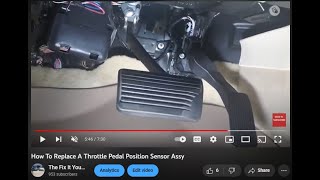
Typical fix: Replace the entire accelerator pedal assembly. The sensor is integrated into the pedal and is not sold separately. Some owners report needing to perform a throttle relearn procedure after replacement, which involves idling the engine for a few minutes. 🎬 See this guide on testing and replacing the pedal sensor
Est. part cost: $80-$150 - Damaged Wiring Harness ⚪ Low Probability Wires can chafe against brackets or other components under the dash, leading to a short to ground which would cause a low voltage reading. One owner on a forum found that wires had rubbed together after losing their place in the harness.
How to confirm: Perform a visual inspection of the harness running from the pedal to the firewall. Check for continuity and shorts to ground on the signal wire for APP Sensor 2 (typically a Light Blue wire on this platform) using a digital multimeter.
Typical fix: Repair the damaged section of wire and protect it from future chafing using loom or tape. 🎬 Watch: Finding a short to ground on a GM truck
Est. part cost: $5-$15 for wiring repair supplies
Rare But Worth Checking
- Faulty Powertrain Control Module (PCM): → Shop Engine Control Module (ECM) This is extremely rare. The PCM should only be considered after all other possibilities, including all wiring, connectors, and the sensor itself, have been exhaustively tested and ruled out.
Diagnosis Steps
- Retrieve all stored DTCs with an OBD-II scanner. Note any other codes present, especially P2138, P2122, or P0641.
- Visually inspect the accelerator pedal assembly and its electrical connector for any obvious damage, corrosion, or loose wires.
- Disconnect the connector and inspect the terminals for looseness, corrosion, or being backed out. This is the most likely cause per TSB #PIP3783D.
- If possible, use proper terminal test probes to check the tension of the female terminals in the connector. A wiggle test of the harness while watching live data is highly recommended.
- Using a scan tool with live data capability, monitor the voltage readings for APP Sensor 1 and APP Sensor 2.
- Slowly and steadily press and release the accelerator pedal. Watch for smooth, linear voltage changes from both sensors. A reading for Sensor 2 that is stuck low (often below 0.2V, sometimes at 0V) or drops out intermittently points to a problem in that circuit.
- If the connector and terminals are good but the signal is bad, the accelerator pedal assembly is the most likely culprit and should be replaced.
- If a new pedal assembly does not fix the issue, perform a continuity and short-to-ground test on the APP Sensor 2 signal wire between the pedal connector and the PCM. Also inspect intermediate harness connectors C109/X109 and C205/X205 as per the TSB.
Parts You'll Likely Need
- Accelerator Pedal Assembly
(OEM #22742315)— This is the most common part replaced to fix P2127 when the sensor itself has failed. The sensor is integrated into the pedal assembly and cannot be replaced separately.
Trusted brands: ACDelco (OEM), Standard Motor Products (APS311), NGK/NTK, Dorman (699-107)
OEM price range: $110-$150
Aftermarket price range: $80-$120 - Accelerator Pedal Position Sensor Connector
(OEM #ACDelco PT2628 (pigtail kit))— Per TSB #PIP3783D, a faulty connector with poor terminal tension is a primary cause. Replacing the connector pigtail is often necessary if terminals are damaged or loose.
Trusted brands: ACDelco, Dorman (645-595)
OEM price range: $30-$50
Aftermarket price range: $20-$40
Related Codes That Often Appear With This One
- P2138 — P2138 indicates a correlation problem between APP Sensor 1 and Sensor 2. It is often set alongside P2127 because the low voltage from Sensor 2 ('E') doesn't match the reading from Sensor 1 ('D').
- P2122 — P2122 is the code for a low circuit input on the *other* pedal sensor (Sensor 'D'). If there is a wiring issue affecting the whole connector or multiple circuits, both codes can appear.
- P0641 — P0641 indicates an issue with the 5-volt reference circuit 'A', which supplies power to multiple sensors, including APP Sensor 2. A short in any sensor on this circuit (e.g., oil pressure sensor, A/C pressure sensor) can cause P2127 to set. If P0641 is present, it must be diagnosed first.
Technical Service Bulletins (TSBs) & Recalls
- PIP3783D: SES Light, Reduced Engine Power Mode, and APP Sensor DTCs (P2120, P2122, P2123, P2125, P2127, P2128, and/or P2138) due to poor terminal tension.
Platform-Specific Known Issues
- GM Technical Service Bulletin #PIP3783D directly addresses intermittent P2127 codes (among others) on 2007-2014 Escalades. It specifically calls out checking for poor terminal tension at the APP sensor and ECM connectors as a primary diagnostic step before replacing parts.
- The TSB also advises inspecting intermediate connectors C109/X109 (located on the left side of the engine compartment below the underhood fuse block) and C205/X205 (located under the Upper Instrument Trim Panel) for corrosion, water intrusion, or poor terminal fitment.
Mechanic-Grade Diagnostic Values
- APP Sensor 2 Signal Voltage (Scan Tool) — expected: 0.32V - 4.75V, changing smoothly with pedal input.. Failure: Voltage is stuck low, typically below 0.2V, for more than 200-400 milliseconds.
- 5-Volt Reference at APP Connector — expected: 4.8V - 5.2V between the 5V reference pin and ground with key on, engine off.. Failure: Voltage below 4.8V or above 5.2V indicates a problem with the 5V reference circuit or PCM.
- Low Reference Circuit Resistance — expected: Less than 5 ohms between the low reference circuit terminal at the APP connector and a known good chassis ground.. Failure: Resistance greater than 5 ohms indicates high resistance or an open in the ground circuit.
Scan Tool Commands That Help
- GDS2 / Tech2 or equivalent professional scanner: Live Data Monitoring of APP Sensor 1 and APP Sensor 2 Voltage PIDs. — This is the primary method to observe sensor behavior. Watching both sensor voltages simultaneously while pressing the pedal can reveal dropouts, glitches, or a lack of correlation that confirms a fault.
- GDS2 / Tech2 or equivalent professional scanner: APP/TPS Relearn Procedure — After replacing the accelerator pedal assembly or throttle body, a relearn procedure may be required to reset learned values and ensure the PCM recognizes the new component's idle and wide-open throttle positions.
Wiring & Ground Locations
- APP Sensor Connector (6-Pin) — At the top of the accelerator pedal assembly, under the driver's side dashboard.. This is the primary connection point and the most common source of failure due to poor terminal tension per TSB #PIP3783D. The pinout is: Pin B (Light Blue wire) is the APP Sensor 2 signal circuit that triggers P2127.
- C109 / X109 — On the left side of the engine compartment, located below the underhood fuse block.. This is an intermediate connector for the APP sensor harness. TSB #PIP3783D recommends inspecting it for corrosion, water intrusion, or poor pin fitment if the issue isn't at the sensor connector itself.
- C205 / X205 — Under the upper instrument panel trim panel (the dash top near the windshield).. This is another intermediate connector for the APP sensor harness. The TSB points to this as a potential failure point, especially for corrosion or poor connections.
When the Usual Fixes Don't Work
- Multiple owner reports on forums describe scenarios where replacing the accelerator pedal assembly, even with an OEM part, did not resolve the P2127 code. In one case, a user replaced the pedal twice and the throttle body with no success, with the problem remaining intermittent over a period of months. Another owner reported the code returned a few months after replacing the pedal assembly. These experiences strongly support the guidance in TSB #PIP3783D that the root cause is often an intermittent wiring or connector issue, not a hard failure of the pedal sensor itself.
Helpful Videos
We Have This Part in Stock

The information in this article is provided for general reference and educational purposes only. Vehicle specifications, procedures, and part compatibility can vary by production date, trim level, and region. Always consult your vehicle's factory service manual and verify part numbers before purchasing or performing repairs. Safety-critical components such as airbags, seat belts, and braking systems should be installed by a qualified professional.
- Cadillac ESCALADE ESV:
- 🧭 Diagnostic Flowchart
- 🎬 Helpful Videos
- 🛍️ Shop This Part
- What's Unique About the 2007-2014 Cadillac ESCALADE ESV
- Symptoms You May Notice
- Most Likely Causes
- Rare But Worth Checking
- Diagnosis Steps
- Parts You'll Likely Need
- Related Codes That Often Appear With This One
- Technical Service Bulletins (TSBs) & Recalls
- Platform-Specific Known Issues
- Mechanic-Grade Diagnostic Values
- Scan Tool Commands That Help
- Wiring & Ground Locations
- When the Usual Fixes Don't Work
- 🎟️ Get 5% Off