

P2127 on 2007-2013 Chevrolet Avalanche: APP Sensor Circuit Low Causes & Fixes
On a 2007-2013 Avalanche, code P2127 is most often caused by poor electrical contact at the accelerator pedal connector (X211), a known issue noted in GM TSB #PIP3783D. The fix is often free, involving re-tensioning the connector's pins. If that fails, the next likely cause is a failed accelerator pedal assembly, which costs between $95 and $185 for the part.
- First, inspect the electrical connector at the accelerator pedal for loose pins or corrosion, as this is a known GM issue (TSB #PIP3783D) and a free fix.
- P2127 will almost always put the truck into 'Reduced Engine Power' mode, making it unsafe to rely on for highway driving.
- The fault is with the Accelerator Pedal Position (APP) sensor, not the Throttle Position Sensor (TPS) on the engine's throttle body.
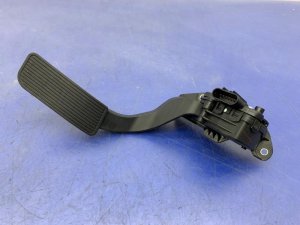
- If the connector is good, the fix is to replace the entire accelerator pedal assembly, which is a straightforward DIY job with basic tools.
What's Unique About the 2007-2013 Chevrolet AVALANCHE
For this generation of Chevrolet Avalanche and related GM trucks (GMT900 platform), the P2127 code is very frequently not a failed part, but an electrical connection issue. General Motors issued a specific Technical Service Bulletin (TSB #PIP3783D, later revised) advising technicians to inspect the APP sensor circuits for poor terminal tension at the pedal connector (often designated X211). This means the metal contacts inside the plastic connector can become loose over time, causing an intermittent or low voltage signal. The TSB also notes to check other intermediate connectors, but the pedal connector is the primary suspect.
Diagnostic Flowchart
Tap your situation to follow the diagnostic path that matches what you're seeing on this vehicle.
Symptoms You May Notice
- "Reduced Engine Power" message on the dashboard.
- Check Engine Light is on.
- Service StabiliTrak / Traction Control light may illuminate.
- Severely limited acceleration or throttle response.
- Unstable or high idle speed.
- Hesitation or stuttering when accelerating from a stop. 🎬 Watch: How to fix the Reduced Engine Power message.
- Replacing the Throttle Body. The throttle body has its own position sensor (TPS), but P2127 specifically points to the accelerator pedal sensor circuit. Owners frequently replace the throttle body only to have the problem persist because the fault is at the driver's foot, not in the engine bay.
- Replacing the Pedal Assembly First. Many owners immediately replace the pedal assembly without first inspecting the connector, which is the more common point of failure and a much cheaper fix. The problem often returns if the loose connector was the root cause.
Most Likely Causes
- Poor Terminal Tension at APP Sensor Connector (X211) 🔴 High Probability This is a widely documented issue on the GMT900 platform, addressed by GM in TSB #PIP3783D. Vibration, heat cycles, and time cause the female terminals in the connector to lose their grip, creating a poor connection that is often intermittent and sensitive to bumps.
How to confirm: With the ignition on, use a scan tool to monitor APP sensor voltages. Wiggle the connector and harness at the accelerator pedal. If the voltage for Sensor 2 jumps or the fault is triggered, you've found the problem. Visually inspect for backed-out or loose-fitting pins.
Typical fix: Disconnect the battery. Carefully remove the pins from the connector housing and use a terminal pick tool to slightly bend the female contacts for a tighter fit. Reassemble and apply dielectric grease. If terminals are damaged, replace the entire connector pigtail (e.g., Dorman 645-510, ACDelco PT2712).
Est. part cost: $0-$40 - Failed Accelerator Pedal Position (APP) Sensor 🟡 Medium Probability → Shop Accelerator Pedal Assembly The sensor is an electronic component integrated into the pedal assembly that wears out over time. It is a very common failure item, but should only be replaced after the connector and wiring have been definitively ruled out.
How to confirm: After confirming the connector is tight and wiring is intact, use a scan tool to monitor the voltage of APP Sensor 1 and APP Sensor 2. If APP Sensor 2 shows a consistently low, erratic, or non-responsive voltage that doesn't correspond smoothly with pedal movement, the sensor has likely failed.
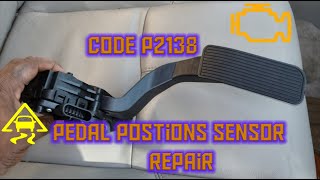
Typical fix: Replace the entire accelerator pedal assembly, as the sensor is integrated into it. This is typically held on by two 10mm nuts. 🎬 Watch: Step-by-step guide to replacing the pedal assembly.
Est. part cost: $95-$185 - Damaged Wiring Harness ⚪ Low Probability The wiring harness can chafe against sharp metal edges under the dashboard or be damaged by improperly installed aftermarket equipment or floor mats that push against the harness.
How to confirm: Perform a continuity test on the wires for the APP sensor 2 signal, 5-volt reference, and ground circuits between the pedal connector and the ECM. Check for opens or shorts to ground. 🎬 See how to diagnose a short to ground on this platform. A visual inspection may reveal chafed or broken wires.
Typical fix: Repair the specific broken or shorted wire using solder and heat shrink, then protect the harness from future damage with loom or tape.
Est. part cost: $5-$25
Rare But Worth Checking
- Faulty Engine Control Module (ECM): → Shop Engine Control Module (ECM) This is extremely rare and should only be considered after all other possibilities, including wiring, connectors, and the pedal sensor itself, have been exhaustively tested and ruled out.
- Corrosion at Intermediate Connectors: TSB #PIP3783D also advises checking intermediate harness connectors like C205 (under the instrument panel) for corrosion or being improperly seated, as they are part of the same circuit.
Diagnosis Steps
- Read the code with an OBD-II scanner and confirm P2127 is present. Note any other codes, especially P2138.
- Visually inspect the accelerator pedal assembly and its electrical connector (X211). Ensure it's securely plugged in and no floor mats are interfering with it.
- Perform a 'wiggle test': With the key on, engine off, and a scan tool displaying live data for APP Sensor 2, wiggle the connector and harness. If the voltage reading changes erratically or the code sets, the connection is the fault.
- Carefully disconnect the connector. Look for any signs of corrosion, moisture, or backed-out pins.
- Following the guidance of TSB #PIP3783D, check for poor terminal tension. If loose, use a terminal pick tool to carefully re-tension the female pins for a tighter fit.
- If the connector is fine, use a multimeter or scan tool to verify that the APP sensor is receiving a steady 5-volt reference and has a good ground.
- With the key on and engine off, use a scan tool to monitor the voltage of APP Sensor 1 and APP Sensor 2 while slowly pressing and releasing the gas pedal. The voltage for both should sweep smoothly with no dropouts. P2127 suggests Sensor 2 will be stuck low or read erratically.
- If the sensor voltage is faulty and the wiring/connector is confirmed to be good, replace the accelerator pedal assembly.
- If a new pedal does not fix the issue, perform a detailed continuity and short-to-ground test on the entire circuit harness between the pedal and the ECM, paying attention to intermediate connectors like C205.
Parts You'll Likely Need
- Accelerator Pedal Assembly
(OEM #25832864 (may be superseded by 15847349, 15101848))— The APP sensor is integrated into the pedal assembly and is not sold separately. This is the most common part replaced to fix P2127 after connector issues are ruled out.
Trusted brands: ACDelco, GM Genuine Parts
OEM price range: $140-$185
Aftermarket price range: $95-$150 - Accelerator Pedal Connector Pigtail
(OEM #ACDelco PT2712 (or aftermarket equivalent))— If the terminals in the original connector are too loose, damaged, or corroded to be re-tensioned, replacing the pigtail by splicing in a new one is the proper repair.
Trusted brands: ACDelco, Dorman, Michigan Motorsports
OEM price range: $25-$40
Aftermarket price range: $15-$30
Related Codes That Often Appear With This One
- P2138 — This code indicates a correlation error between APP Sensor 1 and APP Sensor 2. It's often triggered alongside P2127 because if Sensor 2's voltage is too low, it won't match the reading from Sensor 1, causing the ECM to flag the discrepancy as a safety measure.
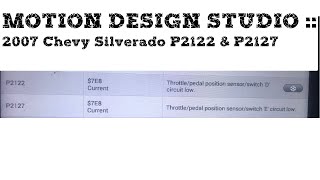
- P2122 — This code is for 'APP Sensor 1 Circuit Low'. While P2127 points to Sensor 2, a wiring issue affecting the shared 5-volt reference or ground could potentially cause faults in both sensor circuits, triggering both codes.
Technical Service Bulletins (TSBs) & Recalls
- PIP3783D: Addresses Diagnostic Trouble Codes P2120, P2122, P2123, P2125, P2127, P2128, and/or P2138. The primary cause identified is poor terminal tension in the Accelerator Pedal Position circuits, but it also advises checking intermediate connectors (like C205) and the ECM connector.
Platform-Specific Known Issues
- A known issue on this platform is poor terminal tension in the accelerator pedal position (APP) sensor connector, which can cause intermittent signal loss and trigger this code. General Motors issued Technical Service Bulletin #PIP3783D to address this specific problem, making a connector inspection the primary diagnostic step.
- The issue is so common that many owners report fixing the problem for free by simply re-seating the connector or carefully bending the pins inside the connector for a tighter fit, without replacing any parts.
Mechanic-Grade Diagnostic Values
- APP Sensor 1 Voltage (Scan Tool) — expected: 0.35V - 4.75V, sweeping smoothly with pedal movement.. Failure: Voltage is stuck, erratic, or has dropouts.
- APP Sensor 2 Voltage (Scan Tool) — expected: 0.32V - 4.75V, sweeping smoothly with pedal movement.. Failure: Voltage is below 0.32V for more than a fraction of a second, triggering P2127.
- 5-Volt Reference at Pedal Connector — expected: 4.8V - 5.2V between the 5V reference pin and a known good ground.. Failure: Voltage below 4.8V or above 5.2V indicates a wiring or ECM fault.
- Low Reference (Ground) Circuit Resistance — expected: Less than 5 ohms between the low reference pin at the connector and a known good ground.. Failure: Resistance greater than 5 ohms indicates an open or high resistance in the ground circuit.
Scan Tool Commands That Help
- Tech2 / GDS2 / High-End Snap-on: Throttle/Pedal Position Relearn — After replacing the accelerator pedal assembly or throttle body. Some vehicles require this procedure to calibrate the new sensor's range with the ECM. A simple battery disconnect may not be sufficient to force the relearn.
Wiring & Ground Locations
- X211 (APP Sensor Connector) — At the top of the accelerator pedal assembly, under the driver's side dashboard.. This is the primary point of failure due to loose terminal tension as per TSB #PIP3783D. All voltage and signal tests for the pedal sensor start here.
- X211 Pin B (APP Sensor 2 Signal) — Pin B on the 6-pin connector at the accelerator pedal. Wire is typically Light Blue.. This is the specific signal wire for APP Sensor 2 ('E' Circuit). A low voltage reading on this wire is what directly triggers code P2127.
- X211 Pin C (5-Volt Reference 2) — Pin C on the 6-pin connector at the accelerator pedal. Wire is typically Tan.. This pin supplies the 5-volt reference voltage from the ECM to APP Sensor 2. A loss of this voltage will cause P2127.
- X211 Pin A (Low Reference 2) — Pin A on the 6-pin connector at the accelerator pedal. Wire is typically Purple.. This is the ground circuit for APP Sensor 2. A bad ground connection here will cause the signal voltage to be incorrect.
- G103 — On the front of the passenger side cylinder head.. This is a primary engine ground. While not directly for the APP sensor, a poor engine ground can introduce electrical noise and voltage offsets that can affect various sensor readings, including those monitored by the ECM.
- G303 — On the driver's side (left) B-pillar, behind the trim panel.. This is an interior body ground. Circuits running under the dash, including sensor grounds, can be tied to this point. A loose or corroded G303 can cause intermittent and hard-to-diagnose electrical issues.
Real Owner Repair Stories
- Tahoe Yukon Forum (2014 GMC Yukon) — Sporadic P2127 code and reduced engine power.
❌ Tried (didn't work) Replaced the accelerator pedal/sensor assembly., Replaced the throttle position sensor on the throttle body.
✅ What actually fixed it Performing a specific manual 'relearn' procedure after parts replacement. The procedure involved idling for 3 minutes, shutting off for 3 minutes, repeating the cycle, then accelerating while in Park to allow the computer to relearn the new sensor positions. - Tahoe Yukon Forum (2014 Suburban LT) — Recurring P2127, happening daily, sometimes multiple times a day.
❌ Tried (didn't work) Replaced the pedal assembly with an OEM GM part.
✅ What actually fixed it The problem was not fully resolved in the thread, but the confirmed next step from experienced users was to use a Tech2 or high-end Snap-on scanner to force a throttle/pedal relearn procedure, as simply replacing the part did not work. This highlights that a software/calibration step is often necessary.
OEM Part Supersession History
15101848, 15847349→25832864— GM regularly updates service part designs to integrate new materials and technologies.
Heads up: No known incompatibility; 25832864 is the correct service replacement for the earlier numbers on this platform.
Helpful Videos
We Have This Part in Stock

The information in this article is provided for general reference and educational purposes only. Vehicle specifications, procedures, and part compatibility can vary by production date, trim level, and region. Always consult your vehicle's factory service manual and verify part numbers before purchasing or performing repairs. Safety-critical components such as airbags, seat belts, and braking systems should be installed by a qualified professional.
- Chevrolet AVALANCHE:
- 🧭 Diagnostic Flowchart
- 🎬 Helpful Videos
- 🛍️ Shop This Part
- What's Unique About the 2007-2013 Chevrolet AVALANCHE
- Symptoms You May Notice
- Most Likely Causes
- Rare But Worth Checking
- Diagnosis Steps
- Parts You'll Likely Need
- Related Codes That Often Appear With This One
- Technical Service Bulletins (TSBs) & Recalls
- Platform-Specific Known Issues
- Mechanic-Grade Diagnostic Values
- Scan Tool Commands That Help
- Wiring & Ground Locations
- Real Owner Repair Stories
- OEM Part Supersession History
- 🎟️ Get 5% Off