

P2127 on 2007-2014 Chevrolet Tahoe: Causes and Fixes for Pedal Sensor Circuit Low Voltage
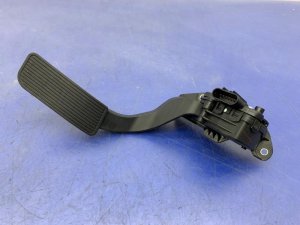
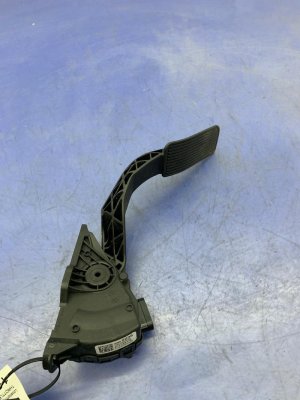
On a 2007-2014 Tahoe, code P2127 is most often caused by a poor electrical connection at the accelerator pedal sensor. Before replacing the pedal assembly, inspect the connector for loose terminals as noted in GM TSB #PIP3783D. If the connector is fine, replacing the accelerator pedal assembly (OEM Part #25832864) is the next likely fix. This issue is common across the GMT900 platform, including the Silverado, Sierra, Yukon, and Escalade.
- P2127 on a 2007-2014 Tahoe means the computer sees low voltage from the secondary sensor in your gas pedal assembly.
- The most common symptom is the "Reduced Engine Power" warning, which makes the vehicle unsafe to drive at normal speeds.
- ALWAYS check the electrical connector at the pedal first. Poor pin tension is a very common problem on these trucks, as noted in a GM service bulletin.
- If the connector is secure and undamaged, the next step is to replace the entire accelerator pedal assembly, which includes the sensors.
- Do not mistake this for a throttle body problem; P2127 points specifically to the pedal sensor circuit.
What's Unique About the 2007-2014 Chevrolet TAHOE
The 2007-2014 (GMT900) generation of GM trucks and SUVs, including the Tahoe, is known for having electrical connection issues at the accelerator pedal. General Motors issued a Technical Service Bulletin (TSB #PIP3783D) highlighting that poor terminal tension in the APP sensor's electrical connector is a common cause for this and related codes. This makes checking the wiring and connector an essential first step, as the problem may not be the sensor itself. The TSB advises inspecting the APP connector, ECM connector, and intermediate connectors C109/X109 and C205/X205 for this issue.
Diagnostic Flowchart
Tap your situation to follow the diagnostic path that matches what you're seeing on this vehicle.
Symptoms You May Notice
- Check Engine Light is on
- "Reduced Engine Power" message displayed on the instrument cluster
- Little to no throttle response or acceleration
- Vehicle may stall or idle roughly
- Inability to accelerate past a certain speed (e.g., 30-40 mph)
- Intermittent "Service Throttle Body" message may appear
- Replacing the Throttle Body. The throttle body has its own position sensors (TP), but P2127 specifically relates to the accelerator pedal assembly (APP). While some owners have reported replacing the throttle body, sometimes in confusion or after multiple failed fixes, the pedal sensor and its wiring should always be the first focus for this code.
Most Likely Causes
- Poor Connection or Damaged Wiring at APP Sensor 🔴 High Probability As documented in TSB #PIP3783D, the female terminals in the APP sensor's electrical connector can lose tension over time, causing an intermittent or poor connection. The harness is also located in an area where it can be disturbed by floor mats or foot traffic, leading to frayed wires or shorts.
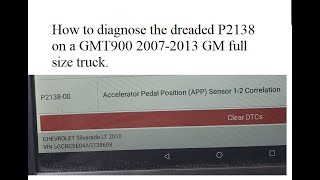
How to confirm: Visually inspect the wiring harness and connector at the accelerator pedal. Disconnect it and check for corrosion, backed-out pins, or damage. Use proper terminal test probes to check the tension of the female pins in the connector. Wiggling the harness while monitoring sensor voltage on a scan tool can also reveal 🎬 See how to diagnose APP sensor voltage issues with a scan tool. intermittent connections, especially when driving over bumps.
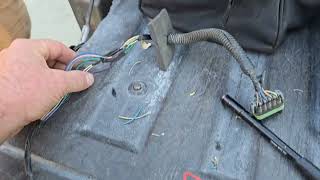
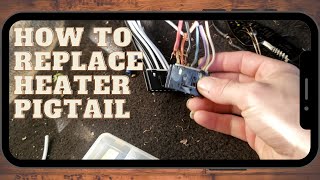
Typical fix: If terminal tension is poor, the terminals may need to be re-crimped or the connector pigtail replaced. A common pigtail replacement is ACDelco PT2712. 🎬 Watch: How to properly replace a damaged pigtail connector. Damaged wires must be repaired.
Est. part cost: $15-$40 for a new connector pigtail - Faulty Accelerator Pedal Position (APP) Sensor Assembly 🟡 Medium Probability → Shop Accelerator Pedal Assembly The sensor is an electronic component that can fail internally over time. Since it's a complete assembly with the pedal, it's a common replacement part. Forum users frequently report this as the ultimate fix after checking wiring.
How to confirm: If the wiring and connector are confirmed to be good, use a scan tool to monitor the voltage from APP Sensor 1 and APP Sensor 2. For P2127, the voltage for sensor 2 will likely be stuck low (typically below 0.25V) and won't change as the pedal is pressed. At rest, APP Sensor 1 should be around 0.5-1.1V and APP Sensor 2 should be around 1.2-2.0V.
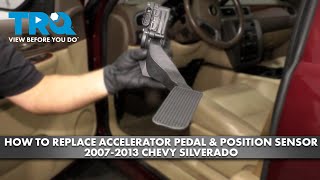
Typical fix: Replace the entire accelerator pedal assembly. This part is typically sold as one unit and does not require programming. After replacement, 🎬 Watch: Step-by-step guide to replacing the accelerator pedal assembly. some sources suggest an idle relearn procedure (idling for 3 minutes, off for 1 minute, repeat) may be beneficial.
Est. part cost: $60-$160
Rare But Worth Checking
- Faulty Powertrain Control Module (PCM): → Shop Engine Control Module (ECM) This is rare and should only be considered after all other possibilities, including wiring and the sensor itself, have been thoroughly ruled out. A technician can perform advanced diagnostics by testing the signal circuit for an open or short to ground; if the circuit tests normal but the fault persists, the ECM may be the cause. Water intrusion into the ECM connector can also cause this fault.
- Poor Ground Connection: A corroded or loose ground wire for the engine control circuits can cause a variety of electrical issues, including APP sensor codes. The low reference circuit for the APP sensor should have less than 5 ohms of resistance to ground. A faulty ground can cause floating voltage readings. Key grounds to inspect include G103 on the cowl above the brake booster.
Diagnosis Steps
- Read all stored fault codes with an OBD-II scanner. Note any other codes present, especially P2122 or P2138.
- Observe the symptoms. Confirm if the 'Reduced Engine Power' message is active and if there is a lack of throttle response.
- Perform a thorough visual inspection of the accelerator pedal's wiring harness and connector. Look for any signs of damage, chafing, corrosion, or interference from floor mats.
- As recommended by TSB #PIP3783D, carefully check for poor terminal tension in the APP sensor connector. The female pins should grip the male pins on the sensor tightly.
- If you have a scan tool with live data, monitor the voltage readings for both APP Sensor 1 and APP Sensor 2. With the key on and engine off, press and release the pedal. The voltage should sweep smoothly. For P2127, you will likely see APP Sensor 2 voltage stuck at a very low value (under 0.25V).
- Test the circuits at the connector. With the key on, you should find a 5-volt reference wire, a ground wire (low reference), and the signal wire. The 5V reference should be between 4.5 and 5.2 volts. The signal wire for APP Sensor 2 is typically a Light Green wire on these models.
- If the connector and wiring are good but the sensor voltage is incorrect, the accelerator pedal assembly needs to be replaced.
- If the problem persists after replacing the pedal, re-check the wiring for an intermittent short to ground between the pedal and the PCM. TSB #PIP3783D also suggests checking intermediate connectors like C109/X109 and C205/X205.
- As a final step, if all wiring and components are verified to be good, the PCM may be at fault, though this is uncommon.
Parts You'll Likely Need
- Accelerator Pedal Assembly with Sensor
(OEM #25832864)— This is the most common fix when the wiring connector is not the issue. The sensor fails internally, requiring the replacement of the entire pedal assembly. This part number is widely cited for the 2007-2011 model years of the Tahoe and its platform mates. It is known to supersede older part numbers 15101848 and 15847349.
Trusted brands: ACDelco (GM Genuine Parts), Dorman
OEM price range: $95-$160
Aftermarket price range: $50-$100 - APP Sensor Connector Pigtail
(OEM #ACDelco PT2712 / Standard Motor Products S-1479)— If diagnostics point to poor terminal tension or a damaged connector as per TSB #PIP3783D, replacing the pigtail is the most robust repair.
Trusted brands: ACDelco, Dorman, Standard Motor Products
OEM price range: $25-$40
Aftermarket price range: $15-$30
Related Codes That Often Appear With This One
- P2122 — This code also indicates a low voltage input, but for the APP Sensor 1 circuit. Seeing them together strongly suggests a common problem like the connector, ground, or 5-volt reference circuit.
- P2138 — This code indicates a voltage correlation error between APP Sensor 1 and APP Sensor 2. It's frequently set alongside P2127 because the low voltage from sensor 2 doesn't match the signal from sensor 1, triggering the correlation fault.
- P2120, P2123, P2125, P2128 — These are all part of the same family of APP sensor circuit codes and are mentioned together in TSB #PIP3783D.
Technical Service Bulletins (TSBs) & Recalls
- PIP3783D: Addresses the Service Engine Soon light, Reduced Engine Power message, and multiple APP sensor DTCs (including P2127). The primary diagnostic step is to inspect the APP circuits for poor terminal tension at the pedal, ECM, and intermediate connectors.
Platform-Specific Known Issues
- A known issue, documented in TSB #PIP3783D, is poor terminal tension in the accelerator pedal position sensor's electrical connector, leading to intermittent low voltage signals and triggering codes like P2127. The TSB directs technicians to check not only the connector at the pedal but also intermediate connectors (C109/X109, C205/X205) and the main ECM connector.
Mechanic-Grade Diagnostic Values
- APP Sensor 5-Volt Reference — expected: 4.5V - 5.2V. Failure: Voltage below 4.5V indicates a problem with the PCM supply circuit or a short to ground.
- APP Sensor 2 Signal Voltage (at rest, KOEO) — expected: ~1.2V - 2.0V. Failure: A voltage consistently below 0.2V - 0.25V for more than 200ms will trigger DTC P2127.
- APP Sensor 1 Signal Voltage (at rest, KOEO) — expected: ~0.5V - 1.1V. Failure: While not directly for P2127, an incorrect reading here can help diagnose a shared circuit problem.
- APP Low Reference Circuit to Ground Resistance — expected: Less than 5 ohms. Failure: Resistance greater than 5 ohms indicates a poor ground connection, which can cause erratic sensor readings.
- APP Sensor 2 Signal Circuit to Ground Resistance — expected: Infinite resistance (Open circuit). Failure: Any significant continuity (e.g., less than 100 ohms) indicates a short to ground in the signal wire.
Scan Tool Commands That Help
- GDS2 / Tech2: Idle Learn Procedure / Throttle Relearn — After replacing the accelerator pedal assembly, throttle body, or disconnecting the battery, this procedure helps the ECM relearn the idle position and stabilize engine RPM. It typically involves idling the engine for 3 minutes, turning it off for 60 seconds, and repeating.
Wiring & Ground Locations
- APP Sensor Connector — At the top of the accelerator pedal assembly, under the driver's side dashboard.. This is the primary connection point and the most common location for poor terminal tension as cited in TSB #PIP3783D.
- X109 / C109 — An intermediate harness connector located on the left side of the engine compartment, below the underhood fuse block.. TSB #PIP3783D identifies this as a potential location for corrosion, water intrusion, or poor connection that can interrupt the APP sensor signals to the ECM.
- X205 / C205 — An intermediate harness connector located under the upper instrument panel trim, near the windshield defroster grille.. Similar to X109, this connector is a known trouble spot mentioned in TSB #PIP3783D for issues that can cause APP sensor codes.
- G103 — Located at the left rear of the engine compartment on the cowl, above the brake booster.. This is a major ground point for the BCM and other interior modules. While not the primary ECM ground, a poor connection here can cause widespread electrical issues that could potentially affect sensor readings.
Real Owner Repair Stories
- YouTube user 'CHECK ENGINE KSA' (Chevrolet Tahoe (year not specified, but GMT900 body style)) — Check Engine Light with codes P2127 and P2138, Reduced Engine Power.
❌ Tried (didn't work) Initial diagnosis pointed towards the APP sensor itself.
✅ What actually fixed it The technician found water had intruded into the wiring harness near the accelerator pedal. After drying out the connector and harness, the codes were cleared and did not return, indicating the water was causing a short or low voltage reading.
OEM Part Supersession History
15101848, 15847349→25832864— GM regularly updates service parts to integrate new materials or design improvements.
Heads up: Part 25832864 is the current recommended replacement for the listed older numbers on vehicles with adjustable pedals. Always verify fitment with VIN.
Helpful Videos
We Have This Part in Stock

The information in this article is provided for general reference and educational purposes only. Vehicle specifications, procedures, and part compatibility can vary by production date, trim level, and region. Always consult your vehicle's factory service manual and verify part numbers before purchasing or performing repairs. Safety-critical components such as airbags, seat belts, and braking systems should be installed by a qualified professional.
- Chevrolet TAHOE:
- 🧭 Diagnostic Flowchart
- 🎬 Helpful Videos
- 🛍️ Shop This Part
- What's Unique About the 2007-2014 Chevrolet TAHOE
- Symptoms You May Notice
- Most Likely Causes
- Rare But Worth Checking
- Diagnosis Steps
- Parts You'll Likely Need
- Related Codes That Often Appear With This One
- Technical Service Bulletins (TSBs) & Recalls
- Platform-Specific Known Issues
- Mechanic-Grade Diagnostic Values
- Scan Tool Commands That Help
- Wiring & Ground Locations
- Real Owner Repair Stories
- OEM Part Supersession History
- 🎟️ Get 5% Off