

P2127 on 2007-2014 GMC Yukon XL: Accelerator Pedal Sensor Low Voltage Fixes
This code almost always points to a faulty accelerator pedal position (APP) sensor, which is replaced as a complete pedal assembly. Before replacing, check the connector for loose pins, as a GM Technical Service Bulletin highlights this as a known issue. Expect to pay $60-$150 for the part. The most common OEM part number is ACDelco 25832864.
- P2127 on your Yukon XL means the second accelerator pedal sensor has a low voltage reading.
- This will cause the "Reduced Engine Power" message and limit your ability to accelerate.
- The most likely fix is replacing the entire accelerator pedal assembly (OEM part ACDelco 25832864).
- Before replacing parts, always inspect the electrical connector at the pedal for loose pins, as this is a known GM issue (TSB #PIP3783D).
- This is a DIY-friendly repair that typically requires only basic hand tools and about 30-60 minutes. A throttle relearn procedure may be required after the repair.
What's Unique About the 2007-2014 Gmc YUKON XL
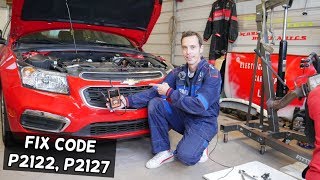
For the GMT900 platform, which includes the 2007-2014 Yukon XL, General Motors issued a Technical Service Bulletin (TSB #PIP3783D) specifically for this and related codes. 🎬 Watch: How to fix codes P2122 and P2127 on GM vehicles The TSB points directly to "poor terminal tension" in the accelerator pedal's electrical connector as a primary cause. This makes checking the connector and its pins a critical first step before assuming the pedal assembly itself has failed. This issue is common across the entire GMT900 lineup, including the Chevrolet Tahoe, Suburban, and Cadillac Escalade.
Diagnostic Flowchart
Tap your situation to follow the diagnostic path that matches what you're seeing on this vehicle.
Symptoms You May Notice
- "Reduced Engine Power" message on the driver information center
- Check Engine Light is illuminated
- Poor or no throttle response; the vehicle will not accelerate properly or may feel like it's in 'limp mode'
- "Service Stabilitrak" or "Service Traction Control" messages may also appear simultaneously
- Engine may stall or have a rough, unstable idle
- Replacing the throttle body. The P2127 code is specific to the pedal sensor circuit ('E' circuit), not the throttle body on the engine. While throttle body issues can cause similar symptoms like 'Reduced Engine Power', they will set different codes (e.g., P1516, P2101).
Most Likely Causes
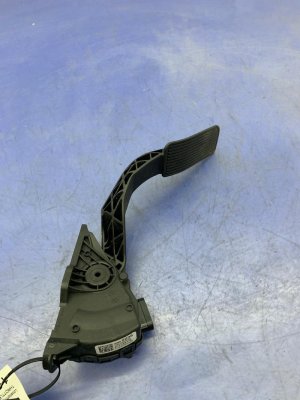
- Faulty Accelerator Pedal Position (APP) Sensor Assembly 🔴 High Probability → Shop Accelerator Pedal Assembly The sensor is integrated into the pedal assembly, which is a common wear item. Internal resistive contacts fail over time, leading to incorrect voltage signals. The entire assembly is a single part number from GM.
How to confirm: Use a scan tool to monitor the live data for APP Sensor 1 and APP Sensor 2. As you press the pedal, the voltage for Sensor 2 will be erratic, show dropouts, or read a constant low voltage (typically <0.5V). A good sensor will show a smooth sweep.
Typical fix: Replace the entire accelerator pedal assembly. It is a single unit that bolts to the firewall with two or three 10mm nuts.
Est. part cost: $60-$150 - Poor Connection or Damaged Wiring at the APP Sensor 🟡 Medium Probability GM TSB #PIP3783D specifically calls out "poor terminal tension" in the connector as a known issue for this code on this platform. The connector's location near the driver's feet also makes it susceptible to being kicked or stressed, and floor mats can sometimes interfere with the wiring.
How to confirm: Visually inspect the connector at the top of the accelerator pedal for loose, bent, or corroded pins. Wiggle the connector while monitoring the APP sensor voltage on a scan tool to see if the reading changes or drops out. This is often called a 'wiggle test'.
Typical fix: Clean the connector terminals. If pins are loose, you may need to carefully re-tension them with a small pick or replace the connector pigtail. Applying dielectric grease can help prevent future corrosion.
Est. part cost: $0-$30
Rare But Worth Checking
- Faulty Engine Control Module (ECM): → Shop Engine Control Module (ECM) This is very rare. The ECM should only be considered after all other possibilities, including wiring and the sensor itself, have been exhaustively checked and ruled out. An ECM failure will typically present with multiple, unrelated codes.
Diagnosis Steps
- Plug in an OBD-II scanner and confirm P2127 is present. Note any other codes, especially P2138 or P2122.
- Observe the live data from APP Sensor 1 and APP Sensor 2 with the key on, engine off.
- Slowly press and release the accelerator pedal. APP Sensor 1 voltage should sweep smoothly (e.g., ~0.7V to ~3.8V) and APP Sensor 2 should also sweep smoothly in its own range. With P2127, you will likely see Sensor 2's voltage stuck low or dropping out.
- Locate the accelerator pedal assembly and inspect the electrical connector at the top. Check for any signs of damage, corrosion, or loose pins. Wiggle the harness to check for intermittent faults.
- As per TSB #PIP3783D, pay close attention to the terminal tension. A loose connection is a known cause.
- If the connector looks good, use a multimeter to check for the 5-volt reference and a good ground at the connector with the key on. A loss of either will cause this code.
- If wiring and connections are confirmed to be good, the APP sensor assembly is the most likely culprit.
- Replace the accelerator pedal assembly. After replacement, a 'relearn' procedure is recommended. A common method is to let the vehicle idle for 3 minutes, turn it off for 1-3 minutes, and then repeat the idle cycle.
Parts You'll Likely Need
- Accelerator Pedal Assembly
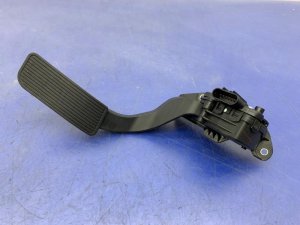
(OEM #ACDelco 25832864)— This is the most common failure point for code P2127. The sensor is integrated into the pedal assembly and is not sold separately. Part number 25832864 is the common OEM replacement for vehicles with adjustable pedals and a tin connector.
Trusted brands: ACDelco (OEM), Standard Motor Products (APS265), Dorman (699-118), NGK/NTK (AD0456)
OEM price range: $100-$150
Aftermarket price range: $60-$120
Related Codes That Often Appear With This One
- P2138 — This code indicates a voltage correlation problem between APP Sensor 1 and APP Sensor 2. It's very common to see this with P2127 because if Sensor 2's voltage is too low, it won't match Sensor 1's reading, triggering the correlation fault.
- P2122 — This is the 'low voltage' code for APP Sensor 1 ('D' circuit). If both P2122 and P2127 are present, it could point to a problem common to both sensor circuits, like a loss of the 5-volt reference or ground connection at the pedal connector.
Technical Service Bulletins (TSBs) & Recalls
- PIP3783D: Mentions that codes P2120, P2122, P2123, P2125, P2127, P2128, and/or P2138 can be caused by poor terminal tension in the Accelerator Pedal Position circuits.
Platform-Specific Known Issues
- A known issue documented in TSB #PIP3783D is poor terminal tension in the APP sensor connector, causing intermittent low voltage readings and triggering codes P2127, P2122, and P2138.
- Some owners on forums report that after replacing the pedal, a throttle relearn procedure is necessary to resolve the issue, even if the code is cleared.
Mechanic-Grade Diagnostic Values
- APP Sensor 2 Signal Voltage (Pin B, Light Blue wire) — expected: Approx. 0.45V at rest, sweeping up to approx. 2.5V at full pedal press.. Failure: Voltage is consistently below 0.25V.
- APP Sensor 1 Signal Voltage (Pin E, Dark Blue wire) — expected: Approx. 0.88V at rest, sweeping up to approx. 4.5V at full pedal press.. Failure: While not the direct cause of P2127, an erratic reading here alongside a P2127 fault could indicate a shared power or ground issue.
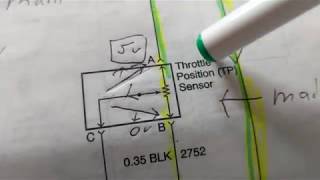
- 5-Volt Reference at APP Connector (Pin C & Pin F) — expected: Between 4.5 and 5.2 volts with key on, engine off.. Failure: Voltage below 4.5V indicates a problem with the ECM or the wiring from the ECM.
- Low Reference (Ground) at APP Connector (Pin A & Pin D) — expected: Less than 100mV (0.1V) when back-probing with key on.. Failure: Voltage significantly higher than 0.1V indicates a poor ground connection, which can cause low signal voltage.
Scan Tool Commands That Help
- GDS2 / Tech 2: Idle Learn Reset / Throttle Relearn — This function should be used after replacing the accelerator pedal assembly or the ECM to reset learned values and force the system to relearn the new sensor's idle and wide-open throttle positions.
- Professional Scan Tool (e.g., UR800): Live Data Monitoring for APP Sensor 1 and APP Sensor 2 — Essential for initial diagnosis. Watching the voltage percentages or raw voltage of both sensors while pressing the pedal can instantly show if Sensor 2 ('E' circuit) is dropping out or not responding, confirming the fault location.
Wiring & Ground Locations
- APP Sensor Connector (X206) — At the top of the accelerator pedal assembly, under the driver's side dashboard.. This is the primary connection point for the sensor. TSB #PIP3783D specifically identifies poor terminal tension within this connector as a root cause. The pins are: A (Low Ref), B (APP 2 Signal), C (5V Ref), D (Low Ref), E (APP 1 Signal), F (5V Ref).
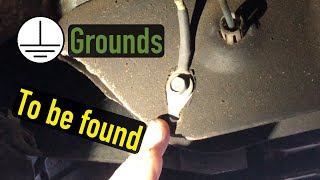
- G103 — On the front of the right cylinder head.. This is a major engine ground. While not a direct ground for the APP sensor (which is grounded through the ECM), a poor connection here can create electrical noise and voltage offsets that affect various sensor readings processed by the ECM.
- G104 / G108 — Located on the rear of the driver's side (left) cylinder head. A ground strap often connects from here to the firewall.. This is a critical ground path for the engine block to the chassis/body. A loose or corroded connection here can cause intermittent and difficult-to-diagnose electrical issues, including problems with sensor reference voltages that rely on a stable ground at the ECM.
Real Owner Repair Stories
- Reddit user /u/dropkickbitch (2007 Saturn Ion 2.2L (Shares similar GM electronic throttle control logic)) — Low engine power, intermittent lack of throttle response from idle, P2127 code present.
❌ Tried (didn't work) Replacing the accelerator pedal sensor assembly. The problem returned the next day.
✅ What actually fixed it An auto electrician found and repaired wires that were rubbing together after coming loose from their harness, causing an intermittent short. Securing the wiring resolved the issue.
When the Usual Fixes Don't Work
- While replacing the pedal assembly is the most common fix, there are documented cases where the code returned immediately. In one instance, the problem was ultimately traced to a chafed wiring harness that was intermittently shorting out. This highlights the importance of performing the wiggle test and thoroughly inspecting the harness from the pedal to the firewall, even if the connector pins look okay.
Model Year Variations Within This Range
- 2007-2014: While the function is the same, there can be different part numbers for the accelerator pedal assembly depending on whether the vehicle is equipped with power-adjustable pedals (RPO JF4). The correct part must be used as the mounting and sometimes the connector can differ. The common part number 25832864 is for vehicles with adjustable pedals.
Helpful Videos
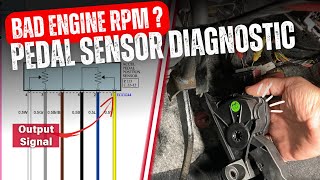
We Have This Part in Stock

The information in this article is provided for general reference and educational purposes only. Vehicle specifications, procedures, and part compatibility can vary by production date, trim level, and region. Always consult your vehicle's factory service manual and verify part numbers before purchasing or performing repairs. Safety-critical components such as airbags, seat belts, and braking systems should be installed by a qualified professional.
- Gmc YUKON XL:
- 🧭 Diagnostic Flowchart
- 🎬 Helpful Videos
- 🛍️ Shop This Part
- What's Unique About the 2007-2014 Gmc YUKON XL
- Symptoms You May Notice
- Most Likely Causes
- Rare But Worth Checking
- Diagnosis Steps
- Parts You'll Likely Need
- Related Codes That Often Appear With This One
- Technical Service Bulletins (TSBs) & Recalls
- Platform-Specific Known Issues
- Mechanic-Grade Diagnostic Values
- Scan Tool Commands That Help
- Wiring & Ground Locations
- Real Owner Repair Stories
- When the Usual Fixes Don't Work
- Model Year Variations Within This Range
- 🎟️ Get 5% Off