

P2135 on 2010-2012 Ford Fusion 2.5L: Throttle Body Failure Causes and Fixes
On a 2010-2012 Ford Fusion, code P2135 almost always means the electronic throttle body has failed. The internal sensors lose correlation, forcing the car into limp mode. The fix is to replace the entire throttle body assembly, which costs about $190 for an OEM part and is a straightforward DIY job that takes less than 30 minutes.
- P2135 on a 2010-2012 Fusion is almost certainly a failed electronic throttle body, a known issue confirmed by a Ford TSB.
- The repair involves replacing the entire throttle body assembly, which is a simple, quick DIY job for most owners.
- The correct, updated OEM part number is DS7Z-9E926-D.
- After replacement, a simple idle relearn procedure is necessary and does not require special tools.
- The same issue affects platform mates like the 2009-2012 Ford Escape and 2010-2011 Mercury Milan.
What's Unique About the 2010-2012 Ford Fusion
The 2010 Ford Fusion, in particular, is known for this issue due to a batch of faulty electronic throttle bodies from the factory. Ford issued Technical Service Bulletin (TSB) 09-23-5 specifically for 2010 models built between June 22, 2009, and October 15, 2009. The TSB identifies the cause as an internal hardware failure within the electronic throttle body (ETB), specifically a plating variation on the printed circuit board caused by dust particle contamination during manufacturing. This defect can lead to cracks in the circuit when exposed to normal engine heat, causing an electrical fault. While the TSB focuses on 2010 models, the failure is common across the 2010-2012 model years, indicating a persistent weakness in the part. Ford also issued Customer Satisfaction Program 13N03 which extended the warranty on the throttle body for certain 2009-2013 vehicles to 10 years or 150,000 miles, further confirming the high failure rate.
Symptoms You May Notice
- Wrench warning light illuminates on the dashboard.
- Vehicle enters 'limp mode' with severely limited engine power and acceleration.
- Hesitation or surging during acceleration.
- Engine stalls, especially after coming to a stop.
- Unstable or high idle RPM.
- Check Engine Light is on.
- Engine revs but vehicle does not accelerate accordingly.
- Replacing the accelerator pedal assembly. While the pedal also has position sensors (APP), the P2135 code on this specific vehicle is overwhelmingly caused by the throttle body itself, as confirmed by TSB 09-23-5 and numerous owner accounts.
Most Likely Causes
- Faulty Electronic Throttle Body (ETB) Assembly 🔴 High Probability → Shop Fuel Injection Throttle Body A known hardware defect prompted Ford to issue TSB 09-23-5 for 2010 models, and the issue persists in later years. The throttle position sensors are integrated into the assembly and are not serviced separately. The failure is due to contamination on the internal circuit board causing a loss of continuity.
How to confirm: Use a scan tool to monitor live data for TP1 and TP2 voltages with the key on, engine off. As you slowly press the gas pedal, the two voltage readings should change smoothly and have an inverse relationship. A jump, drop, or freeze in one of the signals indicates a faulty sensor inside the throttle body.
Typical fix: Replace the entire electronic throttle body assembly and the corresponding gasket. After replacement, a throttle body relearn procedure should be performed to ensure proper idle and performance.
Est. part cost: $150-$250 - Damaged Wiring or Poor Connection ⚪ Low Probability
How to confirm: Visually inspect the wiring harness and connector at the throttle body for any signs of corrosion, bent pins, or chafed wires. While monitoring live sensor data on a scan tool, wiggle the harness and connector to see if the voltage signals become erratic, which would indicate an intermittent connection.
Typical fix: Repair the damaged section of the wiring harness or clean/replace the electrical connector.
Est. part cost: $10-$50
Rare But Worth Checking
- Faulty Powertrain Control Module (PCM): → Shop Engine Control Module (ECM) This is very rare. The PCM should only be considered after the throttle body and wiring have been definitively ruled out as the cause. A manufacturer service bulletin for other Ford models (referenced in NHTSA ODI #10748493) notes that P2135 can sometimes require a Powertrain Control Module reset (B36.11 or B37.2) in addition to sensor checks.
Diagnosis Steps
- Connect an OBD-II scanner and confirm P2135 is the primary code. Check for any other throttle-related codes like P2111 or P2112.
- Access live data on the scanner and display the graphs for Throttle Position Sensor 1 (TP1) and Throttle Position Sensor 2 (TP2).
- With the key on and engine off, slowly press and release the accelerator pedal. Observe the sensor voltage graphs. They should move smoothly and be inversely related (one goes up as the other goes down). Any spikes, dropouts, or flat lines indicate a sensor failure within the throttle body. NHTSA ODI #10817084 notes a case where the TPS reading was stuck at 82% due to a defective throttle body.
- If the data looks inconclusive, turn the vehicle off and disconnect the throttle body electrical connector. Inspect for corrosion, moisture, or bent pins. Clean with electrical contact cleaner if necessary.
- Reconnect the harness and repeat the live data test while wiggling the wires and connector to check for an intermittent connection issue.
- If the sensor data is erratic or does not correlate properly, the throttle body assembly is faulty and needs to be replaced.
- After replacement, perform a throttle body relearn procedure. A common method is to disconnect the negative battery terminal for 5-10 minutes to clear the PCM's memory. Reconnect, turn the key to 'ON' (without starting) for a minute, then start the engine and let it idle for at least 10 minutes to allow the PCM to learn the new throttle's idle position.
Parts You'll Likely Need
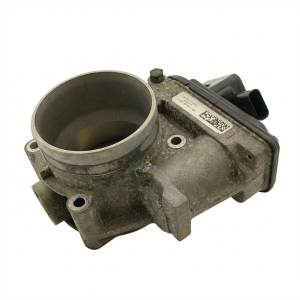
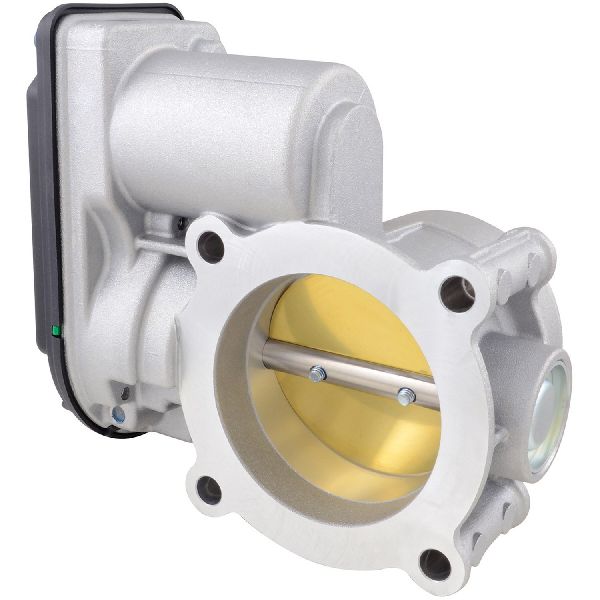
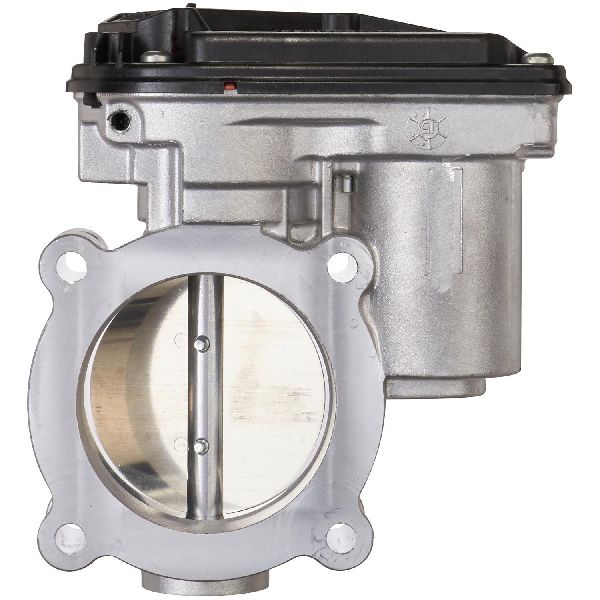
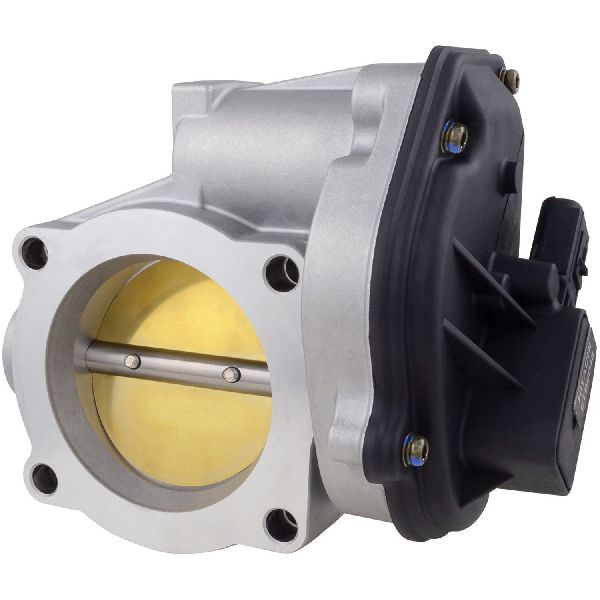
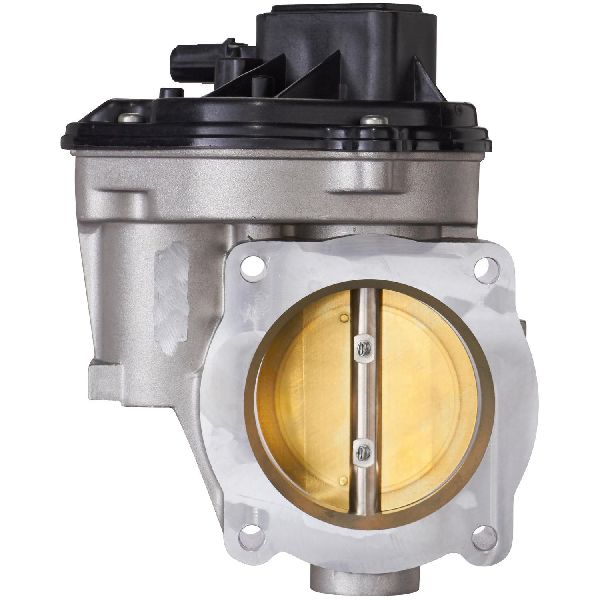
- Electronic Throttle Body Assembly
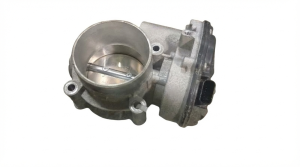
(OEM #DS7Z-9E926-D (supersedes 9L8Z-9E926-A and DS7Z-9E926-A))— This is the most common failure point for code P2135 on this vehicle, as confirmed by owner experiences and a Ford TSB. The non-serviceable internal sensors fail, requiring replacement of the whole unit.
Trusted brands: Motorcraft, Bosch, Dorman, Standard Motor Products (SMP)
OEM price range: $190-$240
Aftermarket price range: $70-$150 - Throttle Body Gasket
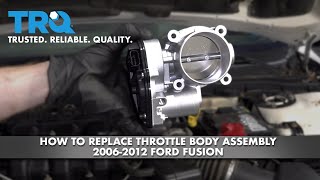
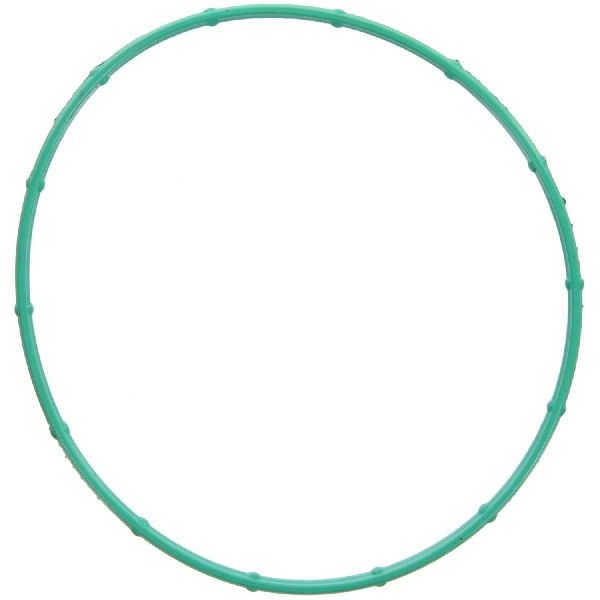
(OEM #9L8Z-9E936-A)— A new gasket should always be used when replacing the throttle body to prevent vacuum leaks. It is often included with a new throttle body assembly. 🎬 See this walkthrough for replacing the assembly on 2006-2012 models
Trusted brands: Motorcraft, Fel-Pro, Mahle
OEM price range: $5-$15
Aftermarket price range: $3-$10
Related Codes That Often Appear With This One
- P2111 — Stands for 'Throttle Actuator Control System - Stuck Open'. This can occur alongside P2135 if the PCM loses confidence in the throttle plate's position and also detects it is not responding as commanded. NHTSA ODI #10537825 describes a case where pinpoint tests showed the throttle actuator control motor was failing when both codes were present.
- P2112 — Stands for 'Throttle Actuator Control System - Stuck Closed'. Similar to P2111, this indicates the PCM believes the throttle plate is stuck, which can be a result of the conflicting sensor data from the P2135 fault.
Technical Service Bulletins (TSBs) & Recalls
- TSB 09-23-5: Addresses Malfunction Indicator Lamp (MIL) or wrench light with DTC P2135 on some 2010 Fusions, Mariners, and Escapes. The cause is identified as Electronic Throttle Body (ETB) hardware, and the fix is to replace the ETB.
Platform-Specific Known Issues
- Ford TSB 09-23-5 was issued for 2010 Fusion models (built from 6/22/09 to 10/15/09) with the 2.5L or 3.0L engine that set code P2135, directly blaming faulty throttle body hardware.
- The root cause identified by Ford was dust contamination on the internal printed circuit board 🎬 Watch: Understanding why these Ford electronic throttle bodies fail during manufacturing, which could lead to circuit cracks and signal failure.
- Cross-manufacturer records such as NHTSA ODI #10564644 indicate that this throttle body failure often occurs after the vehicle has been warm and then gotten cold, causing the throttle body to become disabled.
Mechanic-Grade Diagnostic Values
- TP1 and TP2 Voltage Correlation — expected: With the key on and engine off, the sum of TP1 and TP2 voltages should remain constant, typically around 5.0V, as the throttle plate is moved.. Failure: A jump, drop, or freeze in one of the signals, or a deviation in the combined voltage, points to a faulty sensor within the throttle body assembly.
- TP1 Voltage Range (Pedal Released) — expected: 3.7V to 4.7V. Failure: A reading outside this range indicates a potential sensor or wiring fault.
- TP2 Voltage Range (Pedal Released) — expected: 0.3V to 1.9V. Failure: A reading outside this range indicates a potential sensor or wiring fault.
- TP1 Voltage Range (Pedal Floored) — expected: 0.7V to 2.9V. Failure: A reading outside this range indicates a potential sensor or wiring fault.
- TP2 Voltage Range (Pedal Floored) — expected: 4.1V to 4.7V. Failure: A reading outside this range indicates a potential sensor or wiring fault.
Scan Tool Commands That Help
- Ford IDS (or equivalent professional scanner): Clear KAM (Keep Alive Memory) — After replacing the throttle body, this function should be used to wipe the PCM's adaptive memory, including learned idle and throttle trim values. This forces the PCM to perform a fresh relearn procedure with the new part.
- Ford IDS (or equivalent professional scanner): Throttle Body/TPS Calibration or Relearn — While a manual relearn often works, a professional scan tool can command a guided and verified throttle relearn. This is useful if the manual procedure does not result in a stable idle after part replacement.
Wiring & Ground Locations
- C175B — The 6-pin electrical connector located directly on the electronic throttle body assembly.. This is the single connection point for all signals and power to the throttle body. The pins for TP1, TP2, 5V reference (ETCREF), sensor ground (ETCRTN), and the throttle motor (TACM+/TACM-) are all located here. Corrosion, moisture, or a loose pin in this connector can directly cause P2135.
- G102 — Located on the left rear of the engine compartment.. This is a primary engine ground point. A poor connection here can create an unstable ground reference for the PCM and its sensors, including the throttle body, potentially causing erratic voltage readings and false codes.
- G104 — Located on the right front of the engine compartment, sometimes near the strut tower or under the battery tray.. This is another main engine compartment ground. The PCM and all its sensors rely on these main grounds for a stable reference voltage. A corroded or loose ground at G104 can cause the same issues as a bad G102 ground.
Real Owner Repair Stories
- Reddit user in r/fordfusion (2020 Ford Fusion, 54,900 miles) — Wrench light, Check Engine Light, vehicle entered limp mode.
❌ Tried (didn't work) A dealership initially replaced the throttle body assembly, which did not fix the problem., The dealership then replaced the accelerator pedal assembly, but the P2135 code and symptoms returned again.
✅ What actually fixed it The user was taking the vehicle to a different dealership for further diagnosis, highlighting a case where replacing both the throttle body and accelerator pedal did not provide a final resolution, pointing towards a potential wiring or PCM issue. This mirrors NHTSA ODI #11097577, where an owner reported P2135 kept happening even after replacing both the gas pedal and the throttle body. - Reddit user in r/fordfusion (2011 Ford Fusion SEL, 158,000 miles) — Check engine light and wrench light, P2135 code stored.
✅ What actually fixed it The owner replaced the throttle body assembly. No special programming was needed; the owner performed a manual idle relearn procedure found on YouTube and reported the car was running great afterward.
OEM Part Supersession History
9L8Z-9E926-A→DS7Z-9E926-D— The original part was prone to failure due to internal contamination, as noted in TSBs. The new part number is the revised, more reliable component.
Heads up: The parts are physically interchangeable, but DS7Z-9E926-D is the correct, updated replacement for the original faulty part.
Diagnostic Flowchart
Other Known Issues on This Vehicle
Issues unrelated to this code that are worth knowing about as an owner of this generation:
- Electric Power Assist Steering (EPAS) Failure 🔴 High — Very common, leading to NHTSA investigation PE13003 and recall 15S18. Can occur suddenly, resulting in a loss of power steering. (Ref: Recall 15S18, 19S26)
- 6F35 Transmission Hard Shifting / Slipping 🟠 Medium — Common complaint. Issues range from harsh engagement and slipping to complete failure. A class-action lawsuit was filed regarding these transmissions. (Ref: TSB 16-0043 (Fluid leak), TSB 16-0111 (Harsh engagement on start/stop models))
- Leaking Valve Cover Gasket 🟡 Low — A common oil leak point as the vehicle ages. The plastic valve cover and gasket can become brittle over time.
- Faulty Serpentine Belt Tensioner 🟠 Medium — The original plastic pulley on the tensioner is a known failure point. An updated OEM part with a metal pulley is available. Failure can cause the belt to come off.
- Broken Front Coil Springs 🟠 Medium — Reports of front coil springs breaking are noted in owner forums, which can cause noise and affect vehicle height and alignment.
Used vs. New Parts: Buying Guide for This Vehicle
When a used part is the smart pick: A used part is NOT recommended for this repair. The original failure is a well-documented manufacturing defect (internal contamination). A used part from a donor vehicle of the same era is highly likely to have the same latent defect and could fail prematurely.
What to inspect on the donor part:
- If a used part must be considered, source it from the newest possible model year that uses the updated part number (DS7Z-9E926-D).
OEM-only on this vehicle (don't cheap out):
- Electronic Throttle Body: Given the history of failures and the critical safety function of this part, using the updated OEM Motorcraft part (DS7Z-9E926-D) is strongly recommended for a reliable, long-term repair.
Aftermarket brands forum-validated for this vehicle:
- Motorcraft (OEM)
- Bosch (Often an OEM supplier, considered high quality)
- Hitachi
Brands owners have reported issues with on this vehicle:
- Dorman: While some Dorman parts are re-engineered to fix OEM flaws, forum and mechanic sentiment for their electronic components can be mixed, with some users reporting premature failures compared to OEM.
Real Owner Stories
Aggregated from forums and TSBs cited above. Mileages and costs reflect what owners reported in those sources.
2010 Ford Fusion 2.5L — 224000 miles
Symptoms: Vehicle entering limp mode.
What fixed it: Replacement of the original electronic throttle body.
Cost: $71-$71
Source hint: BobIsTheOilGuy.com - 2010 Ford Fusion common issues?
2011 Ford Fusion
Symptoms: Code P2135 triggered, requiring a throttle body replacement.
What fixed it: Replaced throttle body and performed a relearn by letting the car idle until it reached operating temperature.
Source hint: Reddit r/fordfusion - How to reprogram after replacing throttle body?
2010 Ford Fusion Hybrid 2.5L
Symptoms: Persistent wrench indicator light and losing acceleration.
What fixed it: Throttle body was identified as the culprit for the codes.
Source hint: Reddit r/fordfusion owner_reports
Documented NHTSA Reports
Ford Platform Owner Report
Symptoms: Vehicle check engine light comes on and ECU stores codes P2101, P2111, and P2135. The throttle body becomes disabled and the vehicle will run poorly and not accelerate.
What fixed it: Replaced with a new Ford throttle body.
Source hint: NHTSA ODI #10564644
Ford Platform Owner Report
Symptoms: While driving in stop-and-go traffic, the check engine light came on with no power, forcing the driver to idle home. OBDII codes P0122, P0222, P2111, and P2135 were present.
What fixed it: Identified as a defective throttle body.
Source hint: NHTSA ODI #10817084
Related OBD-II Codes
Frequently Asked Questions
Does TSB 09-23-5 apply to my 2010 Ford Fusion with the 2.5L engine?
Can I replace just the sensors on my Fusion's throttle body to fix P2135?
Do I need a special scan tool to program the new throttle body after replacement?
What is the root cause of the throttle body failure mentioned in Ford's technical service bulletins?
Are there other vehicles that share this same throttle body issue?
Helpful Videos

Used OEM Parts in Stock
New Aftermarket Parts Available


The information in this article is provided for general reference and educational purposes only. Vehicle specifications, procedures, and part compatibility can vary by production date, trim level, and region. Always consult your vehicle's factory service manual and verify part numbers before purchasing or performing repairs. Safety-critical components such as airbags, seat belts, and braking systems should be installed by a qualified professional.
- Ford Fusion:
- 🧭 Diagnostic Flowchart
- 🎬 Helpful Videos
- 🛍️ Shop This Part
- What's Unique About the 2010-2012 Ford Fusion
- Symptoms You May Notice
- Most Likely Causes
- Rare But Worth Checking
- Diagnosis Steps
- Parts You'll Likely Need
- Related Codes That Often Appear With This One
- Technical Service Bulletins (TSBs) & Recalls
- Platform-Specific Known Issues
- Mechanic-Grade Diagnostic Values
- Scan Tool Commands That Help
- Wiring & Ground Locations
- Real Owner Repair Stories
- OEM Part Supersession History
- Other Known Issues on This Vehicle
- Used vs. New Parts: Buying Guide for This Vehicle
- Real Owner Stories
- 2010 Ford Fusion 2.5L — 224000 miles
- 2011 Ford Fusion
- 2010 Ford Fusion Hybrid 2.5L
- Documented NHTSA Reports
- Ford Platform Owner Report
- Ford Platform Owner Report
- Related OBD-II Codes
- Frequently Asked Questions
- 🎟️ Get 5% Off