

P2135 on 2017-2023 Honda Accord: Throttle Position Sensor Failure, Causes, and Fixes
On a 2017-2023 Honda Accord, code P2135 is almost always caused by a failing throttle position sensor, which is integrated into the throttle body. The fix is to replace the entire throttle body assembly, which costs between $200-$500 for the part, followed by a mandatory throttle relearn procedure. This is a well-documented issue across Honda models with the 1.5T and 2.0T engines.
- P2135 means the two sensors inside your throttle body are disagreeing, causing your car to enter a safe 'limp mode'.
- The most common fix is to replace the entire throttle body assembly, not just a sensor.
- A 'throttle relearn' procedure is required after replacing the part to ensure proper idle and performance.
- Before buying parts, check the wiring and connector at the throttle body for obvious damage.
- While an issue with the gas pedal sensor can cause this code, it's less likely than the throttle body.
What's Unique About the 2017-2023 Honda Accord
For modern Hondas like the 2017-2023 Accord, the dual throttle position sensors (TPS) are built directly into the electronic throttle body assembly. Honda does not sell the sensors separately from the throttle body. This means that a failure of the internal sensor tracks, a common wear-and-tear issue, requires the replacement of the entire throttle body unit rather than just a small sensor. This design choice makes the repair more expensive but also more straightforward as it eliminates the possibility of misdiagnosing a faulty sensor versus a faulty throttle motor.
Generation note: The 2017-2023 year range covers three generations of the Honda Accord: the end of the 9th Gen (2017), the full 10th Gen (2018-2022), and the start of the 11th Gen (2023). The causes and repair procedures for P2135 are consistent across these modern 'drive-by-wire' generations, particularly affecting the common 1.5T and 2.0T engines.
🎬 Watch: Understanding P2135 correlation codes on 2017-2023 AccordsSymptoms You May Notice
- Sudden and significant loss of engine power (Limp Mode)
- Check Engine Light is on
- Flashing 'D' (Drive) indicator light on the dashboard
- Vehicle hesitates or won't accelerate when pressing the gas pedal
- Erratic or rough idle, sometimes idling high (e.g., 1500-2000 RPM)
- Multiple warning lights on the dashboard simultaneously, such as Vehicle Stability Assist (VSA), Collision Mitigation Braking System (CMBS), and Tire Pressure Monitoring System (TPMS) errors, as the throttle control data is critical for these systems.
- Replacing the accelerator pedal sensor when the fault is in the throttle body. Code P2138 is more specific to the pedal sensor, while P2135 most often points to the throttle body on these Hondas.
- Cleaning the throttle body. While cleaning a dirty throttle body is good maintenance for a high or rough idle, it will not fix the internal electronic failure of the sensors that causes a P2135 code. The failure is electrical, not due to carbon buildup restricting movement.
- Replacing the throttle body with a used unit. Several forum users report that the issue returned after installing a used throttle body, suggesting the failure rate is high enough that a used part is a significant gamble.
Most Likely Causes
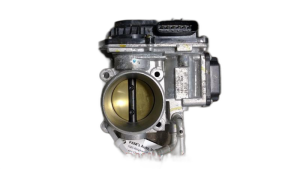
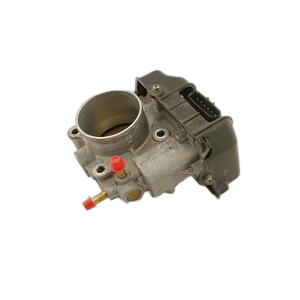
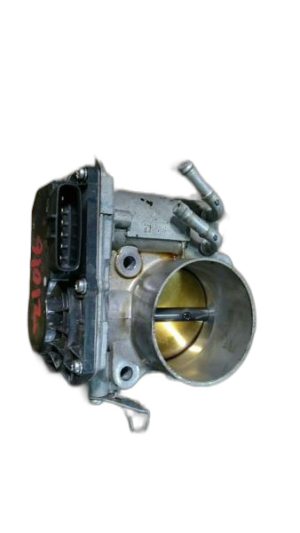
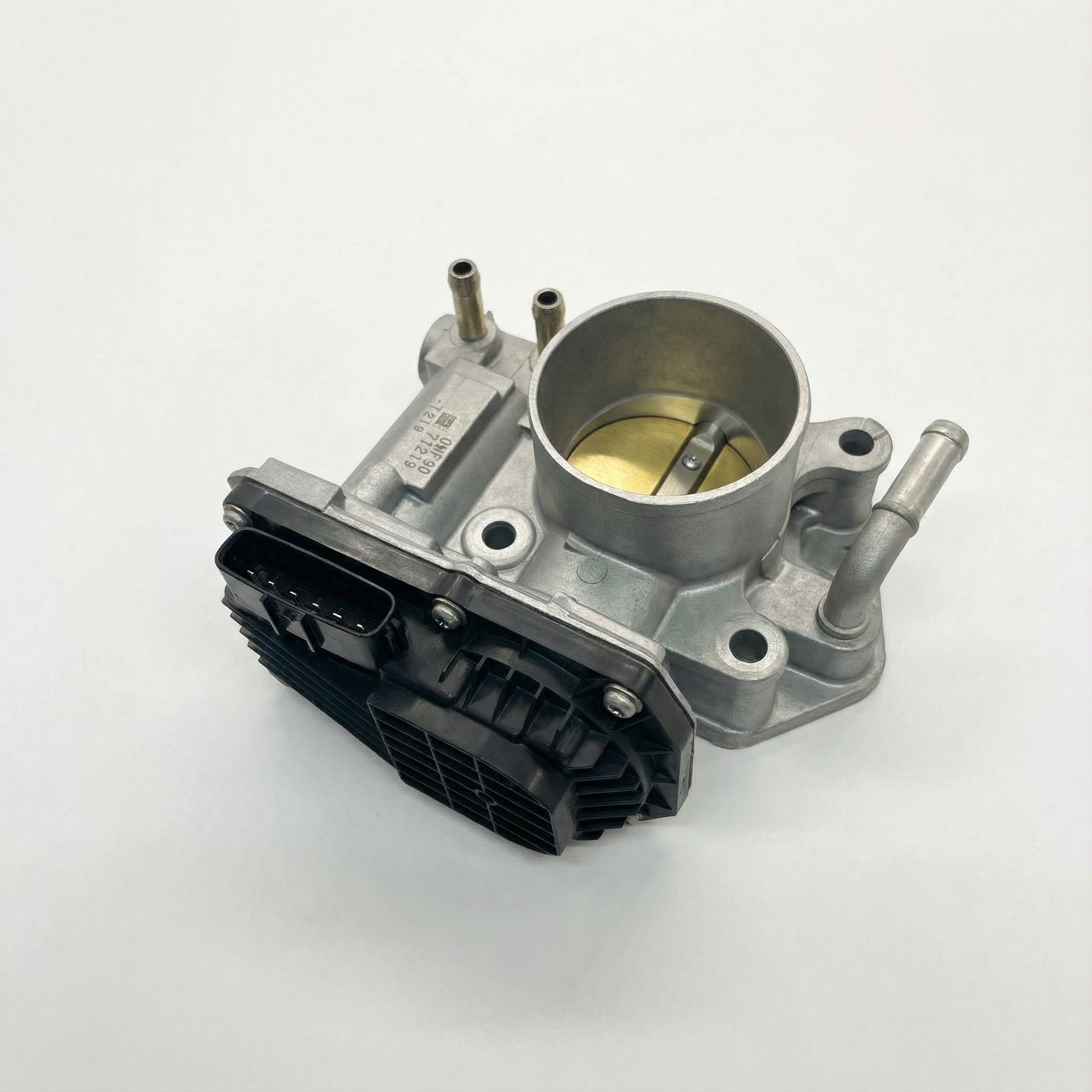
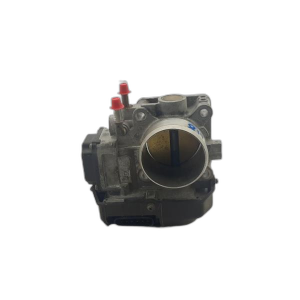
- Faulty Throttle Body Assembly 🔴 High Probability → Shop Fuel Injection Throttle Body The throttle position sensors (TPS) are integrated into the assembly and are a common failure point due to wear on the internal electronic tracks. The OEM does not service the sensor separately. This is a known issue across multiple Honda platforms using the same engine families.
How to confirm: Use a scan tool with live data to graph the voltage of TPS Sensor 1 and Sensor 2. As you slowly press the accelerator pedal, the two voltage readings should move smoothly and in opposition (one rising, one falling). A jump, drop, or flat line from one sensor, or a signal that doesn't mirror the other, indicates failure. The faulty signal often appears as a sudden 'glitch' or 'drop-out' in the voltage graph.
Typical fix: Replace the entire throttle body assembly. A mandatory throttle body 'relearn' procedure must be performed after installation.
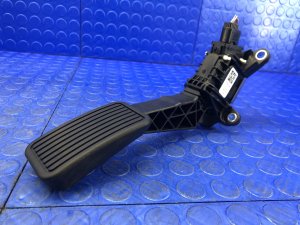
Est. part cost: $200-$500 - Faulty Accelerator Pedal Position (APP) Sensor 🟡 Medium Probability → Shop Accelerator Pedal Assembly The APP sensor, located on the gas pedal assembly, also uses dual sensors for redundancy. Like the TPS, it can wear out over time, causing correlation faults. However, P2135 is more frequently associated with the throttle body itself, while code P2138 points more directly to the APP sensor.
How to confirm: Using a scan tool, monitor the live data for APP Sensor 1 and APP Sensor 2. The voltage should increase smoothly as the pedal is depressed. Any erratic readings or dropouts point to a faulty sensor. This test should be performed after confirming the TPS signals are clean to avoid misdiagnosis.
Typical fix: Replace the accelerator pedal assembly. This is a simple bolt-on part with an electrical connector.
Est. part cost: $150-$250 - Wiring or Connector Issue ⚪ Low Probability Engine vibration and heat can, over time, cause damage to the wiring harness or corrosion in the connector at the throttle body. The wiring harness to the throttle body can be tight from the factory, putting stress on the wires and pins.
How to confirm: Visually inspect the wiring harness and connector pins for the throttle body and accelerator pedal sensor. Check for corrosion, bent pins, or loose connections. With the engine running, gently wiggle the connector and harness to see if it induces the fault. A user on a Honda Fit forum traced a P2135 to a frayed wire right at the throttle body connector due to a tight harness, which was repaired by soldering in a small extension.
Typical fix: Repair the damaged section of wiring or clean/replace the connector. In some cases, a new connector pigtail may need to be spliced in.
Est. part cost: $10-$50
Rare But Worth Checking
- Faulty Powertrain Control Module (PCM): → Shop Engine Control Module (ECM) This is very rare. The PCM should only be considered after the throttle body, pedal sensor, and all related wiring have been thoroughly tested and confirmed to be good. A faulty PCM driver for the sensor circuits could theoretically cause this code.
Diagnosis Steps
- Read the codes with an OBD-II scanner. Confirm P2135 is present and note any other codes like P2138 or P2101.
- Use a scan tool to view live data. Graph the voltage signals from 'TPS A' and 'TPS B' (or TPS1/TPS2).
- With the key on but the engine off, slowly press and release the gas pedal. The two sensor voltages should change smoothly and mirror each other (one may be inverse of the other, but the pattern should be identical). If one or both signals are erratic, jumpy, or flat, the throttle body assembly is almost certainly faulty.
- If the TPS signals look good, repeat the live data test for the 'APP Sensor A' and 'APP Sensor B' from the accelerator pedal. Check for smooth, corresponding voltage changes.
- If sensor data appears normal, perform a wiggle test. With the live data graph running, gently wiggle the wiring harness and electrical connector at the throttle body. If this causes the voltage to jump or drop out, you have a wiring issue.
- If the wiring is intact and the sensors test good, the issue could be an intermittent failure. Given the high probability of throttle body failure on this platform, if the problem is easily repeatable, replacing the throttle body is the most probable solution.
- After any replacement, perform the throttle body relearn procedure. For many Hondas, this can be done without a scan tool.
- a. Ensure all electrical accessories are off.
- b. Turn the ignition to ON (II) for 2 seconds.
- c. Start the engine and hold the RPM at 3,000 until the radiator fan cycles on, or the engine reaches operating temperature (approx. 194°F).
- d. Let the engine idle for at least 5 minutes. The idle relearn is complete. 🎬 Watch: Easy Honda idle relearn procedure without special tools
Parts You'll Likely Need
- Throttle Body Assembly
(OEM #16400-RPY-G01 (for 2.0T engine), 16400-6A0-A02 (for 1.5T engine))— This is the most common cause of P2135, as the internal throttle position sensors fail and are not sold separately by Honda.
Trusted brands: Honda (OEM), Bosch (e.g., 0280750570, though cross-reference is needed)
OEM price range: $350-$500
Aftermarket price range: $200-$350 - Accelerator Pedal Sensor Assembly — This is the second most likely cause if the throttle body tests good. The entire pedal assembly is replaced as a unit.
Trusted brands: Honda (OEM), Hella, Intermotor
OEM price range: $200-$300
Aftermarket price range: $150-$220
Related Codes That Often Appear With This One
- P2138 — This code specifically points to a voltage correlation issue with the Accelerator Pedal Position (APP) sensor. If you see both, it increases the likelihood the issue is with the pedal assembly or its circuit.
- P0120-P0124 — These are general circuit fault codes for the Throttle Position Sensor 'A' (e.g., P0123 for 'Circuit High'). They can appear alongside P2135 if there is a specific circuit malfunction (like a short or open) in addition to the correlation error.
- P2101 — This code stands for 'Throttle Actuator Control Motor Circuit Range/Performance'. It indicates a problem with the motor that physically opens and closes the throttle plate. Seeing this with P2135 strongly points to a comprehensive failure within the throttle body assembly.
Technical Service Bulletins (TSBs) & Recalls
- TSB 23-010 (Acura): While for Acura models (TLX/RDX) with the related 2.0T engine, this TSB addresses software updates for drivability issues and codes like P0172 (Fuel System Too Rich) in certain
Platform-Specific Known Issues
- On the 1.5T and 2.0T engines, the failure is so common that many owners on forums consider the throttle body a wear item, with failures sometimes occurring before 100,000 miles.
Documented NHTSA Reports
- NHTSA ODI #10537865 describes a case where a technician found DTC code P2135 indicating TP Sensor A/B incorrect voltage correlation. The technician initially attempted to recalibrate the TP sensor, but the incident recurred.
- NHTSA ODI #11479189, while filed for a different Honda model (Pilot), illustrates the severity of the issue, noting that the P2135 code caused the dashboard to flash numerous warnings and the vehicle to enter an immediate limp mode.
Mechanic-Grade Diagnostic Values
- Throttle Position Sensor (TPS) Voltage at Idle — expected: ~0.5 V. Failure: Voltage is significantly different from 0.5V with the throttle plate closed.
- Throttle Position Sensor (TPS) Voltage at Wide-Open Throttle (WOT) — expected: ~4.5 V. Failure: Voltage does not reach approximately 4.5V when the throttle is fully open.
- Resistance between TPS signal wires (THL1 and THL2) at the PCM connector — expected: 1 MΩ (megaohm) or greater. Failure: Resistance is lower than 1 MΩ, indicating a short circuit between the two sensor signal wires.
Scan Tool Commands That Help
- Honda Diagnostic System (HDS) or compatible (e.g., Foxwell NT510): TP POSITION CHECK — This function is used to clear the throttle position (TP) learned value in the PCM. It is a required step after cleaning or replacing the throttle body to reset the stored values before performing the idle relearn procedure.
- Honda Diagnostic System (HDS): ETCS TEST (Electronic Throttle Control System Test) — This is an initial diagnostic step to check for pending or confirmed DTCs and verify if the P2135 fault is currently active after clearing codes.
Wiring & Ground Locations
- Throttle Body 6-Pin Connector — On the electronic throttle body assembly where the engine harness connects.. This is the primary connection point for the two throttle position sensors (TPSA/TPSB), their power (VCC), ground (SG), and the throttle actuator motor. A loose connection, corrosion, or damaged wire at this connector is a common cause of P2135. The specific pins are: Pin 1 (TPS1), Pin 2 (VCC - 5V Reference), Pin 3 (TPS2), Pin 4 (SG - Sensor Ground), Pin 5 (Motor -), Pin 6 (Motor +).
- G101 — At the top middle of the engine.. This is a primary engine ground point. A loose or corroded G101 can cause a variety of sensor and module issues, including erratic voltage readings that could potentially trigger a correlation code like P2135.
- PCM Connector E (80-Pin) — One of the main connectors at the Powertrain Control Module (PCM).. Diagnostic procedures require disconnecting this connector to perform continuity and short-circuit tests on the wires running between the PCM and the throttle body, helping to isolate a wiring fault from a component failure.
Real Owner Repair Stories
- Unofficial Honda FIT Forums (2012 Honda Fit M/T) — Engine shudders, CEL and traction control light come on, car enters limp mode. Code P2135.
❌ Tried (didn't work) Initially suspected a bad throttle body.
✅ What actually fixed it The owner noticed the throttle position sensor data was twitchy on a scan tool. Unplugging the accelerator pedal position sensor (APPS) connector made the twitching stop. After plugging the APPS connector back in securely, the problem was resolved, indicating a loose connection at the pedal was the root cause.
OEM Part Supersession History
16400-5A2-A01→16400-5A2-A02— This is a common supersession for the throttle body used on 2.4L Accords (2013-2017) and CR-Vs. Part updates often address reliability issues or manufacturing improvements.
Diagnostic Flowchart
Used vs. New Parts: Buying Guide for This Vehicle
When a used part is the smart pick: For this specific failure (P2135), buying a used throttle body is a significant gamble and generally not recommended. The internal electronic sensors are a known high-failure item. A used part from a donor vehicle may have significant wear and could fail soon after installation, repeating the original problem.
Donor-vehicle mileage cap: roughly under 40000 miles for the part to have meaningful remaining life.
What to inspect on the donor part:
- Verify the part number on the used unit matches the required OEM part number for your vehicle's engine (1.5T vs 2.0T).
- Inspect the electrical connector pins for any signs of corrosion, bending, or damage.
- Ask for the mileage of the donor vehicle; lower mileage is always preferable, but provides no guarantee of remaining life.
- Check the throttle plate for excessive carbon buildup, which might indicate a high-mileage or poorly maintained engine.
OEM-only on this vehicle (don't cheap out):
- Throttle Body Assembly
Aftermarket brands forum-validated for this vehicle:
- Bosch (often the original equipment manufacturer)
Brands owners have reported issues with on this vehicle:
- Unbranded, low-cost units from online marketplaces are frequently reported on forums to fail prematurely or be dead-on-arrival.
Real Owner Stories
Aggregated from forums and TSBs cited above. Mileages and costs reflect what owners reported in those sources.
10th Generation Honda Accord
Symptoms: The classic symptoms of limp mode and a dashboard full of warning lights.
What fixed it: Replacing the throttle body assembly and performing an idle relearn procedure resolved the issue.
Source hint: driveaccord.net user threads
2016 Honda Fit (L15B1 engine) — 90000 miles
Symptoms: Limp mode and multiple dashboard lights, triggering codes P2101 and P2176.
What fixed it: The issue was fixed by installing a new throttle body.
Source hint: Reddit r/hondafit post
2012 Honda Fit
Symptoms: Triggered code P2135, leading to a diagnostic process that started with checking connections and suspecting the APP sensor.
What fixed it: The problem was traced to a frayed wire right at the throttle body connector, which was repaired.
Source hint: fitfreak.net thread titled 'P2135 causes and fixes'
Related OBD-II Codes
Frequently Asked Questions
My dashboard just lit up with VSA, CMBS, and TPMS errors along with the Check Engine Light. Is this all related to code P2135?
The mechanic says I need a whole new throttle body. Can't they just replace the bad sensor to save money?
Is a throttle body failure a known, common issue on the 1.5T and 2.0T Accords?
I replaced the throttle body myself. Do I need a special scan tool for the 'relearn' procedure?
My mechanic thinks the problem is the gas pedal sensor. Is that likely for a P2135 code?
I saw an Acura TSB 23-010 mentioned. Does that apply to my Honda Accord 2.0T?
Helpful Videos


We Have This Part in Stock

The information in this article is provided for general reference and educational purposes only. Vehicle specifications, procedures, and part compatibility can vary by production date, trim level, and region. Always consult your vehicle's factory service manual and verify part numbers before purchasing or performing repairs. Safety-critical components such as airbags, seat belts, and braking systems should be installed by a qualified professional.
- Honda Accord:
- 🧭 Diagnostic Flowchart
- 🎬 Helpful Videos
- 🛍️ Shop This Part
- What's Unique About the 2017-2023 Honda Accord
- Symptoms You May Notice
- Most Likely Causes
- Rare But Worth Checking
- Diagnosis Steps
- Parts You'll Likely Need
- Related Codes That Often Appear With This One
- Technical Service Bulletins (TSBs) & Recalls
- Platform-Specific Known Issues
- Documented NHTSA Reports
- Mechanic-Grade Diagnostic Values
- Scan Tool Commands That Help
- Wiring & Ground Locations
- Real Owner Repair Stories
- OEM Part Supersession History
- Used vs. New Parts: Buying Guide for This Vehicle
- Real Owner Stories
- 10th Generation Honda Accord
- 2016 Honda Fit (L15B1 engine) — 90000 miles
- 2012 Honda Fit
- Related OBD-II Codes
- Frequently Asked Questions
- 🎟️ Get 5% Off