

P2138 on 2011-2017 Chrysler 200 3.6L: Accelerator Pedal Sensor Failure Causes and Fixes
On the Chrysler 200 with the 3.6L engine, code P2138 almost always points to a failed accelerator pedal assembly. This will force the car into a 'limp mode' with severely reduced power. Replacing the entire gas pedal unit is the typical fix, with parts costing roughly $70-$150, and it's a very manageable DIY repair. In some cases, a PCM software update as per TSB 08-033-14 may be required to improve diagnostic tolerance.
- P2138 on your Chrysler 200 almost certainly means you need a new accelerator pedal assembly.
- The car will enter a 'limp mode' with very little power, which is a safety feature. Do not ignore it.
- You can confirm the diagnosis yourself with a basic scan tool that shows live data for the two pedal sensors.
- Replacing the pedal is a simple DIY job that usually requires only basic hand tools and takes less than 30 minutes.
- Before buying a new pedal, always check the wiring and connector at the pedal for any obvious damage or corrosion.
What's Unique About the 2011-2017 Chrysler 200
On the Chrysler 200 and other vehicles with the 3.6L Pentastar engine, this code is a very common indicator of a worn-out accelerator pedal position (APP) sensor. The sensors are integrated directly into the pedal assembly, so the entire unit must be replaced as one piece. While wiring issues can also cause this code, a faulty pedal is by far the most frequent culprit reported by owners and mechanics. For some 2014 models, TSB 08-033-14 suggests a PCM reflash may be needed to prevent the code from being set by minor, transient signal disagreements.
Generation note: The 2011-2017 year range covers two generations of the Chrysler 200: the first generation (JS) from 2011-2014 and the second generation (UF) from 2015-2017. The cause and fix for P2138 are consistent across both generations, but the specific part number for the accelerator pedal assembly differs. Always verify the part number with your vehicle's VIN.
Symptoms You May Notice
- Check Engine Light is illuminated
- Electronic Throttle Control (ETC) warning light (red lightning bolt symbol) is on
- Vehicle enters 'Reduced Power' or 'Limp Mode'
- Sudden loss of engine power while driving
- Poor, delayed, or no acceleration
- Engine may hesitate or stall
- Unresponsive accelerator pedal
- Replacing the throttle body first. While the throttle body is part of the same system, P2138 specifically references the correlation between the two pedal sensors. Mechanics and DIYers often replace the pedal assembly first as it is the most common and direct cause.
Most Likely Causes
- Failed Accelerator Pedal Position (APP) Sensor 🔴 High Probability → Shop Accelerator Pedal Assembly The electronic sensors integrated into the pedal assembly wear out over time, causing their signals to drift or fail, which is a common failure mode for drive-by-wire systems. This is a widely reported failure across many FCA products using the 3.6L Pentastar engine.
How to confirm: Use an OBD-II scanner with live data capabilities to monitor the voltage or percentage of 'APP Sensor 1' and 'APP Sensor 2'. As you slowly press and release the pedal, both readings should move smoothly and in correlation. A jump, drop, or frozen value on one sensor confirms the pedal assembly is faulty.
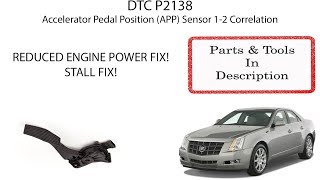
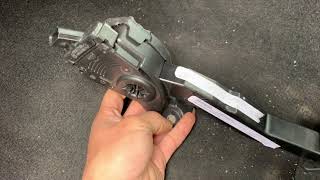
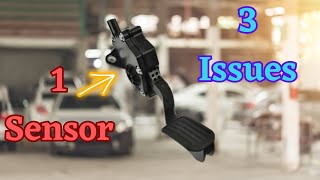
Typical fix: Replace the entire accelerator pedal assembly. This is typically held on by two or three bolts and has a single electrical connector. The repair is considered simple for DIYers. 🎬 Watch this video to see how to replace the pedal assembly.
Est. part cost: $70 - $150 - Wiring or Connector Issue 🟡 Medium Probability Wires in the harness leading to the pedal can chafe, or the connector pins can become corroded or loose, disrupting the sensitive voltage signals. Water leaks from a clogged sunroof drain tube have been known to drip into the driver's side kick panel, causing corrosion in harness connectors located there.
How to confirm: Visually inspect the wiring harness going to the accelerator pedal for any signs of damage, chafing, or pinching. Disconnect the connector and check for corrosion, moisture, or bent pins. Wiggling the connector and harness while observing live data can also reveal an intermittent connection.
Typical fix: Repair the damaged section of wiring. Clean the connector terminals with an electronic contact cleaner or replace the connector pigtail if necessary. A common pigtail is Mopar part #5161924AA.
Est. part cost: $5 - $50 - Outdated PCM Software ⚪ Low Probability For some 2014 models, the original PCM software was overly sensitive to minor variations in the pedal sensor signals, which could trigger a false P2138 code.
How to confirm: Check with a Chrysler dealer or a well-equipped independent shop to see if TSB 08-033-14 applies to your vehicle's VIN. This is typically considered after verifying the pedal and wiring are in good condition.
Typical fix: Reprogram (reflash) the Powertrain Control Module (PCM) with the updated software provided in the TSB.
Est. part cost: $0 - $200 (dealer labor)
Rare But Worth Checking
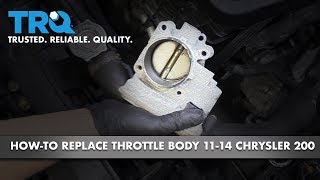
- Faulty Throttle Body: → Shop Fuel Injection Throttle Body While less common for P2138 (which usually points to the pedal), a sticking or failing electronic throttle body can sometimes create a situation the PCM interprets as a correlation fault. This is more likely if you have other throttle-related codes. 🎬 Watch: How to replace the throttle body on a Chrysler 200.
- Faulty Powertrain Control Module (PCM): → Shop Engine Control Module (ECM) This is extremely rare. The PCM is the last item to suspect after the pedal, wiring, and throttle body have all been confirmed to be in good working order.
Diagnosis Steps
- Read all diagnostic trouble codes with an OBD-II scanner. Note any other codes that are present.
- Access the live data stream on the scanner and display the parameters for APP Sensor 1 and APP Sensor 2.
- With the engine off and the key in the 'ON' position, slowly press the accelerator pedal to the floor and release it. Watch the sensor values. They should change smoothly and track each other (e.g., one may read half the value of the other, but they must move in sync).
- If you see any spikes, dropouts, or erratic behavior from either sensor, the accelerator pedal assembly is faulty and needs replacement.
- If the sensor data looks smooth, perform a 'wiggle test'. While watching the live data, gently wiggle the connector and wiring harness at the accelerator pedal. If the values jump, there is a wiring issue.
- Visually inspect the connector for corrosion and the wiring for any visible damage, paying close attention to the driver's side kick panel area for signs of water intrusion.
- If the pedal and wiring are confirmed good, check for applicable TSBs, specifically TSB 08-033-14 for 2014 models, which may require a PCM reflash.
- If all else fails, the issue may lie with the throttle body or, in very rare cases, the PCM. Further diagnostics on those components would be required.
Parts You'll Likely Need
- Accelerator Pedal Assembly
(OEM #4694511AF (2011-2014); 68210178AB (2015-2017) - Always verify with VIN.)— This is the most common cause of P2138. The assembly contains the non-serviceable APP sensors that fail over time.
Trusted brands: Mopar, Dorman, Standard Motor Products (SMP), Carquest
OEM price range: $120-$180
Aftermarket price range: $70-$150
Related Codes That Often Appear With This One
- P0642 — This code indicates a 'Sensor Reference Voltage 'A' Circuit Low' condition. The APP sensor shares a 5-volt reference circuit with other sensors, and a short in the wiring or another sensor on that circuit can cause multiple codes, including P2138.
- P2122 — This code means 'Accelerator Pedal Position Sensor 1 Circuit Low'. It often appears with P2138 because it points to a specific fault in one of the two sensors within the pedal assembly, which leads to the correlation error.
- P2127 — This code means 'Accelerator Pedal Position Sensor 2 Circuit Low'. Similar to P2122, it indicates a fault in the second sensor circuit within the pedal, triggering the P2138 correlation code.
Technical Service Bulletins (TSBs) & Recalls
- TSB 08-033-14: Involves a PCM software update for some 2014 model year Chrysler/Dodge/Jeep vehicles to improve the diagnostic strategy for P2138, making it less likely to be set by transient, non-critical signal variations.
Platform-Specific Known Issues
- On 200forums.com, in a thread titled 'P2138 code limp mode', multiple owners of 2011-2014 and 2015-2017 models confirmed that replacing the entire accelerator pedal assembly resolved their issue immediately.
- A common failure mileage reported in owner forums is between 80,000 and 120,000 miles.
- Real-world owner experience: A 2015 Chrysler 200 owner experienced sudden limp mode with the ETC light. The code was P2138. Replacing the pedal assembly (part #68210178AB) took approximately 20 minutes with basic tools and completely fixed the problem.
Mechanic-Grade Diagnostic Values
- APP Sensor 1 (APP1) Signal Voltage — expected: Fluctuates between ~0.5V (released) and ~4.5V (depressed). A more precise range is 0V to 5.0V.. Failure: A divergence from APP2 of greater than 0.5V, or a signal that is stuck, jumps, or drops out.
- APP Sensor 2 (APP2) Signal Voltage — expected: Fluctuates between ~0.25V (released) and ~2.25V (depressed). The precise range is 0V to 2.5V, and its value should always be approximately half of the APP1 voltage.. Failure: A signal that does not move proportionately with APP1, or a divergence greater than 0.5V.
- APP Sensor Circuit Resistance — expected: Continuity checks on signal and ground wires from the pedal connector to the PCM should show low resistance.. Failure: Resistance greater than 20 Ω indicates an open or high resistance in the wiring that needs repair. Some diagnostic procedures specify checking for resistance below 5.0 Ohms to confirm a good circuit.
Scan Tool Commands That Help
- wiTECH or equivalent professional scan tool: ETC RELEARN — This function must be performed after replacing the accelerator pedal assembly to calibrate the new sensor to the Powertrain Control Module (PCM).
Wiring & Ground Locations
- G200 — Located at the left end of the dash, likely behind the driver's side kick panel.. This is a primary ground point for many instrument panel components. A loose or corroded G200 can cause erratic voltage on the 5-volt reference or ground circuits for the APP sensor, leading to a P2138 code even with a good pedal.
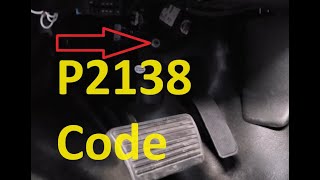
- APP Sensor Connector — The 6-pin electrical connector plugged into the top of the accelerator pedal assembly.. This is the primary point of failure for wiring issues. Pins can become loose or corroded, and the harness can be damaged by foot movement or water intrusion from a leaking cowl or sunroof drain. Wiggling this connector while watching live data is a key diagnostic step.
Real Owner Repair Stories
- YouTube user 'Fix It Now' (2013 Chrysler 200) — Intermittent no-start, no-crank condition after installing a new battery.
❌ Tried (didn't work) Replacing the battery.
✅ What actually fixed it The owner added an additional 4-gauge ground wire from a chassis ground point near the battery to a 16mm bolt on the transmission mount. This resolved the no-start condition, suggesting a poor factory ground was causing electrical issues.
When the Usual Fixes Don't Work
- While the vast majority of P2138 codes on this platform are fixed by replacing the accelerator pedal assembly, underlying electrical system integrity is critical. In some documented cases, intermittent no-start or throttle-related issues on the Chrysler 200 were not resolved by replacing components but by adding an additional ground strap between the chassis and the engine/transmission. A weak or corroded factory ground can create voltage drops and signal noise that the PCM may interpret as a sensor correlation fault. Before replacing the pedal, it is worth inspecting the main engine and chassis ground connections for corrosion or looseness.
Model Year Variations Within This Range
- 2011-2014 vs 2015-2017: The accelerator pedal assembly part number is different between the first (JS) and second (UF) generations. Part #4694511AF is for 2011-2014 models, while #68210178AB is for 2015-2017 models. The parts are not interchangeable.
Diagnostic Flowchart
Other Known Issues on This Vehicle
Issues unrelated to this code that are worth knowing about as an owner of this generation:
- Cracked Oil Filter Housing/Cooler Assembly 🔴 High — Extremely common, often occurring between 60,000 and 120,000 miles. The plastic housing is located in the engine valley and is prone to cracking from heat cycles, causing significant oil and/or coolant leaks. (Ref: Chrysler issued an extended warranty (X86) for this part on some vehicles, but no universal recall.)
- Rocker Arm / Cam Follower Failure ('Pentastar Tick') 🔴 High — Common across all model years, but especially noted in pre-2016 engines. Needle bearings in the rocker arms fail, causing a distinct ticking noise, which can lead to misfire codes (like P030x) and camshaft damage if ignored.
- ZF 9-Speed Automatic Transmission Problems (2015-2017 models) 🟠 Medium — Widespread complaints of harsh/abrupt shifting, lurching, hesitation, and sometimes unexpectedly shifting into neutral. Multiple software updates were released to mitigate, but not always eliminate, the issues. (Ref: Multiple TSBs (e.g., 21-021-15 Rev. E) for software updates and a recall (NHTSA 15V-090) for a park lock issue.)
- Left Cylinder Head Failure (2011-2013 models) 🔴 High — Affected a percentage of early Pentastar engines, causing misfires on the left bank (cylinders 2, 4, 6) due to premature valve guide and seat wear. (Ref: Covered by an extended warranty (X56) detailed in TSB 09-002-14.)
Used vs. New Parts: Buying Guide for This Vehicle
When a used part is the smart pick: For the accelerator pedal assembly, a used part is NOT recommended. It is an electronic wear item with internal moving parts and sensors that fail over time. A used part from a junkyard has unknown history and wear, and may fail soon after installation, repeating the original problem.
Donor-vehicle mileage cap: roughly under 50000 miles for the part to have meaningful remaining life.
What to inspect on the donor part:
- If forced to consider a used part, source it from the lowest-mileage donor vehicle possible.
- Visually inspect the connector for any signs of corrosion, damage, or heavy grease application.
- Ensure the pedal moves smoothly without any grittiness or sticking.
OEM-only on this vehicle (don't cheap out):
- While not strictly OEM-only, the Powertrain Control Module (PCM) should only be replaced with an OEM or a reputable, specialist remanufactured unit due to programming and security requirements.
Aftermarket brands forum-validated for this vehicle:
- Mopar (OEM)
- Standard Motor Products (SMP) - Often considered a high-quality aftermarket equivalent, sometimes repackaging OEM parts.
- Dorman - Offers a cost-effective alternative, sometimes engineering improvements over the original design.
Brands owners have reported issues with on this vehicle:
- Unbranded, no-name parts from online marketplaces should be avoided. Failure of this part results in an immediate and unsafe loss of power, so quality and reliability are paramount.
Real Owner Stories
Aggregated from forums and TSBs cited above. Mileages and costs reflect what owners reported in those sources.
2015 Chrysler 200 3.6L
Symptoms: Sudden limp mode with the ETC light (red lightning bolt symbol) illuminated.
What fixed it: Replacing the accelerator pedal assembly (part #68210178AB).
Source hint: vehicle_specific_issues
2011-2014 Chrysler 200 3.6L — ~100000 miles
Symptoms: P2138 code and vehicle entering limp mode.
What fixed it: Replacing the entire accelerator pedal assembly.
Source hint: 200forums.com thread titled 'P2138 code limp mode'
2011-2014 Dodge Avenger 3.6L
Symptoms: Symptoms identical to the Chrysler 200, including P2138 and P2122 codes.
What fixed it: Replacing the accelerator pedal assembly.
Source hint: avengerforumz.com thread titled 'P2138 and P2122'
Related OBD-II Codes
Frequently Asked Questions
Does TSB 08-033-14 apply to my 2014 Chrysler 200?
Is there a specific wiring pigtail I should use to fix a corroded pedal connector on my Chrysler 200?
Can a sunroof leak cause the P2138 code on a Chrysler 200?
What is the specific part number for the replacement accelerator pedal on a 2015 Chrysler 200 3.6L?
How can I confirm if the APP sensor is bad using a scanner on my Pentastar 3.6L?
Is the P2138 issue common on other Chrysler vehicles with the 3.6L engine?
Helpful Videos

The information in this article is provided for general reference and educational purposes only. Vehicle specifications, procedures, and part compatibility can vary by production date, trim level, and region. Always consult your vehicle's factory service manual and verify part numbers before purchasing or performing repairs. Safety-critical components such as airbags, seat belts, and braking systems should be installed by a qualified professional.
- Chrysler 200:
- 🧭 Diagnostic Flowchart
- 🎬 Helpful Videos
- What's Unique About the 2011-2017 Chrysler 200
- Symptoms You May Notice
- Most Likely Causes
- Rare But Worth Checking
- Diagnosis Steps
- Parts You'll Likely Need
- Related Codes That Often Appear With This One
- Technical Service Bulletins (TSBs) & Recalls
- Platform-Specific Known Issues
- Mechanic-Grade Diagnostic Values
- Scan Tool Commands That Help
- Wiring & Ground Locations
- Real Owner Repair Stories
- When the Usual Fixes Don't Work
- Model Year Variations Within This Range
- Other Known Issues on This Vehicle
- Used vs. New Parts: Buying Guide for This Vehicle
- Real Owner Stories
- 2015 Chrysler 200 3.6L
- 2011-2014 Chrysler 200 3.6L — ~100000 miles
- 2011-2014 Dodge Avenger 3.6L
- Related OBD-II Codes
- Frequently Asked Questions
- 🎟️ Get 5% Off