

P2138 on 2005-2007 Ford Freestyle: Causes and Fixes for Throttle/Pedal Sensor Fault
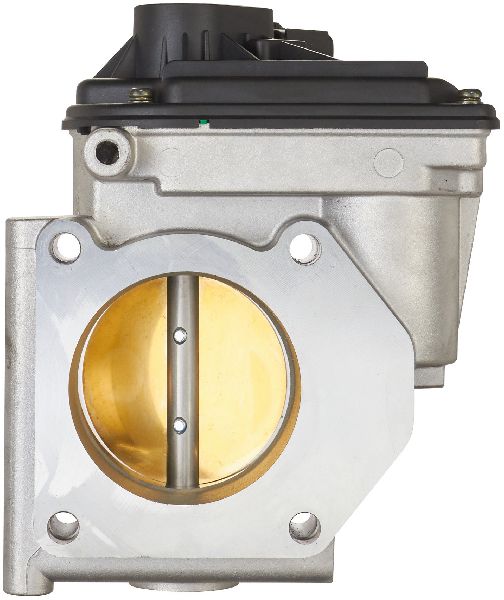
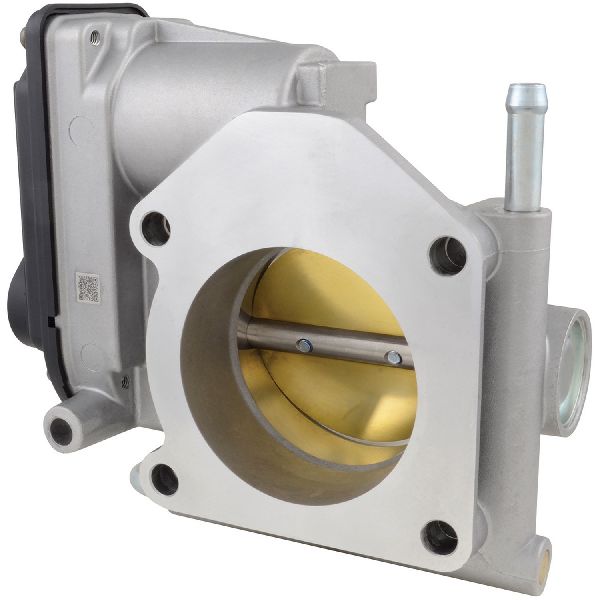
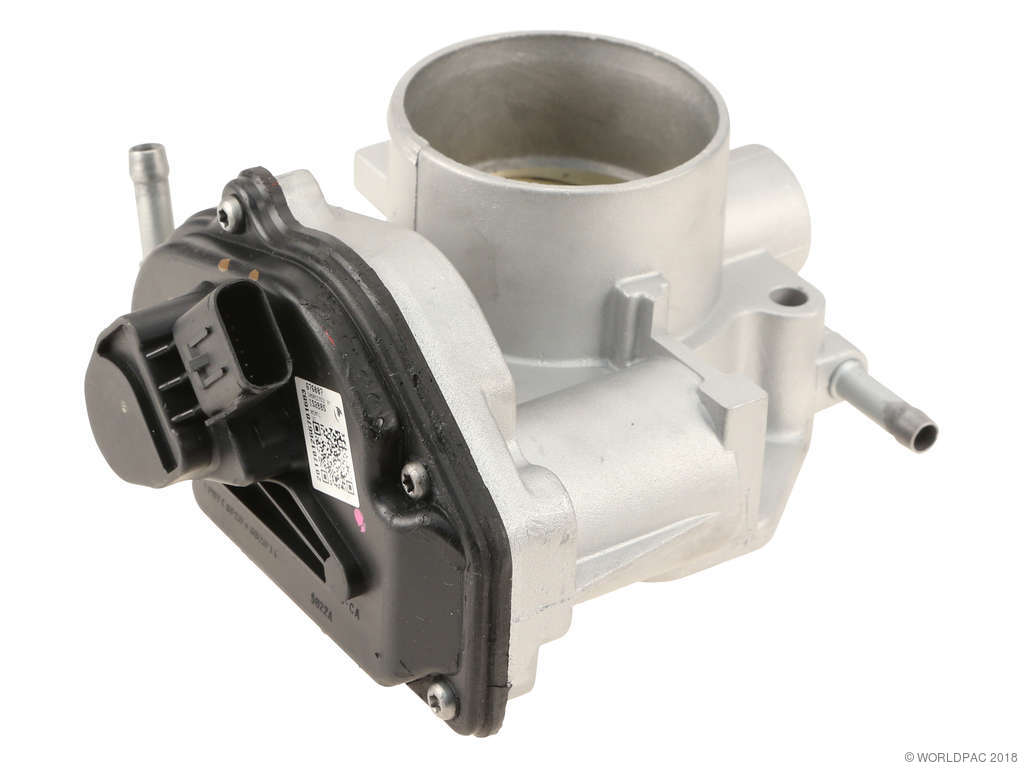
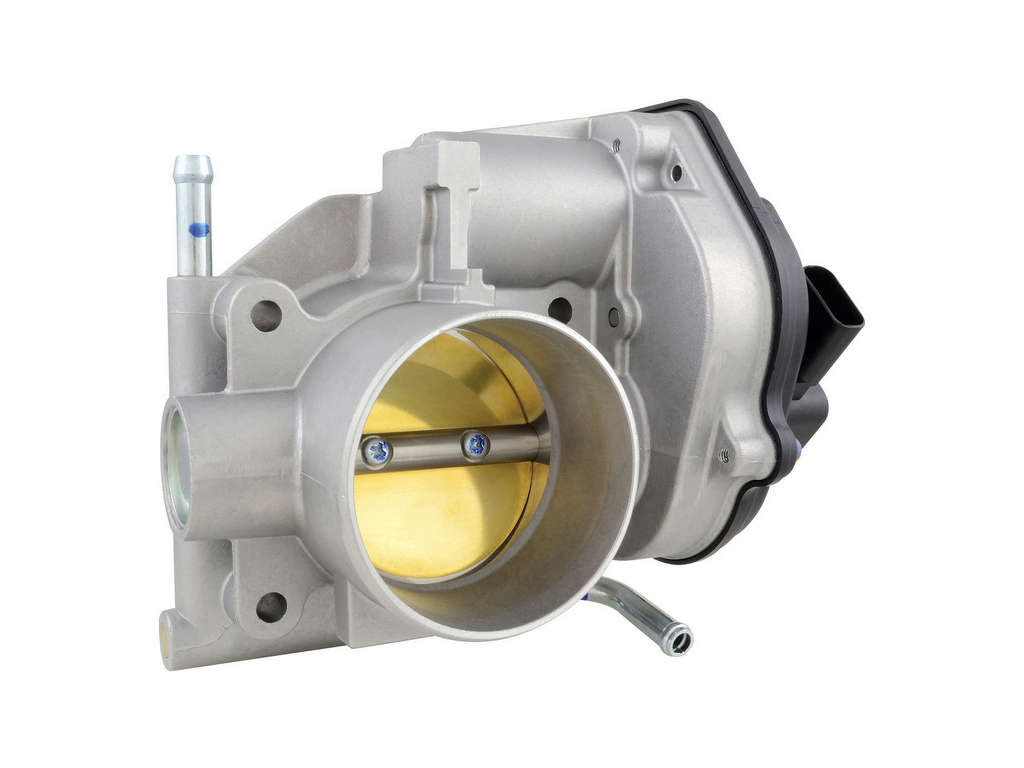
On a 2005-2007 Ford Freestyle, code P2138 is most often caused by a failing electronic throttle body. The internal sensors are not sold separately, so the entire assembly needs replacement. Expect to pay $150-$300 for the part. A faulty accelerator pedal assembly is the second most likely cause.
- P2138 on a 2005-2007 Freestyle means a sensor disagreement in the drive-by-wire system, causing serious drivability problems like limp mode.
- The most likely culprit is a failed electronic throttle body assembly, which is a known weak point on this platform.
- The second most likely cause is a failed accelerator pedal assembly.
- Diagnosis requires a scan tool with live data to determine which component's sensors are failing to correlate.
- After replacing the throttle body, a PCM reset and idle relearn procedure is crucial for proper operation.
What's Unique About the 2005-2007 Ford Freestyle
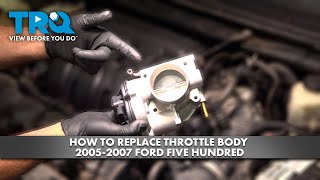
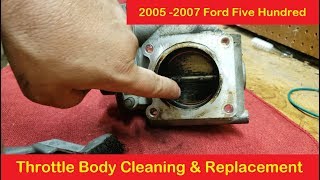
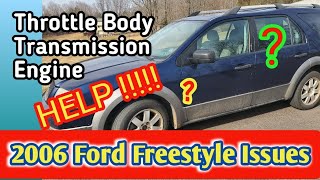
The Ford Freestyle and its platform-mates (Ford Five Hundred, Mercury Montego) from this era are well-documented for having issues with the electronic throttle body. While the code can point to the pedal or throttle, owner experiences and mechanic reports show a high failure rate for the throttle body assembly itself, leading to symptoms like surging and sudden power loss. 🎬 Watch this overview of common Ford Five Hundred throttle issues. At one point, demand for this replacement part was so high there were nationwide shortages, highlighting how common the problem is.
Symptoms You May Notice
- Check Engine Light is on
- Wrench light appears on the dashboard (Powertrain Malfunction Indicator)
- Vehicle enters 'limp mode' (reduced engine power)
- Sudden loss of power while driving
- Hesitation or surging during acceleration
- Engine stalls, especially when coming to a stop
- Erratic or unresponsive throttle
- Car will not accelerate at all
- Replacing only the accelerator pedal when the throttle body is the actual cause.
- Cleaning a dirty throttle body. While a dirty throttle body can cause idle issues, it will not fix an internal electronic sensor failure that triggers P2138.
Most Likely Causes
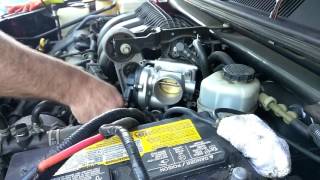
- Failing Electronic Throttle Body Assembly 🔴 High Probability → Shop Fuel Injection Throttle Body This is a widely reported failure item on the Ford Freestyle and Five Hundred platform. The internal Throttle Position Sensors (TPS) wear out or get contaminated, but they are integrated into the assembly and cannot be replaced separately. 🎬 See a mechanic inspect the engine and throttle body components.
How to confirm: Use a scan tool to monitor the live data for the two TPS signals (TP1 and TP2). As you slowly open the throttle by hand (with the engine off), the voltage readings should be smooth and correlate. A jump, drop, or freeze in one of the signals indicates a faulty sensor within the throttle body. A common owner experience is that the issue occurs randomly, sometimes while holding a steady speed, which points more toward the throttle body than the pedal. A Ford-specific IDS scan tool can show a discrepancy between the desired and actual throttle angle; a difference greater than 5 degrees indicates a fault.
Typical fix: Replace the entire electronic throttle body assembly. A throttle relearn procedure should be performed after installation.
Est. part cost: $150-$300 - Failing Accelerator Pedal Position (APP) Sensor 🟡 Medium Probability → Shop Accelerator Pedal Assembly Like the throttle body, the accelerator pedal contains two sensors for redundancy. These sensors can wear out over time, causing their signals to disagree. Manufacturer service bulletin #SSM 53375 notes that vehicles may exhibit an illuminated powertrain malfunction (wrench) indicator specifically when P2138 is stored in the PCM.
How to confirm: Use a scan tool to monitor the live data for the two APP signals (APP1 and APP2). Slowly press and release the accelerator pedal. The two voltage signals should change smoothly and in correlation with each other. A divergence greater than 0.5V between the two signals is a failure indicator. If one signal is erratic, jumps, or doesn't match the other's movement, the pedal assembly is faulty. This is more likely to be the cause if the problem happens specifically when your foot is moving the pedal, rather than holding it steady.
Typical fix: Replace the entire accelerator pedal assembly. It is a bolt-on part with an electrical connector.
Est. part cost: $100-$175 - Wiring Harness or Connector Issue ⚪ Low Probability While less common, chafing of the harness near the throttle body or water intrusion into a body harness connector can cause this code by corroding the pins. Ford service bulletins #SSM 46880 and #SSM 46829 indicate that P2138 can be caused by the Accelerator Pedal Position (APP) sensor harness being improperly routed behind the brake booster to the brake pedal.
How to confirm: Visually inspect the wiring and connectors at both the throttle body and the accelerator pedal. Look for any signs of corrosion, pushed-out pins, or damaged wires. A GM TSB for P2138 specifically notes that water intrusion into an instrument panel-to-body harness connector can cause this exact issue by creating a voltage discrepancy.
Typical fix: Repair the damaged section of the wiring harness or clean/replace the affected connector. Use dielectric grease on connectors to prevent future moisture damage.
Est. part cost: $10-$50
Rare But Worth Checking
- Faulty Powertrain Control Module (PCM): → Shop Engine Control Module (ECM) This is very rare. The PCM should only be considered after all other possibilities, including sensors and wiring, have been thoroughly tested and ruled out.
Diagnosis Steps
- Connect an OBD-II scanner and confirm that P2138 is the primary code. Note any other codes present, such as P2104 or P2112, which reinforce a throttle control issue.
- Using the scanner's live data function, monitor the voltage readings for both Accelerator Pedal Position sensors (APP1, APP2). Press the pedal slowly and watch for smooth, corresponding changes. If one is erratic or the signals diverge by more than 0.5V, the pedal assembly is likely the fault.
- If the APP sensors are working correctly, monitor the live data for the Throttle Position sensors (TP1, TP2). With the engine off and key on, have an assistant press the gas pedal or manually move the throttle plate. Watch for smooth, corresponding voltage changes. If one signal is erratic, the throttle body is the likely culprit.
- For advanced diagnosis, use a Ford IDS scan tool to access the special Electronic Throttle Control monitor data. Check for a difference of more than 5 degrees between the desired throttle angle and the actual measured throttle angle, which indicates a failing throttle body.
- If sensor data is inconclusive, perform a visual inspection of the wiring and connectors for the accelerator pedal and throttle body. Look for any damage, corrosion, or loose pins. Pay attention to the harness routing near the engine for potential chafing.
- Check the main PCM ground connections on the firewall for looseness or corrosion, as a poor ground can cause erratic sensor readings.
- If a wiring issue is suspected, perform a continuity test on the signal and reference wires (ETCREF, ETCRTN) between the sensor connector and the PCM connector. NHTSA ODI #10860309 describes a case where a technician performed a wire repair by bypassing specific circuits at connector C210 to resolve an APP sensor correlation error.
- Based on the test results, replace the faulty component (throttle body or accelerator pedal assembly).
- After replacement, clear all codes. If the throttle body was replaced, perform a throttle relearn procedure. A common method without a scan tool is to disconnect the negative battery terminal for at least 15 minutes, reconnect it, turn the key to the 'ON' position (without starting) for a few minutes, then turn it off. Finally, start the engine and let it idle for 10-15 minutes without touching the throttle.
Parts You'll Likely Need
- Electronic Throttle Body Assembly
(OEM #6F9Z9E926A)— This is the most common failure point for P2138 on this vehicle. The internal sensors fail, requiring replacement of the whole unit. This part number supersedes the older 5F9Z-9E926-B.
Trusted brands: Motorcraft, Standard Motor Products, SKP, Cardone
OEM price range: $250-$350
Aftermarket price range: $150-$250 - Accelerator Pedal Assembly — The second most common cause, where the integrated sensors in the pedal assembly fail.
Trusted brands: Motorcraft, Dorman, Standard Motor Products
OEM price range: $150-$200
Aftermarket price range: $100-$175
Related Codes That Often Appear With This One
- P2104 — Throttle Actuator Control System - Forced Idle. This code often accompanies P2138 as the PCM forces the engine to idle as part of its fail-safe response.
- P2112 — Throttle Actuator Control System - Stuck Closed. This can be logged if the PCM detects the throttle plate is not opening as commanded, which can be related to the same internal throttle body failure.
Technical Service Bulletins (TSBs) & Recalls
- NHTSA TSB MC-10165443-9999 (GM): While for a GM vehicle, this bulletin is highly relevant as it describes how water intrusion into an instrument panel-to-body harness connector can cause P2138 by creating a voltage difference between the two APP sensor signals. This is a plausible, though less common, cause on the Freestyle as well.
- Ford TSB 24-2405: A more recent TSB for 2021-2024 F-150s shows that P2138 continues to be a relevant code for Ford, linked to the powertrain malfunction (wrench) indicator, confirming the diagnostic pattern.
- Bulletin #SSM 53375: Confirms that Ford vehicles may exhibit an illuminated powertrain malfunction (wrench) indicator when DTC P2138 is stored in the powertrain control module.
- Bulletin #SSM 46880 & #SSM 46829: These bulletins highlight that P2138 can be triggered by the Accelerator Pedal Position (APP) sensor harness being improperly routed behind the brake booster, potentially causing interference or damage.
Platform-Specific Known Issues
- The electronic throttle body on the 3.0L V6 used in the Freestyle, Five Hundred, and Montego is a known high-failure part, causing surging, stalling, and limp mode.
- Owner Story: A user on fordforums.com with a 2006 Freestyle reported the classic symptoms of the wrench light illuminating, followed by the car going into limp mode. After replacing the accelerator pedal with no success, replacing the entire throttle body assembly (Part No. 6F9Z-9E926-A) permanently fixed the issue.
Mechanic-Grade Diagnostic Values
- APP Sensor 1 vs. APP Sensor 2 Voltage Correlation — expected: Both sensors should show smooth, proportional voltage changes from ~0.5V to ~4.5V as the pedal is pressed.. Failure: A divergence greater than 0.5V between the two sensor signals at any point in the pedal travel.
- Desired Throttle Angle vs. Measured Throttle Angle (via Ford IDS) — expected: The difference between the two values should be less than 3 degrees, with up to 5 degrees being a potential tolerance limit.. Failure: A difference greater than 5 degrees between the angle requested by the PCM and the angle measured by the TPS. A video example showed a fault at an 11-degree difference.
- Wiring Harness Resistance Check — expected: Resistance should be minimal, under 1 ohm.. Failure: Resistance greater than 20 ohms indicates a problem in the circuit.
Hidden / Shadow Codes Worth Checking
- N/A (Data Monitor): For 2005-2007 Ford Freestyle/Five Hundred models, the Ford IDS scan tool has a special diagnostic function under the PCM menu called the 'Electronic Throttle Control Monitor'. This is not a code, but a dedicated data-pull that retrieves freeze-frame data logged by the PCM specifically for throttle faults, even when no DTC is set. A technician noted to look for any 'ones' in the data stream, which indicates a logged fault event. (see via Ford Integrated Diagnostic System (IDS) scan tool.)
Scan Tool Commands That Help
- Ford IDS: Electronic Throttle Control Monitor — Use this to check for intermittent throttle body faults that haven't yet set a hard code. It provides specific freeze-frame data on what the PCM flagged as an issue, such as the difference between desired and actual throttle angle.
- Ford IDS or equivalent professional scanner: PCM Reset / Clear Keep Alive Memory (KAM) — This should be performed after replacing the throttle body or accelerator pedal to clear adaptive memory and force the PCM to relearn the new component's positions and ranges.
Wiring & Ground Locations
- PCM Ground(s) — Typically bolted to the firewall in the engine compartment.. The APP and TPS sensors rely on a clean ground reference provided by the PCM. A loose, corroded, or otherwise poor PCM ground can introduce noise and voltage fluctuations into the entire 5V reference circuit, causing the sensor signals to become erratic and trigger a P2138 correlation fault. This should be checked if sensor and harness tests are inconclusive.
- Throttle Body Connector Pins — 6-pin connector at the electronic throttle body.. These pins carry the critical signals for diagnosis. Key pins include ETCREF (5V Reference), ETCRTN (Signal Return/Ground), TACM+ and TACM- (Throttle Actuator Control Motor), and TP1/TP2 signals. Testing for correct voltage and continuity at these pins is essential for ruling out wiring issues.
Real Owner Repair Stories
- Scott Link Media blog post (2006 Ford Freestyle) — While on a family trip, the car began to lunge backward when shifted into reverse. The 'Yellow Wrench' and Check Engine Light would illuminate intermittently. The owner suspected a transmission problem.
❌ Tried (didn't work) Initial diagnosis at a dealership was confused, pointing towards a transmission issue.
✅ What actually fixed it A technician at another dealership immediately identified the problem over the phone as a failed throttle body. Replacing the electronic throttle body assembly resolved all symptoms. The owner later discovered this was an extremely common failure. - NHTSA ODI #11435669 — An owner reported their car stopped in the middle of traffic without warning. The service invoice noted codes P2610 and P2138, and the repair required a pinpoint test and a wire repair to bypass connector C210 to the PCM, along with a software reprogram.
OEM Part Supersession History
5F9Z-9E926-B→6F9Z-9E926-A— Updated part design to address high failure rates.
Model Year Variations Within This Range
- 2005-2007 (original part): Some original factory-installed throttle bodies were heated with engine coolant, featuring two small hose connections. The replacement part (6F9Z-9E926-A) is not heated and does not have these connections. When installing the new part, the two coolant lines that went to the old throttle body must be bypassed, typically by connecting them together with a suitable hose and clamps.
Diagnostic Flowchart
Other Known Issues on This Vehicle
Issues unrelated to this code that are worth knowing about as an owner of this generation:
- CVT Transmission Failure (FWD Models) 🔴 High — Very common, especially on vehicles over 80,000 miles. Symptoms include shuddering, whining, hesitation, and sudden loss of power.
- Leaking/Failed Engine Mounts 🟠 Medium — The hydraulic engine mounts, particularly the front and passenger-side mounts, are known to leak fluid and collapse, causing significant vibration at idle and clunking noises.
- Water Leaks into Cabin 🟠 Medium — Commonly reported issue where water leaks into the cabin via clogged cowl or sunroof drains, or poor body seams near the A-pillar, potentially damaging interior electronics.
- Premature Rear Brake Wear 🟡 Low — Many owners report having to replace rear brake pads and rotors more frequently than expected, sometimes as early as 30,000-40,000 miles.
Used vs. New Parts: Buying Guide for This Vehicle
When a used part is the smart pick: For the Accelerator Pedal Assembly, a used part from a low-mileage donor vehicle is a reasonable option as it is not a high-wear item. However, for the Electronic Throttle Body, a used part is strongly discouraged.
Donor-vehicle mileage cap: roughly under 75000 miles for the part to have meaningful remaining life.
What to inspect on the donor part:
- For a pedal assembly, check for smooth, non-binding physical movement.
- Verify the electrical connector is free of corrosion or broken tabs.
- Ask for the VIN of the donor car to check its history if possible.
OEM-only on this vehicle (don't cheap out):
- Electronic Throttle Body Assembly
Aftermarket brands forum-validated for this vehicle:
- Motorcraft (OEM)
Brands owners have reported issues with on this vehicle:
- Given the extremely high failure rate of this specific part on this platform, and reports of even replacement parts failing, it is highly recommended to use the OEM Motorcraft part. While brands like Cardone, SKP, or Dorman are available, forum consensus and mechanic advice lean heavily towards using the genuine Ford part to ensure longevity.
Real Owner Stories
Aggregated from forums and TSBs cited above. Mileages and costs reflect what owners reported in those sources.
2006 Ford Freestyle 3.0L V6
Symptoms: The wrench light illuminated on the dashboard and the car immediately entered limp mode. The owner initially tried replacing the accelerator pedal, but the problem persisted.
What fixed it: Replacing the entire throttle body assembly (Part No. 6F9Z-9E926-A).
Source hint: fordforums.com - Thread '2006 Freestyle - P2138 Code'
2007 Ford Freestyle 3.0L V6
Symptoms: The vehicle experienced lurching, surging, and suddenly entered limp mode while driving.
What fixed it: Replacement of the electronic throttle body.
Source hint: CarComplaints.com owner reports for 2007 Freestyle
2005-2007 Ford Freestyle 3.0L V6
Symptoms: Sudden loss of throttle response while driving on the highway. The issue would temporarily reset after restarting the vehicle. The symptoms were so erratic they were initially mistaken for a CVT transmission failure.
What fixed it: Diagnosis confirmed a P2138 fault in the electronic throttle control system rather than the transmission.
Source hint: Car Talk Community - 'Ford Freestyle Transmission Problem'
Related OBD-II Codes
Frequently Asked Questions
My 2006 Ford Freestyle is showing a wrench light and entering limp mode; which part is the most likely culprit?
Can I just replace the Throttle Position Sensor (TPS) on my 2005 Freestyle to fix P2138?
Is there a specific part number I should look for when replacing the throttle body on my Freestyle?
How can I tell if the problem is my accelerator pedal or the throttle body?
Do I need a scan tool to perform a throttle relearn after replacing the throttle body?
Could water in the wiring cause my Freestyle to throw a P2138 code?
Helpful Videos
We Have This Part in Stock


The information in this article is provided for general reference and educational purposes only. Vehicle specifications, procedures, and part compatibility can vary by production date, trim level, and region. Always consult your vehicle's factory service manual and verify part numbers before purchasing or performing repairs. Safety-critical components such as airbags, seat belts, and braking systems should be installed by a qualified professional.
- Ford Freestyle:
- 🧭 Diagnostic Flowchart
- 🎬 Helpful Videos
- 🛍️ Shop This Part
- What's Unique About the 2005-2007 Ford Freestyle
- Symptoms You May Notice
- Most Likely Causes
- Rare But Worth Checking
- Diagnosis Steps
- Parts You'll Likely Need
- Related Codes That Often Appear With This One
- Technical Service Bulletins (TSBs) & Recalls
- Platform-Specific Known Issues
- Mechanic-Grade Diagnostic Values
- Hidden / Shadow Codes Worth Checking
- Scan Tool Commands That Help
- Wiring & Ground Locations
- Real Owner Repair Stories
- OEM Part Supersession History
- Model Year Variations Within This Range
- Other Known Issues on This Vehicle
- Used vs. New Parts: Buying Guide for This Vehicle
- Real Owner Stories
- 2006 Ford Freestyle 3.0L V6
- 2007 Ford Freestyle 3.0L V6
- 2005-2007 Ford Freestyle 3.0L V6
- Related OBD-II Codes
- Frequently Asked Questions
- 🎟️ Get 5% Off