

P2176 on 2006-2013 Chevy Silverado 3500: Throttle Body Fixes and Relearn Guide
On a 2006-2013 Silverado 3500, code P2176 almost always points to a dirty throttle body causing the engine computer to fail its idle learning process. Carbon buildup physically blocks the throttle plate from closing, triggering the code. The most common fix is to thoroughly clean the throttle body and perform an idle relearn procedure, which is a low-cost, high-success DIY repair.
- P2176 on your Silverado 3500 is most likely caused by a dirty throttle body, not a broken part.
- The fix is often as simple as a thorough cleaning and an idle relearn procedure, a task most DIYers can handle.
- Do not immediately buy a new throttle body; cleaning costs very little and has a high chance of success.
- This code will put your truck in 'Reduced Engine Power' mode, so address it promptly to restore normal vehicle operation.
- After cleaning or disconnecting the battery, an idle relearn is not optional; it is a required step to fix the problem.
What's Unique About the 2006-2013 Chevrolet SILVERADO 3500
On these GMT800 and GMT900-era Silverado trucks, especially those with higher mileage, the Vortec gasoline engines are well-known for accumulating carbon and oil residue inside the throttle body bore. This buildup physically prevents the throttle plate from closing completely, which directly interferes with the ECM's ability to learn the proper idle position. The provided TSB #PIP4578B specifically links this code to high-mileage vehicles, reinforcing that this is a common wear-and-tear issue rather than a sudden component failure. The ECM tries to compensate for this buildup over time, but eventually, it can no longer adjust, triggering the code.
Diagnostic Flowchart
Tap your situation to follow the diagnostic path that matches what you're seeing on this vehicle.
Generation note: This range covers two Silverado generations: the end of the GMT800 ('Classic' models, 2006-2007) and the GMT900 (late 2007-2013). While the electronic throttle control concept is the same, part numbers for the throttle body may differ. However, the cause, symptoms, and primary fix (cleaning and relearn) are consistent across both generations for gasoline engines.
Symptoms You May Notice
- "Reduced Engine Power" message on the dashboard
- Check Engine Light is on
- Unstable, surging, or high idle speed (e.g., 3,000 RPM after cleaning if relearn is not performed)
- Engine may stall when coming to a stop
- Poor or delayed throttle response
- Harsh shifting from Park into Drive or Reverse
- Engine may not crank or start
- "Service ESC / Service Traction" message may appear
- Replacing the accelerator pedal position (APP) sensor. While part of the throttle control system, the APP sensor has its own set of diagnostic codes (like P2138) and is rarely the cause of P2176.
- Replacing the Mass Airflow (MAF) sensor. A dirty MAF sensor can cause performance issues but will not typically trigger an idle position learning fault.
Most Likely Causes
- Dirty Throttle Body 🔴 High Probability → Shop Fuel Injection Throttle Body The PCV (Positive Crankcase Ventilation) system routes oil vapors into the intake, which mix with dirt and form carbon deposits around the throttle plate. Over time, this buildup restricts movement, preventing the plate from fully closing.
How to confirm: Remove the intake duct from the throttle body and visually inspect the throttle plate and bore for a thick, black layer of carbon. The plate may be visibly stuck partially open.
Typical fix: Remove the throttle body, clean it thoroughly with a dedicated throttle body cleaner and a soft brush/cloth, and reinstall. An idle relearn procedure must be performed afterward.
Est. part cost: $5-$15 for cleaner - Failed Idle Relearn Procedure 🟡 Medium Probability This code is commonly triggered after disconnecting the battery, clearing codes with a scan tool, or cleaning/replacing the throttle body without performing the specific relearn procedure. The ECM's learned compensation for carbon is now incorrect for the clean throttle body, causing a high idle or this code.
How to confirm: If the code appeared immediately after a battery disconnect, a repair, or cleaning the throttle body, this is the likely cause.
Typical fix: Perform the GM idle relearn procedure. A scan tool is the most reliable method. A manual procedure may also work: let the engine idle in Park for 3 minutes, turn it off for 60 seconds, restart and idle for another 3 minutes. This may need to be repeated.
Est. part cost: $0 - Faulty Throttle Body Assembly ⚪ Low Probability → Shop Fuel Injection Throttle Body The internal electronic motor or the integrated throttle position sensors (TPS) can fail over time, though this is less common than simple carbon buildup. In cold weather, the grease in the internal gears can stiffen and cause the motor to struggle.
How to confirm: If the code P2176 returns immediately after a thorough cleaning and successful relearn procedure, and is often accompanied by other codes like P1516 or P2101, the unit itself is likely faulty. Using an aftermarket throttle body that is incompatible can also cause this.
Typical fix: Replace the entire throttle body assembly. Using an OEM ACDelco part is highly recommended to ensure compatibility with the relearn procedure.
Est. part cost: $120-$300
Rare But Worth Checking
- Wiring or Connector Issue: The wiring harness leading to the throttle body can become damaged or corroded, causing an intermittent connection. Check for chafed wires or bent/corroded pins in the connector, especially right at the throttle body where vibration and heat are concentrated.
- Engine Control Module (ECM) Fault: → Shop Engine Control Module (ECM) In very rare cases, the ECM itself can have a software glitch or hardware failure that prevents it from learning the idle position. This should be considered a last resort after all other possibilities have been exhausted.
Diagnosis Steps
- Scan for any other accompanying trouble codes. Codes like P1516 and P2101 strongly point to the throttle body.
- Remove the intake air duct from the throttle body.
- Visually inspect the throttle plate and the inside of the throttle body bore for heavy carbon buildup.
- If dirty, disconnect the battery. Remove the throttle body from the intake manifold (typically four 10mm bolts).
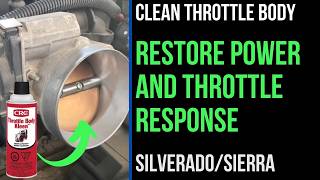
- Clean the throttle body thoroughly on both sides of the plate and in the bore using a dedicated throttle body cleaner and a non-abrasive cloth or brush. 🎬 Watch: A simple guide to cleaning your throttle body. Do not use harsh chemicals like brake cleaner or manually force the butterfly valve open, as this can damage the internal gears.
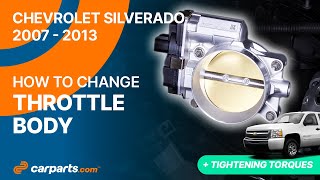
- Reinstall the throttle body with a new gasket if required. Torque bolts to specification 🎬 See this walkthrough for replacing the throttle body assembly. (e.g., 89 in-lbs).
- Reconnect the battery.
- Perform the Idle Relearn Procedure. The most reliable method is using a scan tool to command the 'Idle Learn Reset'. Alternatively, a manual procedure can be attempted: Start the engine and let it idle in Park for 3 minutes. Turn the engine off for 60 seconds. Restart and idle for another 3 minutes.
- Clear all diagnostic trouble codes.
- Perform a test drive. If the code does not return and the idle is stable, the repair is complete.
- If the code returns, inspect the wiring harness and connector at the throttle body for damage or corrosion. If the wiring is intact, the throttle body assembly itself is likely faulty and requires replacement.
Parts You'll Likely Need
- Throttle Body Assembly
(OEM #ACDelco 12601387 (example for 6.0L V8, verify by VIN))— This is the required fix if cleaning the original unit does not resolve the code, indicating an internal failure. Using an OEM part is strongly recommended for compatibility.
Trusted brands: ACDelco, Hitachi, Bosch
OEM price range: $200-$350
Aftermarket price range: $120-$250 - Throttle Body Cleaner — This is the primary 'part' needed for the most common fix, which is simply cleaning the existing throttle body.
Trusted brands: CRC, Berryman, WD-40
OEM price range: $5-$15
Aftermarket price range: $5-$15 - Throttle Body Connector Pigtail
(OEM #ACDelco 88988106 (Connector Part Info))— If the diagnostic process points to a faulty connector at the throttle body, this pigtail allows for replacement of the connector and a short length of wire.
Trusted brands: ACDelco
OEM price range: $30-$50
Aftermarket price range: $15-$30
Related Codes That Often Appear With This One
- P1516 — This GM-specific code indicates a mismatch between the commanded throttle position and the actual throttle position, often triggered by the same sticky throttle plate that causes P2176.
- P2101 — This code relates to a performance problem with the throttle actuator control motor. It can appear with P2176 if the motor is struggling to overcome carbon buildup or is failing internally.
- P0507 — This code for "Idle Air Control System RPM Higher Than Expected" can be set because the throttle plate is stuck slightly open by carbon, letting in too much air at idle. It can also appear after cleaning the throttle body if an idle relearn is not performed.
Technical Service Bulletins (TSBs) & Recalls
- PIP4578B: Mentions DTC P2176 in relation to idle surge and reduced engine power on high-mileage vehicles, pointing towards a common wear/maintenance issue rather than a defect. It confirms the root cause is often carbon buildup requiring cleaning and a scan tool relearn.
Platform-Specific Known Issues
- As noted in TSB #PIP4578B, this code, along with others like P1516 and P2101, is a known issue on high-mileage vehicles and is often associated with idle surge and Reduced Engine Power mode.
- The TSB explicitly states that after cleaning the throttle body, an 'idle learn reset' MUST be performed with a scan tool (like a Tech 2/GDS) to prevent other codes (like P0506/P0507) from appearing.
Mechanic-Grade Diagnostic Values
- Throttle Position Sensor 1 (TP1) Voltage — expected: ~0.4V - 0.9V at closed throttle, sweeping up to ~4.5V at wide-open throttle.. Failure: Voltage is out of range, does not sweep smoothly, or does not match TP2's opposing sweep. A scan tool showing a high percentage (e.g., 16%) at idle points to a dirty/obstructed throttle plate.
- Throttle Position Sensor 2 (TP2) Voltage — expected: ~4.6V at closed throttle, sweeping down to ~0.5V at wide-open throttle.. Failure: Voltage is out of range or does not sweep smoothly and inversely to TP1. The sum of TP1 and TP2 voltages should remain steady at ~5.0V throughout the throttle range.
- 5-Volt Reference at Throttle Body Connector — expected: 5.0V on the reference wire (typically Pin A, Yellow) with key-on, engine-off.. Failure: Voltage is significantly lower or higher than 5.0V, indicating a wiring issue or a problem with the ECM.
- Low Reference (Ground) at Throttle Body Connector — expected: Near 0V on the low reference wire (typically Pin B, Brown).. Failure: Voltage is present, indicating a bad ground connection back to the ECM.
Scan Tool Commands That Help
- GDS2 / Tech 2: Idle Learn Reset — This command, found under 'Module Setup' or a similar menu, is the most reliable way to force the ECM to relearn the new minimum throttle position after cleaning or replacing the throttle body. It is often required to prevent a high idle or codes P0506/P0507 from setting after the repair.
- GDS2 / Tech 2: Throttle Sweep Test — This bidirectional command allows the technician to command the throttle plate through its full range of motion while observing the TP sensor 1 and TP sensor 2 data streams. It is used to verify smooth operation and check for dead spots or glitches in the sensor readings that would indicate a failing throttle body assembly.
Wiring & Ground Locations
- G103 — On the front of the passenger side (right side) cylinder head.. This is a primary engine control ground. A loose or corroded connection at this stud can cause erratic sensor readings and intermittent electronic throttle control faults.
- G104 — On the left front (driver's side) of the engine block, often near the alternator.. This ground is critical for the ECM and various sensors. A poor connection here can lead to incorrect voltage references and trigger a variety of diagnostic trouble codes, including those related to the throttle body.
- Throttle Body Connector (X108) — The main 6-pin electrical connector on the throttle body assembly.. This is the single point of connection for power, ground, and sensor signals. Wires can chafe or break from engine vibration, and pins can become corroded or loose, directly causing P2176 and related codes. The connector pigtail is available as a separate part for repair.
Real Owner Repair Stories
- YouTube video by a professional mechanic (2011 Buick Enclave (similar GM electronic throttle system)) — P2176 code returned instantly after clearing. Scan tool showed throttle position at 16% at idle, which is too high.
❌ Tried (didn't work) Clearing the code, Attempting an idle relearn procedure with a Snap-on Solus Pro scan tool
✅ What actually fixed it The mechanic found the throttle body was extremely dirty with oil and carbon from the PCV system. After thoroughly cleaning the throttle plate and bore, the plate could close fully. A final idle relearn procedure with the scan tool then completed the fix successfully. - Various online forums (Multiple GM trucks (Silverado/Sierra)) — P2176 and other throttle codes, Reduced Engine Power mode.
❌ Tried (didn't work) Cleaning the throttle body, Replacing the throttle body assembly
✅ What actually fixed it In several documented cases, the issue was a broken or chafed wire in the harness right at the throttle body connector. The damage was sometimes hidden inside the wire's insulation. Replacing the connector pigtail (e.g., ACDelco 88988106) resolved the issue when replacing the entire throttle body did not.
Model Year Variations Within This Range
- 2006-2007: The 2007 model year was a transition. Trucks sold as 'Silverado Classic' are the older GMT800 body style (carryover from 1999-2006). The 'New Body Style' is the GMT900 platform. While the P2176 code applies to both, the specific throttle body part number and some engine components may differ between a 2007 Classic and a 2007 New Body Style. It is critical to verify which version the truck is before ordering parts.
Helpful Videos

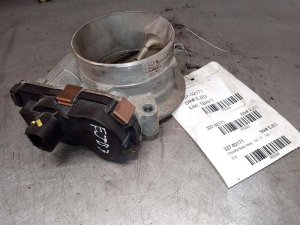
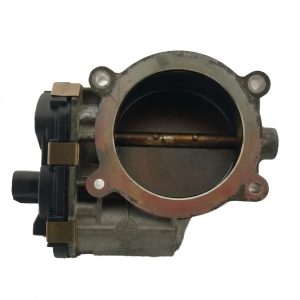
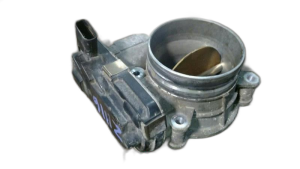
Used OEM Parts in Stock
New Aftermarket Parts Available

The information in this article is provided for general reference and educational purposes only. Vehicle specifications, procedures, and part compatibility can vary by production date, trim level, and region. Always consult your vehicle's factory service manual and verify part numbers before purchasing or performing repairs. Safety-critical components such as airbags, seat belts, and braking systems should be installed by a qualified professional.
- Chevrolet SILVERADO 3500:
- 🧭 Diagnostic Flowchart
- 🎬 Helpful Videos
- 🛍️ Shop This Part
- What's Unique About the 2006-2013 Chevrolet SILVERADO 3500
- Symptoms You May Notice
- Most Likely Causes
- Rare But Worth Checking
- Diagnosis Steps
- Parts You'll Likely Need
- Related Codes That Often Appear With This One
- Technical Service Bulletins (TSBs) & Recalls
- Platform-Specific Known Issues
- Mechanic-Grade Diagnostic Values
- Scan Tool Commands That Help
- Wiring & Ground Locations
- Real Owner Repair Stories
- Model Year Variations Within This Range
- 🎟️ Get 5% Off