

P2178 on 2006-2013 Audi A3 2.0T: "System Too Rich Off-Idle" Causes and Fixes
On the Audi A3 2.0T, code P2178 is most often caused by a failing High-Pressure Fuel Pump (HPFP) which leaks fuel into the engine oil, or a bad PCV valve. A definitive sign of HPFP failure is a strong gasoline smell in the engine oil. A new HPFP can cost $250-$500, while a PCV valve is around $150. Other potential causes include leaking fuel injectors or a faulty MAF sensor.
- First, check your oil dipstick for a gasoline smell. This is the quickest way to diagnose the most common and serious cause: a failed High-Pressure Fuel Pump (HPFP).
- If the oil is fine, the next most likely cause is a failed PCV valve/oil separator creating a large vacuum leak.
- Do not drive the vehicle. A severe rich condition can cause permanent, expensive damage to your catalytic converter and internal engine components.
- This code is often seen with P2188 (Rich at Idle). They point to the same problem.
- While several parts could be the cause, focus your diagnosis on the HPFP and PCV system before moving to less common culprits like injectors or sensors.
What's Unique About the 2006-2013 Audi A3
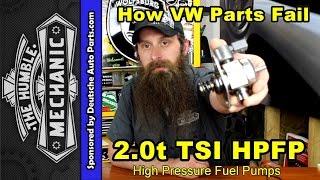
The 2.0T TFSI engine, particularly the EA888 variant used from roughly 2008 onward in the A3, is a direct-injection motor. This design makes it uniquely susceptible to issues with its High-Pressure Fuel Pump (HPFP). A common failure mode for the HPFP on this engine is an internal seal leak, which allows raw fuel to seep directly into the engine's crankcase. This contaminates the engine oil and causes a severe rich condition that triggers P2178. This specific failure pattern is a well-documented quirk of this powertrain, 🎬 Watch: How these high pressure fuel pumps fail internally. with many owner experiences confirming this diagnosis.
Generation note: The 2006-2013 year range covers the Audi A3 (8P) generation. However, the specified EA888 engine was introduced around mid-2008. Earlier 2.0T models (2006-2008) used the belt-driven EA113 engine. While causes can be similar, the HPFP, PCV valve, and timing system designs differ significantly. This guide is most accurate for 2008.5-2013 models with the chain-driven EA888 engine (Gen 1 and Gen 2).
Symptoms You May Notice
- Check Engine Light is on
- Strong smell of gasoline from the exhaust or in the engine oil
- Reduced fuel economy
- Rough idle, especially on startup
- Engine hesitation or sluggish performance
- Black smoke from the exhaust
- Engine stalling at idle or when coming to a stop
- Engine misfires
- Replacing the oxygen sensor first. While an O2 sensor can fail, it is more often correctly reporting a rich condition caused by another component, like the HPFP or a leaking injector.
- Replacing spark plugs and ignition coils. While these are common maintenance items and can cause misfires, they are unlikely to be the root cause of a P2178 code, which is a fuel mixture issue, not an ignition issue.
Most Likely Causes
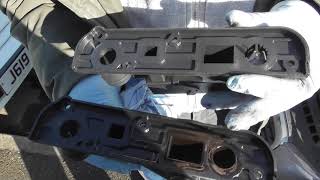
- High-Pressure Fuel Pump (HPFP) Failure 🔴 High Probability → Shop Fuel Pump The cam-driven HPFP on the EA888 engine is a known weak point. The internal seals can fail, causing fuel to leak directly past the pump's piston and into the engine's crankcase, contaminating the oil. This is a very common failure leading to P2178 and P2188 codes. 🎬 Watch: Diagnosing a rich condition caused by the HPFP.
How to confirm: The most definitive sign is a strong smell of gasoline on the oil dipstick or from the oil fill cap. The oil level may also appear to be rising. The oil will be visibly thinned and smell like fuel. In a forum thread, a user confirmed this exact failure and fix on their vehicle.
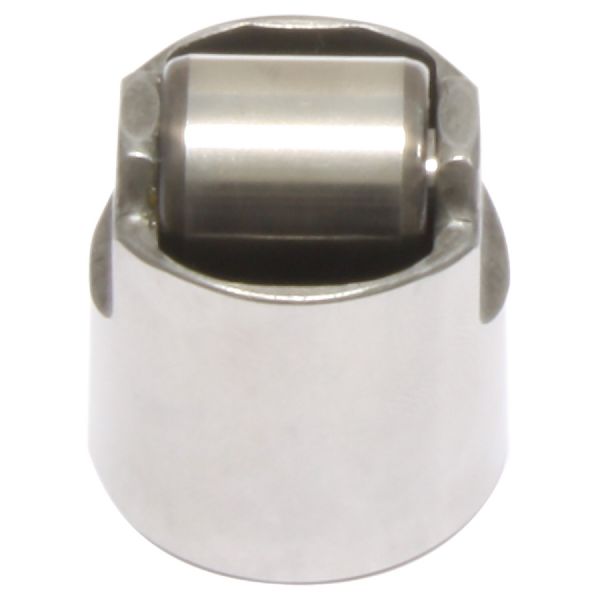
Typical fix: Replacement of the High-Pressure Fuel Pump and its cam follower, followed by an immediate oil and filter change to remove the contaminated oil.
Est. part cost: $250-$500 - PCV Valve / Oil Separator Failure 🔴 High Probability The PCV (Positive Crankcase Ventilation) system on the 2.0T engine uses a diaphragm that is prone to tearing. This creates a significant unmetered air leak (vacuum leak). While this often causes lean codes, the ECU can overcorrect, leading to rich conditions. A failed PCV can also cause other issues like rear main seal leaks due to excessive crankcase pressure.
How to confirm: Perform a smoke test on the intake system to check for leaks originating from the PCV valve. Another common test is to check for strong vacuum at the oil cap when the engine is running; if the cap is very difficult to remove, the PCV valve diaphragm has likely failed. The part is considered a regular maintenance item by some technicians, with replacement suggested every 70-80k miles. 🎬 See this walkthrough on how to replace the PCV valve.
Typical fix: Replace the entire PCV valve assembly. Several part numbers exist, and it's crucial to get the latest revision.
Est. part cost: $120-$180 - Leaking Fuel Injector(s) 🟡 Medium Probability → Shop Fuel Injector As a direct injection engine, the injectors operate under very high pressure and are located inside the combustion chamber. They are susceptible to carbon buildup on the tips and internal mechanical failure, causing them to leak or get stuck open.
How to confirm: Requires removing the injectors and having them professionally flow-tested. A hot-soak pressure test using a scan tool can also indicate a leak if fuel rail pressure drops after shutdown. Monitoring fuel trims per cylinder can also help isolate a leaking injector.
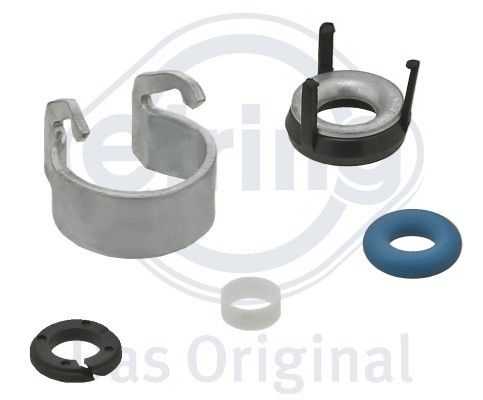
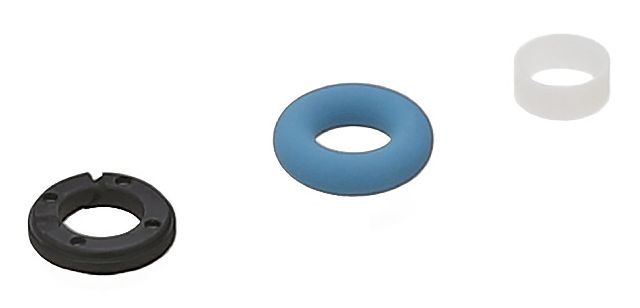
Typical fix: Replace the faulty fuel injector(s). It is highly recommended to replace all four as a set, along with their seals, to ensure balanced fuel delivery.
Est. part cost: $50-$150 per injector - Faulty Mass Air Flow (MAF) Sensor ⚪ Low Probability → Shop Fuel Injection Air Flow Meter
How to confirm: A dirty MAF sensor can under-report the amount of air entering the engine, causing the ECU to inject too much fuel. Try cleaning the sensor with dedicated MAF cleaner first. If the problem persists, monitor MAF readings with a scan tool to see if they are plausible for the given engine speed and load; voltage should increase smoothly with RPM.
Typical fix: Clean the MAF sensor. If cleaning doesn't work, replace the sensor.
Est. part cost: $100-$250
Rare But Worth Checking
- Faulty Front Oxygen (O2) Sensor: → Shop Oxygen Sensor The O2 sensor (also called an air-fuel ratio sensor) can fail and send a false 'rich' signal to the ECU. This is less common than an actual fuel control problem, but it's possible. If the sensor's voltage is stuck high and doesn't fluctuate, it may be faulty.
- High-Pressure Fuel Rail Sensor: A faulty fuel pressure sensor (G247) can report incorrect pressure to the ECU, leading to improper fuel delivery calculations. This is often accompanied by other fuel pressure-related codes. One owner on a forum reported this as the fix for a similar stalling issue.
- Stuck Open EVAP Purge Valve: → Shop Vapor Canister If the canister purge valve sticks open, it can allow unmetered fuel vapors from the charcoal canister to enter the intake manifold at the wrong time, creating a rich condition.
Diagnosis Steps
- Check the engine oil dipstick and oil fill cap. If it smells strongly of gasoline, the High-Pressure Fuel Pump (HPFP) is the most likely culprit. Stop diagnosis and replace the HPFP and its cam follower, then change the oil and filter immediately.
- If the oil is fine, scan for other accompanying fault codes. Codes like P2188, P0087, or P2279 can provide valuable clues.
- Inspect the PCV system. Check for strong vacuum at the oil fill cap with the engine running. A torn diaphragm will cause a very strong suction, making the cap hard to remove. A smoke test is the most reliable way to confirm a leak in the PCV or intake system.
- If no vacuum leaks are found, inspect the Mass Air Flow (MAF) sensor. Check if it is dirty and clean it with a dedicated MAF sensor cleaner. Do not touch the sensor element. Monitor its readings with a scan tool.
- Using a scan tool, monitor long-term and short-term fuel trims (LTFT/STFT). Consistently high negative values (e.g., -15% to -25%) confirm the ECU is trying to correct a rich condition.
- If the code persists, the next step is to investigate the fuel injectors. This is a more involved process that may require a professional to perform a leak-down test or flow test.
- As a final, less common possibility, check the front oxygen sensor's operation with a scan tool to ensure it is fluctuating correctly and not stuck in a 'rich' reading (high voltage).
Parts You'll Likely Need
- High-Pressure Fuel Pump (HPFP)
(OEM #06H127025Q)— This is the most frequent cause of P2178 on the 2.0T EA888 engine due to a common internal failure that leaks fuel into the oil.
Trusted brands: Bosch, Hitachi
OEM price range: $400-$550
Aftermarket price range: $250-$400 - PCV Valve / Oil Separator
(OEM #06H103495AH)— The diaphragm inside this part is known to tear, causing a massive vacuum leak that throws off fuel calculations. This part has had many revisions; ensure you are buying the latest version.
Trusted brands: Audi Genuine, Hengst, Vaico
OEM price range: $150-$200
Aftermarket price range: $50-$120 - Fuel Injector
(OEM #06H906036G)— An injector can get stuck open or leak, dumping excess fuel into a cylinder. It's recommended to replace them as a set.
Trusted brands: Bosch
OEM price range: $120-$180
Aftermarket price range: $50-$150
Related Codes That Often Appear With This One
- P2188 — This code means 'System Too Rich at Idle'. P2178 and P2188 frequently appear together as they both point to an underlying excessive fuel condition, just measured at different engine operating states (off-idle vs. idle).
- P0087 — 'Fuel Rail/System Pressure - Too Low'. This can appear if the HPFP is failing mechanically, even if it is also leaking fuel into the crankcase, or if there's a significant leak in the system, such as from an injector.
- P2279 — 'Intake Air System Leak'. This code often points directly to a failed PCV valve, which is a common cause of fuel trim issues on this engine.
- P0300, P0301, etc. — Random/multiple or single cylinder misfire codes. A severe rich condition can foul spark plugs and cause incomplete combustion, leading to misfires.
Technical Service Bulletins (TSBs) & Recalls
- TSB 2027731: Relates to excessive oil consumption in 2.0T EA888 engines, which can be caused by issues with pistons, rings, and the PCV system.
- TSB A171343 2027731: A version of the oil consumption TSB, noting that stop-and-go driving can worsen conditions.
- TSB (Untitled, NHTSA ID 10153351): Discusses oil leaks around the cylinder head cover due to manufacturing debris, a potential source of vacuum leaks.
Platform-Specific Known Issues
- An extended warranty was issued by Audi for the HPFP on some models due to the high failure rate, though this may have expired for the vehicle years in question.
- The PCV valve is considered a common maintenance item on this engine, with many owners replacing it preventatively every 60,000-80,000 miles to avoid vacuum leaks and potential oil seal damage.
- Audi issued a Technical Service Bulletin (TSB 2027731) related to excessive oil consumption on these engines, which involved replacing pistons and the PCV separator. While not directly for P2178, it highlights the known issues with the crankcase ventilation system.
Mechanic-Grade Diagnostic Values
- High-Pressure Fuel Rail (Actual vs. Specified) — expected: Using VCDS, check Measuring Block 106 or 230. At hot idle, specified and actual pressure should be closely matched around 40-50 bar.. Failure: A deviation greater than 5.0 bar between specified and actual pressure indicates a problem. For a rich condition, the actual pressure may be significantly higher than specified.
- Long-Term Fuel Trim (LTFT) — expected: Using a scan tool, the LTFT value should be within +/- 5%.. Failure: A P2178 code is typically associated with a very high negative fuel trim, often between -18% and -25%, as the ECU tries to remove excess fuel.
- Mass Air Flow (MAF) Sensor Reading — expected: At idle with no load, a healthy 2.0T engine should read approximately 3.0 to 4.5 g/s. The value should increase smoothly with RPM, reaching 15 to 25 g/s at 2500 RPM.. Failure: Readings that are stuck, erratic, or significantly lower than expected (e.g., 2.3 g/s at idle) can indicate a failing sensor that is under-reporting airflow, causing a rich mixture.
- Low-Pressure Fuel System — expected: Pressure should be between 4.0 and 6.0 bar (approx. 58-87 PSI). Note: Some EA888 engines do not have a low-pressure sensor (G410), so this reading may not be available.. Failure: While low pressure typically causes lean codes, erratic pressure from a failing in-tank pump can sometimes contribute to inconsistent HPFP performance.
- High-Pressure Fuel Sensor (G247) Voltage — expected: Key On, Engine Off (KOEO): Approx. 0.5V. At idle: Approx. 1.0V to 2.2V.. Failure: A voltage reading that is stuck, or reads above 4.8V, can indicate a short or internal sensor failure. An open circuit can result in a default low-temperature reading (e.g., -48°C), causing the ECU to heavily enrich the mixture.
- Oxygen Sensor (Lambda) Value — expected: The front O2 sensor's equivalence ratio (Lambda) should fluctuate very close to 1.0 at idle and under steady cruise.. Failure: A value consistently below 1.0 (e.g., 0.8-0.9) indicates a rich condition is being detected.
Scan Tool Commands That Help
- VCDS (Ross-Tech): Advanced Measuring Values — Allows logging of multiple parameters simultaneously, such as 'Fuel high pressure: specified value' and 'Fuel high pressure: actual value'. This is crucial for diagnosing deviations in the fuel system under different load conditions.
- VCDS (Ross-Tech): Measuring Blocks - Group 106, 140, or 230 — This is the standard method for quickly checking specified vs. actual high fuel rail pressure on most CAN-based Audi/VW controllers.
- VCDS (Ross-Tech): Basic Settings - Fuel Pump — Can be used to run the in-tank fuel pump to test its function, though this is more relevant for low-pressure issues. Requires engine to be on and at operating temperature.
Real Owner Repair Stories
- YouTube user 'G's Garage' (2013 Audi A4 2.0T) — Running rough, misfiring, check engine light, exhaust smelling like rotten eggs. Codes for P2178, system too rich at idle, and misfires on all cylinders.
❌ Tried (didn't work) Replaced all 4 spark plugs, Replaced all 4 ignition coils, Replaced PCV / oil separator assembly
✅ What actually fixed it The high-pressure fuel pump (HPFP) was leaking fuel into the crankcase. The final fix was replacing the HPFP and performing an oil and filter change to remove the fuel-contaminated oil. After the repair, fuel trims returned to normal (Lambda ~1.0). - Ross-Tech Forums user (2010 Audi A4 2.0L with 125,747 km) — P2188 (System Too Rich at Idle) and intermittent P2178 (System Too Rich Off-Idle). Noticed gasoline smell in the engine oil.
❌ Tried (didn't work) Replaced EVAP Purge Valve (N80), Replaced HPFP cam follower and pump seal
✅ What actually fixed it The user identified fuel in the oil. The strong implication, given the symptoms and codes, is that the HPFP itself was the source of the leak and required replacement, as replacing only the seal and follower did not resolve the rich condition.
OEM Part Supersession History
06H127025E, G, K, M, N, P→06H127025Q— Multiple revisions by VW/Audi to improve the reliability of the high-pressure fuel pump and address internal seal failures.
Heads up: Some very early 2.0T TSI engines may require a special adapter fitting (P/N: 06E127065G) to use the newest revision pump (06H127025Q). Always verify fitment by VIN.06H103495 (and revisions like E, J)→06H103495AH, AK, etc.— The PCV valve assembly has been updated multiple times to improve the durability of the internal diaphragm and address oil consumption issues.
Heads up: As part of an oil consumption campaign, a 'white cap' version was introduced that operates at a different crankcase pressure than the original 'black cap' version. It is critical to replace the PCV with the correct version for the vehicle's software, or update the software accordingly.
Model Year Variations Within This Range
- 2006-2008.5: These earlier A3s used the timing belt-driven EA113 engine. While they can suffer similar rich codes, the HPFP, cam follower, and PCV valve are completely different parts and have different failure modes compared to the EA888 engine.
- 2008.5-2013 (EA888 Gen 1 & 2): The EA888 engine itself evolved from Gen 1 to Gen 2 around 2008-2009. Gen 2 introduced updates like a variable oil pump and the Audi Valvelift System (AVS) on some versions. While the core causes of P2178 remain the same (HPFP, PCV), part numbers for these components were revised throughout this period.
Diagnostic Flowchart
Other Known Issues on This Vehicle
Issues unrelated to this code that are worth knowing about as an owner of this generation:
- Timing Chain Tensioner Failure 🔴 High — Common on EA888 Gen 1 and early Gen 2 engines (approx. up to 2012). Failure can occur without warning, often between 60k-100k miles. A rattling noise on startup is a key symptom. (Ref: Multiple TSBs issued and a class-action lawsuit settlement led to an extended warranty for some vehicles.)
- Excessive Oil Consumption 🟠 Medium — Prevalent in early EA888 engines (approx. 2009-2011) due to faulty piston ring design. Can lead to consumption rates as high as 1 quart per 1,000 miles. (Ref: TSB 2027731 addresses this, with the fix often requiring new pistons and rings. A class-action lawsuit was also settled over this issue.)
- Intake Valve Carbon Buildup 🟠 Medium — An inherent characteristic of all direct-injection engines, including the EA888. Symptoms like rough idle, hesitation, and power loss typically appear every 40k-80k miles.
- Water Pump / Thermostat Housing Failure 🟠 Medium — The plastic housing is prone to cracking and leaking over time due to heat cycles. It's a very common failure point across all EA888 generations, often noticed by a slow coolant loss or sweet smell. (Ref: Multiple class-action lawsuits have been filed regarding this issue on various model years.)
Used vs. New Parts: Buying Guide for This Vehicle
When a used part is the smart pick: For this repair, used parts are generally not recommended for the primary failure components. The HPFP and PCV valve are known wear items with multiple revisions to improve reliability. A used part is likely to be an older, failure-prone revision or have significant wear already. A used MAF sensor from a low-mileage donor could be a viable option, but only if it is a genuine Bosch/Hitachi unit.
Donor-vehicle mileage cap: roughly under 50000 miles for the part to have meaningful remaining life.
What to inspect on the donor part:
- For a MAF sensor, ensure the donor vehicle had no stored air/fuel mixture codes.
- Verify the part is a genuine OEM brand (Bosch, Hitachi, etc.), not a no-name aftermarket replacement.
- Inspect electrical connectors for corrosion or damage.
OEM-only on this vehicle (don't cheap out):
- High-Pressure Fuel Pump (HPFP): Due to the critical nature of this part and the high failure rate of early versions, using a new OEM (Bosch, Hitachi) or latest-revision Genuine Audi part is strongly advised.
- PCV Valve / Oil Separator: Aftermarket versions are notoriously unreliable. Given the multiple OEM revisions, only the latest genuine part should be used to avoid immediate failure or other engine issues.
Aftermarket brands forum-validated for this vehicle:
- Bosch (for HPFP, Injectors, MAF Sensor - often the OEM supplier)
- Hitachi (for HPFP - often an OEM supplier)
- Hengst (for PCV Valve)
Brands owners have reported issues with on this vehicle:
- Unbranded or 'white-box' electronic sensors (MAF, Fuel Pressure Sensor)
- No-name PCV valve assemblies, as the diaphragm quality is often poor and can fail quickly.
Real Owner Stories
Aggregated from forums and TSBs cited above. Mileages and costs reflect what owners reported in those sources.
Audi A3 (MKII) 2.0T
Symptoms: Check Engine Light with codes P2178 and P2188, a strong smell of fuel in the engine oil, and the engine would occasionally stall on startup with a rough idle.
What fixed it: Replacement of the High-Pressure Fuel Pump (HPFP).
Source hint: AudiWorld.com forum thread titled 'P2178 / P2188, occasionally stalls on startup / rough idle'
Related OBD-II Codes
Frequently Asked Questions
My 2008 Audi A3's oil smells strongly of gasoline. Is this related to the P2178 code?
Should I replace the PCV valve on my A3 as preventative maintenance to avoid a P2178 code?
Is there an Audi TSB that addresses the PCV system issues on the EA888 engine?
My mechanic suggests replacing all four fuel injectors for my P2178 code. Is this necessary?
Was there a recall or extended warranty for the High-Pressure Fuel Pump (HPFP) on my Audi A3?
What is the very first diagnostic step I should take for a P2178 code on my 2.0T A3?
Helpful Videos

Used OEM Parts in Stock
New Aftermarket Parts Available

The information in this article is provided for general reference and educational purposes only. Vehicle specifications, procedures, and part compatibility can vary by production date, trim level, and region. Always consult your vehicle's factory service manual and verify part numbers before purchasing or performing repairs. Safety-critical components such as airbags, seat belts, and braking systems should be installed by a qualified professional.
- Audi A3:
- 🧭 Diagnostic Flowchart
- 🎬 Helpful Videos
- 🛍️ Shop This Part
- What's Unique About the 2006-2013 Audi A3
- Symptoms You May Notice
- Most Likely Causes
- Rare But Worth Checking
- Diagnosis Steps
- Parts You'll Likely Need
- Related Codes That Often Appear With This One
- Technical Service Bulletins (TSBs) & Recalls
- Platform-Specific Known Issues
- Mechanic-Grade Diagnostic Values
- Scan Tool Commands That Help
- Real Owner Repair Stories
- OEM Part Supersession History
- Model Year Variations Within This Range
- Other Known Issues on This Vehicle
- Used vs. New Parts: Buying Guide for This Vehicle
- Real Owner Stories
- Audi A3 (MKII) 2.0T
- Related OBD-II Codes
- Frequently Asked Questions
- 🎟️ Get 5% Off