

P2189 on 2009-2016 Jaguar XF: System Too Lean at Idle (Bank 2) Causes and Fixes
On a 2009-2016 Jaguar XF with a 3.0L V6 or 5.0L V8 engine, code P2189 almost always indicates an unmetered air leak, most commonly from a failed PCV valve diaphragm. A smoke test is the best diagnostic step. The PCV diaphragm itself is an inexpensive part (around $15-$40 for an aftermarket kit), and replacement is a manageable DIY for many owners, though access is tight.
- P2189 on a Jaguar XF means there is an unmetered air leak on the driver's side of the engine at idle.
- The most likely cause is a torn PCV valve diaphragm, a common and relatively inexpensive part to replace.
- Do not replace oxygen sensors; they are reporting the problem, not causing it.
- The definitive diagnostic step is a smoke test to pinpoint the exact location of the vacuum leak.
- This code is often seen with P2187 (Bank 1 Lean), which points to a leak affecting the entire engine.
What's Unique About the 2009-2016 Jaguar XF
The Jaguar XF models in this year range, particularly those with the 5.0L V8 and 3.0L V6 supercharged engines (AJ133 and AJ126), are known for issues with plastic and rubber components in the engine bay becoming brittle over time due to heat cycles. This makes them prone to developing cracks that lead to vacuum leaks. A very common failure point is the diaphragm in the Positive Crankcase Ventilation (PCV) valve, which can tear and cause the exact lean-at-idle condition that triggers P2189. This issue is so prevalent that it affects numerous other Jaguar and Land Rover models equipped with the same engines.
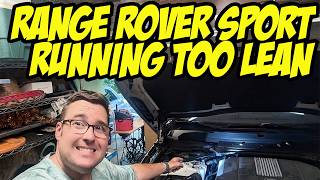
🎬 Watch: Diagnosing lean codes on a Jaguar 5.0L engine.Diagnostic Flowchart
Tap your situation to follow the diagnostic path that matches what you're seeing on this vehicle.
Generation note: This range covers the entire first generation (X250, 2009-2015) and the first model year of the second generation (X260, 2016). While the engines and underlying causes are similar, specific part numbers for items like intake gaskets or hoses may differ. The PCV valve failure is common across the V6 and V8 engines used in this period and also in many other JLR products. All vehicles in this range use the Jaguar SDD (Symptom Driven Diagnostics) software for dealer-level diagnostics; the newer Pathfinder software was introduced around 2018.
Symptoms You May Notice
- Check Engine Light is on
- Rough, unstable, or high idle (RPMs may surge to 2000+ on startup).
- Hesitation or stumbling during acceleration.
- Audible hissing or whistling sound from the engine bay, especially from the valve cover area behind the supercharger.
- Reduced fuel economy.
- Excessive vacuum at the oil filler cap when the engine is running (difficult to remove the cap).
- Replacing oxygen (O2) sensors. While an O2 sensor reports the lean condition, it is rarely the cause of it. The sensor is doing its job by detecting the excess oxygen.
- Replacing the fuel cap. While a loose or faulty fuel cap can cause EVAP system codes, it is an unlikely cause for a lean-at-idle code like P2189.
Most Likely Causes
- Failed PCV Valve Diaphragm 🔴 High Probability → Shop PCV Valve The rubber diaphragm inside the PCV valve, which is integrated into the valve cover, is thin and known to tear or degrade from heat and oil vapor exposure, creating a significant vacuum leak. This is the most widely reported cause for P2187/P2189 on these engines.
How to confirm: With the engine running, a loud hissing sound is often audible from the PCV valve area on the valve cover. A definitive diagnosis is made by performing a smoke test, which will show smoke leaking from the PCV valve cap. A DIY diagnostic involves plugging the hose from the PCV valve; if the hissing stops and idle improves, the diaphragm is bad.
Typical fix: Replace the PCV valve diaphragm and spring. This is often sold as an inexpensive kit. While some dealers may recommend replacing the entire valve cover, aftermarket kits make it possible to service just the diaphragm. The 5.0L V8 has two PCV valves on the passenger side valve cover (Bank 1) and two on the driver's side (Bank 2), while the 3.0L V6 has one on each side.
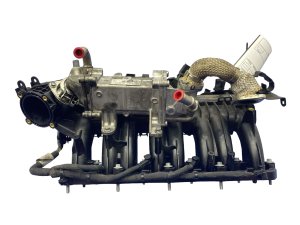
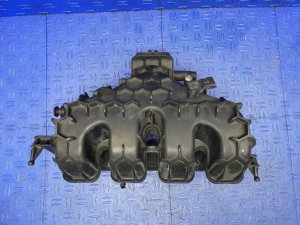
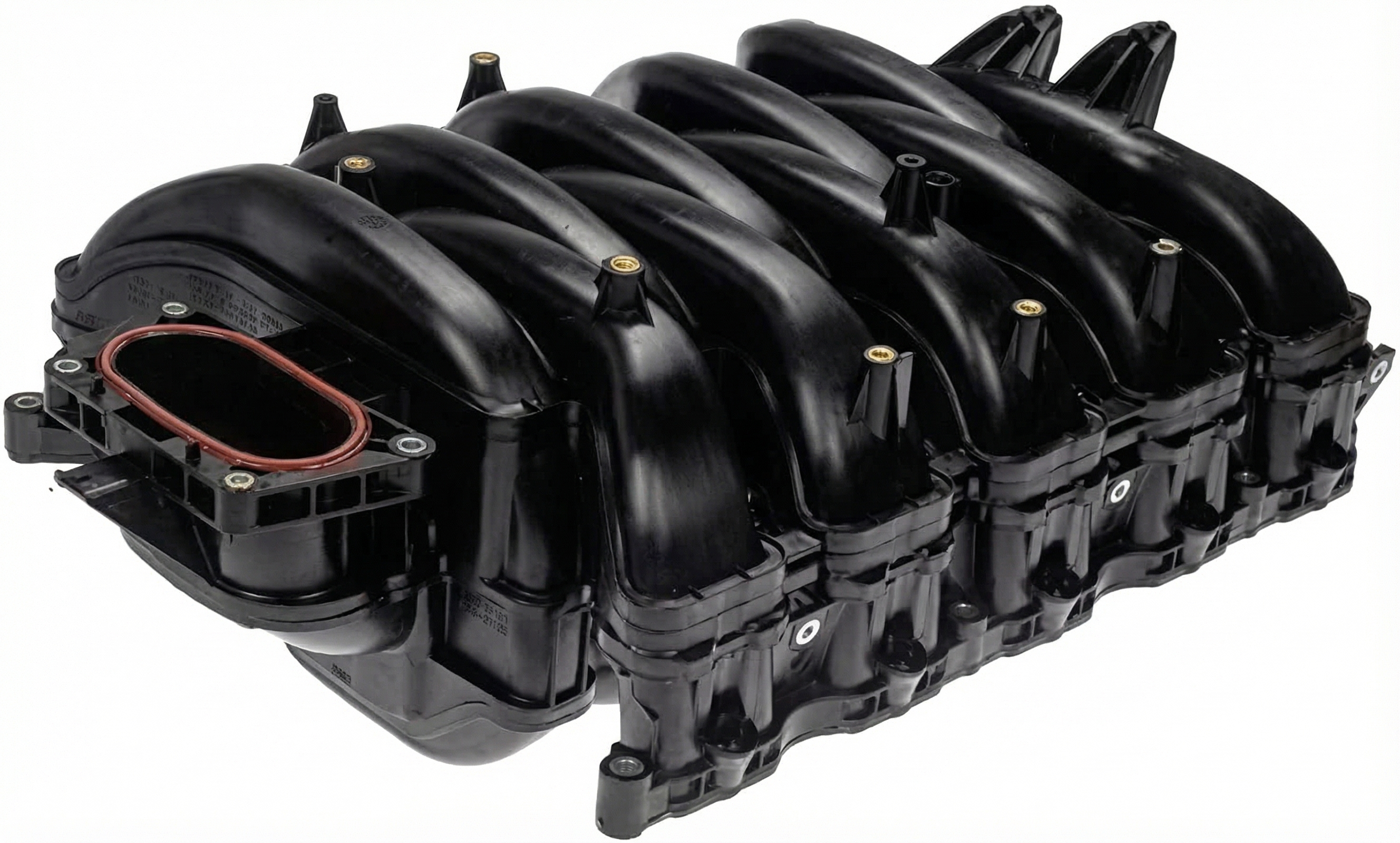
Est. part cost: $15-$40 for an aftermarket kit (e.g., URO Parts, RKX). - Cracked or Leaking Intake Manifold Gaskets 🟡 Medium Probability → Shop Engine Intake Manifold The intake manifold gaskets are subjected to constant heat and pressure changes, which can cause them to become hard and brittle, compromising their seal and causing a vacuum leak.
How to confirm: A smoke test is the most effective way to confirm a leak at the intake manifold gasket. Spraying carburetor cleaner near the gasket area with the engine running may cause a momentary change in idle speed, but this method is less precise and can be a fire hazard.
Typical fix: Replace the intake manifold gaskets. This is a more labor-intensive job that involves removing the supercharger on applicable models.
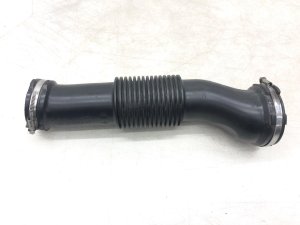
Est. part cost: $30-$120 - Cracked Air Intake Ducts or Hoses 🟡 Medium Probability → Shop Engine Air Intake Resonator The plastic and rubber air intake tubes, especially the flexible accordion-style sections, can develop cracks from age and engine movement, allowing unmetered air in.
How to confirm: Visually inspect all intake ducting between the air filters and the throttle body for cracks or loose connections. A smoke test will quickly reveal any leaks.
Typical fix: Replace the cracked intake duct or hose.
Est. part cost: $50-$200 - Leaking Purge Control Valve ⚪ Low Probability As cited in Jaguar TSB #SSM74375, the purge control valve (part of the EVAP system) can fail and stick open, creating a vacuum leak.
How to confirm: A smoke test can help identify a leak from the valve or its connections. The valve can also be tested for proper operation with a capable scan tool. A stuck open purge valve can sometimes be diagnosed by disconnecting it and plugging the line to see if fuel trims improve.
Typical fix: Replace the purge control valve.
Est. part cost: $40-$80
Rare But Worth Checking
- Leaking Brake Booster or Vacuum Line: A leak in the brake booster diaphragm or the vacuum line running to it can create a large, unmetered air leak. The main vacuum line connects near the PCV valves and can be disconnected for testing. Symptoms may include a hissing sound from the pedal area or a hard brake pedal.
- Dirty or Faulty Mass Airflow (MAF) Sensor: → Shop Fuel Injection Air Flow Meter While less common for a lean-at-idle code (which usually points to a vacuum leak), a dirty MAF sensor can under-report airflow at low RPMs, causing the PCM to command less fuel than needed. Cleaning the sensor with a dedicated MAF cleaner is a simple first step before considering replacement.
- Leaking Fuel Injector O-rings: Aged or cracked O-rings on a fuel injector in Bank 2 can allow unmetered air to leak directly into the intake port.
- Cracked Intake Manifold: → Shop Engine Intake Manifold In some cases, the plastic intake manifold itself can develop a hairline crack, leading to a persistent vacuum leak that is difficult to find without a professional-grade smoke test.
Diagnosis Steps
- Read the Codes: Use an OBD-II scanner to confirm P2189 and check for any other accompanying codes, like P2187.
- Visual Inspection: Carefully inspect the engine bay for any obvious signs of damage, such as cracked hoses, loose connections, or disconnected lines, particularly around the air intake system and PCV valve.
- Listen for Leaks: Start the engine and listen for an audible hissing or whistling sound, which can often lead you directly to the source of a large vacuum leak, typically near the valve covers.
- Check Fuel Trims: Use a scan tool to monitor short-term (STFT) and long-term (LTFT) fuel trims at idle. High positive numbers (e.g., LTFT > 20%) confirm the PCM is adding significant fuel to compensate for a lean condition.
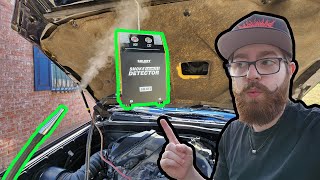
- Perform a Smoke Test: This is the most crucial and effective step. Introduce smoke into the intake system via a vacuum line. Smoke will exit from the location of the leak, whether it's a PCV diaphragm, intake gasket, or cracked hose. This is the definitive diagnostic method.
- Isolate and Repair: Once the leak is identified via the smoke test, replace the faulty component. For a suspected PCV leak, you can temporarily plug the vacuum line to the valve to see if the idle stabilizes.
- Clear Codes and Reset Adaptations: After the repair, clear the trouble codes and use a capable scan tool (like Jaguar SDD) to reset the engine's fuel trim adaptations. A battery disconnect for 15 minutes may also work but is less ideal.
Parts You'll Likely Need
- PCV Valve Diaphragm Kit
(OEM #LR041443, C2D27188, LR133579, C2D60163)— This is the most frequent failure point on the 3.0L V6 and 5.0L V8 engines causing lean codes at idle. The rubber diaphragm tears, creating a large vacuum leak. Note that the 5.0L V8 uses four diaphragms total (two per bank) and the 3.0L V6 uses two (one per bank).
Trusted brands: Genuine Jaguar/Land Rover (often sold as a kit), URO Parts, RKX, Vaico
OEM price range: $50-$70
Aftermarket price range: $15-$40 - Intake Manifold Gasket Set
(OEM #AJ811948)— These gaskets can harden and fail over time, causing vacuum leaks. This is a common secondary cause if the PCV system is intact.
Trusted brands: Fel-Pro, Mahle, Elring
OEM price range: $80-$120
Aftermarket price range: $30-$90 - Air Intake Hose/Duct — The plastic intake tubing can crack, especially in the flexible sections, allowing unmetered air to enter the system.
Trusted brands: Genuine Jaguar
OEM price range: $100-$250
Aftermarket price range: $50-$150
Related Codes That Often Appear With This One
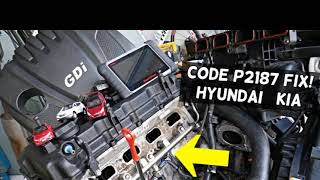
- P2187 — This is the identical code for 'System Too Lean at Idle' but for Bank 1. When both codes appear together, it strongly suggests a vacuum leak in a location that affects both engine banks, such as the PCV system, intake manifold, or throttle body area.
- P0505 — This code for 'Idle Air Control System' can appear alongside P2189 as the engine's computer struggles to maintain a stable idle due to the unmetered air leak, as noted in TSB #SSM74375.
Technical Service Bulletins (TSBs) & Recalls
- SSM74375: Mentions that codes P2187, P2189, P0505, or P0507 could be stored due to an air intake system leak, and lists the purge control valve as a potential cause.
- JTB00385: While not directly for P2189, this TSB addresses related lean codes and vacuum leak diagnostics on similar JLR engines, often pointing towards PCV system failures.
- SSM74374: A Land Rover TSB that directly addresses P2187/P2189 on the same family of engines, identifying a split PCV diaphragm as the primary cause and authorizing repair with a diaphragm kit instead of a full valve cover replacement.
Platform-Specific Known Issues
- The PCV valve is integrated into the valve cover, but service kits are available to replace just the diaphragm without replacing the entire cover. Dealers may incorrectly state the supercharger needs to be removed for access.
- On supercharged models, accessing the PCV valves at the rear of the engine is tight but possible without removing the supercharger.
- A cracked intake 'symposer' pipe, which plumbs engine noise into the cabin on some models, can also be a source of a vacuum leak causing these codes.
Mechanic-Grade Diagnostic Values
- Long-Term Fuel Trim (LTFT) at Idle — expected: Close to 0% (ideally +/- 5%). Failure: High positive values, often +20% or higher, indicate the PCM is compensating for a vacuum leak.
- High-Pressure Fuel System at Idle — expected: Approximately 500 PSI.. Failure: Significantly lower pressure could indicate a fueling issue, but this code is more often a vacuum leak.
- Low-Pressure Fuel System (Key-On or Idling) — expected: 60-106 PSI.. Failure: Pressure below this range could indicate a failing in-tank fuel pump, though this would likely affect both banks and cause other codes.
- Mass Airflow (MAF) Sensor Reading at Idle (5.0L V8) — expected: Approximately 4.0 - 7.0 g/s.. Failure: Readings significantly outside this range could indicate a faulty sensor, but vacuum leaks after the sensor are a more common cause for P2189.
- Engine Ground Strap Voltage Drop — expected: Less than 0.5V.. Failure: A voltage reading higher than 0.5V when measured from the battery negative post to the engine block while cranking indicates a poor ground connection.
Scan Tool Commands That Help
- Jaguar SDD or equivalent advanced scanner: Reset ECM Adaptations / Reset Fuel Trims — After replacing a component that caused a vacuum leak (like a PCV valve or intake gasket), this command should be used to clear the old, learned long-term fuel trim values. This forces the engine to immediately relearn the correct fueling strategy, preventing it from running rich after the repair.
- Jaguar SDD or equivalent advanced scanner: Fuel Prime Procedure — If a fuel delivery issue is suspected over a vacuum leak, this command manually runs the low-pressure fuel pump, allowing a technician to verify its operation audibly and check low-side fuel pressure.
Wiring & Ground Locations
- Main Engine Ground Strap — On the right side (US passenger side) of the vehicle, this braided steel strap typically connects the vehicle's frame/cross-member to the transmission bell housing or engine block, often near the starter motor.. A corroded or loose main ground can cause erratic behavior from sensors that the Powertrain Control Module (PCM) relies on for air-fuel calculations. While not a direct cause of a vacuum leak, it can create confusing electrical symptoms that mimic sensor failure.
Real Owner Repair Stories
- Jaguar Forums user 'zidjan' (2013 Jaguar XJ 5.0L) — Check engine light with codes P2187 and P2189, rough idle, smoke from passenger side tail pipe.
❌ Tried (didn't work) Clearing the codes temporarily resolved the rough idle.
✅ What actually fixed it The owner took the vehicle to a mechanic who confirmed a failed PCV diaphragm. Replacing the diaphragm fixed the issue. - YouTube channel 'fsteddie98' (2013 Jaguar XJ (3.0L or 5.0L engine)) — Check engine light with lean codes P2187 and P2189, very noticeable hissing sound from the engine bay.
✅ What actually fixed it The technician used freeze frame data to confirm high positive fuel trims at idle. A stethoscope pinpointed the hissing to the PCV valve area. As a final confirmation, the tech disconnected the PCV hose and plugged it, which made the hissing stop and the fuel trims improve. Replacing the PCV diaphragm kit (which came in a Land Rover branded package) resolved all symptoms.
"I Checked Everything" — The Actual Cause
- In one documented case for similar lean codes (P0171/P0174), the cause was a failed O-ring on the MAF sensor itself. This allowed unmetered air to leak into the intake right at the sensor housing. This type of leak can be missed by a standard smoke test where smoke is introduced into the system *after* the MAF sensor. The fix was to replace the MAF sensor's O-ring to ensure a proper seal.
OEM Part Supersession History
C2D27188, AJ814028→LR041443— Part has been revised by the manufacturer over time. The Land Rover part number is often used for Jaguar repairs as the engines are shared.
Heads up: Aftermarket listings show these numbers as interchangeable for the PCV valve assembly/kit on 5.0L engines.
Helpful Videos
We Have This Part in Stock

The information in this article is provided for general reference and educational purposes only. Vehicle specifications, procedures, and part compatibility can vary by production date, trim level, and region. Always consult your vehicle's factory service manual and verify part numbers before purchasing or performing repairs. Safety-critical components such as airbags, seat belts, and braking systems should be installed by a qualified professional.
- Jaguar XF:
- 🧭 Diagnostic Flowchart
- 🎬 Helpful Videos
- 🛍️ Shop This Part
- What's Unique About the 2009-2016 Jaguar XF
- Symptoms You May Notice
- Most Likely Causes
- Rare But Worth Checking
- Diagnosis Steps
- Parts You'll Likely Need
- Related Codes That Often Appear With This One
- Technical Service Bulletins (TSBs) & Recalls
- Platform-Specific Known Issues
- Mechanic-Grade Diagnostic Values
- Scan Tool Commands That Help
- Wiring & Ground Locations
- Real Owner Repair Stories
- "I Checked Everything" — The Actual Cause
- OEM Part Supersession History
- 🎟️ Get 5% Off