

P2189 on 2010-2017 Jaguar XJ: System Too Lean at Idle (Bank 2) Causes and Fixes
On a 2010-2017 Jaguar XJ with the 3.0L V6 or 5.0L V8 engine, code P2189 is almost always caused by a failed PCV (Positive Crankcase Ventilation) valve diaphragm, creating a significant vacuum leak. This is a well-documented, common issue. Replacing the diaphragm is a low-cost fix, typically under $50 for an aftermarket kit (Part # LR133579 or C2D60163), and can be done by a skilled DIYer, avoiding a costly valve cover replacement.
- P2189 on a 2010-2017 Jaguar XJ almost always points to a vacuum leak, not a faulty sensor.
- The most likely culprit by a wide margin is a torn PCV valve diaphragm on the valve cover.
- Listen for a distinct hissing sound from the engine bay at idle; this is a strong clue for a vacuum leak.
- A smoke test is the most reliable method to pinpoint the exact location of the leak.
- Do not replace the oxygen sensors; they are just reporting the problem.
What's Unique About the 2010-2017 Jaguar XJ
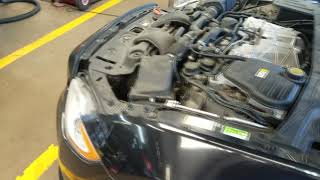
The AJ126 V6 and AJ133 V8 engines in this generation of Jaguar XJ are notorious for PCV valve diaphragm failures. This small rubber diaphragm, often made of a material that becomes brittle with heat and age, is integrated into the valve cover. It is prone to tearing, creating a significant unmetered vacuum leak that is a primary cause of lean codes like P2189. 🎬 Watch: A real-world diagnosis of these common lean codes. While many cars can get this code from various vacuum leaks, the PCV diaphragm is a uniquely frequent and well-documented failure point on this specific JLR engine family, often accompanied by a loud hissing sound.
Diagnostic Flowchart
Tap your situation to follow the diagnostic path that matches what you're seeing on this vehicle.
Symptoms You May Notice
- Check Engine Light is on
- Rough or unstable idle, sometimes surging to high RPMs (e.g., 2000 RPM) on startup before settling down.
- Hesitation or stumbling during acceleration
- Loud and distinct hissing or whistling sound from the engine bay, often near the back of the engine by the valve covers where the PCV valves are located.
- Reduced fuel economy.
- Engine may stall at idle
- Difficulty removing the oil filler cap when the engine is running due to excessive crankcase vacuum
- Replacing the oxygen (O2) sensor. The O2 sensor is accurately reporting the lean condition; it is not the cause of it. Replacing it will not fix the underlying vacuum leak.
- Replacing the Mass Airflow (MAF) sensor without proper diagnosis. While a dirty MAF can cause issues, a vacuum leak is far more probable for this specific code on this platform.
Most Likely Causes
- Failed PCV Valve Diaphragm 🔴 High Probability → Shop PCV Valve The rubber diaphragm inside the PCV valve cap becomes brittle over time from engine heat and oil vapors, then tears, creating a significant unmetered air leak. This is a very common failure on the Jaguar 3.0L and 5.0L engines, and Jaguar Land Rover issued a TSB (SSM74375) acknowledging this exact issue.
How to confirm: A distinct hissing sound can often be heard from the valve cover area. A smoke test is the definitive method to confirm the leak. You can also try carefully placing a hand over the PCV valve; a strong suction indicates a ruptured diaphragm. Another test is to try removing the oil filler cap with the engine running; if it's very difficult to remove due to strong vacuum, the diaphragm has likely failed.
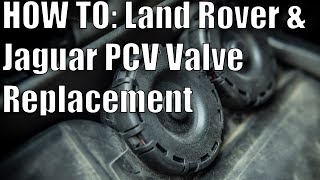
Typical fix: Replace the PCV valve diaphragm and cap. Aftermarket kits are widely available that allow you to replace just the diaphragm without replacing the entire valve cover, which is what dealers often suggest at a much higher cost. The plastic tabs on the old cap are brittle and often break during removal, which is expected as the replacement kit includes a new cap.
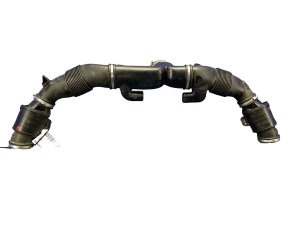
Est. part cost: $25-$50 - Cracked or Loose Air Intake Hose/Duct 🟡 Medium Probability → Shop Engine Air Intake Resonator The plastic and rubber components of the intake system, particularly the flexible accordion-like sections, can become brittle and crack with age and heat cycles.
How to confirm: Visually inspect all intake ducting between the mass airflow (MAF) sensor and the throttle body for cracks or loose connections. A smoke test will quickly reveal any leaks.
Typical fix: Replace the cracked or damaged air intake hose. A temporary fix with high-quality tape might be possible in an emergency.
Est. part cost: $50-$150 - Leaking Intake Manifold Gaskets ⚪ Low Probability → Shop Engine Intake Manifold Gaskets can degrade over time, allowing unmetered air to enter the intake ports. This is less common than PCV failure but can happen on higher mileage vehicles.
How to confirm: A smoke test is the most effective way to identify a leaking intake manifold gasket. Spraying flammable brake cleaner near the gasket area with the engine running can cause a change in idle speed, but this method is less precise and carries a significant fire risk.
Typical fix: Replace the intake manifold gaskets. This is a more labor-intensive and expensive job.
Est. part cost: $50-$120
Rare But Worth Checking
- Faulty Mass Airflow (MAF) Sensor: → Shop Fuel Injection Air Flow Meter A dirty or failing MAF sensor can under-report the amount of air entering the engine, causing the computer to deliver less fuel than needed. Cleaning the sensor with a dedicated MAF cleaner is a good first step before replacement.
- Leaking Fuel Injector O-Rings: Damaged O-rings on a fuel injector can allow unmetered air to leak into the intake port, causing a lean condition on that specific cylinder.
- Weak Fuel Pump or Clogged Fuel Filter: Insufficient fuel pressure can prevent the injectors from delivering enough fuel, leading to a lean condition. However, this would typically affect both engine banks and trigger other codes.
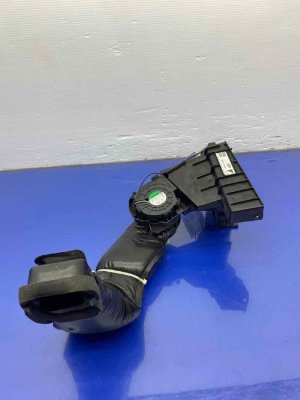
- Cracked Symposer Pipe: On supercharged models, the 'symposer' pipe, which channels engine sound into the cabin, can crack and create a vacuum leak. This was identified by some owners as the source of their lean codes.
Diagnosis Steps
- Read the code with an OBD-II scanner and confirm P2189 is present. Note any other codes, especially P2187, which strongly points to a central vacuum leak.
- With the engine running at idle, listen for an audible hissing or whistling sound from the engine bay, particularly around the valve covers at the back of the engine.
- With the engine running, check long-term fuel trims (LTFT) with a scan tool. High positive numbers (e.g., +15% to +25% or higher) at idle that decrease as RPMs increase confirm a vacuum leak.
- Perform a visual inspection of all accessible vacuum hoses and the air intake ducting for obvious cracks, disconnections, or damage.
- The most effective step is to perform a smoke test. Introduce smoke into the intake system via a vacuum line and look for smoke escaping. Pay close attention to the round PCV valves on the valve covers, intake manifold gaskets, and the intake duct itself.
- If a PCV diaphragm leak is found, replace the diaphragm kit.
- If no vacuum leaks are found, investigate other possibilities like cleaning the MAF sensor or checking fuel pressure.
- After the repair, clear the codes. Resetting the engine adaptations by disconnecting the battery's negative terminal for 15 minutes or using a capable scan tool is recommended to help the ECU relearn fuel trims.
Parts You'll Likely Need
- PCV Valve Diaphragm Repair Kit
(OEM #LR133579 / C2D60163)— This is the most frequent cause of code P2189 on these engines due to the diaphragm tearing. Both part numbers refer to the same diaphragm kit which fits both the 3.0L V6 and 5.0L V8 engines. Note: The 5.0L V8 engine has two PCV valves and may require two kits.
Trusted brands: RKX, Febi Bilstein, Genuine Jaguar/Land Rover, EuroAMP
OEM price range: $40-$60
Aftermarket price range: $15-$40 - Intake Manifold Gasket
(OEM #AJ811948)— If a smoke test reveals a leak at the intake manifold, these gaskets will need to be replaced. This is a much more involved repair with significantly higher labor costs.
Trusted brands: Fel-Pro, Mahle, BritPart, Victor Reinz
OEM price range: $60-$80
Aftermarket price range: $30-$50 - Air Intake Hose — Cracks in the intake hose between the MAF sensor and throttle body are a common source of unmetered air leaks.
Trusted brands: URO Parts
OEM price range: $100-$200
Aftermarket price range: $50-$100
Related Codes That Often Appear With This One
- P2187 — This is the identical code for Bank 1 ('System Too Lean at Idle'). A significant vacuum leak, such as from a PCV valve, is a central leak that affects the entire engine, causing both banks to run lean at idle. It is extremely common to see both codes together.
- P0507 — This code for 'Idle Air Control System RPM Higher Than Expected' can be triggered by the same large vacuum leak causing P2189, as the unmetered air causes the engine idle speed to increase beyond the computer's control. This is explicitly mentioned in TSB #SSM74375.
Technical Service Bulletins (TSBs) & Recalls
- SSM74375: Mentions that DTCs P2187, P2189, P0505, or P0507 could be stored due to an air intake system leak related to a ruptured crankcase pressure control valve diaphragm. It provides the action to use a repair kit.
Platform-Specific Known Issues
- Technical Service Bulletin SSM74375 explicitly lists P2187 and P2189 as potential codes resulting from a split diaphragm within the pressure control valve (PCV) on the V6 and V8 petrol engines. It authorizes the use of a repair kit instead of replacing the entire camshaft cover.
Mechanic-Grade Diagnostic Values
- Long Term Fuel Trims (LTFT) at Idle — expected: Close to 0% (ideally within +/- 5%). Failure: Sustained positive values of +15% to +25% or higher at idle strongly indicate a vacuum leak. The trims will typically decrease towards normal as engine RPM increases.
- Low-Pressure Fuel System — expected: Should prime to approximately 106 PSI when the vehicle is unlocked or the door is opened, before startup.. Failure: Failure to reach or hold pressure could indicate a weak in-tank fuel pump, though this would typically cause issues on both banks and potentially a no-start condition.
- High-Pressure Fuel System — expected: Between 500 and 3,000 PSI during operation.. Failure: Low high-side pressure would likely trigger specific fuel pressure codes (like P0191) in addition to lean codes. An Identifix repair summary notes to disregard P0191 if it appears alongside the common PCV-related lean codes, as the vacuum issue is the primary fault.
Scan Tool Commands That Help
- Jaguar SDD or equivalent high-level scanner: Reset Adaptations / Clear Learned Fuel Adaptations — This function should be used after a repair, such as replacing a PCV diaphragm or fixing a vacuum leak. It forces the Engine Control Module (ECM) to erase its stored long-term fuel trim values and relearn them from scratch with the new, correct baseline. This can resolve poor running conditions faster than waiting for the system to adapt on its own.
Wiring & Ground Locations
- EMS LH Ground Stud — Located on the left front inner fender/wing in the engine bay. A wiring diagram for a 2011 XJ also shows a key ground point (G1D122AL) under the engine compartment fuse box.. The Engine Management System (EMS) ground is critical for all sensors reporting to the ECM, including O2 sensors and MAF sensors. A poor or corroded ground can introduce electrical noise or incorrect reference voltages, potentially causing the ECM to misinterpret sensor data and set erroneous lean codes.
Real Owner Repair Stories
- JaguarForums.com user 'zidjan' (2013 Jaguar XJ 5.0L) — Check engine light with codes P2187 and P2189, rough idle that smoothed out with a little throttle, and some smoke from the passenger side tailpipe.
❌ Tried (didn't work) Clearing the codes temporarily worked but they returned.
✅ What actually fixed it A mechanic confirmed and replaced a failed PCV diaphragm, which resolved the issue. - YouTube channel 'fsteddie98' (2013 Jaguar XJ) — Check engine light with lean codes P2187 and P2189. Freeze frame data showed high positive long-term fuel trims at idle. A loud hissing noise was audible from the right side of the engine.
✅ What actually fixed it The technician identified a torn PCV diaphragm on the valve cover. Plugging the hose leading from the PCV valve made the hissing stop and fuel trims improve, confirming the diagnosis. Replacing the PCV diaphragm kit (which came in Land Rover packaging) fixed the codes and the hissing sound. - JaguarForums.com user 'XJ8JR' (2016 Jaguar XJR) — High idle, rough/bouncing idle, and code P2189 appeared after a separate vacuum hose was repaired.
❌ Tried (didn't work) User attempted a DIY cigar smoke test which failed to find the leak., Replaced O-rings on large vacuum hoses., Replaced PCV caps.
✅ What actually fixed it The user gave up and took it to a professional shop. They used a pressurized smoke machine and found the leak was from an improperly plugged port on the intake manifold after the owner had deleted the 'symposer' unit.
OEM Part Supersession History
Unknown→C2D60163 / LR133579— The PCV diaphragm repair kit was created as a cost-effective alternative to replacing the entire valve cover/camshaft cover, as authorized by TSB SSM74375.
Heads up: The part C2D60163 is the service kit applicable to the X351 XJ for all 3.0L & 5.0L models from 2010 onwards.
Model Year Variations Within This Range
- 2010-2014: Early AJ133 5.0L engines (pre-2015) were fitted with timing chain tensioner guides made of a softer aluminum material. The steel tensioner could wear a groove into the guide over time, reducing chain tension and potentially leading to timing chain skip. While not a direct cause of P2189, it's a critical reliability note for these engines.
- 2012-2017 (V6 Models): The 3.0L V6 (AJ126) engine was introduced in 2012. It is derivative of the 5.0L V8 (AJ133), sharing the same block with the rear two cylinder bores blanked off. For the purposes of code P2189, it shares the same failure-prone PCV diaphragm design. The V6 has one PCV valve, while the V8 has two.
Helpful Videos
Used OEM Parts in Stock
New Aftermarket Parts Available


The information in this article is provided for general reference and educational purposes only. Vehicle specifications, procedures, and part compatibility can vary by production date, trim level, and region. Always consult your vehicle's factory service manual and verify part numbers before purchasing or performing repairs. Safety-critical components such as airbags, seat belts, and braking systems should be installed by a qualified professional.
- Jaguar XJ:
- 🧭 Diagnostic Flowchart
- 🎬 Helpful Videos
- 🛍️ Shop This Part
- What's Unique About the 2010-2017 Jaguar XJ
- Symptoms You May Notice
- Most Likely Causes
- Rare But Worth Checking
- Diagnosis Steps
- Parts You'll Likely Need
- Related Codes That Often Appear With This One
- Technical Service Bulletins (TSBs) & Recalls
- Platform-Specific Known Issues
- Mechanic-Grade Diagnostic Values
- Scan Tool Commands That Help
- Wiring & Ground Locations
- Real Owner Repair Stories
- OEM Part Supersession History
- Model Year Variations Within This Range
- 🎟️ Get 5% Off