

P2402 on 2019-2022 Toyota Avalon: EVAP Pump Circuit High Causes and Fixes
On a 2019-2022 Toyota Avalon, code P2402, especially when seen with codes like P2401 and P2419, almost always means the EVAP leak detection pump has failed. The most common fix is replacing the pump module, which is a DIY-friendly job with the part costing between $50 and $260.
- P2402 on a 2019-2022 Avalon indicates an electrical problem with the EVAP leak detection pump, not a fuel vapor leak.
- Check for other codes. If P2401, P2419, or P043E/F are also present, the leak detection pump itself has almost certainly failed.
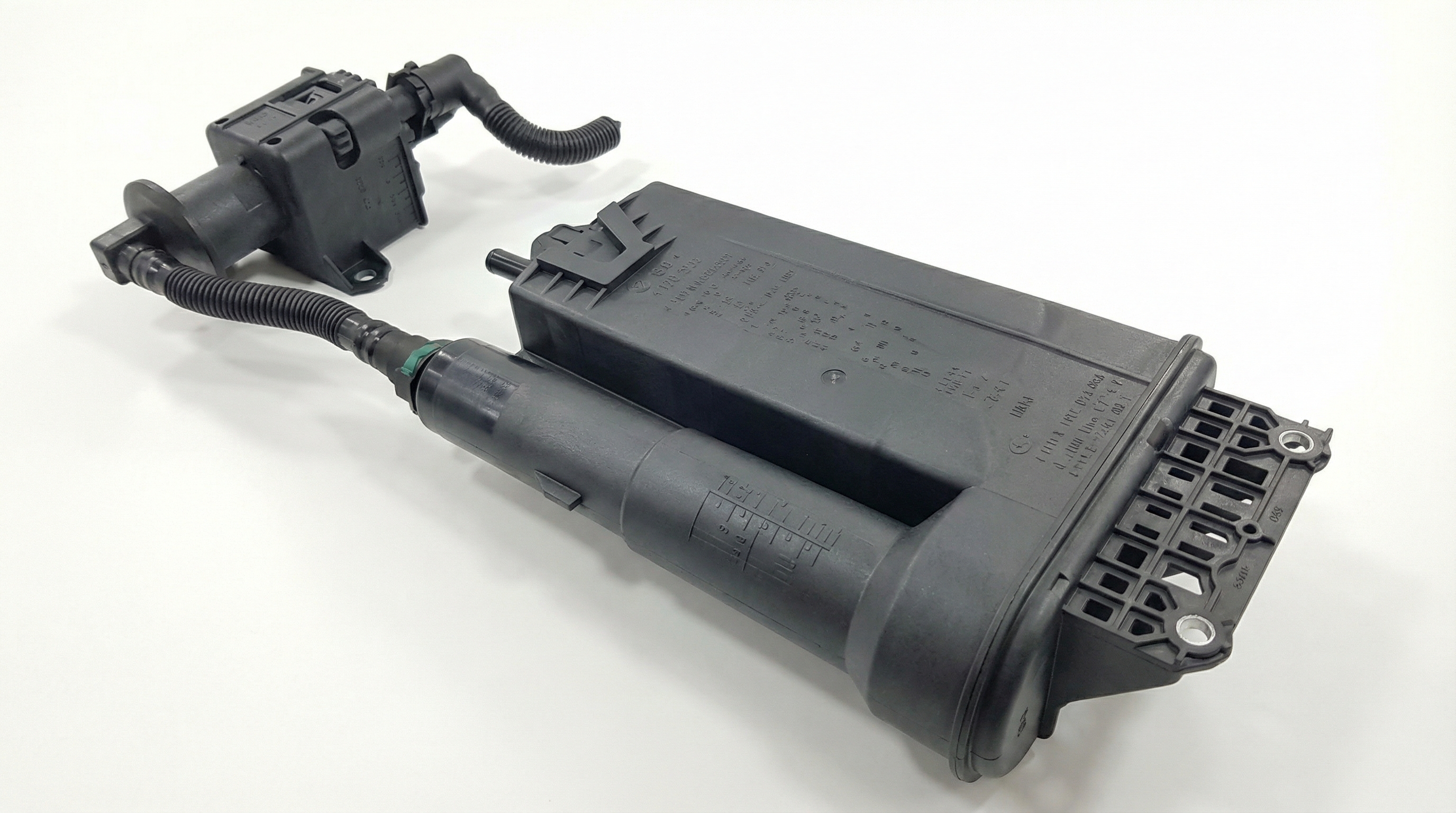
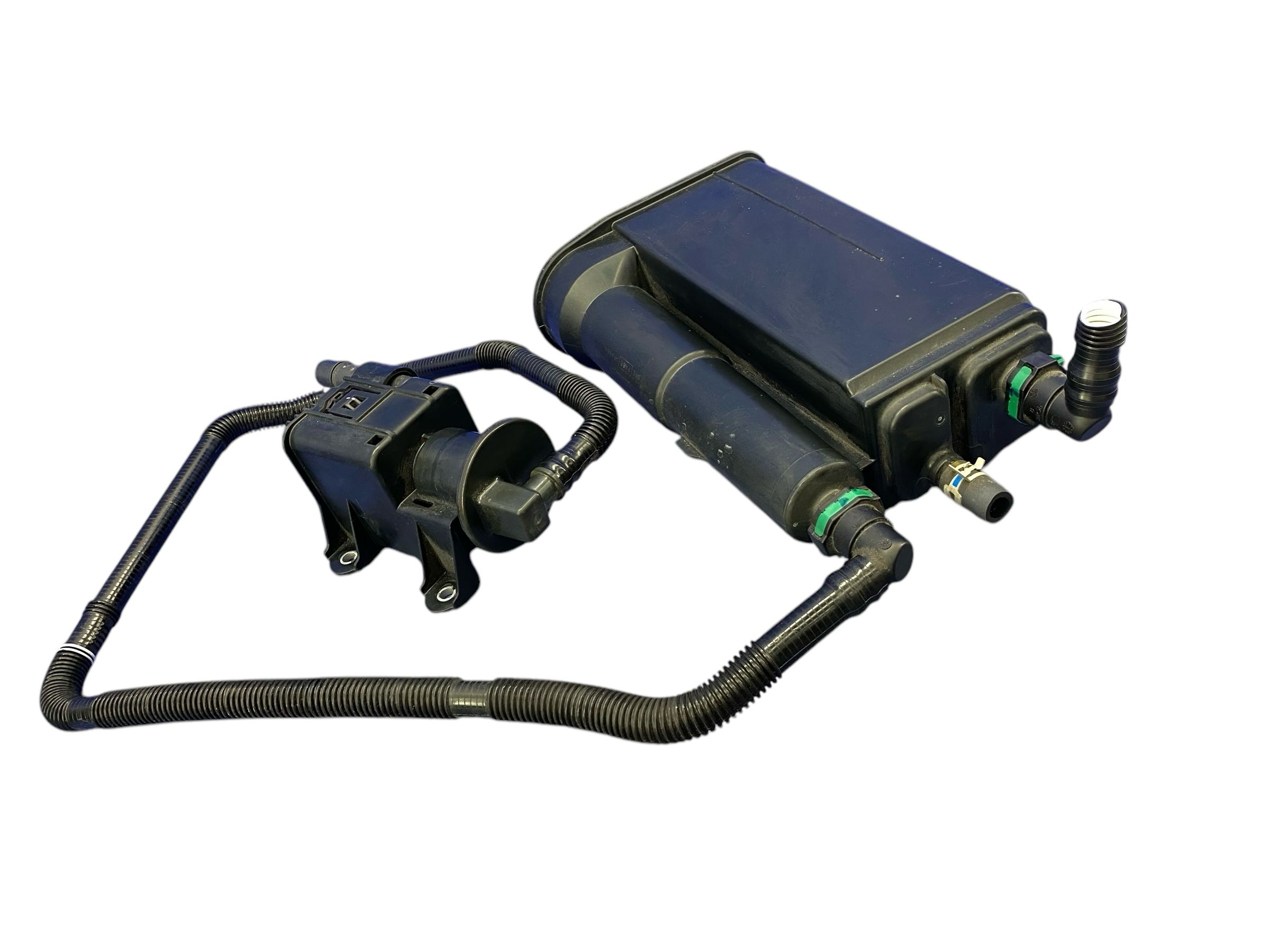
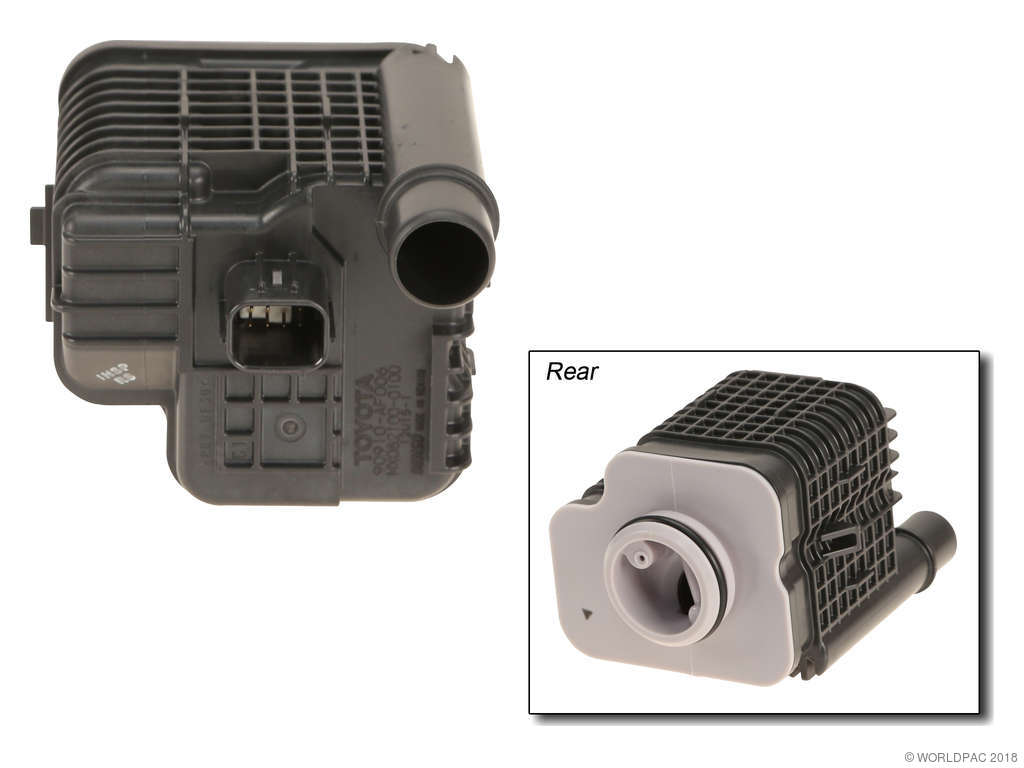
- The most effective repair is to replace the leak detection pump module (OEM Part # 90910-AF006).
- This is a manageable DIY repair for someone with basic tools, but the pump is in a tight location at the rear of the vehicle.
- The car is safe to drive with this code, but it needs to be fixed to pass an emissions test.
What's Unique About the 2019-2022 Toyota Avalon
The 2019-2022 Avalon shares its TNGA-K platform and many parts with the Toyota Camry, RAV4, and Highlander. For this specific generation, P2402 is rarely a standalone issue. It frequently appears as part of a cluster of EVAP codes (P2401, P2419, P043E, P043F). When this group of codes appears together, it is a very strong indicator of an internal electrical failure of the leak detection pump module itself, rather than a simple wiring problem.
Symptoms You May Notice
- Check Engine Light is on.
- Vehicle will fail an emissions inspection test.
- EVAP readiness monitor will be stuck in a "not ready" state.
- Replacing the gas cap. A bad gas cap causes a large leak code (like P0455), not a circuit high code.
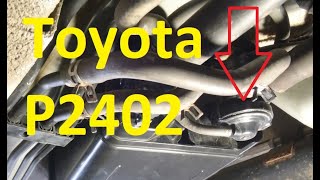
- Searching for a physical EVAP leak. P2402 is an electrical circuit code, not a leak code. 🎬 See this video on P2402 causes and fixes While a leak may exist, it is not the cause of this specific code.
Most Likely Causes
- Failed EVAP Leak Detection Pump 🔴 High Probability → Shop Vapor Canister On this platform, the pump module is known to fail internally, triggering a specific cluster of codes including P2402. This is the most common failure by a wide margin, often confirmed by owners on forums and in repair videos.
How to confirm: Scan for other codes. If P2401, P2419, P043E, or P043F are present alongside P2402, the pump is almost certainly the cause. You can also test the pump's resistance or use a scan tool to command it on; a lack of response or clicking indicates failure. A DIYer on a forum confirmed the failure by checking for 12v and ground at the pump connector, which proved the pump itself was bad.
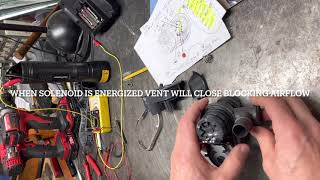
Typical fix: Replace the EVAP leak detection pump. The pump can often be purchased separately from its mounting bracket, 🎬 Watch how to repair the leak detection pump which is a more cost-effective repair.
Est. part cost: $50-$80 - Damaged Wiring or Connector ⚪ Low Probability The pump is located under the rear of the vehicle, exposing the wiring to road debris, moisture, and potential corrosion.
How to confirm: Visually inspect the wiring harness and connector going to the leak detection pump for any signs of corrosion, rodent damage, or breaks. Use a multimeter to check for proper voltage and continuity at the connector according to the factory service manual. NHTSA ODI #11387241 notes that research into this specific code cluster often points to either EVAP canister failure or a possible wiring failure.
Typical fix: Repair the damaged section of the wiring harness or clean/replace the connector.
Est. part cost: $5-$25
Rare But Worth Checking
- Faulty Engine Control Module (ECM): → Shop Engine Control Module (ECM) This is extremely rare. The ECM should only be considered after all other possibilities, including the pump and wiring, have been exhaustively tested and ruled out.
Diagnosis Steps
- Scan the ECM for any stored trouble codes. Note if P2402 appears alone or with other codes like P2401, P2419, and P043E/F.
- If the full cluster of codes is present, the leak detection pump is the most likely culprit. Proceed to replacement.
- If only P2402 is present, perform a visual inspection. Locate the leak detection pump assembly near the charcoal canister at the rear of the vehicle, typically on the driver's side. It may be behind a protective metal cover.
- Carefully inspect the electrical connector and wiring harness leading to the pump. Look for any signs of damage, corrosion, or loose pins.
- If the wiring looks good, use a multimeter to test the circuit. Check for 12-volt power and a good ground at the pump connector with the key on (refer to a service manual for the correct pin and voltage specification). A constant high voltage may indicate a short in the harness or a faulty ECM driver. NHTSA ODI #11533362 confirms that P2402 specifically identifies a "circuit high" status for the leak detection pump control.
- If possible, test the pump itself. You can check the internal resistance of the pump motor across its terminals. An out-of-spec reading suggests the pump has failed internally.
- Based on the test results, replace the faulty component. For this vehicle, it is most often the pump itself. A DIY video shows that removing two 14mm bolts for the sway bar bushing can create enough clearance to remove the pump assembly without more significant disassembly. 🎬 Watch this step-by-step pump replacement walkthrough
- After replacement, clear the codes. Note that permanent codes may take several drive cycles (e.g., 14 warm-ups and 200 miles) to clear from the ECU's memory.
Parts You'll Likely Need
- EVAP Leak Detection Pump
(OEM #90910-AF006)— This is the component that fails internally, causing the P2402 code and its companion codes on this specific vehicle. This part number is widely used across many Toyota models from 2012-2025.
Trusted brands: Toyota (Genuine OE), Denso (Often the OEM manufacturer, part number 192500-1020 may cross-reference)
OEM price range: $60-$90
Aftermarket price range: $45-$75 - EVAP Canister Assembly with Pump
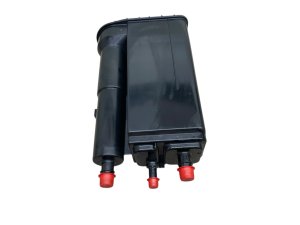
(OEM #77730-06040)— Some owners or shops may choose to replace the entire assembly which includes the pump, bracket, and a hose. This is a more expensive but ensures all related components are new. A repair video for the Camry/Avalon platform uses this specific part.
Trusted brands: Toyota (Genuine OE)
OEM price range: $250-$300
Aftermarket price range: $150-$200
Related Codes That Often Appear With This One
- P2401 — Indicates a 'Circuit Low' condition for the same pump. Seeing both high and low codes often points to an erratic internal short in the pump module.
- P2419 — Relates to the EVAP system's switching valve. It is part of the common code cluster that indicates a failure within the integrated canister/pump assembly.
- P043E / P043F — These codes relate to the EVAP leak detection reference orifice. They are also part of the tell-tale group of codes pointing to a comprehensive failure within the pump assembly. NHTSA ODI #11419086 describes a case where an owner reported the AWD malfunction and engine light appearing with this exact cluster: P043E, P043F, P2401, P2402, and P2419.
Platform-Specific Known Issues
- Access to the pump can be tight. A popular DIY repair video for the sister-platform Camry shows that temporarily removing the two 14mm bolts for the rear sway bar bushing bracket provides enough extra clearance to wiggle the pump assembly out.
- Moisture Contamination: While documented on other Toyota models like the Yaris, NHTSA ODI #10694017 and #10442353 note that water can enter the filler pipe cover and contaminate EVAP components, leading to the P2402 code cluster during highway travel.
Mechanic-Grade Diagnostic Values
- Leak Detection Pump Motor Coil Resistance — expected: 0.8 - 1.2 Ω. Failure: A reading outside this range, especially an open circuit (infinite resistance), confirms a failed pump motor.
- Voltage at Leak Detection Pump Connector (Ignition ON) — expected: ~12V (Battery Voltage). Failure: A reading significantly above 13V can indicate the 'Circuit High' condition. No voltage could point to a wiring or fuse issue.
Scan Tool Commands That Help
- Toyota Techstream: EVAP System Check (Automatic or Manual Operation) — This utility forces the EVAP self-test to run, bypassing the usual 5-hour wait after the car is off. It allows a technician to confirm the pump's operation and verify the repair without multiple drive cycles.
Wiring & Ground Locations
- Leak Detection Pump Connector — On the EVAP canister/pump assembly, located under the rear of the vehicle, typically on the driver's side.. This 5-pin connector is the primary point for all electrical testing. Technicians back-probe the pins here to measure supply voltage, ground, and the command signal from the ECM to diagnose a P2402 fault.
- Rear Chassis Ground — While a specific designator (e.g., 'EB') is not available without the factory manual, the ground for the EVAP pump circuit is typically a bolt on the chassis or rear subframe near the canister assembly.. A corroded or loose ground connection can cause high resistance in the circuit, potentially contributing to a 'Circuit High' fault code.
Real Owner Repair Stories
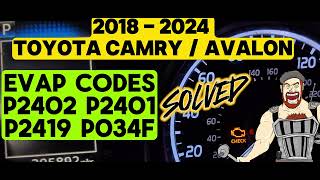
- YouTube channel 'Gearmo Auto' (2018-2024 Toyota Camry/Avalon) — Check Engine Light with a cluster of EVAP codes: P2402, P2401, P2419, P043F (mislabeled as P034F in video title).
❌ Tried (didn't work) The video directly identifies the pump as the culprit based on the code cluster, a common Toyota pattern, so no other failed attempts were documented.
✅ What actually fixed it Replacing the EVAP leak detection pump. The video shows both replacing the entire canister assembly (Part #77730-06040) and the option of replacing just the pump module itself (Part #90910-AF006), which resolved all codes. - Reddit user in r/Toyota (Scion xD (uses similar EVAP components)) — Initially just P2419, but later the full cluster of P2419, P2402, P2401, P043E, and P043F appeared as a hard fault.
❌ Tried (didn't work) Clearing the codes worked temporarily for about 6 months when only P2419 was present.
✅ What actually fixed it After confirming 12V and ground were present at the pump connector, the user replaced the entire charcoal canister assembly, which fixed the issue permanently.
OEM Part Supersession History
90910-14005, 90910-14008, 90910-AF003, 90910-AF004→90910-AF006— Standard part evolution and consolidation for newer vehicle platforms.
Heads up: While older numbers are superseded, ensure the replacement is the latest version (90910-AF006) for this vehicle to guarantee compatibility with the ECM's expectations.
Model Year Variations Within This Range
- 2019 vs 2022: While the core EVAP system and the P2402 failure pattern remained the same, the 2022 model year received updates to the infotainment system (larger screen), safety systems (Toyota Safety Sense 2.5+), and interior/exterior cosmetic options. These changes do not affect the diagnosis or repair of code P2402.
Diagnostic Flowchart
Other Known Issues on This Vehicle
Issues unrelated to this code that are worth knowing about as an owner of this generation:
- Low-Pressure Fuel Pump Failure 🔴 High — Affects a large number of 2018-2020 models, including the Avalon. The issue led to a massive multi-year recall campaign. (Ref: NHTSA Campaign Number: 20V012000 (and subsequent expansions).)
- Hesitation or Jerk from 8-Speed Transmission (UA80E) 🟡 Low — Some owners of V6 models report occasional harsh shifts or hesitation, particularly in early production years (2019). Often addressed with an ECU software update. (Ref: T-SB-0122-20 (for torque converter clutch logic) may address related symptoms.)
- Front Brake Squeal/Squeak Noise 🟡 Low — Reported on some 2019 models. Not a safety issue, but an annoyance for which Toyota released updated parts. (Ref: T-SB-0025-20.)
- HVAC Evaporator Drain Hose Clogging 🟠 Medium — A known issue on various Toyota models where insect nests can block the A/C drain hose, potentially causing water to leak into the passenger cabin. (Ref: T-SB-0033-14 (on older models, but the issue persists across the brand).)
Used vs. New Parts: Buying Guide for This Vehicle
When a used part is the smart pick: A used leak detection pump module (90910-AF006) can be a cost-effective choice if sourced from a low-mileage, accident-free donor vehicle. Since the failure is electronic and not purely wear-based, a known-good used part is a reasonable option. Avoid buying the entire used charcoal canister assembly, as the charcoal inside can be contaminated or degraded, leading to different EVAP problems.
Donor-vehicle mileage cap: roughly under 60000 miles for the part to have meaningful remaining life.
What to inspect on the donor part:
- Check for a clean, corrosion-free electrical connector and pins.
- Ensure the plastic housing of the pump is not cracked or damaged.
- Source from a vehicle in a dry climate to reduce the risk of internal moisture damage.
- Ask the seller for the donor vehicle's VIN to verify its year and low mileage.
OEM-only on this vehicle (don't cheap out):
- While the pump itself can be sourced from quality aftermarket brands, if you choose to replace the entire canister assembly (77730-06040), using a Genuine Toyota part is strongly recommended to ensure the internal charcoal and valves meet OE specifications and prevent future, different EVAP codes.
Aftermarket brands forum-validated for this vehicle:
- Denso (often the original equipment manufacturer)
- Standard Motor Products (SMP)
Brands owners have reported issues with on this vehicle:
- No-name, unbranded parts from online marketplaces are risky, as their internal electronics may not communicate correctly with the Toyota ECM, leading to the code returning.
Real Owner Stories
Aggregated from forums and TSBs cited above. Mileages and costs reflect what owners reported in those sources.
2019-2022 Avalon
Symptoms: Illuminated check engine light with multiple EVAP codes: P2402, P2401, P2419, P043E.
What fixed it: Replaced the EVAP leak detection pump assembly (Part No. 77730-06040).
Source hint: YouTube comment from GEARMO AUTO: '2024 TOYOTA CAMRY / AVALON EVAP CODES P2402 P2401 P2419 P034F SOLVED'
Toyota Scion xD (similar Toyota EVAP system)
Symptoms: Stored codes P2419, P2402, P2401, P043E, and P043F.
What fixed it: Verified 12v and ground at the connector, then replaced the charcoal canister assembly.
Source hint: Reddit r/Toyota: Fixed my P2419, P2402, P2401, P043E, P043F codes
Related OBD-II Codes
Frequently Asked Questions
My 2019 Avalon has a check engine light and codes P2402, P2401, and P043E. Is there a specific part I should look for?
I heard there is a major recall for the 2019-2020 Avalon. Does it involve the EVAP system?
Is it true I have to take apart the whole rear suspension to reach the pump on my Avalon?
Can I use a used leak detection pump from a Camry to fix my P2402 code?
Why did my Avalon fail the emissions test even though the car drives fine?
Are there any TSBs for transmission issues on the 2019 Avalon that might be related to this?
Helpful Videos
Used OEM Parts in Stock

New Aftermarket Parts Available


The information in this article is provided for general reference and educational purposes only. Vehicle specifications, procedures, and part compatibility can vary by production date, trim level, and region. Always consult your vehicle's factory service manual and verify part numbers before purchasing or performing repairs. Safety-critical components such as airbags, seat belts, and braking systems should be installed by a qualified professional.
- Toyota Avalon:
- 🧭 Diagnostic Flowchart
- 🎬 Helpful Videos
- 🛍️ Shop This Part
- What's Unique About the 2019-2022 Toyota Avalon
- Symptoms You May Notice
- Most Likely Causes
- Rare But Worth Checking
- Diagnosis Steps
- Parts You'll Likely Need
- Related Codes That Often Appear With This One
- Platform-Specific Known Issues
- Mechanic-Grade Diagnostic Values
- Scan Tool Commands That Help
- Wiring & Ground Locations
- Real Owner Repair Stories
- OEM Part Supersession History
- Model Year Variations Within This Range
- Other Known Issues on This Vehicle
- Used vs. New Parts: Buying Guide for This Vehicle
- Real Owner Stories
- 2019-2022 Avalon
- Toyota Scion xD (similar Toyota EVAP system)
- Related OBD-II Codes
- Frequently Asked Questions
- 🎟️ Get 5% Off