

P2459 on 2022-2024 GMC Yukon: DPF & Intake Manifold Causes and Fixes
On 3.0L Duramax diesel models, P2459 means the DPF is regenerating too often, likely due to a leaking intake manifold (per TSB #22-NA-128), a dirty air filter, or short-trip driving habits. For gasoline V8s, this code is not applicable. The most common fix for the diesel is replacing the intake manifold, a repair covered by a specific GM technical bulletin.
- P2459 on a 2022-2024 Yukon is almost exclusively an issue for the 3.0L Duramax diesel engine.
- The most likely cause is a leaking intake manifold, a known issue covered by GM Technical Service Bulletin #22-NA-128.
- This code often appears with P0172 (System Too Rich), which is a strong indicator of the intake leak.
- Before expensive repairs, check the engine air filter and ensure the vehicle is driven at highway speeds regularly to allow for proper DPF cleaning.
- If you have a 2024 model, check with a dealer about a potential software update (TSB #24-NA-094) before replacing any parts.
What's Unique About the 2022-2024 Gmc YUKON
What's unique about the P2459 code on this specific platform is that it directly points to a known mechanical engine problem rather than just an exhaust or sensor issue. General Motors issued TSB #22-NA-128, which explicitly connects P2459 on the 3.0L Duramax diesel (both LM2 and the updated LZ0 engines) to a leaking intake manifold. This is an unusual root cause for a DPF frequency code and is a known issue on this powertrain, often appearing with fuel system and sensor codes like P0172 (System Too Rich), P2A00 (O2 Sensor Performance), and P026D (Fuel Injection Quantity Too High).
Diagnostic Flowchart
Tap your situation to follow the diagnostic path that matches what you're seeing on this vehicle.
Symptoms You May Notice
- Check Engine Light is on
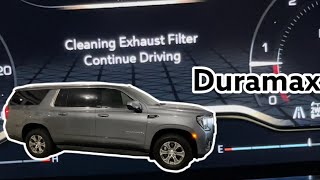
- Message on the driver information center (DIC) like "Cleaning Exhaust Filter, Keep Driving" or "Service Exhaust System"
- Reduced engine power or 'limp mode'
- Noticeably poor fuel economy due to frequent regenerations
- Engine may run rough or exhibit poor throttle response
- Higher than normal engine or exhaust temperatures
- Replacing the DPF assembly without diagnosing the root cause. A clogged DPF is usually a symptom of another problem (like a leaking intake, bad sensor, or collapsed air filter), and the new DPF will likely clog again if the underlying issue isn't fixed.
- Blaming driving habits without performing a smoke test. While short trips can be a factor, the leaking intake manifold is a very common and specific problem on this platform that must be ruled out.
Most Likely Causes
- Leaking Intake Manifold 🔴 High Probability → Shop Engine Intake Manifold This is a documented issue for the 3.0L Duramax engine (LM2/LZ0) in this chassis, as identified in GM TSB #22-NA-128. The leak, often from a crack in the plastic manifold, introduces unmetered air, which disrupts the air-fuel mixture, leading to excessive soot and triggering frequent regenerations.
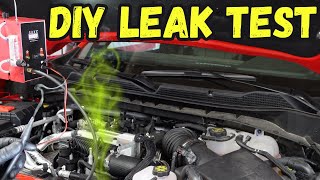
How to confirm: A technician will use a smoke machine to introduce pressurized smoke into the intake system and look for leaks, particularly around the manifold seams or gaskets. 🎬 Watch: How to perform a smoke test for intake leaks. This is the specific diagnostic procedure called for in the GM service bulletin.
Typical fix: Replace the entire intake manifold assembly. GM specifies that if debris from an internal engine failure is found, the manifold must be replaced as it cannot be cleaned effectively.
Est. part cost: $300-$500 - Driving Habits (Frequent Short Trips) 🟡 Medium Probability The DPF regeneration process requires sustained driving at highway speeds (e.g., above 50 mph for 20-30 minutes) to reach the necessary temperatures (over 1,000°F) to burn off soot. If the vehicle is only used for short, low-speed trips, the automatic regeneration may never complete, causing the system to try more frequently and eventually log the P2459 code.
How to confirm: Review the vehicle's typical usage pattern. If it consists mainly of city driving, this is a likely contributor. The DIC may display a message prompting the driver to keep driving. 🎬 See: How to perform the DPF self-cleaning procedure.
Typical fix: Drive the vehicle at highway speeds (above 50 mph) for at least 30 minutes to allow a full regeneration cycle to complete. If the code returns, investigate other mechanical causes.
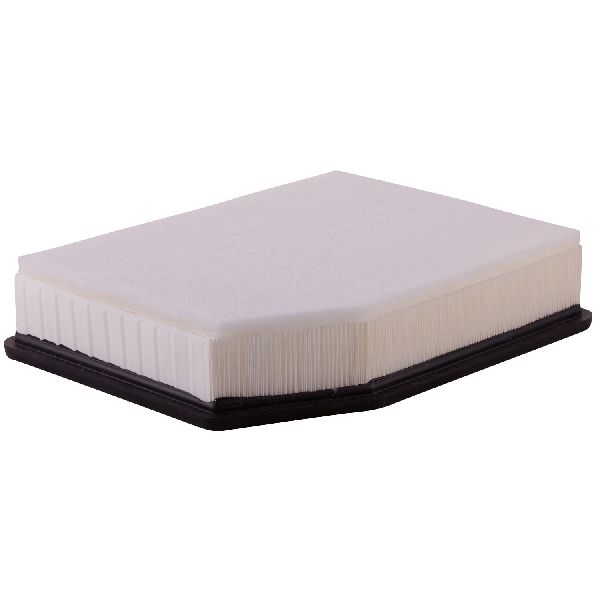
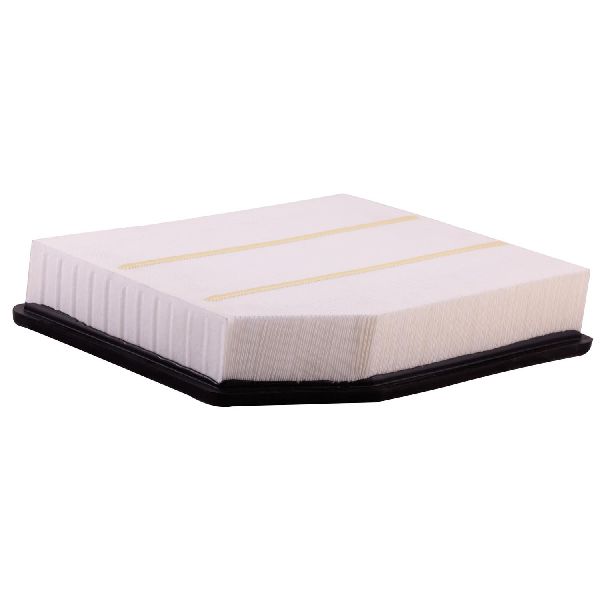
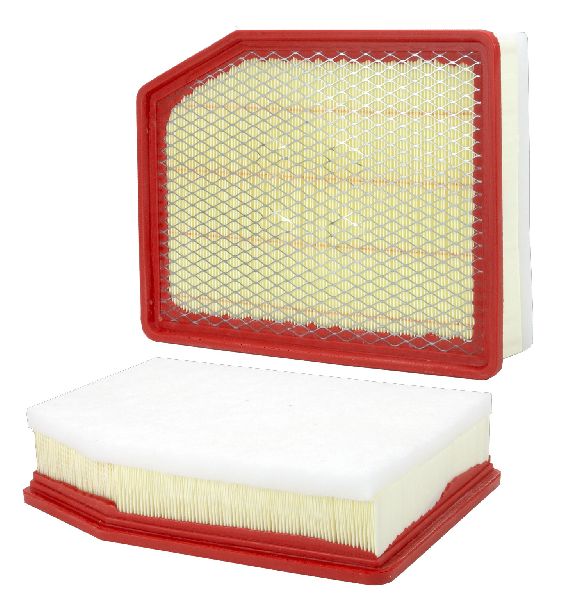
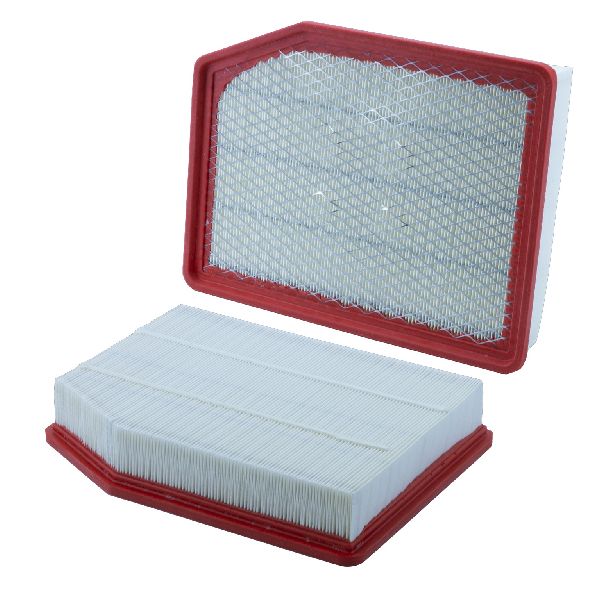
Est. part cost: $0 - Restricted Engine Air Filter 🟡 Medium Probability → Shop Air Cleaner Assembly A dirty or collapsed air filter restricts airflow, causing a rich air-fuel mixture. This incomplete combustion generates excess soot, overwhelming the DPF and triggering more frequent regenerations. GM has a separate TSB (PIP5489C) that specifically links a restricted air filter to DPF-related codes.
How to confirm: Visually inspect the engine air filter. If it is dirty, collapsed, wet, or clogged with debris, it is restricted. A technician in one documented case found a collapsed air filter causing P2459.
Typical fix: Replace the engine air filter. This is a simple maintenance item that is often overlooked but critical for proper engine and emissions system performance. Using a genuine OEM filter is recommended.
Est. part cost: $30-$80 - Faulty DPF Pressure Sensor ⚪ Low Probability
How to confirm: A technician can use a scan tool to monitor the DPF pressure sensor readings. If the sensor provides erratic data or readings that don't correlate with engine load and RPM (e.g., showing high pressure when the engine is off), it is likely faulty. The hoses to the sensor should also be checked for clogs.
Typical fix: Replace the DPF pressure sensor and its associated lines if they are clogged or damaged.
Est. part cost: $50-$150
Rare But Worth Checking
- ECM Software Anomaly: For some 2024 models with the LZ0 engine, GM has identified a software issue that can falsely trigger DPF-related codes, including P2459. TSB #24-NA-094 addresses this with an ECM software update. A similar bulletin, TSB #23-NA-071, exists for 2023 models. Always check with a dealer for open bulletins.
Diagnosis Steps
- Verify the engine type. This guide applies only to the 3.0L Duramax Diesel (LM2 or LZ0).
- Scan the ECM for all stored trouble codes. Note if P0172, P2A00, or P026D are present alongside P2459, as this strongly suggests the intake manifold issue described in TSB #22-NA-128.
- Check with a GM dealer for any open recalls or Technical Service Bulletins (TSBs), especially TSB #22-NA-128 and, for 2023-2024 models, TSB #23-NA-071 or #24-NA-094. 🎬 Watch: A technician's guide to fixing P2459 and related codes.
- Inspect the engine air filter. Replace if it is dirty, collapsed, or clogged.
- Perform a smoke test on the intake manifold to check for leaks. This is the definitive test for the most common cause on this platform.
- If no intake leaks are found, analyze the DPF pressure sensor data with a scan tool to ensure it is reading correctly and its hoses are clear.
- Review the vehicle's driving history. If it's exclusively short trips, attempt a manual DPF regeneration by driving at sustained highway speeds for 30 minutes.
- If all other causes are ruled out, the DPF itself may be damaged or filled with ash (a non-burnable byproduct of regeneration), requiring professional cleaning or replacement.
Parts You'll Likely Need
- Intake Manifold
(OEM #55511544)— This is the most common cause of P2459 on the 3.0L Duramax engine in this vehicle, as documented by GM in TSB #22-NA-128. The bulletin explicitly lists this part number as the causal part.
Trusted brands: ACDelco, GM Genuine
OEM price range: $350-$500
Aftermarket price range: $250-$400 - Engine Air Filter
(OEM #A3240C)— A restricted air filter can cause an overly rich air-fuel mixture, leading to excess soot production and more frequent DPF regenerations. It's a common cause and the first thing to check.
Trusted brands: ACDelco, Wix, Fram
OEM price range: $50-$80
Aftermarket price range: $30-$50
Related Codes That Often Appear With This One
- P0172 — System Too Rich. TSB #22-NA-128 explicitly links this code with P2459, indicating a leaking intake manifold is the common cause for both.
- P2A00 — O2 Sensor Performance. This code is also mentioned in TSB #22-NA-128 as being caused by the same intake manifold leak.
- P026D — Fuel Injection Quantity Too High. This is another code listed in TSB #22-NA-128, pointing to the intake manifold leak as the root cause.
- P2463 — Diesel Particulate Filter Restriction - Soot Accumulation. This code often appears with P2459 because the frequent regenerations (P2459) are a direct response to the filter being excessively full of soot (P2463).
Technical Service Bulletins (TSBs) & Recalls
- 22-NA-128: Addresses a Malfunction Indicator Lamp with DTCs P2459, P0172, P026D, and/or P2A00, identifying the cause as a leak at the intake manifold on 3.0L Duramax engines. The fix is to replace the manifold (Part No. 55511544).
- 24-NA-094: For 2024 models with the LZ0 engine, this TSB addresses a software issue that can falsely set DPF codes like P2459. The fix is an ECM software update.
- 23-NA-071: For 2023 models with the LZ0 engine, this TSB also addresses software logic issues causing DPF codes, requiring an ECM reprogram.
Platform-Specific Known Issues
- A leaking intake manifold is a known, widespread problem on 2022-2024 GMC Yukons with the 3.0L Duramax (LM2/LZ0) engine, causing codes P2459, P0172, P2A00, and P026D. GM has issued TSB #22-NA-128 to address this, with the fix being a complete replacement of the intake manifold.
- The labor time for the intake manifold replacement under warranty is listed as 6.3 hours for SUVs in TSB #22-NA-128.
Mechanic-Grade Diagnostic Values
- DPF Pressure Sensor Voltage (Key On, Engine Off) — expected: ~0.5V - 0.7V. Failure: A reading significantly higher than 0.7V, or a reading that shows pressure when the engine is off, indicates a faulty sensor.
- DPF Differential Pressure (Scan Tool, at Idle) — expected: 1 to 2 kPa. Failure: An abnormally high pressure at idle, or a value that does not change with engine RPM, suggests a faulty sensor or blocked hoses.
- DPF Pressure Sensor 5V Reference (Key On, Engine Off, Sensor Unplugged) — expected: 5.0V. Failure: A voltage reading significantly lower than 5.0V suggests a short in the reference circuit or a faulty ECM, not a faulty sensor.
- DPF Soot Mass (Scan Tool PID) — expected: Below 70 grams. Failure: A companion code like P2463 may set when soot mass exceeds 70 grams or the calculated soot level exceeds 125-140%.
Scan Tool Commands That Help
- GM GDS2: Service Regeneration — To command a stationary, high-temperature cleaning of the DPF when a normal highway regeneration has failed or is not possible. This is used when P2463 is present.
- GM GDS2: DPF/Catalyst Reset — This function MUST be performed after physically replacing the DPF assembly to reset the learned soot and ash accumulation values in the ECM.
- GM GDS2: Induction System Leak Indicator (ISLI) Test — To diagnose underlying air intake or boost leaks that could cause excessive soot production. This is highly relevant for confirming the intake manifold leak cited in TSB #22-NA-128.
- GM GDS2: Cylinder Power Balance / Injector Balance Test — To rule out a faulty fuel injector that may be causing an overly rich condition, leading to excess soot and frequent regenerations.
Wiring & Ground Locations
- Engine Wiring Harness Chafe Point — On 3.0L LM2 engines, the harness may chafe on top of the generator or on a PVC hose clamp near the crankcase pressure regulator.. A chafed harness can short various sensor circuits, including those for fuel injectors or emissions components, leading to conditions that create excess soot and trigger P2459. GM specifically states not to replace the ECM for related codes without first inspecting the harness.
- DPF Pressure Sensor Connector — Located on the passenger side of the engine bay, near the firewall.. A known failure point on 3.0L LM2 engines is for wires to break internally at the back of this connector, causing intermittent or failed signals from the DPF pressure sensor, which can lead to incorrect regeneration frequency calculations.
Real Owner Repair Stories
- Reddit user Superamo69 (2024 GMC Sierra 1500 AT4 3.0L (LZ0), ~700 miles) — Message 'Cleaning Exhaust Filter' and 'reduced acceleration' appeared.
❌ Tried (didn't work) Driving the vehicle did not clear the messages.
✅ What actually fixed it The owner took it to a dealer, who performed a computer reset. The issue had not returned after subsequent driving. This aligns with GM TSBs for software anomalies on 2023-2024 models.
OEM Part Supersession History
55511544→N/A— This is the current, specified part number for the intake manifold replacement according to TSB #22-NA-128.
Heads up: No supersession history found during research. Some parts catalogs may list alternate number 40009521, but it refers to the same assembly.
Model Year Variations Within This Range
- 2022-Early 2023 (SUVs): These model years primarily use the LM2 version of the 3.0L Duramax. While the intake manifold leak (TSB #22-NA-128) is a major issue, they are also prone to specific wiring harness chafe points on the generator or near the crankcase pressure regulator as noted in GM documents.
- Late 2023-2024: These model years use the updated LZ0 3.0L Duramax, which has steel pistons, new injectors, and revised tuning. While TSB #22-NA-128 was updated to include the LZ0, these years are also subject to specific software-related TSBs (#23-NA-071 and #24-NA-094) that can falsely trigger P2459 and should be checked first before replacing hardware.
Helpful Videos
We Have This Part in Stock

The information in this article is provided for general reference and educational purposes only. Vehicle specifications, procedures, and part compatibility can vary by production date, trim level, and region. Always consult your vehicle's factory service manual and verify part numbers before purchasing or performing repairs. Safety-critical components such as airbags, seat belts, and braking systems should be installed by a qualified professional.
- Gmc YUKON:
- 🧭 Diagnostic Flowchart
- 🎬 Helpful Videos
- 🛍️ Shop This Part
- What's Unique About the 2022-2024 Gmc YUKON
- Symptoms You May Notice
- Most Likely Causes
- Rare But Worth Checking
- Diagnosis Steps
- Parts You'll Likely Need
- Related Codes That Often Appear With This One
- Technical Service Bulletins (TSBs) & Recalls
- Platform-Specific Known Issues
- Mechanic-Grade Diagnostic Values
- Scan Tool Commands That Help
- Wiring & Ground Locations
- Real Owner Repair Stories
- OEM Part Supersession History
- Model Year Variations Within This Range
- 🎟️ Get 5% Off