

P2463 on 2007-2014 GMC Savana 2500: DPF Restriction Causes & Fixes
On a 2007-2014 GMC Savana 2500 with the 6.6L Duramax engine, code P2463 means the Diesel Particulate Filter (DPF) is clogged with soot. This is often due to driving habits like frequent short trips or excessive idling, which prevent the DPF from self-cleaning (regenerating). Once the soot load becomes too high, a driver-commanded regen is disabled, and the most common fix is to initiate a 'service regeneration' with a professional scan tool.
- P2463 on your Savana means the Diesel Particulate Filter (DPF) is severely clogged with soot.
- The most common cause is a lack of highway driving, which prevents the DPF from self-cleaning.
- Once this code appears with a 'Reduced Power' message, you cannot fix it by just driving. It requires a 'service regeneration' at a repair shop.
- Before considering a costly DPF replacement, always check for simpler causes like a clogged air filter, bad DPF pressure sensor, or leaks in the intake system.
- Ignoring this code will lead to further power loss and can cause permanent, expensive damage to the DPF.
What's Unique About the 2007-2014 Gmc SAVANA 2500
The GMC Savana, especially when used as a work or fleet vehicle, is prone to the driving conditions that cause P2463. Extensive idling and short, stop-and-go trips prevent the exhaust system from reaching the high temperatures needed for automatic DPF regeneration. GM has issued multiple service bulletins acknowledging that when soot accumulation becomes too high (e.g., over 70 grams), driver-commanded regeneration is disabled, and a forced 'service regeneration' at a dealership becomes mandatory. One technician noted that calculating equivalent mileage from engine hours on a work truck often shows it has spent more time idling than driving.
🎬 Watch: Understanding why idling causes clogged DPF codes like P2463.Diagnostic Flowchart
Tap your situation to follow the diagnostic path that matches what you're seeing on this vehicle.
Symptoms You May Notice
- Check Engine Light illuminated.
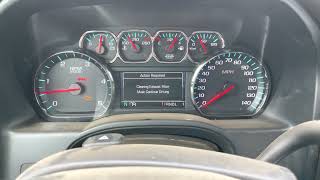
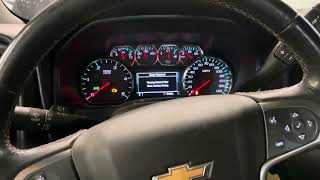
- "Clean Exhaust Filter" or similar message on the Driver Information Center (DIC).
- "Engine Power Is Reduced" message displayed (Limp Mode).
- Noticeable loss of engine power and acceleration.
- Increased fuel consumption.
- Inability to pass an emissions test.
- Excessive black smoke from the exhaust.
- High engine or exhaust temperatures.
- Replacing the DPF without diagnosing the root cause. If the underlying issue (e.g., a bad sensor, air leak, or poor driving habits) is not corrected, the new DPF will quickly clog again.
- Assuming the DPF is bad when only a forced regeneration is needed. Many owners report being told they need a new DPF when a service regen resolves the code.
Most Likely Causes
- Failed Automatic DPF Regeneration 🔴 High Probability Commonly used for work, these vans often experience extended idling or short-trip driving, which prevents the exhaust from getting hot enough (above 50 km/h / 30 mph) for a complete regeneration cycle.
How to confirm: Review the vehicle's driving history (many short trips vs. highway driving). A scan tool can show the calculated soot load and time since the last successful regeneration. A high number of engine hours relative to mileage is a strong indicator of excessive idling.
Typical fix: Perform a forced 'service regeneration' using a compatible professional scan tool. This process runs the engine at a high RPM (2,000-2,500 RPM) while stationary for 20-60 minutes to burn off the soot.
Est. part cost: $0 - Faulty DPF Differential Pressure Sensor 🟡 Medium Probability The sensor's rubber hoses can get clogged with soot or moisture, or the sensor itself can fail internally, sending incorrect high-pressure readings to the ECM and falsely triggering the code.
How to confirm: Inspect the sensor's rubber hoses for cracks, blockages, or melting. Use a scan tool to monitor the sensor's voltage/pressure reading at idle and under load to see if it's within specification. Readings should be near zero with the key on, engine off. During a forced regen, one technician noted readings as high as 12.2 PSI, indicating a severe restriction. A forum user noted that on a healthy LML engine, the pressure should be 0 PSI at idle and about 0.5 PSI when revved.
Typical fix: Clean or replace the sensor's hoses. If the sensor is faulty, it must be replaced. The sensor may require programming after installation.
Est. part cost: $50-$150 - Upstream System Faults 🟡 Medium Probability Issues that cause excessive soot production will overwhelm the DPF. This includes intake air leaks, a collapsed or extremely dirty air filter, or problems with the EGR system.
How to confirm: Inspect the entire air intake system from the filter to the turbo for leaks or restrictions. A collapsed or filthy air filter is a common finding. TSB PI0845 recommends checking the 'Air Leak Equivalence Ratio' parameter on a scan tool; a value outside 0.80:1 to 1.20:1 indicates a leak. Check for other DTCs related to the EGR valve, turbo, or fuel injectors.
Typical fix: Repair the underlying fault. This could be as simple as replacing a dirty air filter or may involve more complex repairs to the charge air cooler (CAC) hoses, EGR, or turbocharger systems.
Est. part cost: $20-$500+
Rare But Worth Checking
- Faulty Exhaust Gas Temperature (EGT) Sensors: → Shop Exhaust Gas Temperature (EGT) Sensor The DPF regeneration process is highly dependent on temperature. If an EGT sensor provides inaccurate readings, the ECM may not initiate or sustain regeneration, leading to soot buildup.
- DPF Clogged with Ash: Over a high-mileage lifetime (typically over 100,000 miles), the DPF accumulates ash, a byproduct of burnt engine oil and fuel additives. Unlike soot, ash cannot be burned off by regeneration. A service regen that results in a still-high soot percentage can indicate high ash levels, requiring professional off-vehicle cleaning or DPF replacement.
- ECM Software Issues: GM has released software updates to improve the DPF regeneration logic. An outdated ECM calibration could contribute to the problem, and TSB PI0845 suggests verifying the vehicle has the latest calibration if a service regen fails to run.
Diagnosis Steps
- Connect a professional OBD-II scanner and confirm P2463 is active. Check for any other codes and address them first, as they can cause the P2463.
- Using the scanner, view live data for DPF soot load (grams or percentage), DPF differential pressure, and exhaust gas temperatures. According to TSB PI0845, a soot level of 70 grams or more will trigger P2463. On some models, a service regen may not run if the soot load exceeds 120 grams.
- Visually inspect the DPF differential pressure sensor and its hoses for damage, clogging, melting, or corrosion.
- Inspect the entire air intake system for leaks, paying close attention to the air filter condition and all connections post-turbocharger, including charge air cooler (CAC) hoses.
- If soot load is extremely high (e.g., >120g), a 'DPF/Catalyst 2 Reset' may need to be performed with the scan tool before a service regen will initiate. Some owners have found that you must clear the code by running the 'DPF replacement' function on the scan tool before a forced regen will work.
- If no other faults are found, attempt to perform a 'DPF Service Regeneration' using the scan tool. Ensure the hood is open, the vehicle is in Park, and the exhaust area is clear. The process will run the engine at high RPM for an extended period (up to an hour).
- After regeneration, check the soot load data. A successful regen should significantly lower the value (e.g., from over 100% to under 30%). If it remains high, the DPF may be clogged with ash and require professional cleaning or replacement.
- If regeneration fails to start or complete, test the DPF pressure sensor and EGT sensors to ensure they are reading correctly according to the service manual.
- Clear the codes and perform a thorough test drive to ensure the P2463 code and 'Reduced Engine Power' message do not return.
Parts You'll Likely Need
- DPF Differential Pressure Sensor
(OEM #ACDelco 213-3854 (GM 12598445))— This sensor is a common failure point. Its hoses can clog or the sensor itself can fail, leading to a false P2463 code. This part may require programming.
Trusted brands: ACDelco, Bosch, Standard Motor Products, Walker
OEM price range: $100-$180
Aftermarket price range: $50-$120 - Diesel Particulate Filter (DPF) — This is the last resort. If the filter is physically damaged or clogged with non-burnable ash from high mileage, it must be replaced. An owner on Reddit reported having the entire emissions system, including the DPF, replaced under warranty at 50k miles only to have the code return 21k miles later.
Trusted brands: ACDelco, Walker, Dorman
OEM price range: $2000-$3000+
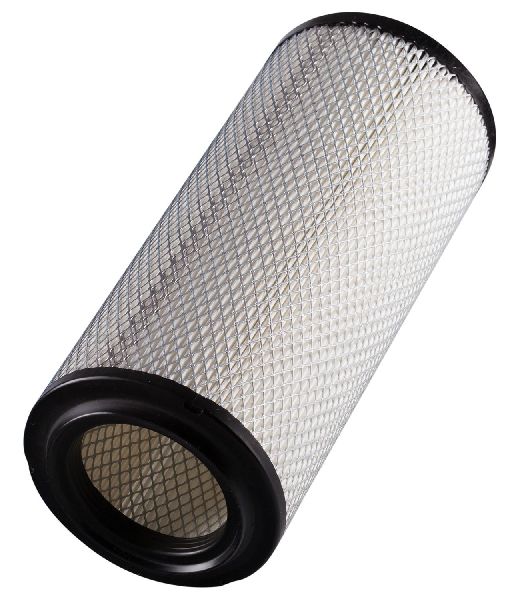
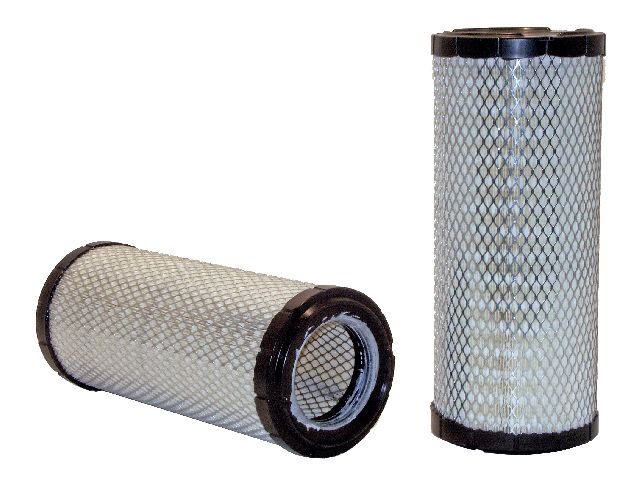
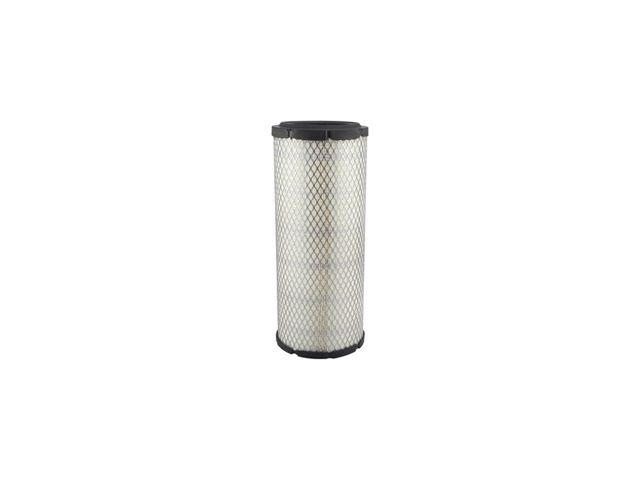
Aftermarket price range: $800-$1800 - Engine Air Filter — A severely clogged or collapsed air filter can cause excessive soot production, leading to a clogged DPF. It's a critical and often overlooked maintenance item. A technician on YouTube found a collapsed filter to be a contributing factor to a P2463 code.
Trusted brands: ACDelco, Wix, Fram
OEM price range: $40-$80
Aftermarket price range: $25-$50
Related Codes That Often Appear With This One
- P2459 — This code indicates an issue with the DPF regeneration frequency, often appearing alongside P2463 when the system is struggling to keep the filter clean.
- P0299 — A 'Turbocharger Underboost' code can be caused by a severely restricted exhaust from a clogged DPF, or an air leak that is also contributing to the DPF issue. A technician noted this code appeared after a service regen but before the root cause of power loss was resolved.
Technical Service Bulletins (TSBs) & Recalls
- 10-06-05-002M: Information on Clean Exhaust Filter See Owner Manual Now or Cleaning Exhaust Filter Keep Driving Until Message is Cleared messages Displayed on DIC, DTC P2463 May Be Set.
- PI0845: Information for Diesel Particulate Filter (DPF) Service Regeneration Documentation, Service Regeneration Will Not Run, Reduced Engine Power Message Displayed, DTC P2463 Set.
Platform-Specific Known Issues
- GM Technical Service Bulletin #10-06-05-002M notes that the DIC message 'Clean Exhaust Filter' may appear and DTC P2463 may be set. It warns that once P2463 is set, self-cleaning is no longer possible and dealer service is required.
- GM Technical Service Bulletin #PI0845 specifically addresses DTC P2463 on 2011-2013 models, outlining a diagnostic procedure that starts with checking for other codes. It states that P2463 may be caused by the DPF accumulating 70 grams or more of soot. It also notes that on some models, if the soot level is too high (e.g., over 120 grams), the service regeneration may not run without first performing a specific 'DPF/Catalyst 2 Reset' with a scan tool.
Mechanic-Grade Diagnostic Values
- DPF Differential Pressure Sensor Voltage (Key On, Engine Off) — expected: Approx. 0.5V (LML) or near zero. Should not be 5V.. Failure: A reading of 0V or 5V indicates a sensor or wiring fault. A reading of 3.5V was noted on a faulty circuit.
- DPF Differential Pressure (Live Data) — expected: 0 PSI at idle, ~0.5 PSI when revved.. Failure: Readings of 2-3 PSI or higher at idle indicate a significant restriction. During a forced regen on a clogged filter, one tech saw pressures as high as 12.2 PSI.
- EGT Sensor Resistance — expected: Approximately 220 Ohms at room temperature.. Failure: A sensor reading significantly lower (e.g., 112 Ohms) or higher indicates a failed sensor.
- EGT Sensor Circuit Voltage (Key On, Engine Off) — expected: One pin should have a 5V reference from the ECM, the other should be a ground.. Failure: Absence of the 5V reference or a bad ground points to a wiring issue rather than a sensor failure.
- Injector Balance Rates (at idle) — expected: Between +4.0 and -6.9 in Park/Neutral.. Failure: Values outside this range suggest a problem with that specific cylinder or injector, which could cause excess soot.
Scan Tool Commands That Help
- Tech2 / GDS2: DPF Service Regeneration — This is the primary tool-commanded function to burn off excessive soot when P2463 is set and normal regeneration is inhibited.
- Tech2 / GDS2: DPF/Catalyst 2 Reset — According to GM TSB PI0845, this reset may be required *before* a service regeneration will initiate, especially if soot levels are extremely high (e.g., >120g).
- Tech2 / GDS2: Reductant Fluid Quality Test (RFQT) — In some stubborn cases outlined in TSB PI0845, a technician may need to start the RFQT and then, while it's running, navigate to and start the DPF Service Regeneration to force it to begin.
- Launch X-431 / Autel: DPF Reset — This function on aftermarket tools tells the ECM that a new DPF has been installed. It resets the learned soot and ash values. This is sometimes necessary to get the ECM to allow a service regeneration after a repair.
Wiring & Ground Locations
- Engine Block Grounds (Driver Side) — On the lower front driver's side of the engine block, near the starter and oil cooler lines. There are typically three ground wires terminating on a single stud.. A poor engine ground can cause erratic behavior and incorrect readings from various engine sensors, including those in the DPF system.
- Engine Block Grounds (Passenger Side) — On the lower passenger side of the engine block, near the block heater element. There are also multiple grounds on a single stud in this location.. These grounds are critical for the ECM and sensor reference voltages. A loose or corroded ground here can lead to false sensor readings.
- Cab-to-Engine Ground Strap — A braided strap that connects from the firewall of the cab to the rear of the driver's side cylinder head.. This main ground strap ensures the entire vehicle chassis and body have a solid ground reference with the engine block, which is essential for all electronics.
- DPF Pressure Sensor Harness — The sensor is mounted on the vehicle's frame or body, connected by two rubber hoses to pipes on the DPF. The wiring harness runs from the sensor along the frame rail.. The wiring and its connector are exposed to road debris and heat. Damage or corrosion here is a direct cause of sensor-related DPF codes.
Real Owner Repair Stories
- Reddit user on r/Duramax (2007.5 LMM, 122k miles) — DIC message 'clean exhaust system', followed by P0101 (MAF) and then P2463 with Reduced Power Mode. Manual regen attempts with a code reader would fail and trigger P2463.
❌ Tried (didn't work) Driving on the freeway for 30+ miles., Replacing the air filter (this cleared a P0101 but not the DPF issue)., Attempting a 'Manual Regen' which repeatedly failed.
✅ What actually fixed it The user was finally able to get a 'DPF Service Regen' to run. This successfully lowered the soot level from a calculated 81 grams down to a very low value and cleared the codes. However, the 'Clean Exhaust Filter' message returned shortly after, suggesting the root cause (likely a failing DPF pressure sensor that had been replaced previously) was still present.
When the Usual Fixes Don't Work
- In one documented case, a technician performed a successful service regeneration, clearing the P2463 code and bringing soot load to near zero. However, the truck remained in 'Reduced Engine Power' mode with no active codes. The issue was only resolved after disconnecting the battery for 15 minutes to force a full reset of the modules, suggesting a software glitch can occur after a scan tool-commanded regen, especially if communication is interrupted.
OEM Part Supersession History
GM 12598445→GM 12630257— Part revision/update by the manufacturer.
Heads up: Walker aftermarket part number 274-1025 is listed as a cross-reference for both original and superseded GM part numbers, suggesting they are interchangeable.
Model Year Variations Within This Range
- 2007.5-2010 (LMM Engine): This engine is essentially an LBZ with a DPF added. It uses a reliable CP3 injection pump and does not use Diesel Exhaust Fluid (DEF). The emissions system is simpler than the later LML.
- 2011-2014 (LML Engine): The LML engine introduced a more complex emissions system that includes Selective Catalytic Reduction (SCR) and requires Diesel Exhaust Fluid (DEF). It also features a dedicated '9th injector' to supply fuel for DPF regeneration, which is a unique failure point not present on the LMM. The LML switched to a CP4.2 injection pump, which is considered by many to be less robust than the LMM's CP3.
Helpful Videos

![[EN] How to replace a DPF sensor | Masters of Motion](https://img.youtube.com/vi/rX9WGUP7p7c/mqdefault.jpg)
We Have This Part in Stock


The information in this article is provided for general reference and educational purposes only. Vehicle specifications, procedures, and part compatibility can vary by production date, trim level, and region. Always consult your vehicle's factory service manual and verify part numbers before purchasing or performing repairs. Safety-critical components such as airbags, seat belts, and braking systems should be installed by a qualified professional.
- Gmc SAVANA 2500:
- 🧭 Diagnostic Flowchart
- 🎬 Helpful Videos
- 🛍️ Shop This Part
- What's Unique About the 2007-2014 Gmc SAVANA 2500
- Symptoms You May Notice
- Most Likely Causes
- Rare But Worth Checking
- Diagnosis Steps
- Parts You'll Likely Need
- Related Codes That Often Appear With This One
- Technical Service Bulletins (TSBs) & Recalls
- Platform-Specific Known Issues
- Mechanic-Grade Diagnostic Values
- Scan Tool Commands That Help
- Wiring & Ground Locations
- Real Owner Repair Stories
- When the Usual Fixes Don't Work
- OEM Part Supersession History
- Model Year Variations Within This Range
- 🎟️ Get 5% Off