

P2463 on 2021-2023 GMC Yukon 3.0L Diesel: DPF Restriction Causes and Fixes
On a 2021-2023 GMC Yukon with the 3.0L Duramax diesel, code P2463 means the Diesel Particulate Filter (DPF) is clogged with soot. This is often caused by frequent short trips that prevent the DPF from self-cleaning. The immediate fix is to drive at highway speeds for up to 30 minutes; if that fails, a forced 'service regeneration' at a shop is required. Ignoring this can lead to 'limp mode' and costly DPF damage.
- P2463 on your Yukon 3.0L Diesel means the DPF is clogged with soot.
- The most common cause is too many short trips; try driving at highway speeds for 30 minutes to let the truck clean itself.
- Heed dashboard warnings like 'Keep Driving to Clean Filter' to prevent the code from being set in the first place.
- If the code is already set and power is reduced, a shop will need to perform a 'service regeneration' with a scan tool.
- Before replacing the very expensive DPF, always have the DPF pressure sensor and its hoses checked, as they are a common and much cheaper point of failure.
What's Unique About the 2021-2023 Gmc YUKON
The 3.0L 'baby Duramax' engine (RPO code LM2) in the fifth-generation Yukon is equipped with a sensitive DPF system. GM has issued Technical Service Bulletins specifically mentioning that this code is often preceded by driver information messages like "Clean Exhaust Filter See Owner Manual Now" or "Cleaning Exhaust Filter Keep Driving". This indicates that for this platform, the vehicle actively tries to warn the driver to alter their driving habits to allow a self-cleaning cycle before the more serious P2463 code is triggered. Ignoring these messages is a common pathway to setting this fault. TSB 10-06-05-002M explicitly states that if a service regeneration is performed and no DPF system malfunction is found, the cost should not be charged to GM warranty, implying driver habit is the expected root cause.
Diagnostic Flowchart
Tap your situation to follow the diagnostic path that matches what you're seeing on this vehicle.
Symptoms You May Notice
- Check Engine Light illuminated.
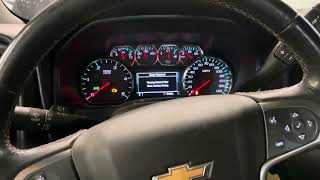
- Driver Information Center (DIC) message, such as "Clean Exhaust Filter See Owners Manual Now" or "DIESEL PARTIC FILTER IS FULL CONTINUED DRIVING MANDATORY".
- Reduced engine power or "limp mode", often with a DIC message stating "Engine Power Is Reduced".
- Noticeable decrease in fuel economy.
- Change in engine or exhaust sound during attempted regeneration.
- In severe cases, black smoke from the exhaust if the DPF is cracked or failing.
- Immediately replacing the Diesel Particulate Filter (DPF). The DPF is extremely expensive and is often just clogged, not failed. The actual cause is usually what prevents it from cleaning itself (driving habits, bad sensor). A forced regeneration or sensor replacement should always be attempted before considering DPF replacement.
Most Likely Causes
- Insufficient DPF Regeneration Due to Driving Habits 🔴 High Probability The DPF requires sustained highway speeds (typically over 30 mph for up to 30 minutes) to get hot enough to burn off soot (a process called passive regeneration 🎬 Watch: An in-depth look at how the regeneration process works.). Frequent short trips, stop-and-go traffic, or excessive idling prevent this, causing soot to build up. GM TSBs directly state that avoiding extended idle time is crucial.
How to confirm: Review recent driving patterns. If the vehicle is used primarily for short commutes, this is the most likely cause. A DIC message prompting you to 'Keep Driving' is a direct confirmation. A scan tool can show 'Distance Since Last Successful Regeneration', and a high value points to this cause. A technician can also compare engine hours to mileage; a high hour-to-mile ratio indicates excessive idling.
Typical fix: Follow the DIC prompt and drive at a steady highway speed for 20-30 minutes until the message clears. If the P2463 code is already set, a forced 'service regeneration' using a professional scan tool 🎬 See how a technician performs a forced DPF regeneration. is necessary. This stationary process can take 30-60 minutes.
Est. part cost: $0 - Faulty DPF Differential Pressure Sensor 🟡 Medium Probability This sensor measures the pressure before and after the DPF to calculate soot load. The sensor or its connecting hoses can get clogged with soot or moisture, or fail electronically, sending false high-restriction signals to the ECM. The wiring pigtail to the sensor is also a known failure point, with wires breaking internally near the connector.
How to confirm: A technician can use a scan tool to monitor the DPF pressure sensor's live data. With the Key On, Engine Off (KOEO), the voltage should be between 0.5V and 0.77V. If the readings are erratic, stuck at a high value even with the engine off, or do not change with engine RPM, the sensor is likely faulty. Visual inspection of the sensor's hoses for blockages or melting is also necessary.
Typical fix: Replace the DPF differential pressure sensor and/or clean or replace its hoses. The OEM part number for the sensor is often cited as ACDelco 12677019 for this application.
Est. part cost: $50-$150 - Underlying Engine Issue Causing Excessive Soot ⚪ Low Probability While less common, any engine problem that leads to a rich fuel mixture or incomplete combustion will create excess soot, overwhelming the DPF. This can include a clogged engine air filter, faulty fuel injectors, or issues with the turbocharger or EGR system. A collapsed or improperly installed air filter has been documented as a contributor. Leaks in the charge air cooler (CAC) system can also cause excessive soot.
How to confirm: Diagnose any other accompanying trouble codes first (e.g., P0299 for turbo underboost, P0101 for MAF issues). A technician would check for boost leaks, monitor fuel trims, and inspect the entire air intake system for restrictions, including the air filter itself. A scan tool can be used to check the 'Air Leak Equivalence Ratio' to identify leaks in the induction or exhaust system.
Typical fix: Repair the root cause, which could range from replacing an air filter to servicing fuel injectors or the turbocharger.
Est. part cost: $25-$2000+ - Faulty Exhaust Gas Temperature (EGT) Sensor ⚪ Low Probability → Shop Exhaust Gas Temperature (EGT) Sensor The ECM relies on accurate temperature readings from multiple EGT sensors to initiate and control the regeneration process. A failed or inaccurate EGT sensor can prevent regeneration from starting or completing, causing soot to build up and trigger P2463.
How to confirm: Use a scan tool to monitor all EGT sensor readings simultaneously while the engine is running. The readings should be plausible and change with engine conditions. A sensor that is stuck or reads illogically compared to the others indicates a failure. At room temperature, a good sensor should have a resistance of approximately 220 Ohms.
Typical fix: Replace the faulty EGT sensor.
Est. part cost: $80-$200
Rare But Worth Checking
- Loose Turbocharger Outlet Connection: A GM investigation for the newer LZ0 engine (PIE0883A) found that an improperly clipped turbocharger outlet connection could cause airflow inconsistencies, leading to inaccurate calculations that trigger P2463. While for a newer engine, it's a simple check worth performing on a late-model LM2 as the principle is the same.
- Internally Collapsed Charge Air Cooler (CAC) Hose: → Shop Intercooler A GM service bulletin addresses a lack of power during acceleration on LM2/LZ0 engines caused by an internal restriction of the charge air cooler inlet or outlet hose. This airflow disruption could potentially affect DPF regeneration efficiency and contribute to soot buildup.
- Broken Ground Stud (G134): GM bulletin #22-NA-210 identifies a ground stud, G134, that can break due to vibration fatigue. This can cause a wide range of electrical issues and fault codes, potentially including those related to the emissions system.
Diagnosis Steps
- Read the trouble codes with an OBD-II scanner and note any other codes present, especially P0299, P2459, or P2002.
- Check the Driver Information Center (DIC) for any active messages regarding the exhaust filter.
- If a 'Keep Driving' message is present and the vehicle is not yet in limp mode, drive at sustained highway speeds (above 30 mph) for up to 30 minutes to allow a passive regeneration.
- If the code is already set and power is reduced, a 'service regeneration' (forced regen) must be initiated using a compatible professional scan tool like the GM GDS2.
- While the scan tool is connected, monitor live data. Check 'DPF Soot Mass' (P2463 may trigger above 70g) and 'DPF Calculated Soot %' (may trigger at 140% and read over 200%). Also check the DPF pressure sensor voltage (should be ~0.5V-0.77V at KOEO) and pressure at idle and with RPMs increased.
- Visually inspect the DPF pressure sensor hoses for cracks, melting, or blockages.
- Inspect the air intake system, including the air filter, for blockages or collapse. A dirty, collapsed, or improperly seated air filter can cause excessive soot.
- Inspect the turbocharger outlet connection to ensure it is fully seated and clipped in place.
- If regeneration fails or the code returns immediately, and the sensor/hoses are good, investigate underlying engine issues (air filter, injectors, EGR, boost leaks) that could be producing excess soot.
- Only consider DPF cleaning or replacement if all other causes have been ruled out and the filter is confirmed to be permanently clogged with ash or damaged.
Parts You'll Likely Need
- DPF Differential Pressure Sensor
(OEM #12677019)— This sensor is a common failure point. It can provide false readings that incorrectly tell the ECM the DPF is clogged, triggering the P2463 code.
Trusted brands: ACDelco, Bosch
OEM price range: $90-$160
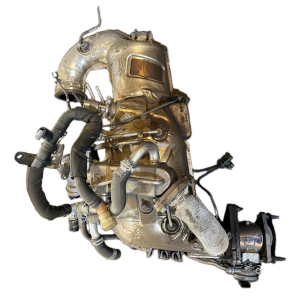
Aftermarket price range: $50-$100 - Diesel Particulate Filter (DPF) — This is a last resort. If the filter is ignored while clogged, it can become permanently damaged or filled with un-burnable ash, requiring replacement. Professional cleaning is a less expensive alternative if the filter is not damaged.
Trusted brands: GM Genuine, ACDelco
OEM price range: $2000-$2800
Aftermarket price range: $1500-$2200
Related Codes That Often Appear With This One
- P0299 — A Turbocharger/Supercharger Underboost condition can cause incomplete combustion, leading to excessive soot that clogs the DPF and triggers P2463. This code was seen in conjunction with P2463 in a documented repair.
- P2459 — Indicates 'Diesel Particulate Filter Regeneration Frequency Too High'. The ECM sets this when it is attempting to regenerate too often, which is a direct symptom of the DPF being persistently clogged and related to the P2463 code.
- P2002 — Indicates 'Diesel Particulate Filter Efficiency Below Threshold'. This often means the DPF is either clogged (triggering P2463) or internally damaged and can no longer filter soot effectively.
Technical Service Bulletins (TSBs) & Recalls
- 10-06-05-002M: Information on DIC messages related to DPF cleaning and the potential for DTC P2463 to be set. It clarifies that driver action is the first step and that warranty may not cover forced regens if no parts have failed.
- 10-06-05-002L: An earlier, superseded version of the same bulletin, covering the same issue for 2021 models.
- PIE0883A: An investigation for the newer LZ0 engine (2023+) that found a loose turbocharger outlet connection could cause P2463, a useful check for late-model LM2 engines as well.
Platform-Specific Known Issues
- GM has issued Technical Service Bulletin #10-06-05-002M, which covers 2021-2024 models. It notes that DTC P2463 may be set in conjunction with DIC messages like 'Clean Exhaust Filter See Owner Manual Now'. The bulletin emphasizes that if diagnostics find no DPF system fault, a forced regeneration should not be charged to GM warranty, pointing to driving habits as the primary cause.
Mechanic-Grade Diagnostic Values
- DPF Differential Pressure Sensor Voltage (Key-On, Engine-Off) — expected: 0.5V - 0.77V DC. Failure: Voltage outside this range suggests a faulty sensor or a wiring issue.
- DPF Differential Pressure at Idle — expected: 0 - 2 PSI. Failure: An elevated reading at idle suggests a clogged filter or a biased sensor.
- Exhaust Gas Temperature (EGT) Sensor Resistance — expected: ~220 Ohms at room temperature. Failure: A significantly different reading indicates a faulty sensor.
- Scan Tool 'Air Leak Equivalence Ratio' (with EGR commanded closed) — expected: 0.80:1 to 1.20:1. Failure: A value outside this range indicates an air leak in the induction or exhaust system.
- DPF Soot Accumulation (Scan Tool Parameter) — expected: Below 100%. Failure: DTC P2463 may set when calculated soot level reaches 140%.
Scan Tool Commands That Help
- GDS2 (GM Dealer Tool): Service Regeneration — This is the primary function to command a stationary cleaning of the DPF when P2463 is set and normal driving regeneration is no longer possible.
- GDS2 (GM Dealer Tool): Regeneration Enable — A less intense function that enables the system to attempt a regeneration on the next drive cycle. GM may recommend this if soot levels are high but a full service regeneration is not yet mandated.
- GDS2 (GM Dealer Tool): DPF/Catalyst Reset — This function must be performed after replacing the DPF to reset its learned values within the ECM.
- GDS2 (GM Dealer Tool): Induction System Leak Indicator (ISLI) Test — Used to diagnose underlying air intake or boost leaks that could cause excessive soot production, leading to a recurring P2463.
Wiring & Ground Locations
- G134 — Near the NOx catalyst.. Per GM bulletin #22-NA-210, this ground stud can break from vibration fatigue, causing a host of potential electrical faults and codes, which could disrupt the emissions monitoring system.
- Frame Grounds — On the frame rail behind both front wheels and below the driver's seat area.. These grounds are in a terrible location exposed to road spray, making them prone to corrosion which can affect sensor readings and module communication for the emissions system.
Real Owner Repair Stories
- YouTube channel 'Watch Wes Work' (2019 Chevy Silverado 6.6L Duramax (Similar L5P DPF system principles apply)) — Reduced engine power message, 'cleaning exhaust filter' message, and code P2463. Also had a P0299 underboost code stored.
❌ Tried (didn't work) A forced service regeneration successfully completed and lowered soot percentage from 203% to 66%, but the 'Reduced Engine Power' message remained and the truck had no power, even with no active codes.
✅ What actually fixed it The technician suspected a communication glitch occurred when his scan tool laptop had an issue mid-procedure. Disconnecting the battery for 15 minutes forced a full system reset, which cleared the persistent 'Reduced Engine Power' state after the successful regeneration. The truck's power was restored.
OEM Part Supersession History
12677019→12690742— Unknown, likely an internal revision for durability or accuracy.
Model Year Variations Within This Range
- 2021-2023 (LM2 Engine): The 2021-2023 Yukon uses the LM2 3.0L Duramax engine.
- 2023+ (LZ0 Engine in trucks, 2025+ in SUVs): Starting in 2023 trucks and 2025 SUVs, GM introduced the updated LZ0 3.0L Duramax. It features new steel pistons, higher-pressure injectors, and a revised turbo to produce more power (305 hp vs 277 hp). The emissions system was also revised, moving the Diesel Oxidation Catalyst (DOC) closer to the turbo for faster warm-up. While the P2463 code applies to both, diagnostics on a 2023+ model should consider LZ0-specific issues.
Helpful Videos
We Have This Part in Stock

The information in this article is provided for general reference and educational purposes only. Vehicle specifications, procedures, and part compatibility can vary by production date, trim level, and region. Always consult your vehicle's factory service manual and verify part numbers before purchasing or performing repairs. Safety-critical components such as airbags, seat belts, and braking systems should be installed by a qualified professional.
- Gmc YUKON:
- 🧭 Diagnostic Flowchart
- 🎬 Helpful Videos
- 🛍️ Shop This Part
- What's Unique About the 2021-2023 Gmc YUKON
- Symptoms You May Notice
- Most Likely Causes
- Rare But Worth Checking
- Diagnosis Steps
- Parts You'll Likely Need
- Related Codes That Often Appear With This One
- Technical Service Bulletins (TSBs) & Recalls
- Platform-Specific Known Issues
- Mechanic-Grade Diagnostic Values
- Scan Tool Commands That Help
- Wiring & Ground Locations
- Real Owner Repair Stories
- OEM Part Supersession History
- Model Year Variations Within This Range
- 🎟️ Get 5% Off