

P2463 on 2016-2018 Land Rover Range Rover: DPF Restriction, Causes, and Fixes
This code means the Diesel Particulate Filter (DPF) is clogged with soot. It's often caused by frequent short trips that prevent the DPF from self-cleaning (regenerating). However, on the 3.0L TDV6, it is frequently a secondary code caused by a P0234 (Turbo Overboost) condition. The root cause is often a sticking throttle body or a failed PCV oil separator, which must be fixed before addressing the DPF. The most common fix involves repairing the upstream cause (throttle/PCV), then performing a f
- P2463 means your Range Rover's Diesel Particulate Filter is clogged with soot.
- The most common cause is a driving style with too many short, low-speed trips, which prevents the exhaust from getting hot enough to self-clean.
- Do not ignore this code. The vehicle will enter a low-power 'limp mode', and continued driving can cause more expensive damage.
- The first step is usually a professional 'forced regeneration' and an oil change, not an immediate DPF replacement.
- Check for other codes, especially P0234 (Turbo Overboost), as a turbo issue could be the root cause of the DPF problem.
What's Unique About the 2016-2018 Land Rover RANGE ROVER
On many Land Rover and Jaguar models with the 3.0L TDV6 engine, the P2463 code is a very common issue, but it is often a symptom of another problem. While short-trip driving habits are a factor, the primary trigger is frequently the P0234 'Turbocharger Overboost' code, as stated in TSB LTB01204NAS3. Investigations by independent specialists and owners reveal the P0234 code is itself caused by either a sticking intake throttle body flap (gummed up with oil residue) or a failed PCV oil separator allowing too much oil into the intake tract. This upstream fault disrupts regeneration, leading to the P2463 DPF blockage.
Diagnostic Flowchart
Tap your situation to follow the diagnostic path that matches what you're seeing on this vehicle.
Symptoms You May Notice
- Check Engine Light illuminated
- DPF warning light on (amber or red).
- Vehicle enters 'limp mode' (Restricted Performance) with significantly reduced engine power and sluggish acceleration.
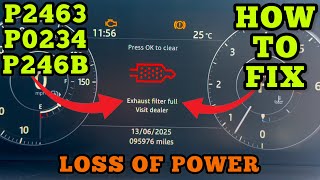
- Message on the dashboard like 'Exhaust Filter Full, Visit Dealer' or 'Exhaust Filter Nearly Full'.
- Increased fuel consumption.
- Engine cooling fan running more than usual.
- Noticeable smell of diesel from the engine oil, and oil level may be over the 'Full' mark.
- Replacing the DPF immediately. The DPF is almost always just clogged as a symptom of another fault. A forced regeneration or professional cleaning after fixing the root cause (throttle body, PCV) is the correct procedure.
- Blaming the driver's habits exclusively. While short trips are not ideal, on the 3.0L TDV6 there is very often an underlying mechanical fault (throttle body/PCV) that makes regeneration impossible even with perfect driving habits.
Most Likely Causes
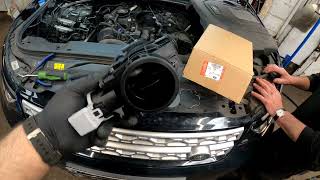
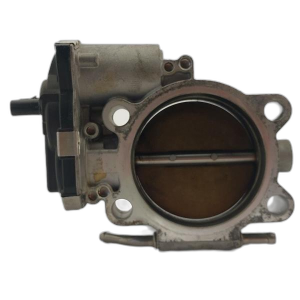
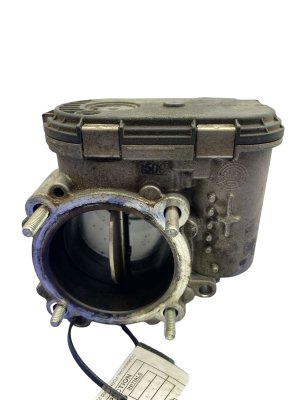
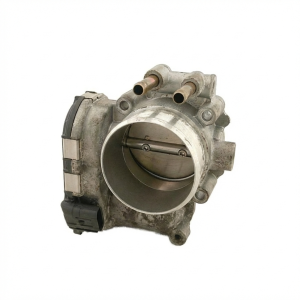
- Sticking Intake Throttle Body Very High Probability → Shop Fuel Injection Throttle Body This is the primary cause cited in TSB LTB01204NAS3 for the accompanying P0234 overboost code. Oil vapor from the PCV system contaminates the throttle body, causing the flap to stick closed or move slowly. This incorrect airflow prevents DPF regeneration and creates excessive soot.
How to confirm: Remove the intake pipe connected to the throttle body. Manually push the flap open with your finger; if it sticks, is slow to return, or is heavily coated in oily sludge, it is faulty. This is a well-documented failure mode in numerous online repair videos for the 3.0L TDV6.
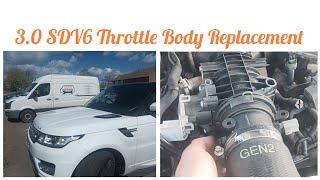
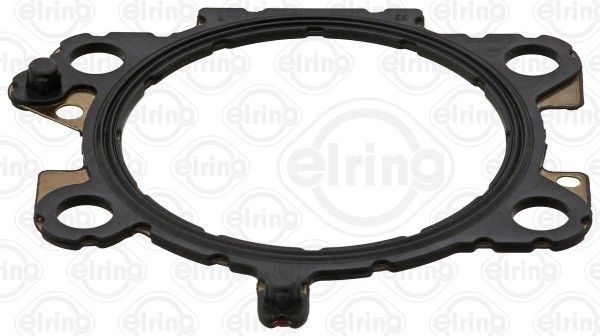
Typical fix: Cleaning the throttle body is a temporary fix at best and often fails again shortly after. The recommended repair is to replace the entire throttle body assembly and then perform a throttle valve adaptation reset using a diagnostic tool.
Est. part cost: $250-$450 for an OEM throttle body - Faulty PCV Oil Separator 🔴 High Probability The PCV oil separator on the 3.0L TDV6 is known to fail, allowing excessive oil vapor and droplets into the air intake system. This oil contaminates the MAP sensor, gums up the throttle body (causing the issue above), and increases soot production, directly leading to P0234 and P2463.
How to confirm: Inspect the inside of the intake tract and throttle body for excessive liquid oil, not just vapor staining. A heavily contaminated MAP sensor is another strong indicator. In some cases, this is the true root cause even when the throttle body is also sticking.
Typical fix: Replace the PCV oil separator unit. This part is often located in the engine valley. After replacement, clean the oil out of the intake piping and MAP sensor. This is often done in conjunction with a throttle body replacement.
Est. part cost: $150-$250 for OEM part LR122439 - Insufficient DPF Regeneration Due to Driving Style 🟡 Medium Probability While often a secondary issue, the DPF system still requires sustained highway speeds (e.g., over 40 mph for 20+ minutes) to passively regenerate. Vehicles used only for short, city-based trips will inevitably accumulate soot faster, making them more vulnerable to blockages when an upstream fault like a sticking throttle occurs.
How to confirm: Review the vehicle's typical usage pattern. If it consists mainly of short journeys, this is a major contributing factor. A diagnostic scan tool will show a high DPF soot load percentage.
Typical fix: After fixing any primary faults (throttle, PCV), perform a forced DPF regeneration using a compatible diagnostic tool. An oil and filter change is mandatory afterward due to fuel dilution.
Est. part cost: $80-$150 for oil and filter - Faulty DPF Differential Pressure Sensor 🟡 Medium Probability This sensor measures backpressure to calculate soot load. If it fails, it can send incorrect data to the ECU, either preventing regeneration or falsely reporting a clog. The rubber hoses connected to it can also perish, crack, or get blocked.
How to confirm: Use a diagnostic tool to monitor the DPF pressure sensor readings. The voltage should be around 0.5V with the engine off and increase with RPM. Implausible or static readings, such as a negative value at idle, indicate a faulty sensor. Visually inspect the hoses for damage or perform a smoke test on the hoses to find leaks.
Typical fix: Replace the DPF differential pressure sensor and its hoses. After replacement, the sensor's learned values must be reset in the ECU.
Est. part cost: $75-$200 for OEM part LR008463. - Upstream Air/Boost Leaks ⚪ Low Probability The plastic and rubber components of the intake system can become brittle from heat and age, leading to cracks. A common failure point is the intake duct hose which can split and cause an unmetered air leak, leading to excess soot.
How to confirm: Visually inspect all intake and turbo piping for cracks, loose clamps, or oil residue, especially on the underside of plastic ducts. A smoke test is the most effective way to find small leaks.
Typical fix: Repair the leak by replacing the cracked hose, faulty gasket, or damaged component.
Est. part cost: $100-$500 depending on the leaking part
Rare But Worth Checking
- Clogged MAP Sensor: As a direct result of a faulty PCV oil separator, the Manifold Absolute Pressure (MAP) sensor can become completely clogged with oily sludge. This provides false readings to the ECU, contributing to the P0234 overboost code and preventing proper engine management for regeneration.
- Faulty Exhaust Gas Temperature Sensor: → Shop Exhaust Gas Temperature (EGT) Sensor The ECU relies on these sensors to monitor temperatures for regeneration. A faulty sensor can prevent the process from starting or completing, though this is less common than the throttle body issue.
- Clogged AdBlue/DEF Injector: On models equipped with Selective Catalytic Reduction (SCR), a crystallized or clogged DEF injector can disrupt the exhaust chemistry. This can sometimes trigger a cascade of emission-related faults, including NOx exceedance codes (like P2BAE) which may appear alongside DPF codes.
Diagnosis Steps
- Read all fault codes using a Land Rover compatible scanner. Prioritize diagnosis of P0234-77 if present. 🎬 Watch: Diagnosing and fixing these common turbo and DPF codes.
- Inspect the intake throttle body. Remove the intake hose and manually operate the flap. If it is sticky, slow, or coated in heavy, wet oil, it is the likely cause.
- Inspect the PCV oil separator and MAP sensor. Check for excessive liquid oil in the intake tract. Remove and inspect the MAP sensor; if it is caked in sludge, the PCV system is highly suspect.
- Check the engine oil level and smell for diesel fuel contamination. If the level is high or it smells of fuel, an oil change is mandatory after repairs.
- Inspect the DPF differential pressure sensor readings. Check for plausible values that change with engine RPM. Inspect the sensor's rubber hoses for cracks, perishing, or blockages.
- If no throttle/PCV issues are found, perform a smoke test on the entire intake system from the air filters to the manifold to check for leaks.
- Once the root cause (e.g., new throttle body, new PCV separator) is repaired, clear adaptations for the replaced component using the diagnostic tool.
- Perform a 'forced' or 'static' DPF regeneration using the diagnostic tool. This involves running the engine at a high RPM while parked for 20-40 minutes to burn off the accumulated soot.
- After successful regeneration, perform a complete engine oil and filter change.
Parts You'll Likely Need
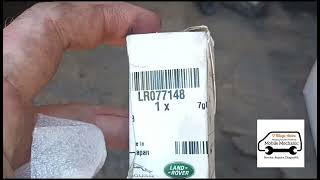
- Intake Air Shutoff Throttle Body
(OEM #LR078552 (verify by VIN))— This is the most common root cause of the P0234/P2463 code combination. The internal flap sticks due to oil contamination, preventing proper airflow for DPF regeneration.
Trusted brands: Genuine Land Rover, Bosch
OEM price range: $350-$500
Aftermarket price range: $250-$400 - PCV Oil Separator / Breather
(OEM #LR122439 (verify by VIN))— A failed separator floods the intake with oil, causing the throttle body to stick and the MAP sensor to clog. It is often the true underlying failure.
Trusted brands: Genuine Land Rover
OEM price range: $150-$250
Aftermarket price range: $100-$180 - DPF Differential Pressure Sensor
(OEM #LR008463)— This sensor is a common failure point that can incorrectly report a clogged DPF or prevent regeneration from starting.
Trusted brands: Bosch, Genuine Land Rover, Autotec
OEM price range: $150-$250
Aftermarket price range: $75-$150 - Engine Oil and Filter — Failed regeneration attempts frequently lead to fuel contaminating the engine oil, compromising its lubricating properties. An oil change is essential to prevent engine damage after any DPF-related repair.
OEM price range: $100-$180
Related Codes That Often Appear With This One
- P0234-77 — 'Turbocharger Overboost Condition'. This is the key code. Land Rover TSBs state this is often the primary fault, with P2463 appearing as a consequence. The '-77' sub-type means 'Commanded Position Not Reachable', pointing directly to a mechanical issue like a stuck throttle flap.
- P246B-00 — This code means 'Vehicle Conditions Incorrect for DPF Regeneration'. It almost always appears with P2463, indicating that the system tried to self-clean but couldn't due to an active fault like P0234 or incorrect sensor readings.
Technical Service Bulletins (TSBs) & Recalls
- LTB01204NAS3: Notes that a check engine light may be on with DTC P0234-77, which may be accompanied by P2463-00 and P246B-00.
- LTB01204NAS2: Similar to the above, states that DTC P0234-77 may be stored, and P2463-00 and P246B-00 may also be present.
- LTB01204NAS1: The earliest version of the bulletin, also linking P0234-77 with the potential for P2463-00 and P246B-00 to be stored.
Platform-Specific Known Issues
- P0234 (Turbo Overboost) is the Primary Fault: According to Land Rover's own Technical Service Bulletins (LTB01204NAS1/2/3), the P0234 'Turbocharger Overboost Condition' is often the root cause, with P2463 appearing as a secondary symptom. The overboost condition disrupts the sensitive air/fuel calculations required for DPF regeneration, causing the process to fail and the filter to clog. Diagnostics should always prioritize resolving P0234 first.
- Sticking Throttle Body & Faulty Oil Separator: → Shop Fuel Injection Throttle Body The most common cause for the P0234 overboost code on this platform is not the turbo itself, but rather a sticking intake throttle body flap or a failed PCV oil separator. The throttle flap gets gummed up with oil residue and sticks, preventing correct airflow. Alternatively, a failed oil separator allows excessive engine oil into the intake, which can clog the MAP sensor and contribute to the throttle body issue, creating more soot and triggering the overboost code.
Mechanic-Grade Diagnostic Values
- DPF Differential Pressure Sensor Voltage — expected: Approximately 0.5V with Key On, Engine Off (KOEO). Voltage should increase with engine RPM. The overall operating range is typically 0.25V to 3.23V.. Failure: A static voltage that does not change with RPM, or a negative reading at idle (e.g., -11.89 kPa) strongly indicates a failed sensor.
- DPF Soot Mass (Live Data) — expected: 'Soot Mass Calculated' is an ECU estimate based on driving parameters. 'Soot Mass Measured' is derived from the differential pressure sensor. After a successful regeneration, values should be low, e.g., under 5 g.. Failure: A 'Measured' value significantly higher than the 'Calculated' value, or a 'Measured' value that doesn't decrease after a regeneration cycle. A soot mass above 22g will typically prevent automatic regeneration.
- DPF Differential Pressure Sensor Power Supply — expected: 5V reference signal at the sensor connector with ignition on.. Failure: No voltage or a short to ground indicates a wiring or PCM issue, not a sensor failure.
Scan Tool Commands That Help
- JLR SDD / Pathfinder / Compatible Advanced Scanners (iCarsoft, Autel): Throttle Valve Actuator Routine / Throttle Adaptation Reset — This is mandatory after cleaning or replacing the intake throttle body. The ECU must re-learn the closed and open positions of the new/clean valve, otherwise it will use old adaptation values and cause incorrect airflow.
- JLR SDD / Pathfinder / Compatible Advanced Scanners (iCarsoft, Autel): DPF Regeneration / Service Regenerate (Static or Dynamic) — Used after the primary fault (e.g., sticking throttle) is fixed. This command forces the vehicle to run at high temperature while parked (Static) or guides the user on a drive cycle (Dynamic) to burn off the excessive soot accumulation and clear the P2463 code.
- JLR SDD / Pathfinder / Compatible Advanced Scanners (iCarsoft, Autel): Particulate Filter Component Replacement / Reset DPF Adaptations — This function tells the ECU that the DPF has been cleaned or replaced. It resets the learned soot and ash values. This should ONLY be used after the DPF is confirmed to be physically clean (either by regeneration or off-car cleaning), as resetting the values on a still-clogged filter can lead to damage.
- JLR SDD / Pathfinder / Compatible Advanced Scanners (iCarsoft, Autel): Reset Oil Dilution / Service Interval Reset — This is a critical final step after performing a forced DPF regeneration. The process of regeneration dilutes the engine oil with diesel fuel, and this reset tells the service computer that an oil change has been performed.
Wiring & Ground Locations
- Main Chassis Ground Points — On the L405, key ground points are located in the driver and passenger footwells behind the kick panels at the bottom of the 'A' pillar, and on the inner fender behind the battery.. Corrosion at these main ground studs can cause a wide range of intermittent electrical faults and incorrect sensor readings, including those from the DPF pressure sensor or MAP sensor, leading to failed regenerations and fault codes. Cleaning these points is a crucial step in diagnosing persistent, hard-to-trace electronic issues.
- DPF Differential Pressure Sensor Connector — The sensor is located in the engine bay, connected by two rubber hoses to metal pipes leading to the DPF. The electrical connector is a 3-pin oval shape.. This is the primary connection for testing the sensor. Pin tests for 5V supply, ground, and the signal wire are performed here. The harness should be checked for heat damage, chafing, or corrosion.
Real Owner Repair Stories
- YouTube channel 'O'Rileys Autos' (2017 Land Rover Discovery 3.0L TDV6 (engine is shared with Range Rover)) — Check Engine Light, 'Exhaust Filter Full' message, limp mode, and codes P2463, P0234-77, and P246B stored.
❌ Tried (didn't work) The initial focus was on the DPF itself, but live data showed the P0234-77 (Turbo Overboost - Commanded Position Not Reachable) was the primary issue.
✅ What actually fixed it The root cause was a sticking intake throttle body flap. The mechanic confirmed this by manually pushing on the flap and observing that it was sticking. Replacing the throttle body, clearing adaptations, and then performing a DPF flush/regeneration resolved all codes and symptoms. The video also recommended replacing the PCV oil separator at the same time as a preventative measure. - YouTube channel 'O'Rileys Autos' (Range Rover 3.0L TDV6 with Restricted Performance) — Restricted Performance light, codes P244B-68 (DPF Pressure Sensor Circuit Range/Performance) and P2453 (DPF Pressure Sensor Circuit Performance). Live data showed a static, negative pressure reading (-11.89 kPa) that did not change with engine RPM.
❌ Tried (didn't work) Checking the DPF hoses for blockages; they were clear.
✅ What actually fixed it The DPF differential pressure sensor was faulty. A new sensor was installed, and live data immediately showed a plausible reading that responded to pressure changes. After replacing the sensor and performing a DPF cleaning, the fault was resolved.
OEM Part Supersession History
LR061957→LR078546— Standard part revision by the manufacturer for the throttle body and motor assembly for the 3.0L V6 Diesel Gen2 engine.
Helpful Videos
Used OEM Parts in Stock

New Aftermarket Parts Available



The information in this article is provided for general reference and educational purposes only. Vehicle specifications, procedures, and part compatibility can vary by production date, trim level, and region. Always consult your vehicle's factory service manual and verify part numbers before purchasing or performing repairs. Safety-critical components such as airbags, seat belts, and braking systems should be installed by a qualified professional.
- Land Rover RANGE ROVER:
- 🧭 Diagnostic Flowchart
- 🎬 Helpful Videos
- 🛍️ Shop This Part
- What's Unique About the 2016-2018 Land Rover RANGE ROVER
- Symptoms You May Notice
- Most Likely Causes
- Rare But Worth Checking
- Diagnosis Steps
- Parts You'll Likely Need
- Related Codes That Often Appear With This One
- Technical Service Bulletins (TSBs) & Recalls
- Platform-Specific Known Issues
- Mechanic-Grade Diagnostic Values
- Scan Tool Commands That Help
- Wiring & Ground Locations
- Real Owner Repair Stories
- OEM Part Supersession History
- 🎟️ Get 5% Off