

P2507 on 2008-2017 Honda Accord: Causes and Fixes for Low ECM/PCM Voltage
This code almost always indicates a failing battery or alternator. Start by testing the battery's health and the alternator's output voltage. A new battery costs around $150-$250, while an alternator replacement can range from $400-$950 depending on the shop and specific model.
- P2507 means the car's computer is not getting enough voltage.
- The most likely cause on your 2008-2017 Accord is a weak battery or a failing alternator.
- Start your diagnosis with simple, inexpensive tests: check battery voltage and alternator output with a multimeter.
- Do not replace the expensive PCM (computer) unless all other possibilities (battery, alternator, wiring, fuses, relays) have been definitively ruled out.
- If the battery and alternator are good, investigate a possible parasitic draw, which can be caused by a faulty electronic component.
What's Unique About the 2008-2017 Honda Accord
On the 8th and 9th generation Honda Accord, the P2507 code is a straightforward electrical issue, almost always pointing to a weak link in the charging system. While the cause is rarely complex, Accords from this era, particularly the 9th generation (2013-2017) with 4-cylinder engines, have been noted by owners and mechanics to have undersized factory batteries (Group Size 51R) that may fail prematurely, making a battery test the most critical first step. Unlike some other manufacturers where this code can be linked to software glitches, on this platform, it's typically a hardware failure. It's also important to know these Accords use a dual-mode charging system controlled by the PCM, which can intentionally lower the charging voltage to 12.4-12.9V under light load, a normal condition that can be misdiagnosed as a failing alternator.
Generation note: This guide covers the 8th generation (2008-2012) and 9th generation (2013-2017) Honda Accord. The causes are largely the same for both, but some 9th-gen owners have reported issues with the OEM battery capacity being insufficient, leading to premature failure. Additionally, a recall for the battery management sensor on 2013-2016 models can cause similar charging system issues.
Symptoms You May Notice
- Check Engine Light is on
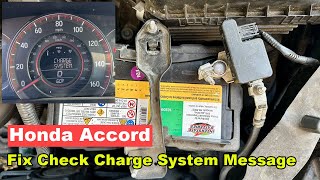
- Battery or charging system warning light is on
- Engine stalls, sometimes intermittently while driving
- Slow or difficult engine cranking
- Vehicle will not start
- Dimming headlights and interior lights, especially at idle
- Erratic behavior from electronic accessories (radio, navigation)
- A grinding or spinning noise at startup (can indicate a related starter issue on 9th-gen models)
- Replacing the Powertrain Control Module (PCM). PCM failure is extremely rare. This code indicates a problem with the *power supplied to* the PCM, not the PCM itself. Always rule out the battery, alternator, and wiring first.
- Misdiagnosing the Alternator due to Honda's Dual-Mode Charging System. A technician seeing 12.5V at the battery with the engine running might condemn the alternator, but this can be a normal voltage in 'low output mode'. The system must be forced into 'normal output mode' by turning on high-load accessories for proper testing.
Most Likely Causes
- Weak or Failing Battery 🔴 High Probability → Shop Vehicle Battery Some OEM batteries, particularly the Group Size 51R in 9th generation 4-cylinder models, are considered undersized and may have a shorter lifespan of 2-4 years. Batteries naturally degrade over 3-5 years regardless.
How to confirm: Test the battery voltage with a multimeter. A healthy battery should read at least 12.4V with the engine off. Perform a load test at an auto parts store to confirm its health. A reading below 12.4V indicates a discharged or failing battery. System voltage dropping below 9.0-10.0V during cranking can trigger the fault.
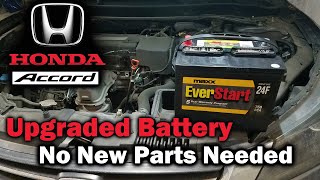
Typical fix: Replace the battery. Some owners opt to upgrade the 4-cylinder model's Group 51R battery to a larger, more robust Group 24F battery, which requires minor tray modification. 🎬 Watch: How to upgrade your 9th-gen Accord battery
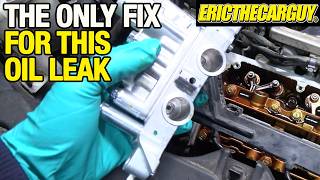
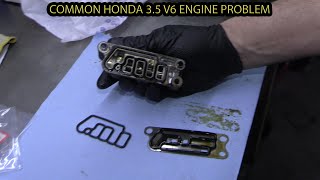
Est. part cost: $150 - $250 - Failing Alternator 🔴 High Probability → Shop Alternator The alternator is a common wear-and-tear component that can fail after 100,000 miles. On V6 models, oil leaks from the VCM (Variable Cylinder Management) or VVT (Variable Valve Timing) solenoid gasket located above the alternator can drip onto it, causing premature failure.
How to confirm: With the engine running and electrical accessories (headlights, A/C) on, test the voltage at the battery terminals. A healthy alternator should produce between 13.5V and 14.5V (High-Output Mode). If the voltage is low or not present, the alternator is likely faulty. Be aware of Honda's dual-mode system; a reading of 12.4-12.9V can be normal under light load. Also check for AC voltage ripple at the battery, which should be under 100mV AC; higher values suggest a failing rectifier inside the alternator.
Typical fix: Replace the alternator. If the VCM/VVT gasket is leaking on a V6, it must be replaced at the same time. 🎬 See how to fix this common Honda oil leak
Est. part cost: $200 - $500 - Corroded or Loose Battery Terminals/Cables 🟡 Medium Probability → Shop Vehicle Battery Corrosion is common in all vehicles over time. The battery sensor on the negative terminal of 2013-2016 models was subject to a recall for not being properly sealed, allowing moisture intrusion and corrosion that can disrupt charging.
How to confirm: Visually inspect the battery terminals for white or greenish corrosion. Check that the main power and ground cables are tight and free of damage or internal corrosion. Specifically inspect the negative terminal and sensor on 2013-2016 models.
Typical fix: Clean the battery terminals and cable ends with a wire brush. Replace cable ends or the entire cable if corrosion is severe. If the battery sensor is corroded, it should be replaced.
Est. part cost: $5 - $80 - Parasitic Battery Drain ⚪ Low Probability → Shop Vehicle Battery A failing component can stay active when the car is off, slowly draining the battery. On these Accords, the Hands-Free Link (Bluetooth) module is a known culprit for developing an internal short and causing a significant parasitic draw. Aftermarket accessories are also a common source.
How to confirm: Perform a parasitic draw test using a multimeter set to measure amps. With the car off and all modules asleep (wait ~30 mins), the draw should be below 50mA. If the draw is high (e.g., over 100mA), pull fuses one by one to isolate the circuit causing the drain.
Typical fix: Replace the faulty component or relay identified during the test. If the HFL module is the cause, it can be unplugged (usually located behind the passenger's right kick panel) or replaced.
Est. part cost: $20 - $400+
Rare But Worth Checking
- Faulty PGM-FI Main Relay: → Shop Wiring Relay The main relay (Programmed Fuel Injection relay) supplies power to the PCM. Heat can cause solder joints inside the relay to crack over time, leading to intermittent power loss. This can cause a no-start or stalling condition. It's located in the under-dash fuse box and can be tested by checking for continuity between terminals when energized or swapped with an identical relay.
- Damaged Wiring or Ground Strap: → Shop Engine Ground Strap A main engine or chassis ground strap that is broken, loose, or corroded can cause a wide range of electrical issues, including this code. A visual inspection and voltage drop test across the ground straps can confirm their integrity. A voltage drop of more than 0.05 volts (50 millivolts) on a ground circuit indicates a problem.
- Faulty Battery Management Sensor: → Shop Vehicle Battery Specific to 2013-2016 models, the sensor on the negative battery terminal was recalled (Honda TSB 17-069) because it could 🎬 Watch: How to replace a faulty battery sensor short circuit from moisture intrusion, leading to incorrect charging and low voltage codes. This can also set a DTC P154A.
Diagnosis Steps
- Visually inspect the battery terminals for corrosion and ensure the cable clamps are tight. Pay special attention to the negative terminal sensor on 2013-2016 models. Clean as needed.
- With the engine off, use a multimeter to measure the battery's resting voltage. It should be 12.4V or higher. If lower, charge the battery and re-test. If it won't hold a charge above 12.4V, it is likely bad.
- Have the battery professionally load-tested at an auto parts store to confirm its health. This is a crucial step.
- Start the engine. Turn on the headlights, rear defroster, and A/C to create a high electrical load. Measure the voltage at the battery terminals. The reading should be between 13.5V and 14.5V. If the voltage is below this range, the alternator is likely bad. If it's above this range, the voltage regulator (internal to the alternator) is faulty.
- Inspect the main power cable from the alternator to the fuse box and the main ground straps (battery-to-chassis, chassis-to-engine). Ensure they are clean, tight, and undamaged. Perform a voltage drop test on the ground and power circuits if a visual inspection is inconclusive.
- If the battery and alternator test good, check the PGM-FI fuses in the under-hood and interior fuse boxes. A blown main fuse for the charging system can also be a cause.
- If the battery drains overnight, perform a parasitic draw test. After letting the car sit for 30 minutes for all modules to go to sleep, the draw should be under 50mA. Isolate the faulty circuit by pulling fuses.
- On V6 models, inspect the VCM/VVT solenoid gasket (above the alternator) for any signs of oil leakage that could be contaminating the alternator.
Parts You'll Likely Need
- Battery
(OEM #31500-SR1-100M (example for Group 51R))— This is the most common failure point leading to low system voltage and the P2507 code, especially the undersized 51R in 9th-gen 4-cyl models.
Trusted brands: Interstate, Duralast Gold (often recommended as an upgrade), DieHard, ACDelco
OEM price range: $180 - $280
Aftermarket price range: $150 - $250 - Alternator
(OEM #31100-5A2-A01 (4-cyl 9th gen), 31100-R70-A01 (V6 8th gen))— The second most common cause, a failing alternator cannot recharge the battery, causing system voltage to drop while driving. Can be damaged by oil leaks on V6 models.
Trusted brands: Denso (OEM supplier), Bosch, Remy, TYC
OEM price range: $500 - $700
Aftermarket price range: $200 - $500
Related Codes That Often Appear With This One
- P0562 — P0562 indicates 'System Voltage Low'. While P2507 is specific to the PCM's power input, P0562 is a more general low voltage code. Seeing them together strongly points to a failing battery or alternator.
- P154A — This code indicates a 'Battery Sensor Internal Failure' and is specific to the 2013-2016 models equipped with the battery management sensor on the negative terminal. A faulty sensor can cause incorrect charging behavior, leading to the low voltage condition that triggers P2507.
Technical Service Bulletins (TSBs) & Recalls
- TSB 17-069: Recall for faulty Battery Management Sensor on 2013-2016 Accord models due to moisture intrusion.
- TSB 16-002: Addresses starter grinding issues on 2013-2016 V6 models, a related electrical system problem. While not a direct cause of P2507, it points to the sensitivity of the starting/charging system.
Platform-Specific Known Issues
- { "title": "Premature Battery Failure (9th Gen 4-Cyl)", "description": "The factory-installed Group 51R battery is considered undersized by many owners, leading to a short service life of 2-4 years. Many owners proactively upgrade to a larger Group 24F battery for better longevity." }
- { "title": "Leaking VCM Gasket Damaging Alternator (V6 Models)", "description": "On J35 V6 engines, the Variable Cylinder Management (VCM) spool valve gasket can leak oil directly onto the alternator below it, causing it to fail prematurely." }
- { "title": "Faulty Battery Management Sensor (2013-2016)", "description": "A recall was issued (TSB 17-069) for the negative battery terminal sensor, which was not properly sealed against moisture. A failure here can cause a short and lead to various charging system codes, including P2507 and P0562." }
Mechanic-Grade Diagnostic Values
- Battery Resting Voltage (Engine Off) — expected: 12.4V - 12.8V. Failure: Below 12.4V suggests a discharged or failing battery.
- System Voltage (Cranking) — expected: Above 9.0V - 10.0V. Failure: Sustained voltage below 9.0V during cranking can trigger P2507.
- Charging System Voltage (Engine Running, High Load) — expected: 13.5V - 14.5V. Failure: Below 13.5V indicates a charging problem (likely alternator).
- Voltage Drop on PCM Power or Ground Circuit — expected: Less than 0.05V (50mV). Failure: Voltage drop greater than 50mV indicates high resistance in the wiring or connections.
- Parasitic Draw — expected: Less than 50mA. Failure: A draw above 50mA after all modules are asleep (approx. 30 mins) indicates a component is not shutting off.
- Alternator AC Ripple Voltage — expected: Less than 100mV AC. Failure: AC voltage above 100mV suggests a failing diode/rectifier inside the alternator.
- PCM Power Input Pin Voltage (Key On, Engine Off) — expected: Within 0.2V - 0.5V of battery voltage. Failure: A significant drop compared to battery voltage points to a wiring or relay issue before the PCM.
Scan Tool Commands That Help
- Honda Diagnostic System (HDS) or equivalent: Alternator Test / Charging System Test — To command the alternator into high and low output modes to verify its function, bypassing the normal dual-mode charging logic. This is critical for avoiding misdiagnosis of a healthy alternator that is simply in a low-output state.
- Honda Diagnostic System (HDS) or equivalent: Clear DTCs — After any repair, DTCs must be cleared. For the battery sensor recall, clearing the code was a required first step before testing.
Wiring & Ground Locations
- G101 — On the driver's side of the intake manifold plenum or on the cylinder head near the driver's side.. This is a primary ground point for the engine control harness and the PCM. A loose or corroded G101 can cause a floating ground, leading to unstable voltage reference for the PCM and triggering P2507.
- Main Battery Ground — The main, thick black cable from the negative battery terminal connects to the chassis and/or the transmission case.. This is the main return path for the entire electrical system. Corrosion or looseness here can cause system-wide low voltage issues.
- PGM-FI Main Relay — Located in the under-dash fuse/relay box, behind the left kick panel.. This relay directly supplies switched power to the PCM. A failure here cuts power to the computer.
- PCM Power Input Pins — On the main connectors to the PCM, which is typically located under the center of the dash. Specific pins for power input are often Yellow/Black wires.. This is the specific point to back-probe with a multimeter to confirm if the PCM itself is receiving proper voltage, which should be nearly identical to battery voltage with the key on.
Real Owner Repair Stories
- YouTube video by 'No Limits LTX' (Honda Accord (year not specified, but similar generation)) — Battery light on the dash, car would not stay running after disconnecting the battery terminal (indicating no charge).
❌ Tried (didn't work) Replacing the battery with a new one., Replacing the alternator with a new one.
✅ What actually fixed it A blown main fuse for the charging system was found to be the culprit. Replacing the fuse resolved the no-charge condition. - YouTube video by 'klowny1969' (Honda V6 model (Accord/Pilot/Odyssey)) — Premature and repeated alternator failure, charging system light on.
❌ Tried (didn't work) Replacing the alternator without addressing the root cause.
✅ What actually fixed it The oil leak from the VVT/spool valve gasket, located directly above the alternator, was dripping oil into the alternator and causing it to fail. The fix required replacing the alternator AND the leaking spool valve gaskets (Honda TSB 20-023). - Reddit user in r/Honda (2015 Honda Accord 2.4L) — Occasional 'Check Charge System' error message after alternator replacement.
❌ Tried (didn't work) Replacing the alternator with a rebuilt (non-OEM or poorly remanufactured) unit.
✅ What actually fixed it The consensus from other users was that Honda charging systems are very sensitive to the alternator's quality. The issue is often caused by aftermarket or improperly remanufactured alternators. The recommended fix was to replace it with a genuine OEM Denso (new or low-mileage used) or a high-quality remanufactured Denso unit.
OEM Part Supersession History
38920-T2A-A02, 38920-T2A-A03→38920-T2A-A04— Original battery sensors on 2013-2016 Accords were not sufficiently sealed against moisture, leading to corrosion, short circuits, and potential fire risk under recall 17-069.
Heads up: The older part numbers should not be used; they are defective. The replacement part, 38920-T2A-A04, is the corrected countermeasure part.
Model Year Variations Within This Range
- 2013-2017 (9th Generation): Introduced the Battery Management Sensor (Part# 38920-T2A-A0x) on the negative battery terminal. This component was not present on the 8th generation (2008-2012) and is a unique point of failure for these years, subject to a major recall.
- 2008-2017 (V6 Models Only): V6 engines (J-series) feature a VCM or VVT spool valve located on the front valve cover, directly above the alternator. Gaskets for this valve are a very common failure point, causing oil to leak directly into the alternator and leading to premature failure. This is not a concern for 4-cylinder models.
Diagnostic Flowchart
Other Known Issues on This Vehicle
Issues unrelated to this code that are worth knowing about as an owner of this generation:
- Excessive Oil Consumption (V6 & 4-Cyl) 🔴 High — Common on both K24 (4-cyl) and J35 (V6) engines, particularly 2008-2012 models. Can start as early as 30k miles. The V6 issue is often linked to the VCM system causing piston rings to foul. (Ref: A 2013 class-action lawsuit settlement extended warranties for some V6 models due to misfires and oil consumption.)
- Variable Cylinder Management (VCM) Issues (V6) 🔴 High — Affects all J35 V6 models with VCM. Can cause engine vibrations, fouled spark plugs, oil consumption, and premature failure of active engine mounts. (Ref: Multiple TSBs exist, and warranty extensions were offered. Many owners install a 'VCM Muzzler' to disable the system.)
- Premature Starter Failure (9th Gen) 🟠 Medium — Common on 2013-2015 models, often presenting as a grinding noise on startup. Can occur around 50,000 miles. (Ref: Honda TSB 16-002 addresses the issue, which is caused by improper clearance between the starter and torque converter ring gear. The fix involves replacing the starter and rotating the torque converter.)
- Failing LED Daytime Running Light (DRL) Strips (9th Gen) 🟡 Low — Common on 2013-2017 models equipped with LED DRLs, especially 2016-2017. Part of the strip will dim or go out completely. (Ref: Honda issued TSB 19-042 and extended the warranty for this issue on some 2016-2017 models as the entire headlight assembly must be replaced.)
- Premature Rear Brake Wear (8th Gen) 🟠 Medium — Very common on 2008-2009 models, with rear brake pads often lasting less than 25,000 miles. Caused by brake system proportioning and caliper design. (Ref: Led to class-action lawsuits. Later models in the generation were improved but can still experience faster-than-average wear.)
Used vs. New Parts: Buying Guide for This Vehicle
When a used part is the smart pick: A used alternator can be a smart choice IF it is a low-mileage, OEM Denso unit from a reputable salvage yard. Forum users report that a used OEM Denso is often more reliable than a new, cheap aftermarket alternator. Used relays, fuse boxes, and wiring harnesses are also generally safe and cost-effective.
Donor-vehicle mileage cap: roughly under 80000 miles for the part to have meaningful remaining life.
What to inspect on the donor part:
- For an alternator, check the donor vehicle's mileage. Look for units under 80,000 miles.
- Inspect the alternator pulley; it should spin smoothly with no grinding or excessive play.
- On V6 models, check the used alternator for any signs of oil contamination. If it's oily, it was likely subjected to the common spool valve leak and should be avoided.
- For wiring, ensure connectors are intact with no broken clips or corroded pins.
OEM-only on this vehicle (don't cheap out):
- Battery Management Sensor (2013-2017 models): Use only the genuine Honda part (38920-T2A-A04) to ensure compatibility with the charging system and to get the updated, sealed design.
- PGM-FI Main Relay: While aftermarket relays exist, the OEM relay is known to be more reliable. Given its critical function, OEM is recommended.
Aftermarket brands forum-validated for this vehicle:
- Alternator: Denso (OEM supplier) is the most recommended brand, whether new or remanufactured.
- Battery: Interstate, DieHard, Duralast Gold are frequently cited by owners as reliable replacements or upgrades.
Brands owners have reported issues with on this vehicle:
- Alternator: Avoid generic, unbranded, or 'white-box' alternators from online marketplaces. Owners report frequent and immediate failures with these units on Honda's sensitive charging systems.
Real Owner Stories
Aggregated from forums and TSBs cited above. Mileages and costs reflect what owners reported in those sources.
2007 Honda Accord — ~120000 miles
Symptoms: The battery was draining overnight. A multimeter test showed a 150mA parasitic draw when the car was off and modules were asleep.
What fixed it: Traced the draw to the Hands-Free Link (Bluetooth) module by pulling fuses; unplugging the module resolved the drain.
Source hint: Reddit (r/Honda and r/MechanicAdvice)
2013-2016 Honda Accord V6
Symptoms: Grinding or spinning noise at startup and charging system warning lights.
What fixed it: Replacement of the battery management sensor on the negative terminal due to moisture intrusion and potential starter replacement per TSB 16-002.
Source hint: TSB 17-069 and TSB 16-002
9th Gen Honda Accord 4-Cylinder — ~45000 miles
Symptoms: Slow engine cranking and the battery failing after only 3 years of service.
What fixed it: Upgraded the undersized factory Group 51R battery to a larger Group 24F battery with minor tray modifications.
Source hint: driveaccord.net forum discussions
Related OBD-II Codes
Frequently Asked Questions
Is there a recall for the battery sensor on my 2013-2016 Honda Accord?
Why does my V6 Accord keep killing alternators?
Can I upgrade the small battery in my 9th generation 4-cylinder Accord?
My 2013 Accord makes a grinding noise when I start it; is this related to P2507?
What is causing my battery to drain overnight even when the car is off?
How can I tell if my Accord's alternator is in 'High-Output Mode' during testing?
Helpful Videos
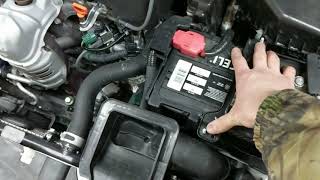
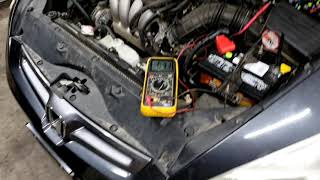
![Parasitic Amp Draw Test 1999 Honda Accord [Part 2 of 3]](https://img.youtube.com/vi/zOKO59_MkBg/mqdefault.jpg)
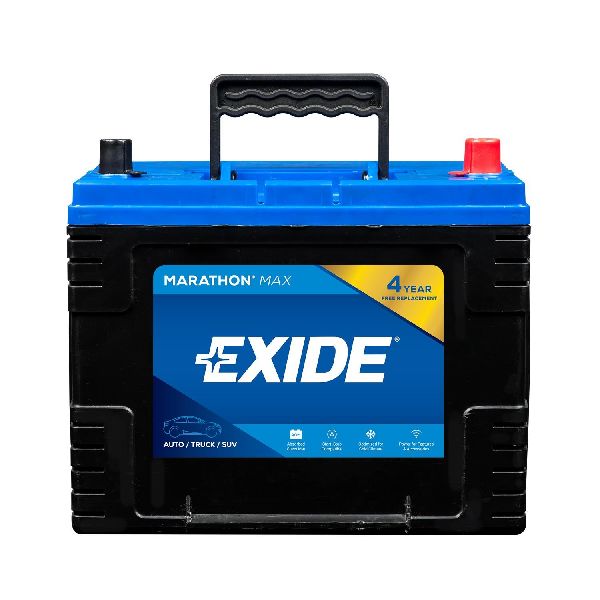
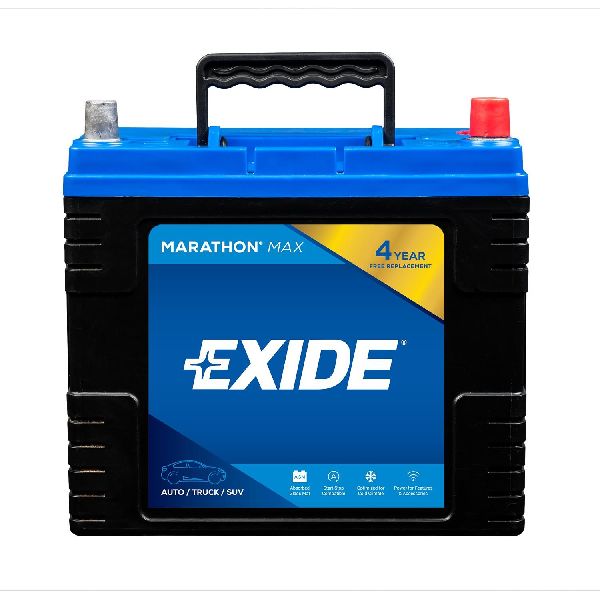
We Have This Part in Stock


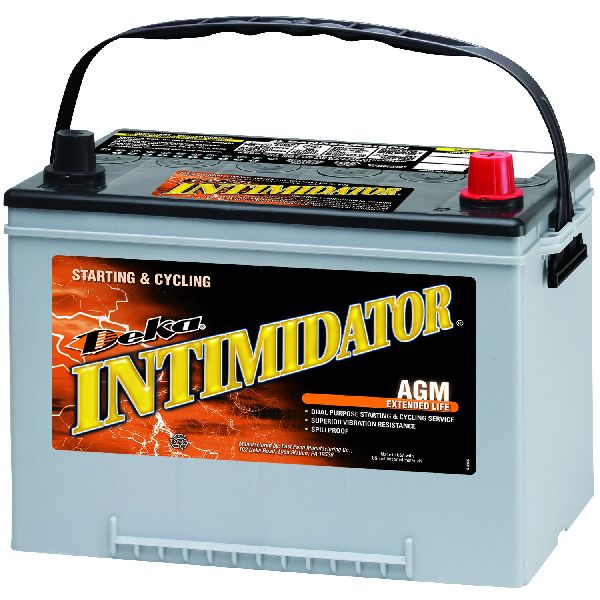
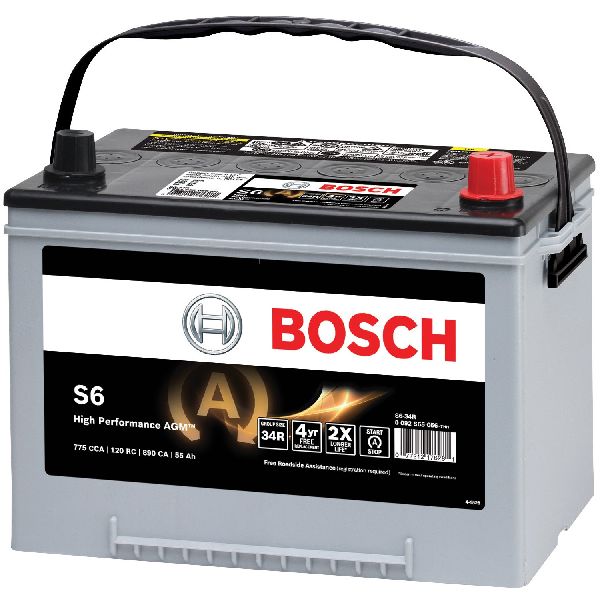

The information in this article is provided for general reference and educational purposes only. Vehicle specifications, procedures, and part compatibility can vary by production date, trim level, and region. Always consult your vehicle's factory service manual and verify part numbers before purchasing or performing repairs. Safety-critical components such as airbags, seat belts, and braking systems should be installed by a qualified professional.
- Honda Accord:
- 🧭 Diagnostic Flowchart
- 🎬 Helpful Videos
- 🛍️ Shop This Part
- What's Unique About the 2008-2017 Honda Accord
- Symptoms You May Notice
- Most Likely Causes
- Rare But Worth Checking
- Diagnosis Steps
- Parts You'll Likely Need
- Related Codes That Often Appear With This One
- Technical Service Bulletins (TSBs) & Recalls
- Platform-Specific Known Issues
- Mechanic-Grade Diagnostic Values
- Scan Tool Commands That Help
- Wiring & Ground Locations
- Real Owner Repair Stories
- OEM Part Supersession History
- Model Year Variations Within This Range
- Other Known Issues on This Vehicle
- Used vs. New Parts: Buying Guide for This Vehicle
- Real Owner Stories
- 2007 Honda Accord — ~120000 miles
- 2013-2016 Honda Accord V6
- 9th Gen Honda Accord 4-Cylinder — ~45000 miles
- Related OBD-II Codes
- Frequently Asked Questions
- 🎟️ Get 5% Off