

P2568 on 2009-2015 VW Jetta 2.0TSI: Radiator Identification Sensor Fault Guide
On a 2.0TSI Jetta, P2568 means a problem with the Radiator Identification Sensor (G611), not a catalyst. This is often caused by a failed sensor, using an aftermarket radiator, or a faulty water pump/thermostat. The official fix is a new OEM radiator (~$400+), as the sensor isn't sold separately by VW. Some owners have successfully used a spliced Mercedes sensor as a workaround.
- P2568 on a 2.0TSI Jetta is for the Radiator Identification Sensor (G611), not an exhaust catalyst.
- Do not install an aftermarket radiator on this vehicle, as it will cause this code. You must use a genuine VW radiator with the PremAir® coating.
- If you have other cooling system symptoms like overheating or erratic temperature readings, the actual problem may be a failing water pump/thermostat, not the radiator sensor.
- The official fix is an expensive radiator replacement, but a DIY-savvy owner may be able to replace just the sensor by adapting a similar part from Mercedes-Benz.
What's Unique About the 2009-2015 Volkswagen JETTA
Volkswagen uses the P2568 code for a unique purpose that often confuses technicians and owners. Instead of a typical exhaust catalyst sensor, it relates to a special 'PremAir®' radiator coating used to meet specific emissions standards (Super Ultra-Low Emission Vehicle or SULEV), particularly in states like California. The sensor (G611) communicates with the ECM via an encrypted LIN bus signal to prevent tampering or the use of incorrect, non-coated aftermarket radiators. This system is particularly common on the CBFA engine variant, which was built to meet stricter emissions requirements and has an extra temperature sensor on the water pump that the CCTA engine lacks.
Diagnostic Flowchart
Tap your situation to follow the diagnostic path that matches what you're seeing on this vehicle.
Generation note: This issue affects both the Mk5 Jetta (2009-2010) and the Mk6 Jetta (2011-2015) when equipped with the 2.0L TSI (CCTA/CBFA) engine. It is most prevalent on the CBFA engine due to its SULEV emissions equipment.
Symptoms You May Notice
- Check Engine Light is on
- Inability to pass an emissions test
- Potential for engine overheating or incorrect temperature gauge readings.
- In some cases, reduced engine boost.
- Loud or excessive cooling fan operation.
- Temperature gauge dropping unexpectedly after reaching operating temperature.
- Replacing oxygen (O2) sensors. The code's generic definition mentions 'catalyst', misleading people to look at the exhaust system. 🎬 See a detailed explanation of why the P2568 code is so confusing.
- Assuming the radiator is fine. Many replace the sensor only to find the code returns because an aftermarket radiator was previously installed.
- Replacing the radiator when the water pump/thermostat is the actual cause of the slow warm-up time that triggered the code.
Most Likely Causes
- Faulty Radiator Identification Sensor (G611) 🔴 High Probability → Shop Radiator The sensor is an electronic component exposed to heat, vibration, and potential road debris at the front of the vehicle, making it susceptible to failure over time. Physical contact with an aftermarket intercooler can also cause damage.
How to confirm: Diagnose with a VW-specific scan tool (like VCDS) to confirm the G611 fault. Visually inspect the sensor and its wiring harness for damage. The sensor is located on the driver's side of the radiator. The fault may appear intermittently, especially with temperature changes.
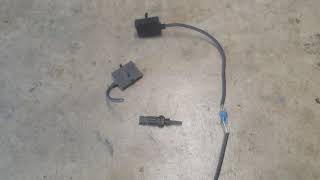
Typical fix: Officially, the entire radiator must be replaced with an OEM unit. Unofficially, some owners replace just the sensor, often adapting a similar part from Mercedes-Benz (Part No. 221905560080) by splicing the VW connector onto it.
Est. part cost: $250-$500 (for OEM radiator with sensor) - Aftermarket or Incorrect Radiator Installed 🔴 High Probability → Shop Radiator Owners or shops may unknowingly install a cheaper, aftermarket radiator that does not have the special PremAir® coating or the G611 sensor, immediately triggering the code.
How to confirm: Check the part number on the installed radiator or look for the G611 sensor and its wiring. If it's missing or an aftermarket brand, the wrong radiator is installed. An owner on a forum reported that even after installing an OEM radiator, the code returned, suggesting other issues can be at play.
Typical fix: Replace the aftermarket radiator with a genuine OEM Volkswagen radiator that supports the PremAir® system.
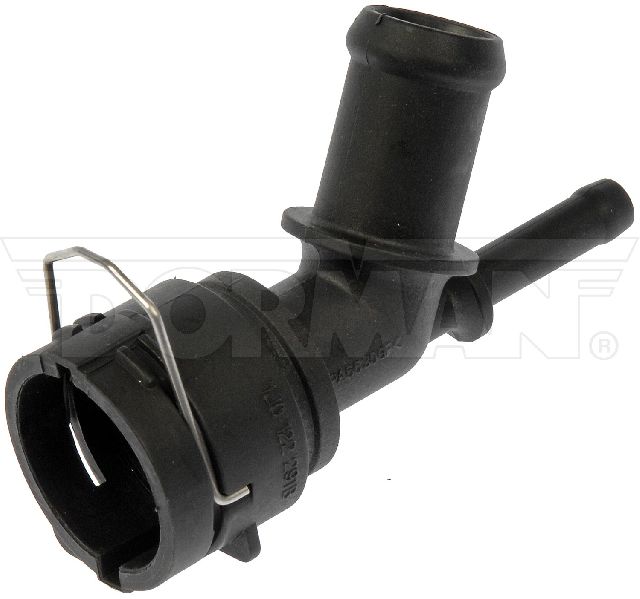
Est. part cost: $250-$500 - Failing Water Pump or Thermostat 🟡 Medium Probability → Shop Integrated Thermostat Housing Assembly The 2.0TSI engine is known for water pump and thermostat housing failures. The CBFA engine has an extra sensor on the water pump. The ECM compares warm-up times between the G611 radiator sensor and other coolant sensors. A failing thermostat can cause a slow warm-up, triggering a P2568 code even if the radiator and G611 sensor are fine.
How to confirm: Monitor engine coolant temperature during warm-up. If the temperature drops unexpectedly or takes an excessively long time to reach operating temp, the thermostat is likely failing. Look for signs of coolant leaks around the water pump housing. Some owners report getting P2568 immediately after replacing only the water pump, suggesting the new and old sensors have drifted out of tolerance with each other.
Typical fix: Replace the water pump and thermostat assembly. On these engines, they are typically replaced as a single unit. Ensure the correct part for the CBFA engine (with the extra sensor) is used.
Est. part cost: $200-$450 - Damaged Sensor Wiring or Connector 🟡 Medium Probability The sensor's wiring is located at the front of the car and can be damaged by road debris, improper service, or contact with the cooling fan.
How to confirm: Perform a visual inspection of the wiring harness leading to the G611 sensor. Check for broken wires, corrosion in the connector, or chafing. A Ross-Tech forum user detailed checking for continuity between the sensor connector pins and the ECM.
Typical fix: Repair the damaged section of the wiring harness or replace the connector pigtail.
Est. part cost: $15-$50
Rare But Worth Checking
- Improper Sensor Installation: When a new OEM radiator is installed, the G611 sensor often comes packaged separately and must be bonded to the radiator with a specific adhesive (VW Part #AMV 195 KD1 01). Failure to do this correctly, or using a generic thermal paste, can cause the fault to return. One user on a Ross-Tech forum noted that VW may have discontinued the adhesive, and that Loctite 4204 is used by Mercedes and BMW for the same purpose.
- Engine Control Module (ECM) Fault: → Shop Engine Control Module (ECM) In very rare cases, the ECM itself may have a fault in the monitoring circuit. This should only be considered after all other possibilities have been exhausted.
- PZEV Warranty Coverage: For vehicles in certain regions, this specific issue may be covered under a PZEV (Partial Zero Emissions Vehicle) extended warranty for up to 15 years or 150,000 miles. It is worth checking with a VW dealer, as a successful claim results in a free OEM radiator replacement.
Diagnosis Steps
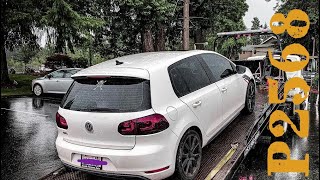
- Scan the vehicle with a VW-specific tool (like VCDS) to confirm P2568 and check for any other related fault codes like P2181, U102F, or U102E. 🎬 Watch this video to see how these communication codes relate to the radiator.
- Verify the vehicle has a 2.0L TSI engine, specifically checking if it is the CBFA variant, which is more prone to this issue.
- Inspect the radiator. Determine if it is a genuine VW part or an aftermarket unit. Look for the G611 sensor mounted on the driver's side of the radiator.
- Inspect the G611 sensor's wiring harness and connector for any visible damage, corrosion, or loose connections. Test for power, ground, and signal continuity back to the ECM if necessary.
- Monitor the engine's warm-up cycle. Watch the coolant temperature gauge for any erratic behavior, such as dropping after reaching operating temperature, which points to a faulty thermostat.
- If a new radiator was recently installed, confirm the G611 sensor was transferred and properly bonded to the new unit with the correct adhesive.
- If the water pump/thermostat is suspected, check for coolant leaks in that area. Replacing the water pump assembly is a common fix for related cooling system codes.
- Check with a VW dealer using your VIN to see if the PZEV extended emissions warranty (15yr/150k miles) applies to your vehicle for this specific fault.
Parts You'll Likely Need
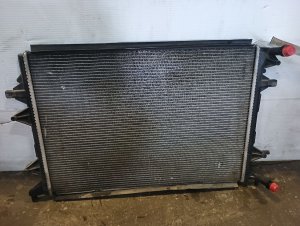
- Radiator with PremAir Coating
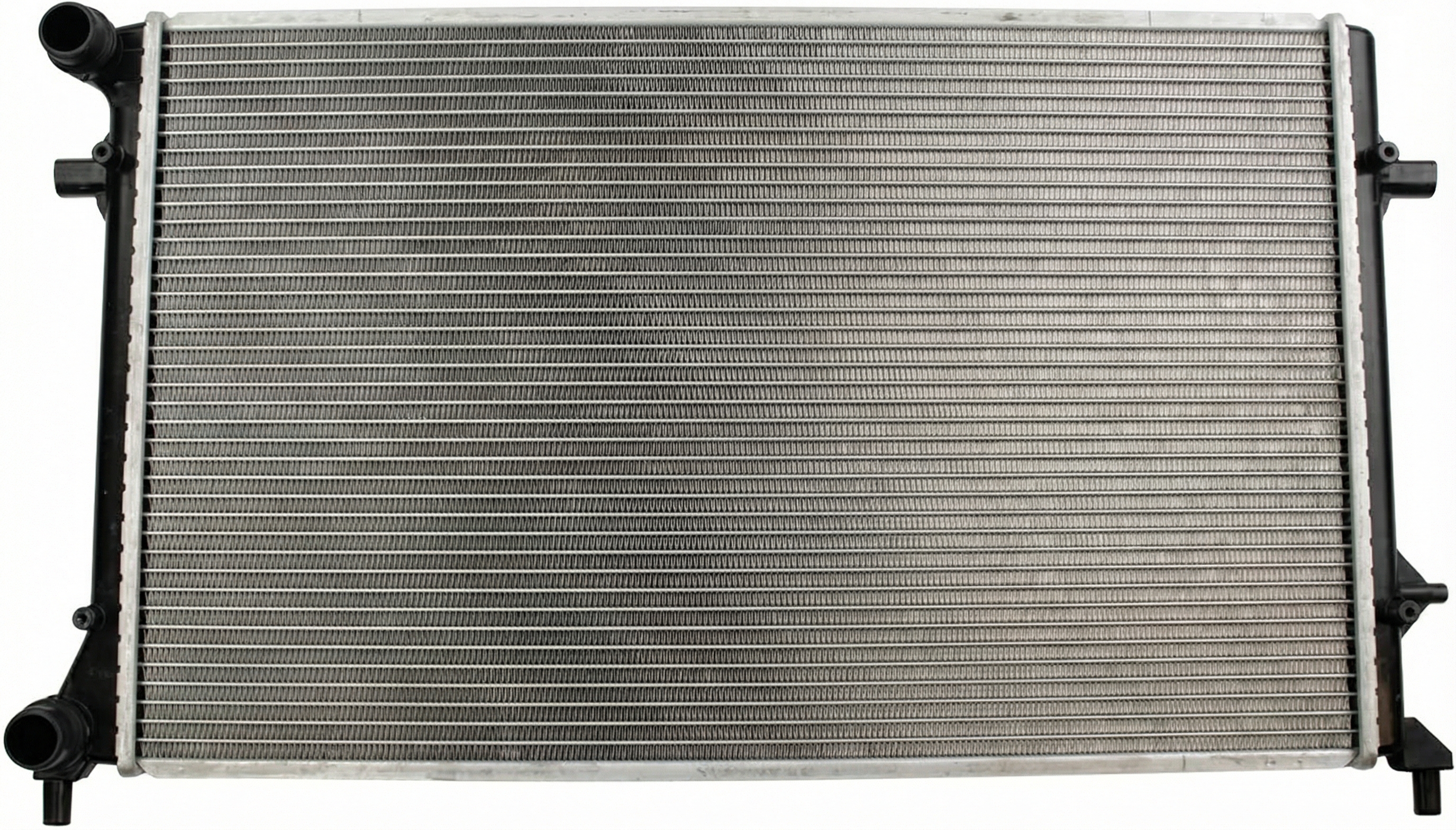
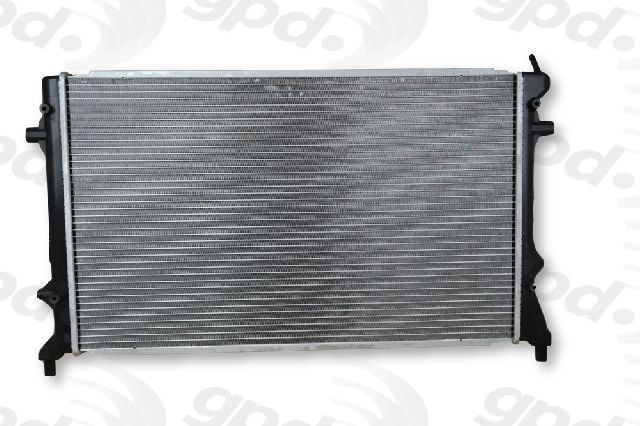
(OEM #Varies by VIN, e.g., 5K0121251J)— This is the official VW-mandated fix, as the G611 sensor is not sold separately by VW and is required for the emissions system. This is necessary if an incorrect aftermarket radiator is installed or if the sensor itself has failed.
Trusted brands: Volkswagen Genuine
OEM price range: $250-$500
Aftermarket price range: N/A (Aftermarket will cause the code) - Water Pump & Thermostat Assembly
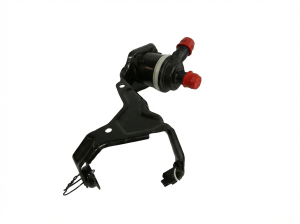
(OEM #06J121026BG (for CBFA))— A failing thermostat can cause implausible temperature readings that trigger P2568. On the 2.0TSI, the pump and thermostat are replaced as one unit. This is a common failure point. Ensure the CBFA-specific part with the extra sensor is used.
Trusted brands: Volkswagen Genuine, INA, Graf, Hepu
OEM price range: $350-$450
Aftermarket price range: $150-$250 - Radiator Identification Sensor (G611)
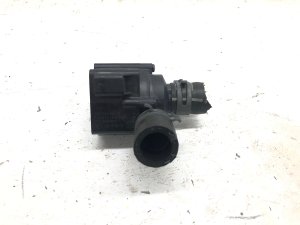
(OEM #221905560080 (Mercedes part))— For DIY repair, some owners have successfully adapted this Mercedes sensor by splicing the VW connector onto it, avoiding the cost of a full radiator replacement. The wiring colors are reportedly identical. An aftermarket version, URO Parts 8P4965873A, is also available but has mixed reviews.
Trusted brands: Mercedes-Benz Genuine, URO Parts
OEM price range: $80-$120
Aftermarket price range: $60-$90
Related Codes That Often Appear With This One
- P2181 — This code indicates a 'Cooling System Performance' issue. It often appears alongside P2568 when the root cause is a failing thermostat or water pump, as both codes relate to implausible temperature readings or warm-up times.
- U102F / U102E — These are manufacturer-specific codes indicating 'No Communication with Radiator Identification Sensor' or 'Implausible Signal'. They directly point to a failure of the G611 sensor or its circuit and often appear with P2568 when using a VW-specific scan tool.
Technical Service Bulletins (TSBs) & Recalls
- TT 19-12-01: Clarifies that P2568 refers to the G611 Radiator Identification Sensor on 2.0L TSI engines and notes that the sensor must be bonded to a replacement radiator.
Platform-Specific Known Issues
- Volkswagen TSB TT 19-12-01 explicitly identifies P2568 on 2.0L TSI engines as a fault with the G611 Radiator Identification Sensor and notes the sensor must be bonded to a new radiator.
- The G611 sensor is intentionally designed to be non-removable without causing damage to prevent tampering with the emissions system.
- The CBFA engine variant has an additional temperature sensor on the water pump, creating a complex relationship between the pump's health and the P2568 code that the CCTA engine doesn't have.
- Some owners report that replacing just one sensor (either on the water pump or the radiator) can trigger the P2568 code, theorizing that the ECM detects a significant difference between the new sensor and the remaining old, degraded sensor.
Helpful Videos
Used OEM Parts in Stock

New Aftermarket Parts Available

The information in this article is provided for general reference and educational purposes only. Vehicle specifications, procedures, and part compatibility can vary by production date, trim level, and region. Always consult your vehicle's factory service manual and verify part numbers before purchasing or performing repairs. Safety-critical components such as airbags, seat belts, and braking systems should be installed by a qualified professional.
- Volkswagen JETTA:
- 🧭 Diagnostic Flowchart
- 🎬 Helpful Videos
- 🛍️ Shop This Part
- What's Unique About the 2009-2015 Volkswagen JETTA
- Symptoms You May Notice
- Most Likely Causes
- Rare But Worth Checking
- Diagnosis Steps
- Parts You'll Likely Need
- Related Codes That Often Appear With This One
- Technical Service Bulletins (TSBs) & Recalls
- Platform-Specific Known Issues
- 🎟️ Get 5% Off