

P2610 on 2006-2010 Hyundai Sonata 3.3L: Engine Off Timer Fault Causes and Fixes
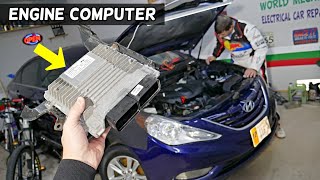
On a 2006-2010 Sonata 3.3L, code P2610 almost always means the main engine computer (PCM/ECM) has failed internally. The most common fix is replacing the PCM, which can cost between $350 and $1100. Before replacement, check for software updates and verify PCM power and ground connections, especially the 'keep-alive' memory circuit.
- P2610 on a 2006-2010 Sonata 3.3L strongly points to a failed engine computer (PCM).
- Your car will drive, but you will fail any required emissions inspection.
- Before replacing the PCM, always check for software updates and verify power and ground circuits.
- A hot-soak no-start condition is a known secondary symptom that often gets resolved with the PCM replacement.
What's Unique About the 2006-2010 Hyundai Sonata
For the fifth-generation (NF) Hyundai Sonata and its platform mates with the 3.3L Lambda V6, the P2610 code is a strong indicator of an internal Powertrain Control Module (PCM) failure. While on other vehicles this code could be triggered by a faulty coolant sensor or wiring issue, on this specific Sonata platform, the fault is very often internal to the PCM itself. This can be a software glitch that requires a reflash or, more commonly, a hardware failure within the module that necessitates its replacement.
Symptoms You May Notice
- Check Engine Light is on.
- Vehicle will fail an emissions test.
- Potential for hard starting or no-start conditions, especially when the engine is hot (hot-soak).
- In rare cases, erratic behavior of automatic shut-off functions.
- Replacing the battery without load testing it first.
- Replacing external sensors like the Engine Coolant Temperature sensor before verifying PCM power, grounds, and software status.
Most Likely Causes
- Internal PCM Failure 🔴 High Probability The Lambda V6 platform from this era has documented instances of PCM hardware failure, often presenting with P2610 and the related P0606 or P0605 codes, strongly indicating a faulty module.
How to confirm: This is a diagnosis of exclusion. If all power, ground, and wiring checks pass, and a software update doesn't resolve the issue or isn't available, the PCM is condemned. A hard reset (disconnecting the battery for 30 minutes) that results in the code immediately returning is a strong indicator of a permanent hardware fault.
Typical fix: Replace the Powertrain Control Module (PCM/ECM). The new module must be programmed to the vehicle's VIN and security system.
Est. part cost: $300-$800 - PCM Software/Calibration Issue 🟡 Medium Probability Manufacturers often release software updates to fix logic bugs. Hyundai released TSB 10-FL-002 for this vehicle's PCM to address hard starting and rough idle, which confirms that software updates are a known repair path for this module. While no TSB is specifically for P2610 on this model, it's a valid diagnostic step.
How to confirm: A Hyundai dealership or a qualified shop with a factory-level scan tool (GDS) can check the current software calibration ID against the latest version available from Hyundai.
Typical fix: Reprogram (reflash) the PCM with the latest software version. This must be done by a dealer or a properly equipped independent shop.
Est. part cost: $0-$200 - Poor PCM Power or Ground Connection ⚪ Low Probability
How to confirm: Inspect the battery terminals for corrosion and tightness. Load test the battery to ensure it's healthy. Using a multimeter and wiring diagram, check for stable battery voltage at the PCM's 'keep-alive' memory pin, which receives constant power even when the ignition is off. A loss of voltage on this specific pin will cause the PCM to lose its 'engine off' memory and trigger P2610.
Typical fix: Clean or repair corroded terminals, tighten loose connections, or replace a weak battery.
Est. part cost: $0-$250
Rare But Worth Checking
- Faulty Engine Coolant Temperature (ECT) Sensor: While rare on this platform, a faulty ECT sensor can theoretically confuse the PCM's timer logic, which uses temperature data to determine engine-off soak time. This would typically be accompanied by other ECT-related codes like P0117.
Diagnosis Steps
- Scan the vehicle for any other trouble codes. Address codes related to power supply (like P0562) or other module faults (like P0606, P0605) first.
- Check for Technical Service Bulletins (TSBs). Contact a Hyundai dealer with your VIN to see if a PCM software update is available. Reference TSB 10-FL-002 as an example of a software update for this PCM that addresses other logic issues.
- Inspect the battery, terminals, and charging system. Ensure the battery is fully charged (above 12.2V engine off), holds a load, and that the terminals are clean and tight.
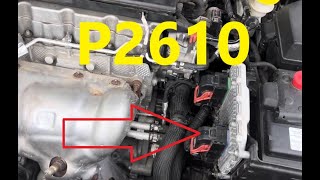
- Verify PCM power and ground circuits. Using a wiring diagram, check for constant voltage at the PCM's 'keep-alive' memory pin and ensure all ground connections are clean and secure. A loss of this constant power is a direct cause. 🎬 Watch: Diagnosing P2610 causes and fixes
- If all external wiring, power, and grounds are good and no software update is available or applicable, the PCM is highly likely to be faulty.
- Replace the PCM. The new module will require programming by a dealership or a specialized repair shop.
Parts You'll Likely Need
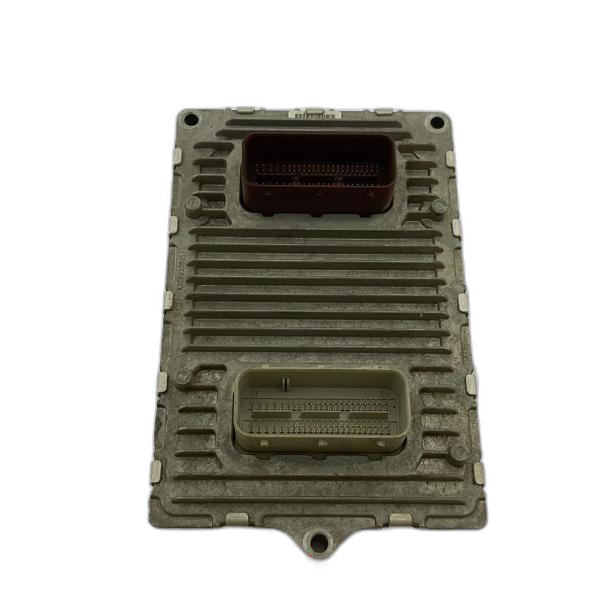
- Powertrain Control Module (PCM/ECM)
(OEM #Examples include 39110-3C760. Part numbers are VIN-specific; always verify with a dealer.)— This is the most common cause of code P2610 on this specific vehicle due to a known pattern of internal hardware failure.
Trusted brands: Hyundai (OEM), Cardone (Remanufactured), Flagship One (Pre-programmed)
OEM price range: $800-$1200
Aftermarket price range: $300-$800
Related Codes That Often Appear With This One
- P0606 — This code for 'ECM/PCM Processor Fault' is a more general internal computer failure. If seen with P2610, it strongly reinforces the diagnosis that the PCM has failed and needs replacement.
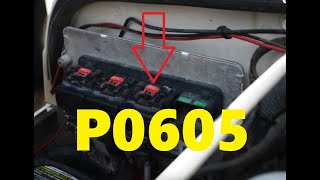
- P0605 — This code for 'Internal Control Module Read Only Memory (ROM) Error' is another self-test failure that points directly to a faulty PCM. It is often seen with P2610 on platform mates like the Santa Fe. 🎬 Watch: Understanding P0605 internal ROM errors
- P0562 — This code indicates 'System Voltage Low'. It can appear with P2610 if a weak or failing battery is the underlying cause of the electrical issue confusing the PCM's timer.
Technical Service Bulletins (TSBs) & Recalls
- Hyundai TSB 10-FL-002: This bulletin provides a PCM software update for 2006-2010 Sonata 3.3L vehicles to resolve issues like hard starting, rough idle, and DTC P161B. While not directly for P2610, it confirms that software revisions are a known and valid repair path for PCM logic problems on this exact vehicle, making a software check a critical diagnostic step.
Mechanic-Grade Diagnostic Values
- Battery Voltage (Key OFF) — expected: 12.4V - 12.8V. Failure: Below 12.3V suggests a weak battery that can cause various electrical faults, including P2610.
- Charging System Voltage (Engine Running at Idle) — expected: 13.5V - 14.5V. Failure: Voltage outside this range points to a faulty alternator or voltage regulator, which can create electrical instability for the PCM.
- PCM Keep-Alive Memory Pin Voltage — expected: Should be equal to battery voltage at all times, even with the key off.. Failure: A loss of voltage on this pin, likely due to a corroded wire or blown fuse, will directly cause the PCM to lose its memory and trigger P2610.
- Engine Coolant Temperature (ECT) Sensor Resistance — expected: 2,000 to 3,000 Ohms (2.0kΩ - 3.0kΩ) at 68°F (20°C).. Failure: A reading significantly outside this range or an open circuit (no reading) indicates a faulty sensor.
Scan Tool Commands That Help
- Hyundai GDS (Global Diagnostic System): ECU Upgrade (Reprogramming) — Use this function before condemning the PCM. It checks the current ROM ID of the software and allows you to flash the latest version from Hyundai, which may fix logic errors causing P2610.
- Hyundai GDS (Global Diagnostic System): VIN Input / Immobilizer Programming — This function is mandatory after installing a new or used PCM. It writes the car's VIN to the module and synchronizes it with the vehicle's security keys. The engine will not start without performing this step.
Wiring & Ground Locations
- Engine Ground (Ghg01) — On the left side of the engine compartment (driver's side in LHD models), typically a strap from the chassis to the engine block or transmission.. A poor main engine ground can cause unstable voltage and erratic behavior from the PCM. This is a primary ground point to inspect for corrosion and tightness when diagnosing any PCM-related code.
- PCM Keep-Alive Power Pin — Varies by specific PCM connector and year; requires a vehicle-specific wiring diagram. For example, on some Hyundai models, this is Pin 5 or 6 on the main ECM connector.. This specific pin must have constant battery voltage to maintain the PCM's internal clock and memory when the engine is off. A voltage drop or loss on this circuit is a direct cause of P2610.
Real Owner Repair Stories
- Hyundai-Forums.com (2006 Hyundai Sonata 3.3L) — P2610 code present, accompanied by a no-start condition only when the engine was hot (hot-soak).
❌ Tried (didn't work) Initial diagnosis pointed towards various sensors, but the owner was advised the PCM was the likely cause.
✅ What actually fixed it The owner replaced the PCM with a remanufactured unit. This single repair resolved both the P2610 code and the hot-soak no-start problem.
OEM Part Supersession History
39110-3C760→39110-3C761, 39110-3C762, 39110-3C763, 39110-3C764— Internal revisions and software updates by the manufacturer to improve reliability or address bugs.
Heads up: While these part numbers are listed as interchangeable, it is critical to ensure the replacement module is programmed for the vehicle's specific VIN and immobilizer system. A module from a vehicle without an immobilizer will not work in a vehicle that has one, and vice-versa.39110-3C765→Unknown— Production split.
Heads up: Part number 39110-3C765 is specified for 3.3L V6 models built up to March 5, 2009. Vehicles built after this date may use a different part number. Always physically verify the number on the original unit before ordering a replacement.
Model Year Variations Within This Range
- 2009-2010: The Sonata received a mid-cycle refresh for the 2009 model year. This included changes to the electronics. There was a production split for the 3.3L V6 ECM in early 2009, meaning a 2008 ECM may not be compatible with a late-2009 vehicle, even with the same engine. Verifying the OEM part number on the original module is essential.
Diagnostic Flowchart
Other Known Issues on This Vehicle
Issues unrelated to this code that are worth knowing about as an owner of this generation:
- Timing Chain Tensioner Failure 🔴 High — Common issue. Often presents as a 2-5 second rattle on cold startup. Failure can lead to chain stretch or jumping teeth, causing catastrophic engine damage. (Ref: No official recall, but it is a widely documented problem in owner forums and by technicians.)
- Leaking Valve Cover Gaskets 🟠 Medium — Very common as the vehicle ages. The front gasket is known to leak oil directly onto the alternator, causing premature alternator failure. The rear gasket is labor-intensive to replace.
- High Oil Consumption 🟠 Medium — Tends to occur on higher-mileage (100k+ miles) engines, often attributed to piston rings sticking.
- Transmission Slamming into 3rd Gear (Fail-Safe) 🔴 High — Often reported in conjunction with PCM failure codes like P0606. The transmission enters a limp mode, which can be a safety hazard. This is a symptom of the PCM failing, not a separate transmission problem.
Used vs. New Parts: Buying Guide for This Vehicle
When a used part is the smart pick: A used PCM from a reputable salvage yard or online retailer is a very cost-effective option for this repair, often saving hundreds of dollars over a new OEM unit. However, this only makes sense if you have a confirmed plan for programming.
Donor-vehicle mileage cap: roughly under 80000 miles for the part to have meaningful remaining life.
What to inspect on the donor part:
- Verify the part number on the donor PCM EXACTLY matches your original module.
- Inspect the donor unit for any signs of physical damage, corrosion on the case, or bent/corroded connector pins.
- Purchase from a seller that offers a warranty, even if it's only 30-90 days, to protect against receiving a dead-on-arrival unit.
OEM-only on this vehicle (don't cheap out):
- For this specific repair, the PCM itself is the primary component. While a used OEM unit is viable, new aftermarket units are not widely available. Remanufactured units from reputable brands are the most common alternative to used.
Aftermarket brands forum-validated for this vehicle:
- Cardone (Remanufactured)
- Flagship One (Pre-programmed service has mixed but many positive reviews; they are often a source for obsolete modules).
Brands owners have reported issues with on this vehicle:
- Unbranded, no-name modules from online marketplaces should be avoided due to high failure rates and lack of support.
Real Owner Stories
Aggregated from forums and TSBs cited above. Mileages and costs reflect what owners reported in those sources.
2006 Sonata 3.3L
Symptoms: P2610 code and a hot-soak no-start condition (no-start after the engine was hot and parked for a short time).
What fixed it: Replaced the PCM with a remanufactured unit after verifying the battery and connections were good.
Source hint: Hyundai-Forums.com: 'P2610 and hot no start'
2008 Hyundai Santa Fe 3.3L
Symptoms: Vehicle presented with codes P0605 and P2610.
What fixed it: Replacement of the ECM (PCM) after all external wiring, power, and ground checks passed.
Source hint: iATN (International Automotive Technicians Network)
Related OBD-II Codes
Frequently Asked Questions
Does Hyundai TSB 10-FL-002 apply to my 3.3L Sonata's P2610 code?
Can a weak battery cause a P2610 on my Sonata?
My Sonata is slamming into 3rd gear and has a P2610; is my transmission failing?
If I replace the PCM myself to fix P2610, will it work immediately?
Is there a way to tell if my Sonata's PCM hardware is permanently failed?
Are there other Hyundai models that have this same PCM issue?
Helpful Videos
We Have This Part in Stock

The information in this article is provided for general reference and educational purposes only. Vehicle specifications, procedures, and part compatibility can vary by production date, trim level, and region. Always consult your vehicle's factory service manual and verify part numbers before purchasing or performing repairs. Safety-critical components such as airbags, seat belts, and braking systems should be installed by a qualified professional.
- Hyundai Sonata:
- 🧭 Diagnostic Flowchart
- 🎬 Helpful Videos
- 🛍️ Shop This Part
- What's Unique About the 2006-2010 Hyundai Sonata
- Symptoms You May Notice
- Most Likely Causes
- Rare But Worth Checking
- Diagnosis Steps
- Parts You'll Likely Need
- Related Codes That Often Appear With This One
- Technical Service Bulletins (TSBs) & Recalls
- Mechanic-Grade Diagnostic Values
- Scan Tool Commands That Help
- Wiring & Ground Locations
- Real Owner Repair Stories
- OEM Part Supersession History
- Model Year Variations Within This Range
- Other Known Issues on This Vehicle
- Used vs. New Parts: Buying Guide for This Vehicle
- Real Owner Stories
- 2006 Sonata 3.3L
- 2008 Hyundai Santa Fe 3.3L
- Related OBD-II Codes
- Frequently Asked Questions
- 🎟️ Get 5% Off