

P2610 on 2009-2015 Hyundai Tucson: Engine Off Timer Performance Causes and Fixes
On a 2009-2015 Tucson, code P2610 means the engine's computer has a faulty internal clock. Before replacing the expensive computer (ECM), first have the battery and charging system professionally tested, as low voltage is a very common cause. If the power supply is good, and no software update is available from a dealer, the ECM itself has likely failed.
- P2610 means the engine computer's internal clock has failed, which will cause the vehicle to fail an emissions test.
- The most common cause is not the computer itself, but a weak battery or bad connection. Always perform a professional battery load test first.
- If the battery is good, ask a dealer to check for an ECM software update before replacing the expensive module.
- Only when power supply and software are ruled out should the ECM be replaced.
What's Unique About the 2009-2015 Hyundai Tucson
For this generation of Hyundai, the P2610 code is a straightforward electrical or module fault. Unlike some vehicles where this code is frequently tied to a simple software bug (though this should still be checked), on the Tucson it more often points to either a fundamental power supply issue (a weak battery) or an actual hardware failure within the Engine Control Module (ECM). While a software update should always be investigated with a dealer, owners should be prepared for a diagnosis that points to either the battery or the ECM itself as the root cause.
Generation note: The 2009-2015 range covers two Tucson generations: the first generation (JM), which ended with the 2009 model year, and the second generation (LM), which ran from 2010-2015. The diagnostic principles are the same, but specific ECM part numbers will differ between these generations and engine types. For example, 2.4L models from 2014-2015 use a different series of ECMs than earlier models.
Symptoms You May Notice
- Check Engine Light is illuminated.
- Vehicle will fail an emissions test because readiness monitors cannot be completed.
- In rare, advanced cases, it could lead to reduced engine performance or fuel efficiency.
- Delayed or malfunctioning start-stop system engagement (if equipped).
- Accessories (like radio or interior lights) staying on longer than usual after the engine is turned off.
- Occasional longer crank times or unstable idle immediately after starting.
- Immediately replacing the ECM without first professionally load-testing the battery and checking for available software updates. A weak battery is a very common and much cheaper cause of this code.
Most Likely Causes
- Weak or Failing Battery / Poor Connections 🔴 High Probability → Shop Vehicle Battery The ECM's internal memory and timer require constant and stable voltage to function. An aging battery that drops below optimal voltage (e.g., under 10.5V) during cranking or sitting can corrupt the timer's memory, triggering the code. This is a very common cause across many Hyundai models.
How to confirm: Perform a professional load test on the battery; a simple voltage check is not sufficient. Inspect battery terminals and main ground connections for corrosion or looseness. Check voltage at the ECM connector to ensure it's stable and above 12.2V with the engine off.
Typical fix: Replace the battery and clean all connection points thoroughly.
Est. part cost: $150-$250 - Internal Engine Control Module (ECM) Failure 🟡 Medium Probability → Shop Engine Control Module (ECM) The internal timer circuit within the ECM can fail due to age, heat, or internal component degradation like solder joint cracks. This is a known failure mode for this code when power supply issues are ruled out.
How to confirm: This is diagnosed by exclusion. If the battery, charging system, and all related wiring are confirmed to be in perfect condition, and no software update is available, the ECM itself is the source of the fault. A technician may also see related codes like P0606 (ECM Processor Fault).
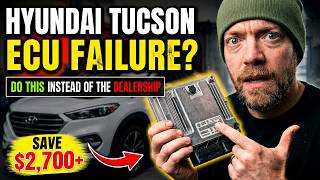
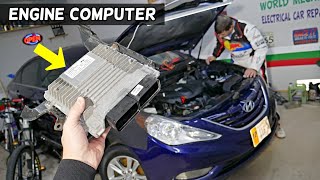
Typical fix: Replace the Engine Control Module. The new module must be programmed to the vehicle's VIN and immobilizer system by a dealer or qualified shop. Remanufactured, pre-programmed units are also available. 🎬 See how to handle Hyundai ECU replacement yourself
Est. part cost: $800-$2200 - Outdated ECM Software ⚪ Low Probability Manufacturers sometimes release software updates (reflashes) to fix logic errors that can cause codes like P2610 to be set too sensitively. While no specific TSB for P2610 on the Tucson is widely cited, Hyundai has issued many software updates for other issues, making it a mandatory check.
How to confirm: A Hyundai dealership or a specialized repair shop with access to Hyundai's service database (GDS) can check your vehicle's VIN for any available ECM software updates.
Typical fix: Reprogram the ECM with the latest software. This typically costs one hour of labor.
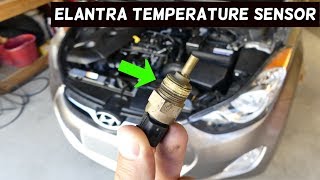
Est. part cost: $100-$250 - Faulty Engine Coolant Temperature (ECT) Sensor ⚪ Low Probability The ECM uses data from the ECT sensor to help verify the engine-off time by tracking how much the engine has cooled. If the sensor provides irrational data (e.g., reading hot when the engine is cold), it can conflict with the internal timer and trigger a fault.
How to confirm: Use a scan tool to monitor the live data from the ECT sensor. If the temperature reading is erratic or illogical (e.g., reading -40°F or 280°F on a cold engine), the sensor is likely bad. This condition will usually set its own codes, like P0117 or P0118. 🎬 Watch: How to replace a Hyundai coolant temperature sensor
Typical fix: Replace the Engine Coolant Temperature sensor.
Est. part cost: $20-$60
Rare But Worth Checking
- ECM Power or Ground Circuit Issue: While less common than a weak battery, a corroded or damaged wire providing power or ground to the ECM can cause the same symptoms. A visual inspection and voltage drop test of the wiring harness to and from the ECM is warranted before replacing the module.
- Aftermarket Electronics Interference: Poorly installed remote starters, alarms, or audio systems can create a parasitic draw or electrical interference that disrupts the ECM's keep-alive power supply, potentially triggering a P2610 code.
Diagnosis Steps
- Scan for any other trouble codes. Address any codes related to system voltage (P0562) or the ECT sensor (P0117, P0118) first.
- Perform a professional load test on the battery. Ensure it is fully charged and healthy. Clean any corrosion from the battery terminals and check that all connections are tight.
- Inspect the alternator charging output to ensure it is within the specification of 13.5-14.5 volts when the engine is running.
- Visually inspect the main power and ground wires for the engine and ECM. Ensure they are secure and free of corrosion or damage. Perform a voltage drop test on these circuits if a visual inspection is inconclusive.
- Contact a Hyundai dealer with your VIN to inquire if there is a software update (reflash) available for the ECM to address P2610 or other logic issues.
- If all the above steps do not resolve the issue, the Engine Control Module (ECM) is the most likely failed component and requires replacement and programming.
Parts You'll Likely Need
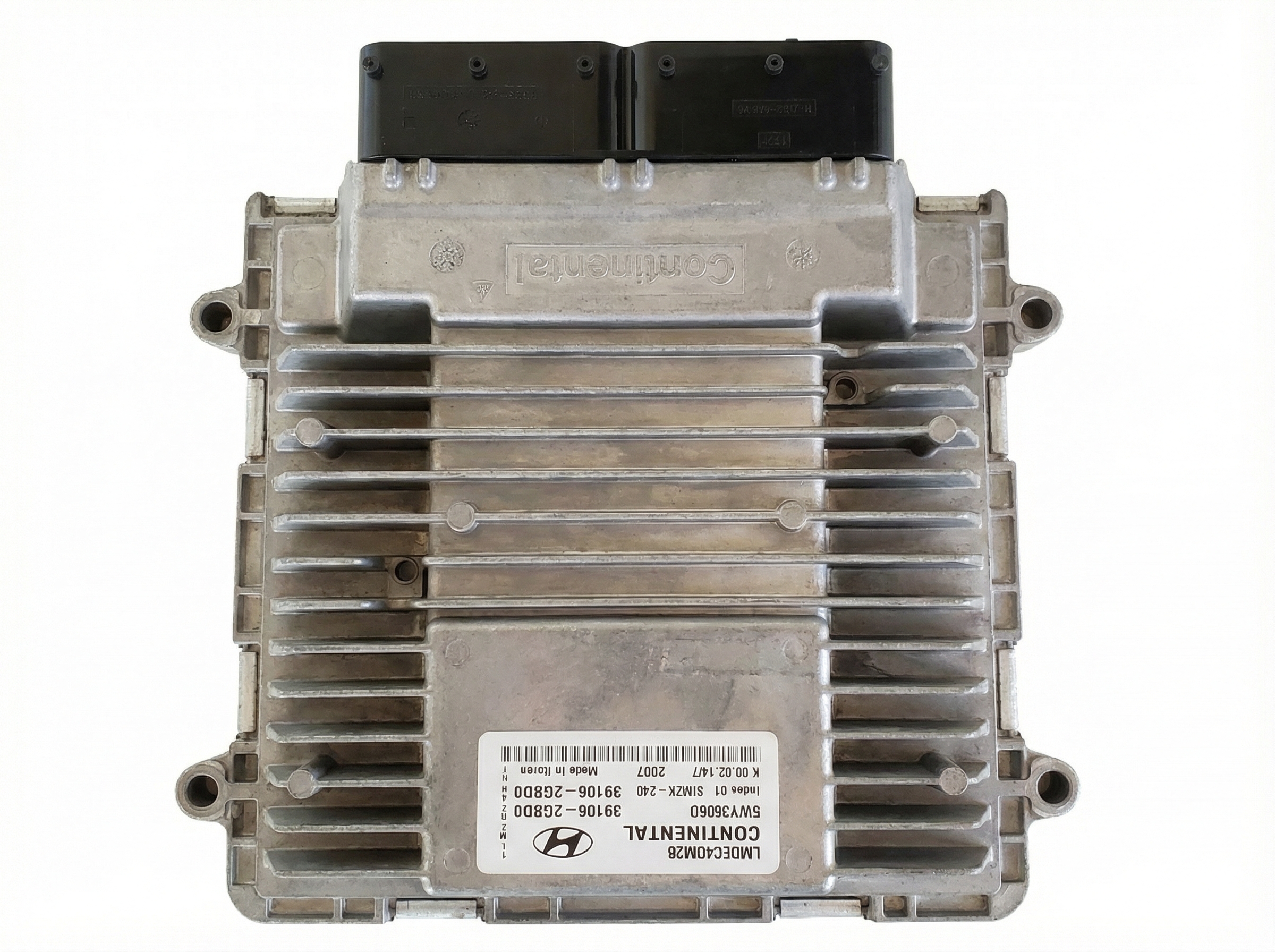
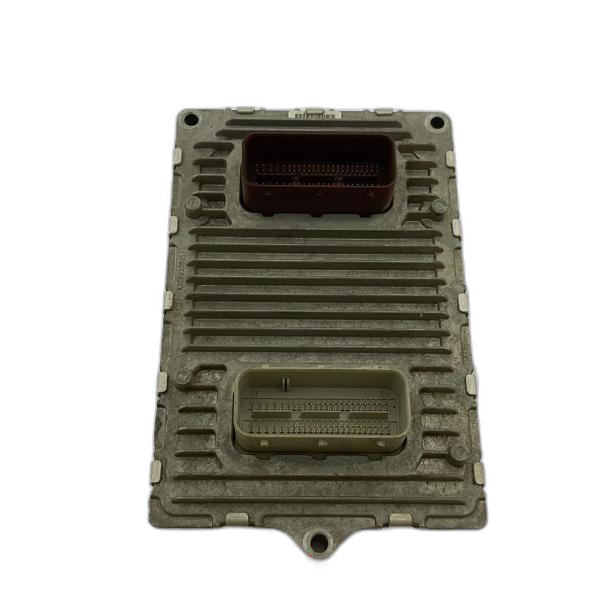
- Engine Control Module (ECM/PCM)
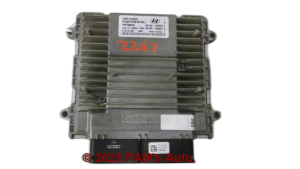
(OEM #39106-2GBD6)— This is the most probable cause if the battery and its connections are confirmed to be good. The internal timer hardware fails within the module. Part numbers are highly specific; always match the number from your original unit. Examples include 39106-2GBD0, 39106-2GBD1, 39106-2GBD2 (2014-15 2.4L) and 39106-2GBD6 (2015 2.4L).
Trusted brands: Hyundai (OEM)
OEM price range: $1200-$2200
Aftermarket price range: $400-$800 (Remanufactured) - Engine Coolant Temperature (ECT) Sensor
(OEM #39220-38030)— A potential but less common cause. If the sensor provides illogical data, it can trigger the P2610 code. It's an inexpensive part to rule out.
Trusted brands: Hyundai (OEM), Bosch, NTK, Delphi
OEM price range: $40-$80
Aftermarket price range: $20-$50
Related Codes That Often Appear With This One
- P0562 — This code indicates 'System Voltage Low'. If you see this with P2610, it strongly suggests a weak battery or failing alternator is the root cause.
- P0117 / P0118 — These codes point to a fault in the Engine Coolant Temperature (ECT) sensor circuit. If present, they suggest the ECT sensor is the likely cause of the P2610 code.
- P0606 — This code for 'ECM/PCM Processor Fault' is a more general internal computer error. Seeing it alongside P2610 reinforces the diagnosis of a failed ECM.
- U0100 — This code for 'Lost Communication With ECM/PCM' can be triggered by severe voltage drops from a bad battery or a faulty ground connection, which are also root causes for P2610.
Technical Service Bulletins (TSBs) & Recalls
- While no specific TSB for P2610 on the 2009-2015 Tucson is widely documented, Hyundai did issue TSB 10-FL-002 for a similar issue on the 2006-2010 Sonata, which was resolved with a software update. This sets a precedent for checking for software updates as a potential fix.
Platform-Specific Known Issues
- ECM Replacement is the Common Final Fix: Forum discussions and repair databases for various Hyundai models, including the related Sonata and Santa Fe, show a pattern where after checking the battery and wiring, the final resolution for a persistent P2610 is replacing the ECM.
Mechanic-Grade Diagnostic Values
- Battery Voltage (Engine Off) — expected: 12.2V or higher. Failure: Below 12.2V suggests a discharged or weak battery that can corrupt the ECM's timer memory.
- Charging System Voltage (Engine Running) — expected: 13.5V to 14.5V. Failure: Voltage below 13.5V or above 14.5V indicates a faulty alternator or regulator, which can cause electrical instability and trigger P2610.
- ECM Internal Timer Deviation Threshold — expected: Less than 2 seconds. Failure: A difference greater than 2 seconds between the Low Power Counter and the test timer will set the code on some Hyundai models.
Scan Tool Commands That Help
- Hyundai GDS (Global Diagnostic System) or compatible J2534 device: ECU Upgrade (Reprogramming) — This is used to apply a software update from Hyundai that may contain logic fixes for the P2610 code. It should be performed after verifying the battery and wiring but before replacing the ECM.
- Hyundai GDS or advanced scan tool: ECM Neutral Mode / Immobilizer Teaching — This function is required after installing a new or used ECM to program it to the vehicle's VIN and synchronize it with the immobilizer system, allowing the engine to start.
Wiring & Ground Locations
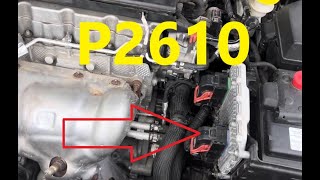
- PCM / ECM Location — Located in the engine compartment, at the left rear (driver's side, near the firewall).. This is the location of the module itself. The connectors here must be checked for corrosion or damage, and the module's ground connection must be clean and tight.
- GC105 — Ground point located at the left rear of the engine compartment.. This is a primary ground point for the PCM on the 2.4L engine. A loose or corroded connection here can interrupt power and cause memory/timer issues within the PCM.
- GC103 — Ground point located under the center of the dash for the 2.4L model.. This is another ground point related to the engine controls. While less direct than the engine bay ground, poor interior grounds can cause a range of electrical issues.
- GC205 — Ground point located at the left rear of the engine compartment for the 2.0L engine.. This is the equivalent primary PCM ground for the 2.0L engine models. A fault here is a direct potential cause for the P2610 code.
Real Owner Repair Stories
- BAT Auto Technical forum (2007 Hyundai Entourage 3.8L (similar electrical architecture)) — Check Engine Light with code P2610, headlights and interior lights dimming when decelerating.
❌ Tried (didn't work) The user was advised against immediately replacing the ECM.
✅ What actually fixed it The confirmed fix was not posted, but expert advice pointed strongly toward a failing alternator causing unstable voltage, which would explain both the P2610 code and the dimming lights. The recommendation was to fix the charging system issue and clear codes before suspecting the ECM.
OEM Part Supersession History
39106-2GBD0→39106-2GBD1, 39106-2GBD2— Internal revisions and software updates by the manufacturer.
Heads up: Part numbers 39106-2GBD0, 39106-2GBD1, and 39106-2GBD2 are listed as interchangeable for 2014-2015 2.4L models. Always verify the exact part number on your original unit before ordering a replacement.
Model Year Variations Within This Range
- 2014-2015: Models from 2014-2015 with the 2.4L engine use a specific series of ECMs (e.g., 39106-2GBD#, 39106-2GBE#). These part numbers are distinct from the 2010-2013 models and are not interchangeable.
Diagnostic Flowchart
Other Known Issues on This Vehicle
Issues unrelated to this code that are worth knowing about as an owner of this generation:
- Theta II Engine Failure (Rod Bearing Wear) 🔴 High — Widespread across multiple model years (2014-2015 for Tucson). Can occur at various mileages, often leading to engine seizure. (Ref: Subject of multiple recalls (e.g., NHTSA 19V063000) and a major class-action lawsuit resulting in a lifetime warranty for the engine short block for qualifying vehicles.)
- ABS Module Electrical Short / Fire Risk 🔴 High — Affects 2014-2015 models. An internal leak in the ABS module can cause an electrical short, leading to a fire risk even when the vehicle is parked. (Ref: NHTSA Recall 20V543000. Hyundai advises parking these vehicles outside and away from structures until the recall repair is performed.)
- Engine Oil Pan Leak 🟠 Medium — Common on 2011-2013 models. The oil pan seal can degrade and leak, which if ignored, can lead to oil starvation and engine damage. (Ref: NHTSA Recall 19V063000 addresses this for some vehicles.)
- Excessive Oil Consumption 🟠 Medium — Reported by numerous owners of the 2.0L and 2.4L engines, leading to frequent top-offs and potential for engine damage if the level drops too low.
- Knock Sensor Detection System (KSDS) Update 🟡 Low — Part of the engine failure settlement, this software update was installed on many vehicles to detect early signs of rod bearing wear. It can sometimes be overly sensitive, putting the vehicle into limp mode. (Ref: Part of the class-action settlement and related service campaigns.)
Used vs. New Parts: Buying Guide for This Vehicle
When a used part is the smart pick: A used ECM from a reputable salvage yard is a very common and cost-effective repair for P2610, given that a new OEM unit is extremely expensive. This is a viable option if the part number matches exactly and the donor vehicle information is available.
Donor-vehicle mileage cap: roughly under 80000 miles for the part to have meaningful remaining life.
What to inspect on the donor part:
- Verify the part number on the used ECM EXACTLY matches your original unit.
- Inspect the connectors for any signs of corrosion, moisture, or bent pins. Water damage is a common cause of ECM failure.
- Obtain the VIN of the donor vehicle if possible to check its history for electrical problems or flood damage.
- Purchase from a seller that offers a warranty and a return policy.
OEM-only on this vehicle (don't cheap out):
- Engine Control Module (ECM) - While used OEM is viable, brand-new aftermarket (cloned) ECMs are not widely trusted and can cause unpredictable issues. A remanufactured unit from a reputable brand like Cardone is a better alternative to a new aftermarket unit.
Aftermarket brands forum-validated for this vehicle:
- Cardone (for remanufactured ECMs)
Brands owners have reported issues with on this vehicle:
- Unbranded, no-name 'plug-and-play' ECMs from online marketplaces without a warranty or programming support.
Real Owner Stories
Aggregated from forums and TSBs cited above. Mileages and costs reflect what owners reported in those sources.
2006 Hyundai Sonata (Shared ECM Architecture)
Symptoms: P2610 code along with a no-start condition when the engine was hot.
What fixed it: Replacing the PCM with a remanufactured unit after confirming the battery was in good condition.
Source hint: A user on Hyundai Forums with a 2006 Sonata (sharing similar ECM architecture)
Related OBD-II Codes
Frequently Asked Questions
Is there a specific TSB for the P2610 code on my 2009-2015 Hyundai Tucson?
Could my Tucson's engine cooling issues trigger a P2610 code?
Why is my Tucson failing the emissions test with this code if it drives fine?
Can a weak battery cause the P2610 code on a Hyundai Tucson?
Are there any recalls for the 2014-2015 Tucson that I should be aware of while diagnosing engine codes?
Does the Kia Sportage have the same P2610 issues as the Tucson?
Helpful Videos
We Have This Part in Stock

The information in this article is provided for general reference and educational purposes only. Vehicle specifications, procedures, and part compatibility can vary by production date, trim level, and region. Always consult your vehicle's factory service manual and verify part numbers before purchasing or performing repairs. Safety-critical components such as airbags, seat belts, and braking systems should be installed by a qualified professional.
- Hyundai Tucson:
- 🧭 Diagnostic Flowchart
- 🎬 Helpful Videos
- 🛍️ Shop This Part
- What's Unique About the 2009-2015 Hyundai Tucson
- Symptoms You May Notice
- Most Likely Causes
- Rare But Worth Checking
- Diagnosis Steps
- Parts You'll Likely Need
- Related Codes That Often Appear With This One
- Technical Service Bulletins (TSBs) & Recalls
- Platform-Specific Known Issues
- Mechanic-Grade Diagnostic Values
- Scan Tool Commands That Help
- Wiring & Ground Locations
- Real Owner Repair Stories
- OEM Part Supersession History
- Model Year Variations Within This Range
- Other Known Issues on This Vehicle
- Used vs. New Parts: Buying Guide for This Vehicle
- Real Owner Stories
- 2006 Hyundai Sonata (Shared ECM Architecture)
- Related OBD-II Codes
- Frequently Asked Questions
- 🎟️ Get 5% Off