

P2610 on 2013-2018 Toyota RAV4: Engine Off Timer Performance Causes and Fixes
On a 2015-2018 Toyota RAV4, code P2610 is almost always caused by outdated Engine Control Module (ECM) software. A simple software update (reflash) from a Toyota dealer, covered by TSB T-SB-0336-17, is the required fix. This may be covered under the 8-year/80,000-mile federal emissions warranty. Do not replace the battery or ECM before verifying the software status.
- For a 2015-2018 RAV4, P2610 is almost certainly a software issue that a Toyota dealer can fix via a reflash.
- Do NOT replace the ECM or battery before checking if TSB T-SB-0336-17 applies and has been performed.
- This repair may be free if your vehicle is under the 8-year/80,000-mile federal emissions warranty.
- The vehicle is safe to drive, but you will not pass an emissions test until the code is resolved.
What's Unique About the 2013-2018 Toyota RAV4
For the 2015-2018 RAV4 (and many other Toyotas of this era), the P2610 code is a widely recognized and documented issue. Toyota issued a Technical Service Bulletin (TSB T-SB-0336-17) acknowledging that the original ECM software logic was too sensitive and could falsely trigger the code. This is a key distinction, as the problem is not a failing hardware component but a correctable software glitch. Many owners or shops might mistakenly suspect a bad battery or a faulty ECM, when the actual solution is a straightforward software update from the manufacturer. The TSB explicitly warns NOT to replace the ECM for this issue.
Symptoms You May Notice
- Check Engine Light is on.
- Vehicle fails emissions testing because readiness monitors cannot be completed.
- Remote start system may not function correctly (if equipped), as the system may not be able to confirm the engine is off before initiating a start sequence.
- In rare cases, hesitation or hard starting.
- Replacing the Engine Control Module (ECM) before performing the software update. The TSB specifically warns against replacing the ECM as part of this repair.
- Replacing the battery without confirming it has failed a load test. While a bad battery can cause this, the software issue is far more common on this specific vehicle.
Most Likely Causes
- Outdated Engine Control Module (ECM) Software 🔴 High Probability → Shop Engine Control Module (ECM) Toyota explicitly identified this as a software logic issue and released TSB T-SB-0336-17 to correct it for 2015-2017 models. The original software was overly sensitive in monitoring the ECM's internal clock. This issue was widespread across many Toyota and Lexus models from 2014-2018.
How to confirm: A Toyota dealer or a qualified shop with Toyota Techstream software can check the current calibration ID on the ECM and compare it to the updated versions listed in TSB T-SB-0336-17. They can also check for an 'Authorized Modifications Label' (P/N 00451-00001-LBL) in the engine bay, which indicates the update has already been performed.
Typical fix: Reprogram (reflash) the ECM with the updated software provided by Toyota. The TSB explicitly states the ECM should NOT be replaced for this repair. The labor time for this procedure is listed as 0.4 hours.
Est. part cost: $0 - Weak or Failing 12V Battery ⚪ Low Probability → Shop Vehicle Battery While the TSB is the most likely cause, a weak battery can cause voltage anomalies that disrupt the ECM's constant power supply needed to maintain its internal clock when the car is off. A Reddit user with a 2015 4Runner noted the P2610 code would return after sitting for a day or two, suspecting the battery, even though it tested fine.
How to confirm: Test the battery with a digital multimeter or, more definitively, a load tester. A healthy, resting battery should show ~12.6 volts. With the engine running, the alternator should be charging it at ~13.7-14.7 volts. Many auto parts stores will perform a load test for free.
Typical fix: Replace the 12V battery and ensure terminal connections are clean and tight. This should only be done after confirming the battery is faulty via a load test.
Est. part cost: $150-$300
Rare But Worth Checking
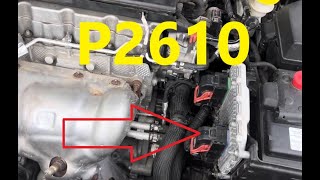
- Internal ECM Failure: This is extremely rare and should only be considered after the TSB software update has been performed and the battery/charging system has been confirmed to be in perfect health. Some generic repair manuals incorrectly list this as the primary cause, but for this specific RAV4, it is the last resort. Replacement can cost over $1,000. 🎬 Watch: Understanding the P2610 code and common engine timer fixes
- ECM Power or Ground Circuit Issue: A poor connection, corroded wire, or blown fuse related to the ECM's constant power supply can disrupt the engine-off timer. This is unlikely but possible, especially on vehicles with a history of collision repair, rodent damage, or aftermarket accessory installation.
- Aftermarket Remote Starter: An improperly installed aftermarket remote starter can interfere with the ECM's ability to know when the engine is truly off, potentially triggering this code. An owner of a similar platform (2015 Avalon) reported the code appeared after using a newly installed remote starter.
Diagnosis Steps
- Check for Technical Service Bulletins (TSBs). For a 2015-2018 RAV4, TSB T-SB-0336-17 is the most important first step.
- Contact a Toyota dealer with your VIN. Inquire if the TSB applies and if the software update has already been performed. This repair may be covered under the Federal Emission Warranty (8 years/96 months or 80,000 miles).
- If the TSB does not apply or has already been done, proceed with standard diagnosis.
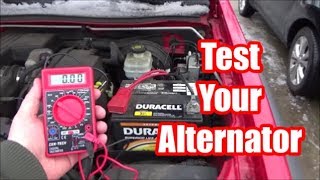
- Test the 12V battery. Ensure it is fully charged and passes a load test. Check battery terminals for corrosion and tightness. A simple voltage check is not sufficient. 🎬 See how to test your battery and alternator with a multimeter
- Check the charging system. With the engine running, verify the alternator is charging between 13.7 and 14.7 volts.
- Inspect ECM power and ground connections for any signs of corrosion or damage, especially if aftermarket accessories have been installed.
- If the TSB has been performed and the battery/charging system are good, the issue may be a rare internal ECM fault, which would require replacement and programming by a professional.
Parts You'll Likely Need
- Engine Control Module (ECM) Software Update
(OEM #N/A (Software Calibration Update))— This is the official fix from Toyota per TSB T-SB-0336-17 to correct over-sensitive logic in the original software. The TSB provides new Calibration IDs to be flashed, for example, for a 2015 RAV4 2WD, the old part numbers were 89661-0R460/0R461 and for a 2016-2017 2WD, 89661-42V90/0R510.
Trusted brands: Toyota
OEM price range: $0-$250
Aftermarket price range: N/A
Technical Service Bulletins (TSBs) & Recalls
- T-SB-0336-17 (December 21, 2017): MIL 'ON' DTC P2610. States that the ECM logic has been modified to reduce the possibility of this condition and provides new calibration IDs for 2015-2017 RAV4 and other models.
- T-SB-0276-17 (August 18, 2017): An earlier, broader version of the TSB covering many Toyota models for the same P2610 issue, including Camry, 4Runner, and Avalon. This TSB was superseded by T-SB-0336-17 for the RAV4.
Platform-Specific Known Issues
- Toyota issued Technical Service Bulletin T-SB-0336-17, which directly addresses code P2610 on 2015-2017 RAV4 models by providing a corrective software update for the ECM.
- The Federal Emission Warranty covers this repair for 96 months or 80,000 miles, whichever comes first, from the vehicle's in-service date.
Mechanic-Grade Diagnostic Values
- ECM Keep Alive Memory (KAM) Power Supply Voltage — expected: Constant 12V+ (should match battery voltage) at the ECM's +B terminal, even with the key off.. Failure: Voltage below 12.0V or dropping out indicates a bad connection, parasitic draw, or faulty fuse (EFI MAIN). This will cause the internal timer to reset improperly.
- ECM Power Supply Voltage During Reprogramming — expected: Maintained at a constant 13.5 Volts.. Failure: Voltage dropping below this level during the flash procedure can corrupt the ECM software, potentially making the P2610 code permanent or bricking the module.
- Parasitic Draw on Battery — expected: Less than 50mA after all modules have entered sleep mode (approx. 20-30 minutes).. Failure: A draw higher than 50mA can slowly drain the battery, causing low voltage conditions that trigger P2610 or a related P0603 (Keep Alive Memory Error) code, even if the battery itself tests as 'good'.
Hidden / Shadow Codes Worth Checking
- P0603: Internal Control Module Keep Alive Memory (KAM) Error. This code indicates that the ECM has lost its constant power supply, which is the same circuit that powers the engine-off timer. If P2610 is caused by a weak battery or poor connection, P0603 may also be stored or pending. (see via Standard OBD-II scanner. It may appear as a pending code before becoming an active one.)
Scan Tool Commands That Help
- Toyota Techstream: ECU Flash Reprogramming / Calibration Update — This is the primary repair function used to load the new software calibration files provided in TSB T-SB-0336-17. It is used after confirming the vehicle has an older, problematic calibration ID.
- Toyota Techstream: Health Check / DTC Scan — To read the current Calibration ID from the ECM to compare against the TSB, and to check for any other related codes like P0603 that might point towards a power supply issue rather than just the software bug.
- Toyota Techstream: Data List > Engine and ECT > 'Engine Off Timer' — While not explicitly mentioned in the TSB, a technician can use the live data list to monitor the timer's value. This can help verify if the timer is behaving erratically, which would be useful for diagnosis if the TSB has already been performed but the code returns.
Wiring & Ground Locations
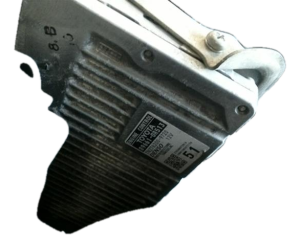
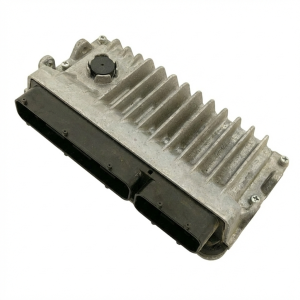
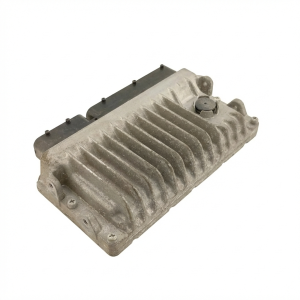
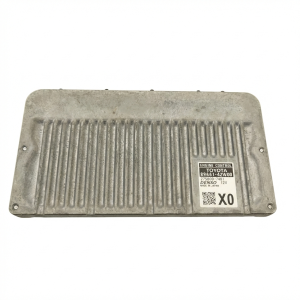
- ECM / PCM Location — In the engine compartment, on the driver's side, mounted to the firewall/bulkhead.. This is the component that requires reprogramming or, in very rare cases, replacement. Its location is needed for inspection of connectors for corrosion or damage.
- ECM Ground Points (A1, A2) — Ground points A1 and A2 are located on the left front of the engine compartment, bolted to the chassis frame rail near the battery.. A poor ground connection at these points can cause voltage irregularities and communication errors within the ECM, potentially mimicking an internal fault and triggering P2610. This is a critical check if the software reflash does not solve the issue.
- ECM Constant Power Fuse (EFI MAIN) — Located in the main engine room fuse and relay box (engine room J/B 1).. This fuse supplies the constant power (Keep Alive Memory) to the ECM that runs the internal clock. A corroded fuse holder or intermittent connection here will directly cause a P2610 or P0603 fault.
OEM Part Supersession History
89661-0R460, 89661-0R461→New Calibration ID (e.g., 30R46200)— Software logic updated to correct over-sensitive monitoring for the engine-off timer.
Heads up: These are Original Factory Part numbers for the ECM hardware/software combination on a 2015 RAV4 2WD. The fix is not a new hardware part, but a software reflash to a new Calibration ID as specified in TSB T-SB-0336-17.89661-42V90, 89661-0R510→New Calibration ID (e.g., 342V9100)— Software logic updated to correct over-sensitive monitoring for the engine-off timer.
Heads up: These are Original Factory Part numbers for the ECM hardware/software combination on a 2016-2017 RAV4 2WD. The fix is not a new hardware part, but a software reflash to a new Calibration ID as specified in TSB T-SB-0336-17.
Model Year Variations Within This Range
- 2013-2014: These model years are NOT covered by TSB T-SB-0336-17 for the P2610 code. While the code can still occur, it is not due to the widespread software glitch found in 2015+ models. For these earlier years, diagnosis should focus more heavily on traditional causes like a weak battery, charging system issues, or a wiring/ground fault before considering a rare ECM failure.
- 2015-2017: These are the primary years affected by the software logic flaw. TSB T-SB-0336-17 provides specific new calibration IDs to fix the issue. Diagnosis should always start by checking the software version.
- 2018: The 2018 RAV4 is not officially listed in the applicability chart of TSB T-SB-0336-17 for the 2AR-FE engine. However, the TSB does cover other 2018 Toyota models, suggesting the updated logic was likely incorporated into the RAV4's production software during or before this model year. A P2610 code on a 2018 model is less likely to be the known software bug and warrants a closer look at battery and power supply health.
Diagnostic Flowchart
Used vs. New Parts: Buying Guide for This Vehicle
When a used part is the smart pick: For this specific P2610 issue, a used part is almost never the correct solution, as the problem is software-based. However, if the ECM has been definitively diagnosed as failed (e.g., after a failed reflash attempt or physical damage), a used ECM from a donor vehicle can be a cost-effective alternative to a new one.
Donor-vehicle mileage cap: roughly under 150000 miles for the part to have meaningful remaining life.
What to inspect on the donor part:
- Match the OEM part number EXACTLY. Even a single digit difference can mean incompatibility.
- Source from a vehicle with the same engine, transmission, and drivetrain (2WD vs 4WD).
- Inspect the donor ECM's connectors for any signs of corrosion, bent pins, or water intrusion.
- Obtain the VIN of the donor vehicle if possible to help with potential immobilizer reprogramming.
OEM-only on this vehicle (don't cheap out):
- Engine Control Module (ECM) Software Update: This service can only be performed by a Toyota dealer or a specialized independent shop with a subscription to Toyota's Techstream service. There is no aftermarket alternative.
Brands owners have reported issues with on this vehicle:
- Pre-programmed or 'plug-and-play' ECMs from unknown online vendors should be avoided. Many modern Toyota ECMs are linked to the vehicle's immobilizer system. A used ECM will likely prevent the car from starting until it is reprogrammed by a dealer or a specialist with the ability to 'virginize' the module and pair it to the vehicle's keys and VIN.
Real Owner Stories
Aggregated from forums and TSBs cited above. Mileages and costs reflect what owners reported in those sources.
2015 Toyota 4Runner 1GR-FE — 200000 miles
Symptoms: The Check Engine Light with code P2610 would disappear after disconnecting the battery but would return if the vehicle sat for a day or two.
What fixed it: The owner suspected a battery issue was the root cause, even though the battery had tested fine.
Source hint: Reddit r/4Runner (2023)
2017 Toyota Camry 2AR-FE
Symptoms: Owner reported a pending P2610 trouble code.
What fixed it: The owner was investigating TSB T-SB-0276-17 as the solution, which involves an ECM software update.
Source hint: CarKiller Forum (2021)
2018 Toyota Sienna XLE
Symptoms: Owner reported multiple issues including the P2610 code.
What fixed it: The cause was noted as often being related to either the ECM software or battery voltage issues.
Source hint: Reddit r/ToyotaSienna (2022)
Related OBD-II Codes
Frequently Asked Questions
Is there a recall for the P2610 code on my 2015-2017 RAV4?
How can I check if the TSB T-SB-0336-17 software update has already been performed on my RAV4?
My mechanic says I need a new ECM to fix the P2610 code. Is this necessary for my 2016 RAV4?
My 2015 RAV4 has a P2610 code, and the battery voltage seems okay. Could the battery still be the cause?
My remote start stopped working and the Check Engine Light is on. Is this related to code P2610?
Does the P2610 software issue affect other Toyota models besides the RAV4?
Helpful Videos
We Have This Part in Stock

The information in this article is provided for general reference and educational purposes only. Vehicle specifications, procedures, and part compatibility can vary by production date, trim level, and region. Always consult your vehicle's factory service manual and verify part numbers before purchasing or performing repairs. Safety-critical components such as airbags, seat belts, and braking systems should be installed by a qualified professional.
- Toyota RAV4:
- 🧭 Diagnostic Flowchart
- 🎬 Helpful Videos
- 🛍️ Shop This Part
- What's Unique About the 2013-2018 Toyota RAV4
- Symptoms You May Notice
- Most Likely Causes
- Rare But Worth Checking
- Diagnosis Steps
- Parts You'll Likely Need
- Technical Service Bulletins (TSBs) & Recalls
- Platform-Specific Known Issues
- Mechanic-Grade Diagnostic Values
- Hidden / Shadow Codes Worth Checking
- Scan Tool Commands That Help
- Wiring & Ground Locations
- OEM Part Supersession History
- Model Year Variations Within This Range
- Used vs. New Parts: Buying Guide for This Vehicle
- Real Owner Stories
- 2015 Toyota 4Runner 1GR-FE — 200000 miles
- 2017 Toyota Camry 2AR-FE
- 2018 Toyota Sienna XLE
- Related OBD-II Codes
- Frequently Asked Questions
- 🎟️ Get 5% Off