

P2764 on 2013-2020 Dodge Grand Caravan: TCC Solenoid & Torque Converter Guide
On a 2013-2020 Grand Caravan, code P2764 usually means a failed torque converter or a bad TCC solenoid. A Chrysler TSB states if the solenoid tests okay, the torque converter is the culprit. However, a specific symptom—stalling in Drive but not Reverse—often points directly to a failed TCC solenoid. A solenoid fix costs ~$500-$1000, while a torque converter replacement is a major repair costing $1500-$2500.
- P2764 on a Grand Caravan is a serious transmission code that should be diagnosed promptly.
- A Chrysler TSB is very clear: if the TCC solenoid and its wiring are good, the torque converter has failed and must be replaced.
- Do not automatically replace the solenoid pack without proper diagnosis, as you may be ignoring the real problem in the torque converter.
- Symptoms often include jerking, slipping, and potentially stalling the engine when you come to a stop.
- This is not a DIY-friendly repair; professional service is strongly recommended due to the complexity and labor involved.
What's Unique About the 2013-2020 Dodge GRAND CARAVAN

The 2013-2020 Dodge Grand Caravan uses the 6-speed 62TE automatic transmission, which has known issues with this specific code. A manufacturer Technical Service Bulletin (TSB) directly addresses P2764, noting that it often indicates a complete torque converter failure, not just a simple solenoid issue. However, an Automatic Transmission Rebuilders Association (ATRA) bulletin highlights a key counter-scenario: if the engine stalls when put into Drive but not Reverse, the TCC solenoid itself is the likely cause. This makes proper diagnosis critical, as replacing the solenoid pack may not solve the problem if the underlying cause is a failing torque converter, and vice-versa.
Diagnostic Flowchart

Tap your situation to follow the diagnostic path that matches what you're seeing on this vehicle.
Symptoms You May Notice
- Jerking or slipping during acceleration.
- Harsh, erratic, or delayed gear shifts.
- Engine stalling when coming to a stop, especially after highway driving.
- Engine stalls when shifting from Reverse into Drive, but works fine in Reverse.
- Transmission overheating.
- Reduced fuel economy.
- Vehicle enters 'limp mode', often stuck in a single gear with high RPMs.
- Illuminated Check Engine Light.
- Replacing the solenoid when the torque converter is the actual point of failure. The manufacturer TSB specifically warns that a good solenoid with this code points to a bad torque converter.
- Replacing the torque converter when only the TCC solenoid was stuck. If the primary symptom is stalling in Drive but not Reverse, the solenoid is the more likely culprit per ATRA bulletin #1648.
Most Likely Causes

- Failed Torque Converter 🔴 High Probability → Shop Automatic Transmission Torque Converter A specific Chrysler TSB (#9004009 / 21-015-09) for the 62TE transmission states that if the TCC solenoid is functioning correctly, code P2764 is indicative of torque converter failure. The internal lock-up clutch lining can fail, contaminating the system.
How to confirm: A technician must first rule out any issues with the TCC solenoid and its wiring. If the solenoid and circuit test good via resistance checks and a bidirectional scan tool, the torque converter is condemned per the TSB diagnostic logic.
Typical fix: Replace the torque converter. This is a major repair that requires removing the transmission from the vehicle. It is often recommended to flush the cooler lines and consider a full transmission rebuild at the same time due to potential contamination.
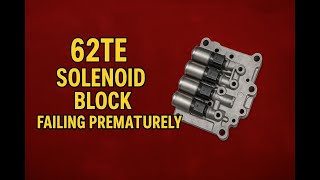
Est. part cost: $200-$500 - Failed TCC Solenoid 🔴 High Probability → Shop Transmission Valve Body The TCC solenoid (part of the solenoid pack/valve body) in the 62TE transmission is a known failure point. An ATRA bulletin (#1648) specifically links P2764 to a defective TCC solenoid when the primary symptom is the engine stalling when shifting into Drive but not Reverse. The solenoid can fail electrically or become mechanically stuck. 🎬 See why these 62TE solenoid blocks fail so frequently
How to confirm: A technician can test the solenoid's resistance (should be approx. 13 ohms when cold) and check for proper voltage at the connector. A professional scan tool can also command the solenoid on and off to check its response. A common real-world failure mode is intermittent stalling, making it hard to reproduce.
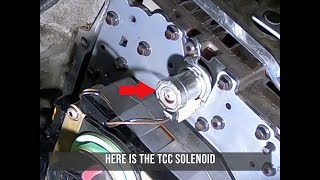
Typical fix: Replace the individual TCC solenoid (Mopar P/N 5169313AA). This is located on the valve body and can be accessed from the top of the engine bay by removing the battery, battery tray, and a transmission cover.
Est. part cost: $150-$400 - Low or Contaminated Transmission Fluid ⚪ Low Probability → Shop Transmission Assembly
How to confirm: Check the transmission fluid level and condition. The fluid should be at the correct level, red in color, and not smell burnt. Dark or metallic fluid indicates internal wear, often from a failing torque converter.
Typical fix: Perform a transmission fluid and filter change using only the specified Mopar ATF+4 fluid. If the fluid is heavily contaminated, it's a sign of a more serious internal problem like torque converter failure.
Est. part cost: $60-$120 - Damaged Wiring or Connectors ⚪ Low Probability
How to confirm: Visually inspect the wiring harness leading to the transmission for any signs of fraying, corrosion, or damage. Test for continuity and proper voltage at the solenoid connector.
Typical fix: Repair or replace the damaged section of the wiring harness or the connector.
Est. part cost: $20-$100
Rare But Worth Checking
- Faulty Powertrain Control Module (PCM): This is extremely rare. The PCM should only be considered after all other possibilities (solenoid, torque converter, wiring) have been exhaustively ruled out.
Diagnosis Steps

- Scan the computer for P2764 and any other related codes (e.g., P0740, P0700). Note the freeze frame data.
- Check the transmission fluid level and condition. Ensure it is full and clean. Burnt or debris-filled fluid suggests a larger internal problem, likely the torque converter.
- Interview the driver about specific symptoms. Does it stall when shifting into Drive but not Reverse? This points towards the TCC solenoid per ATRA TSB #1648.
- Inspect the transmission wiring harness and connectors for visible damage, corrosion, or loose connections.
- Using a professional scan tool, monitor the TCC solenoid operation and command it on/off to check for a response.
- Test the resistance of the TCC solenoid circuit. It should be approximately 13 ohms when the engine is cold.
- If the solenoid circuit tests open, shorted, or has incorrect resistance, the TCC solenoid (P/N 5169313AA) is the likely cause.
- If the solenoid and wiring test good, follow the guidance of Chrysler TSB #9004009, which indicates a failed torque converter is the likely cause.
- If the solenoid is faulty, replace it. Access is typically from the top of the engine bay.
- If the torque converter is diagnosed as the fault, the transmission must be removed for replacement.
Parts You'll Likely Need
- Torque Converter
(OEM #R8453637AB (Part of a remanufactured transmission kit for 2019+ models))— A manufacturer TSB identifies this as the primary failure point when the control solenoid and circuit are confirmed to be working properly.
Trusted brands: Mopar, TC Remanufacturing, Hughes Performance
OEM price range: $300-$500
Aftermarket price range: $200-$400 - TCC Solenoid (EMCC VFS Solenoid)
(OEM #5169313AA)— This is the second most likely cause, and the primary suspect if the vehicle stalls in Drive but not Reverse. It is a common failure item on the 62TE transmission.
Trusted brands: Mopar, Dorman
OEM price range: $250-$350
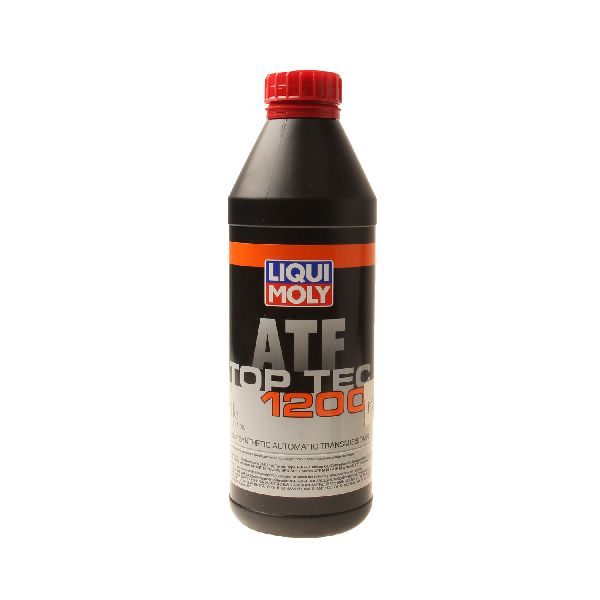
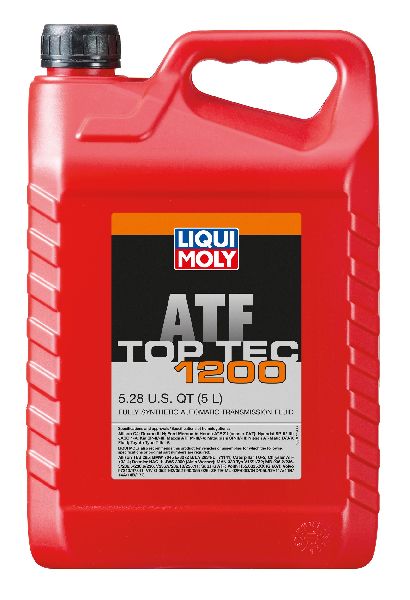
Aftermarket price range: $150-$250 - Automatic Transmission Fluid (ATF+4) — Fluid must be replaced during either a solenoid or torque converter replacement. Using the correct Mopar ATF+4 specification is critical for this transmission.
Trusted brands: Mopar, Valvoline, Castrol
OEM price range: $15-$25 per quart
Aftermarket price range: $8-$15 per quart
Related Codes That Often Appear With This One
- P0740 — This code also relates to the Torque Converter Clutch Circuit. The official Chrysler TSB groups P0740 and P2764 together with the same diagnostic procedure.
- P0700 — This is a generic code indicating that the Transmission Control Module (TCM) has stored a fault. It acts as a general alert and will almost always appear alongside a specific transmission code like P2764.
Technical Service Bulletins (TSBs) & Recalls
- 9004009 (also cited as 21-015-09): Links P2764 to torque converter failure if the TCC solenoid is operational.
- ATRA #1648: Links P2764 to a defective TCC solenoid if the symptom is stalling in Drive but not Reverse.
Platform-Specific Known Issues
- Chrysler Technical Service Bulletin #9004009 (also 21-015-09) directly addresses this code on vehicles with the 62TE transmission. It states: 'If vehicle is jerking/slipping with MIL code(s) P0740 or P2764, check TCC Solenoid operation. If TCC Solenoid is ok, the codes are indicative of a torque converter failure. Replace the torque converter.'
- ATRA (Automatic Transmission Rebuilders Association) Bulletin #1648 describes a classic symptom for P2764 on 62TE transmissions: after a long trip, the engine dies every time it is put into Drive, but not in Reverse. The bulletin identifies this as a stuck-on TCC and recommends replacing the defective TCC solenoid (P/N 5169313AA).
Mechanic-Grade Diagnostic Values
- TCC (EMCC) VFS Solenoid Resistance — expected: 4.8 - 5.2 Ohms at ~70°F (21°C). Failure: A reading significantly outside this range, or an open/short circuit, indicates a failed solenoid.
- Other Shift Solenoids (LR, UD, 2/4, OD, DC) Resistance — expected: 1.6 - 1.8 Ohms at ~70°F (21°C). Failure: While not the direct cause of P2764, a reading on another solenoid that is significantly different from the others can indicate a failing solenoid pack.
- TCC Solenoid Circuit Voltage (Key On, Engine Off) — expected: ~12V (+/- 0.5V). Failure: Voltage below 9V at the solenoid connector confirms the 'Circuit Low' condition reported by the code.
- TCC Solenoid Circuit Test at Main Connector — expected: Test between Pin 10 (12V power from relay) and Pin 3 (TCC VFS control).. Failure: A short to ground on the wire to Pin 3 is the most likely cause for a 'Circuit Low' code.
Scan Tool Commands That Help
- wiTECH (or equivalent professional scan tool): Solenoid Actuation Test / Bidirectional Control — This command allows a technician to manually turn the TCC solenoid on and off to verify its mechanical and electrical response, helping to distinguish between a stuck solenoid and a wiring issue.
- wiTECH (or equivalent professional scan tool): Quick Learn Procedure — This procedure is required after replacing the solenoid pack or valve body. It allows the TCM to learn the hydraulic characteristics of the new components to ensure proper shift quality.
Wiring & Ground Locations

- Main Transmission Connector (C1) — On the front of the 62TE transmission case, where the main vehicle harness connects.. This is the primary test point for all solenoid circuits. Pin 3 is the TCC VFS control wire, and Pin 10 is the main 12V power feed from the transmission control relay.
- Engine Ground Strap — A braided strap that connects from the engine block (often near the power steering pump/accessory belt area) across the upper engine mount to the vehicle's frame/chassis on the passenger side.. This strap is a known failure point; it can break or corrode. A poor ground connection can cause intermittent and widespread electrical issues, including low voltage faults like P2764 that are difficult to diagnose.
- Main Battery Ground Stud — Located on the driver's side strut tower in the engine bay.. This is a central grounding point for the vehicle's entire electrical system. Corrosion or a loose connection here can cause numerous, seemingly unrelated low-voltage faults.
Real Owner Repair Stories
- YouTube channel 'CarboNS DIY Garage' (2015 Dodge Grand Caravan with 3.6L Pentastar) — Vehicle would chug slightly when braking to a stop when warm, and then stall completely at a stoplight. No trouble codes were present initially.
❌ Tried (didn't work) Initial diagnosis was difficult due to the lack of stored codes.
✅ What actually fixed it The owner replaced the individual Torque Converter Clutch (TCC) solenoid (Mopar part 5169313AA). This resolved the stalling issue completely. - YouTube channel 'uncle Mark' (2010 Dodge Grand Caravan with 4.0L V6) — Stalling at idle when shifted into Drive, but running fine when shifted into Reverse. No Check Engine Light was on. Coasting to a stop felt rough.
✅ What actually fixed it Replaced the individual TCC solenoid (Mopar P/N 05169313AA) for around $20. The repair was done by accessing the solenoid from the top of the engine bay.
OEM Part Supersession History
5169313AA→5169313AB— Standard part revision by the manufacturer.
Heads up: The parts are interchangeable. 5169313AB is the newer revision.
Helpful Videos
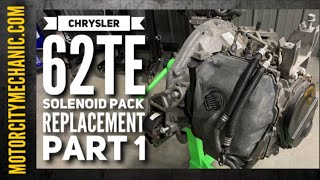
We Have This Part in Stock

The information in this article is provided for general reference and educational purposes only. Vehicle specifications, procedures, and part compatibility can vary by production date, trim level, and region. Always consult your vehicle's factory service manual and verify part numbers before purchasing or performing repairs. Safety-critical components such as airbags, seat belts, and braking systems should be installed by a qualified professional.
- Dodge GRAND CARAVAN:
- 🧭 Diagnostic Flowchart
- 🎬 Helpful Videos
- 🛍️ Shop This Part
- What's Unique About the 2013-2020 Dodge GRAND CARAVAN
- Symptoms You May Notice
- Most Likely Causes
- Rare But Worth Checking
- Diagnosis Steps
- Parts You'll Likely Need
- Related Codes That Often Appear With This One
- Technical Service Bulletins (TSBs) & Recalls
- Platform-Specific Known Issues
- Mechanic-Grade Diagnostic Values
- Scan Tool Commands That Help
- Wiring & Ground Locations
- Real Owner Repair Stories
- OEM Part Supersession History
- 🎟️ Get 5% Off