

P3075 on 2019-2022 GMC Sierra 1500 2.7L: Engine Coolant Flow Too Low
On a 2019-2022 GMC Sierra 1500 with the 2.7L engine, code P3075 is almost always caused by a low coolant level or air trapped in the cooling system. Before replacing any parts, check for leaks and ensure the system is properly filled and bled, preferably with a vacuum tool.
- P3075 means the cooling system is low on fluid or has air trapped in it.
- Do NOT replace the coolant pump. This is rarely the fix and is a common misdiagnosis.
- Your first steps are to check the coolant level, pressure test the system for leaks, and repair any leaks found.
- After any repairs, the cooling system must be carefully bled to remove all air pockets, or the code will return.
What's Unique About the 2019-2022 Gmc SIERRA 1500
The 2.7L L3B engine in these trucks uses a sophisticated, electrically-controlled coolant pump. The vehicle's computer actively monitors the pump's performance by checking its current draw. 🎬 Watch: Troubleshooting common wiring harness and communication issues. This allows it to detect issues like small coolant leaks or air pockets before a severe overheat might occur. GM has issued multiple Technical Service Bulletins (TSBs) that strongly advise against replacing the pump as the first step, highlighting that the root cause is almost always a coolant leak or improper bleeding, not a faulty pump itself.
Diagnostic Flowchart
Tap your situation to follow the diagnostic path that matches what you're seeing on this vehicle.
Symptoms You May Notice
- Check Engine Light (Malfunction Indicator Lamp) is on.
- Driver Information Center may display a message like 'reduced acceleration drive with care'.
- Engine cooling fan runs for an extended period after the engine is shut off.
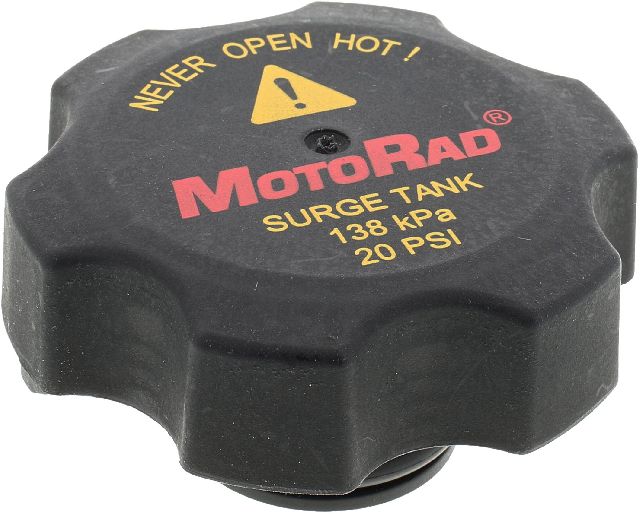
- Low coolant level in the overflow reservoir.
- Visible coolant leaks under the vehicle.
- A faint smell of sweet coolant from the engine bay.
- Replacing the coolant pump assembly. This is the most common misdiagnosis. The TSBs repeatedly warn that this is unlikely to be the root cause and should only be done as a last resort after all other steps have failed.
Most Likely Causes
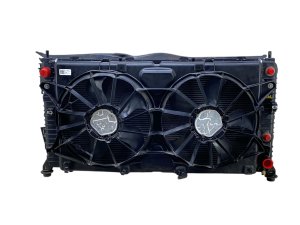
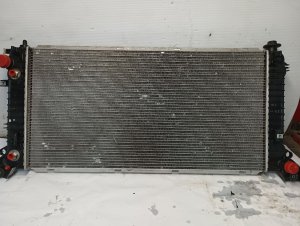
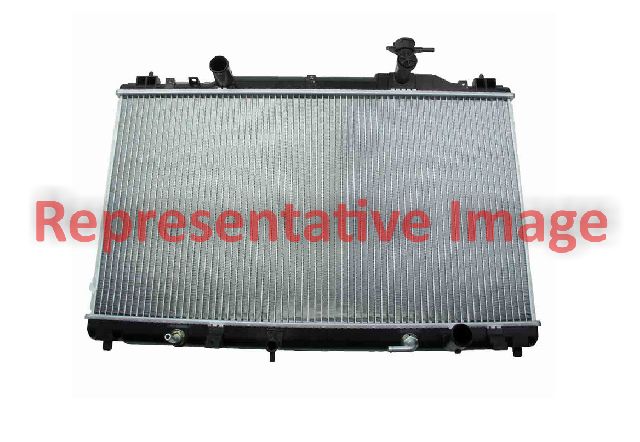
- Low Engine Coolant 🔴 High Probability → Shop Engine Coolant / Antifreeze The system is sensitive to volume changes. Leaks from hoses, the radiator, or water pump seals can lead to a gradual loss of coolant, triggering the flow test to fail. A specific weak point is the upper radiator inlet hose quick-connect fitting, where the internal seal can degrade and cause a slow leak.
How to confirm: Visually check the coolant level in the reservoir. If it is below the 'MIN' or 'COLD FILL' line, the system is low. Perform a cooling system pressure test to find the source of the leak.
Typical fix: Find and repair the source of the coolant leak. Common sources include radiator hoses (especially the upper inlet hose seal), the radiator itself (especially at the plastic end tanks), or the coolant control valve housing. After repair, refill and bleed the system.
Est. part cost: $20-$300 - Air Trapped in Cooling System 🔴 High Probability Air can enter the system if there's a small leak or after any service that involves draining the coolant. The bleeding procedure for this engine is complex, and if not done correctly, air pockets will remain and cause the pump's diagnostic test to fail.
How to confirm: This is often diagnosed after a recent coolant service or if no leaks are found. The code may appear immediately after starting the engine following a coolant refill.
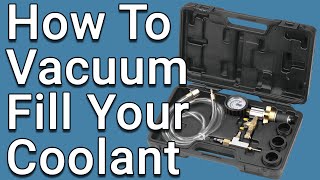
Typical fix: Perform the manufacturer-specified cooling system bleeding procedure. GM service information strongly recommends using a vacuum-lift cooling system refiller to prevent trapped air. Manually bleeding may require several drive cycles to purge all air.
Est. part cost: $0-$50 (DIY vacuum tool rental) - Outdated ECM Software ⚪ Low Probability For the 2019 model year specifically, a software anomaly could cause the code to be set incorrectly due to overly sensitive diagnostic parameters. TSB 19-NA-149 addresses this.
How to confirm: A GM dealership or a qualified shop with access to GM's software can check the vehicle's calibration files against the latest versions.
Typical fix: Update the Engine Control Module (ECM) software to the latest version.
Est. part cost: $0-$200
Rare But Worth Checking
- Failing Electric Coolant Pump: → Shop Engine Water Pump This is rarely the cause. GM TSBs explicitly state to only replace the coolant pump if the P3075 code returns after verifying there are no leaks, the system is properly bled, and the software is current. The OEM part number is GM 12709291.
- Faulty Coolant Control Valve (CCV): → Shop Engine Coolant Control Valve This multi-port valve directs coolant flow. While not a primary cause for P3075, it has been known to develop leaks which lead to low coolant levels, indirectly causing the code. In rarer cases, an electronic failure of the valve could cause flow issues. A related code for CCV failure is P26BB. The OEM part number is GM 12713123.
Diagnosis Steps
- Verify the code P3075 with an OBD-II scanner.
- For 2019 models, consult a dealer to ensure the ECM software is up to date as per TSB 19-NA-149.
- Visually inspect the coolant reservoir. If the level is low, top it off and proceed to the next step.
- Perform a cooling system pressure test to identify any external leaks. Carefully check all hoses, the radiator (especially where the plastic tanks meet the aluminum core), the coolant control valve, and the water pump area.
- Repair any leaks found. This may involve replacing a hose, clamp, radiator, or the coolant control valve.
- Once all leaks are repaired, perform a full cooling system fill. It is highly recommended to use a vacuum-lift refilling tool to prevent introducing air into the system.
- If a vacuum tool is not used, perform the manual bleeding procedure per the service manual. This involves running the engine to operating temperature with the heater on high, followed by cool-down cycles, to purge trapped air.
- Clear the DTC and test drive the vehicle. Note that the code may reappear once or twice until all residual air is fully purged from the system.
- If the code returns after confirming the system is full, free of leaks, properly bled, and has current software, then and only then should you consider replacing the electric coolant pump assembly.
Parts You'll Likely Need
- Engine Coolant/Antifreeze
(OEM #ACDelco 10-128 (50/50 Pre-mixed) or 10-101 (Concentrate))— The system must be refilled with the correct DEX-COOL coolant after repairing a leak or to top off a low system. Use of the correct type is critical for system longevity.
Trusted brands: ACDelco DEX-COOL
OEM price range: $25-$35
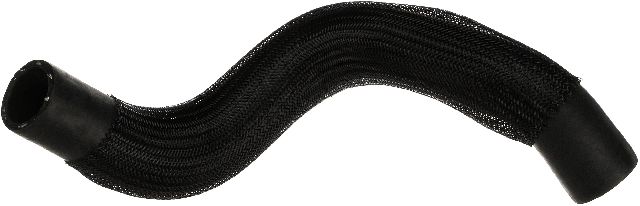
Aftermarket price range: $20-$28 - Radiator Inlet Hose — Leaks can sometimes develop at hose connections, particularly the quick-connect fittings, due to seal degradation.
Trusted brands: ACDelco, Gates
OEM price range: $50-$90
Aftermarket price range: $30-$60 - Electric Coolant Pump
(OEM #12709291)— Only needed in the rare event that the pump itself has failed, after all other diagnostic steps have been exhausted.
Trusted brands: ACDelco GM Original Equipment
OEM price range: $250-$400
Aftermarket price range: $180-$300
Technical Service Bulletins (TSBs) & Recalls
- 21-NA-257: Malfunction Indicator Lamp (MIL) Illuminated - DTC P3075 Set. Provides the most current diagnostic procedure, emphasizing checking for leaks and air in the system before replacing parts.
- PIP5650B: Diagnostic Tip: Possible DTC P3075 That May Be Set Current or History. Notes the cause as low coolant or air in the system and advises against immediate pump replacement.
- 19-NA-149: Malfunction Indicator Lamp (MIL) Illuminated with DTC P3075 Set. Mentions a possible software anomaly on 2019 models and provides a software update procedure before proceeding with physical diagnosis.
Platform-Specific Known Issues
- Multiple Technical Service Bulletins (TSBs #21NA257, #PIP5650B, #19NA149) have been issued by GM for this exact code on this platform, all pointing towards low coolant or trapped air as the primary cause, not a faulty part.
- The diagnostic test for P3075 is very sensitive by design, intended to flag small coolant losses before they can result in engine damage from overheating.
Mechanic-Grade Diagnostic Values
- Electric Coolant Pump Intrusive Test — expected: Pump runs at ~4000 RPM for 15 seconds; AC current draw is within a specific, but unpublished, range.. Failure: The AC current feedback is lower than expected, indicating the pump is moving air instead of coolant.
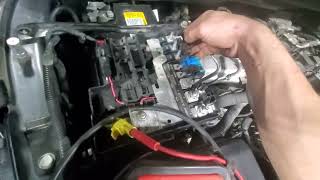
- Voltage Drop at Coolant Pump Fuse — expected: Less than a few hundred millivolts (e.g., < 0.2V).. Failure: A voltage reading of several volts when wiggling the fuse or harness indicates a poor internal connection in the battery-top fuse block.
Scan Tool Commands That Help
- GDS2: Confirm P3075 has run and passed — After performing repairs (leak fix, bleeding), this function in the GM diagnostic software (GDS2) is used to verify that the ECM's internal test has executed and passed in the current drive cycle before returning the vehicle to the customer.
- GDS2 / Professional Scan Tool: Engine Coolant Control Valve Learn / Reset — This function is required after replacing the Coolant Control Valve (CCV) to learn the new valve's motor positions. While not a direct fix for P3075, it's critical if the CCV was replaced to fix a leak that caused the code.
- GDS2 / Professional Scan Tool: Reset Engine Pump Coolant Data — This reset may be necessary after replacing the electric coolant pump to clear learned values.
Wiring & Ground Locations
- K61 Engine Coolant Pump Control Module — The control module is integrated into the electric coolant pump assembly, located on the lower left side of the engine.. This is the component being tested by the ECM. P3075 indicates a performance issue (low current draw) detected by this module's internal diagnostics.
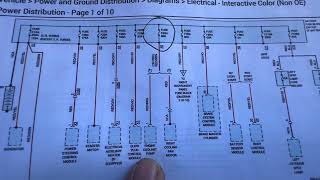
- Battery-Top Fuse Block — Mounted directly on top of the vehicle's battery.. This block contains the main fuse (often 40A or 80A) for the electric coolant pump. Internal failures or poor connections in this block can cause low voltage or intermittent power to the pump, potentially leading to communication codes (like U0672) and performance issues.
- Coolant Pump Harness Connector — The 4-pin electrical connector at the electric coolant pump.. This is the primary connection point for power, ground, and the LIN bus communication wire from the ECM. Corrosion or loose pins here can cause a variety of pump-related codes.
- Harness Chafe Points — The wiring harness near the coolant pump and around the battery fuse block.. Technicians have reported finding wires chafed through, causing intermittent open circuits or shorts to ground for the coolant pump's power or communication lines.
Real Owner Repair Stories
- YouTube: Antonio Aguirre (2020 GMC Sierra 2.7L) — Engine Power Reduced message, multiple communication codes including U0672 (Lost Communication With Coolant Pump).
❌ Tried (didn't work) Initial diagnosis pointed towards a module failure due to communication loss.
✅ What actually fixed it The entire battery-top fuse block was faulty. The 40-amp fuse for the coolant pump had a bad internal connection within the block, causing intermittent power loss. Replacing the entire fuse block assembly resolved the codes. - Reddit: r/chevycolorado (Recent purchase of a vehicle with 2.7L Turbo) — Check Engine Light with code P3075, coolant reservoir was 'bone dry'.
❌ Tried (didn't work) Topping off the coolant reservoir.
✅ What actually fixed it The user refilled the coolant, but the level dropped to 'near dry' again 12 days later, confirming an active, unresolved coolant leak as the root cause of the P3075 code. The final repair was not posted, but the story confirms the diagnosis pattern.
Model Year Variations Within This Range
- 2019 only: A potential software anomaly could cause P3075 to be set erroneously. TSB 19-NA-149 advises checking for and applying an ECM software update as the first step for this model year before proceeding with physical diagnosis.
- 2022: The 2.7L L3B engine received a significant update for the 2022 model year, marketed as the 'Turbo High-Output'. While horsepower remained 310, torque increased from 348 lb-ft to 430 lb-ft. This involved strengthening the block and crankshaft and updating engine tuning. While the cooling system architecture and P3075 diagnostic logic remained the same, be aware of these internal engine differences.
Helpful Videos

Used OEM Parts in Stock
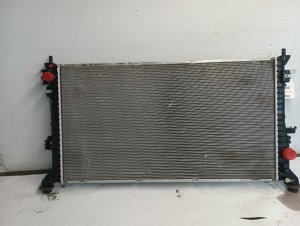
New Aftermarket Parts Available


The information in this article is provided for general reference and educational purposes only. Vehicle specifications, procedures, and part compatibility can vary by production date, trim level, and region. Always consult your vehicle's factory service manual and verify part numbers before purchasing or performing repairs. Safety-critical components such as airbags, seat belts, and braking systems should be installed by a qualified professional.
- Gmc SIERRA 1500:
- 🧭 Diagnostic Flowchart
- 🎬 Helpful Videos
- 🛍️ Shop This Part
- What's Unique About the 2019-2022 Gmc SIERRA 1500
- Symptoms You May Notice
- Most Likely Causes
- Rare But Worth Checking
- Diagnosis Steps
- Parts You'll Likely Need
- Technical Service Bulletins (TSBs) & Recalls
- Platform-Specific Known Issues
- Mechanic-Grade Diagnostic Values
- Scan Tool Commands That Help
- Wiring & Ground Locations
- Real Owner Repair Stories
- Model Year Variations Within This Range
- 🎟️ Get 5% Off