

U0001 on 2015-2020 Ford F-150: Causes and Fixes for High Speed CAN Bus Failure
Code U0001 on a 2015-2020 Ford F-150 means a critical communication failure between essential computer modules on the High-Speed CAN bus. This is most often caused by a damaged wiring harness chafing against the frame or a corroded connector, particularly in the rear of the truck or on the transmission harness. The fix usually involves inspecting and repairing the wiring, which can cost between $200 and $800 depending on the location and severity of the damage.
- U0001 is a critical network failure code. Do not drive the vehicle.
- On the 2015-2020 F-150, the most likely cause is a wiring harness that has rubbed through on the frame.
- Before replacing any expensive modules, perform a detailed visual inspection of the harnesses at the rear of the truck, near the transmission, and in the driver's side wheel well.
- Diagnosis is complex and best left to a professional with network diagnostic tools, but a visual inspection of known problem areas can save significant time and money.
- Check for Ford Special Service Message (SSM) 48563 if you have a 2017-2020 model with these symptoms.
What's Unique About the 2015-2020 Ford F-150
For the 2015-2020 F-150 (13th generation), the U0001 code is frequently traced back to specific wiring harness vulnerabilities. Unlike a random module failure, these trucks have known chafe points where harnesses can rub against the frame or other components, eventually causing wires to short out. Ford even issued a Special Service Message (SSM 48563) for 2017-2020 models regarding a transmission harness (part of the 15525 harness group) that can cause network codes and no-start conditions if not properly secured at the rear of the engine. Investigating these specific, well-documented locations is key to an accurate diagnosis.
Symptoms You May Notice
- Multiple warning lights on the dashboard, often described as a 'Christmas tree' effect (Check Engine, ABS, Airbag, AdvanceTrac).
- Engine will not start or cranks but fails to start.
- Engine stalls while driving.
- Transmission gets stuck in one gear or goes into 'limp mode'.
- Loss of power steering assist.
- BLIS (Blind Spot Information System) and Cross-Traffic Alert fault messages.
- Inability to communicate with multiple modules using a standard OBD-II scanner.
- Auto Start/Stop inoperative message.
- Replacing the PCM or BCM without first thoroughly inspecting all related wiring harnesses. A wiring fault is far more common on this platform and much cheaper to fix.
- Replacing the accelerator pedal for AdvanceTrac warnings that are actually caused by a network communication issue.
Most Likely Causes
- Chafed or Damaged Wiring Harness 🔴 High Probability Multiple forum and video sources identify specific areas where harnesses are poorly routed from the factory, causing them to rub against the frame or other components. The transmission harness is a key offender, as noted in SSM 48563.
How to confirm: Visually inspect known problem areas: the transmission wiring harness where it runs down the back of the engine (ref: SSM 48563), harnesses in the rear bumper area near the frame rails (especially driver's side above the spare tire), and wiring in the driver-side front wheel well. Look for worn insulation, exposed copper wires, or areas where the harness makes sharp contact with metal.
Typical fix: Repair the damaged section of wire using solder and heat-shrink tubing or weatherproof butt connectors. Re-route and secure the harness away from the sharp edge using zip ties and protective wire loom.
Est. part cost: $10-$50 - Corroded Connectors 🟡 Medium Probability Connectors exposed to the elements, particularly in the rear of the truck, are susceptible to water intrusion, leading to pin corrosion and high resistance. The C405 and C408 connectors, located above the spare tire, are frequently cited.
How to confirm: Disconnect and inspect major harness connectors, especially C405 (tailgate/bumper harness) and C408 (backup camera/BLIS) located above the spare tire. Also inspect the BCM connectors in the passenger footwell. Look for green or white crusty deposits, bent pins, or signs of moisture.
Typical fix: Clean the connector pins carefully with an electrical contact cleaner and a small brush. Apply dielectric grease before reconnecting to prevent future moisture intrusion. If corrosion is severe, the connector or individual pins may need to be replaced.
Est. part cost: $5-$100 - Weak or Failing Battery / Poor Ground Connection ⚪ Low Probability → Shop Vehicle Battery
How to confirm: Test the battery voltage; it should be above 12.4V with the engine off. Perform a load test to confirm its health. Inspect the main battery terminals and the primary body/engine ground straps for tightness and corrosion. Low voltage can cause modules to drop off the network.
Typical fix: Replace the battery if it fails a load test. Clean and tighten all ground connections.
Est. part cost: $150-$300 - Faulty Control Module ⚪ Low Probability While any module can fail, the Body Control Module (BCM) and Side Obstacle Detection (SODL/SODR) modules in the taillights are more common culprits for bringing down the network due to their gateway functions or exposure to moisture.
How to confirm: This is a process of elimination. If the wiring, connectors, and power/ground sources are all confirmed to be good, a professional will need to use an advanced scan tool to perform a network test and systematically disconnect modules from the CAN bus to see if communication is restored. The module that, when disconnected, allows the network to come back online is the faulty one.
Typical fix: Replace the failed module. Note that many modules (like the PCM or BCM) require programming by a dealer or a qualified shop to function correctly.
Est. part cost: $400-$1500
Rare But Worth Checking
- Aftermarket Device Interference: Improperly installed remote starters, alarms, or audio equipment can be tapped into the CAN bus wiring, causing signal interference that triggers a U0001 code.
Diagnosis Steps
- Check Battery Health: → Shop Vehicle Battery Ensure the battery has a full charge (12.4V+) and tight, clean terminals. A weak battery can cause numerous communication codes.
- Scan for All Codes: Use a high-level scan tool capable of performing a network test. Note all 'U' codes from all modules. The module that has the most 'lost communication with...' codes is often the one that is offline or faulty.
- Inspect Known Chafe Points: Before any electrical testing, perform a thorough visual inspection of common problem areas. Pay close attention to: - The transmission wiring harness (per SSM 48563 for 2017-2020 models), checking for proper routing and security at the back of the engine. - The wiring harness near the rear bumper and frame rails, especially on the driver's side above the spare tire. - The main harness in the driver's side front wheel well area.
- Inspect Connectors: Disconnect and check key connectors for corrosion or water damage, particularly connector C405 and C408 above the spare tire, and the connectors for the taillights and Blind Spot (SOD) modules.
- Check CAN Bus Resistance: With the battery disconnected, use a multimeter to measure the resistance between Pin 6 (CAN-H) and Pin 14 (CAN-L) at the OBD-II port. A healthy network should read approximately 60 ohms. A reading of 120 ohms indicates an open circuit or a missing terminating resistor (usually in the PCM or BCM). A reading near 0 ohms indicates a short between the two wires.
- Isolate the Faulty Module/Wire (Advanced): If the resistance is incorrect, you must disconnect modules one by one to find the source of the problem. A wiring diagram is essential for this step. Disconnecting the faulty module or section of harness should cause the resistance to return to a normal value.
- Check for Shorts to Power/Ground (Advanced): With the battery disconnected, check for continuity between each CAN line (Pin 6 and Pin 14) and a good ground, and then to battery positive. There should be no continuity.
Parts You'll Likely Need
- Wiring Repair Supplies — The most common cause is a chafed or broken wire that needs to be repaired, not a part that needs to be replaced.
Trusted brands: 3M, Tesa tape
Aftermarket price range: $10-$50 - Body Control Module (BCM)
(OEM #JU5Z-15604-BXFC (example for 2018-2020 models, always verify with VIN))— The BCM acts as a central gateway for multiple networks. If it fails internally, it can bring down the entire HS-CAN bus. This is a less common cause and should only be replaced after confirming all wiring is intact.
Trusted brands: Ford (OEM)
OEM price range: $400-$700
Aftermarket price range: $250-$500 (Remanufactured)
Related Codes That Often Appear With This One
- U0100 — Lost Communication With ECM/PCM
- U0101 — Lost Communication with TCM (Transmission Control Module).
- U0121 — Lost Communication With Anti-Lock Brake System (ABS) Control Module.
- U0140 — Lost Communication With Body Control Module.
- U0074 — Control Module Communication Bus B Off - often cited alongside U0001 in SSM 48563.
Technical Service Bulletins (TSBs) & Recalls
- SSM 48563: Addresses no-crank/no-start and multiple network DTCs due to an improperly secured transmission wire harness on 2017-2020 F-150s.
Platform-Specific Known Issues
- SSM 48563: A Special Service Message issued for 2017-2020 F-150s for a misrouted transmission harness that can cause a no-start and various communication DTCs.
- Rear Frame Harness Chafing: A documented issue where the wiring harness routed along the frame in the rear of the truck can rub through, causing faults in the BLIS and Cross-Traffic systems which use the CAN bus.
- Front Wheel Well Harness Damage: Reports of the main harness under the fuse box in the driver's side wheel well being damaged by tire rub, severing communication wires.
Diagnostic Flowchart
Other Known Issues on This Vehicle
Issues unrelated to this code that are worth knowing about as an owner of this generation:
- Frozen Door Latches 🔴 High — Widespread on 2015-2017 models, especially in cold climates. (Ref: Recall 17S33 / NHTSA 17V652.)
- 10R80 10-Speed Transmission Harsh Shifting 🟠 Medium → Shop Transmission Assembly — Common on 2017-2020 models, particularly early in the production run. Often presents as harsh or delayed shifts. (Ref: Multiple TSBs issued, including TSB 18-2274, TSB 21-2145, and TSB 24-2046 for software updates and mechanical fixes.)
- 5.0L V8 Excessive Oil Consumption 🟠 Medium — Affects some 2018-2020 models with the 5.0L Coyote V8. (Ref: TSB 19-2365 details a PCM reprogram and new dipstick to address the issue.)
- Warped Dashboard 🟡 Low — Cosmetic issue affecting many 2015-2020 trucks, where the dashboard deforms near the defrost vents.
- Panoramic Sunroof Drain Tube Leaks 🟠 Medium — Occurs when drain tubes become clogged, leading to water leaking into the cabin, potentially damaging headliner and electronics.
- 3.5L EcoBoost Cam Phaser Rattle 🔴 High — A metallic rattle on cold starts, indicating wear in the cam phasers. Can lead to expensive timing system repairs if ignored.
Real Owner Stories
Aggregated from forums and TSBs cited above. Mileages and costs reflect what owners reported in those sources.
2017 Ford F-150
Symptoms: No-crank/no-start condition along with multiple network DTCs appearing simultaneously.
What fixed it: Inspected and repaired the transmission wire harness which was improperly secured at the back of the engine per SSM 48563.
Source hint: SSM 48563
2015 Ford F-150
Symptoms: Owner reported issues with the C405 connector and was seeking its location to troubleshoot communication problems.
What fixed it: Cleaning and inspecting the C405 connector located above the spare tire for water intrusion and corrosion.
Source hint: f150forum.com - C405 Connector Help
2016 Ford F-150
Symptoms: Main harness under the fuse box was damaged, leading to severed communication wires.
What fixed it: Repairing the harness in the driver's side front wheel well that had been damaged by tire rub.
Source hint: Front Wheel Well Harness Damage report
Related OBD-II Codes
Frequently Asked Questions
My 2018 F-150 won't crank and has multiple network codes; is there a specific service bulletin for this?
I'm seeing BLIS and Cross-Traffic Alert faults on my dashboard. Could this be related to U0001?
Can a bad battery cause U0001 communication errors on a 2015-2020 F-150?
Where are the most common wiring 'chafe points' I should check on my truck?
Why is my F-150 showing a 'Christmas tree' of lights like ABS, Airbag, and AdvanceTrac all at once?
Do I need to program a new Body Control Module (BCM) if it's the cause of my U0001 code?
Helpful Videos

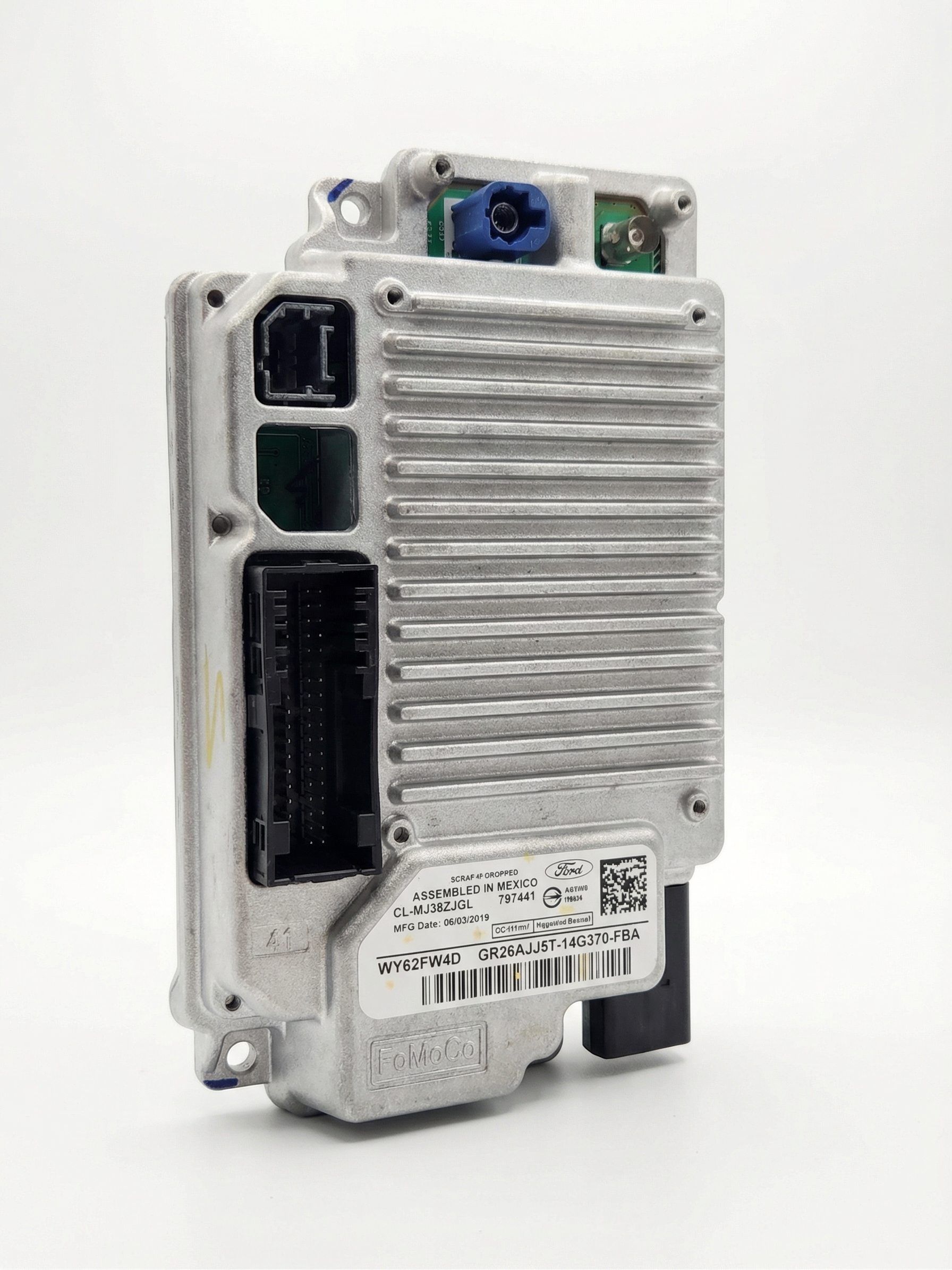
We Have This Part in Stock

The information in this article is provided for general reference and educational purposes only. Vehicle specifications, procedures, and part compatibility can vary by production date, trim level, and region. Always consult your vehicle's factory service manual and verify part numbers before purchasing or performing repairs. Safety-critical components such as airbags, seat belts, and braking systems should be installed by a qualified professional.
- Ford F-150:
- 🧭 Diagnostic Flowchart
- 🎬 Helpful Videos
- 🛍️ Shop This Part
- What's Unique About the 2015-2020 Ford F-150
- Symptoms You May Notice
- Most Likely Causes
- Rare But Worth Checking
- Diagnosis Steps
- Parts You'll Likely Need
- Related Codes That Often Appear With This One
- Technical Service Bulletins (TSBs) & Recalls
- Platform-Specific Known Issues
- Other Known Issues on This Vehicle
- Real Owner Stories
- 2017 Ford F-150
- 2015 Ford F-150
- 2016 Ford F-150
- Related OBD-II Codes
- Frequently Asked Questions
- 🎟️ Get 5% Off