

U0073 on 2013-2018 Hyundai Santa Fe: Network Communication Causes and Fixes
U0073 indicates a total communication failure on the vehicle's main computer network (CAN bus). The cause can be a simple blown fuse, a weak battery, corroded wiring, or a more complex issue like a wiring short or a single faulty module bringing the whole network down. Professional diagnosis is strongly recommended as there is no single common fix, and it requires specialized tools to diagnose properly.
- U0073 is a critical code indicating a complete failure of the vehicle's primary communication network.
- Do not drive the vehicle. There is a high risk of stalling or unpredictable behavior.
- The cause is not one single part; it could be a wiring fault, a bad ground, a weak battery, or any one of the dozens of modules on the network failing.
- Due to the complexity, professional diagnosis with advanced tools is essential. Do not start replacing expensive modules like the ECM without a confirmed diagnosis.
- Check for open recalls, particularly the ABS module recall on 2018 models, as this is a known potential cause for a catastrophic electrical/network fault.
What's Unique About the 2013-2018 Hyundai Santa Fe
For the 2013-2018 Santa Fe, a U0073 code doesn't point to one single, universally common failure part. It's a general network fault. However, documented issues on this platform provide clues. There is a known recall for ABS modules that can short circuit, which could potentially bring down the entire network. Additionally, case studies have shown that seemingly unrelated components, like a faulty rearview camera, can short out and disrupt the CAN bus, causing this code and widespread electronic havoc in the vehicle. Water intrusion in the driver's kick panel area is another potential area to inspect for corrosion affecting CAN bus wiring.
Generation note: This guide covers the third generation (DM) of the Hyundai Santa Fe, which includes both the 5-seater Santa Fe Sport and the 7-seater Santa Fe (later renamed Santa Fe XL) from 2013 to 2018. The underlying CAN network architecture is similar across these models and also shares similarities with its platform-mate, the Kia Sorento.
Symptoms You May Notice
- Multiple warning lights on the dashboard (Check Engine, ABS, Traction Control, etc.)
- Vehicle will not start or starts and then stalls
- Loss of power or erratic engine performance
- Transmission may not shift correctly or may be stuck in one gear
- Gauges on the instrument cluster behaving erratically or not working
- Power windows, radio, or other electronic accessories may not function
- Inability to release the electronic parking brake 🎬 See this breakdown of common bad ABS module symptoms.
- Reduced fuel economy
- Replacing the ECM or another expensive module without confirming it is the specific cause of the network failure. The U0073 code is a network-wide problem, and the true cause is often a different, less-obvious module or a simple wiring issue.
Most Likely Causes
- Damaged Wiring or Corroded Connectors 🔴 High Probability Wiring harnesses can be susceptible to damage from road debris, moisture intrusion, or rodent activity. Specific areas to check include the driver's kick panel fuse box area for water intrusion, under the carpet, and any harnesses near the battery or firewall. Soy-based wiring insulation used in this era can also attract rodents.
How to confirm: A technician will perform a detailed visual inspection of the CAN bus wiring harnesses. They will also use a multimeter to check for continuity, shorts to power, or shorts to ground between the CAN High and CAN Low wires at the OBD-II port and various module connectors.
Typical fix: Repairing the specific section of damaged wire or cleaning/replacing the corroded connector.
Est. part cost: $5-$50 for wiring supplies - Faulty Control Module 🟡 Medium Probability Any module on the network can fail internally, causing it to short the communication lines or stop communicating. A recall for shorting ABS modules on these models makes it a prime suspect. A failed instrument cluster or clock spring are also known points of failure on Hyundai models that can disrupt CAN communication.
How to confirm: This is a process of elimination. A technician with an advanced scan tool will try to communicate with all modules. If the network is down, they will disconnect modules one by one from the CAN bus until communication is restored. The module whose disconnection brings the network back online is the faulty one.
Typical fix: Replacing the failed module (e.g., ABS module, rearview camera, instrument cluster) and programming the new one to the vehicle.
Est. part cost: $200-$1500+ depending on the module - Weak or Failing Battery / Poor Ground Connection 🟡 Medium Probability → Shop Vehicle Battery Low system voltage can cause electronic modules to malfunction and fail to initialize properly, leading to communication errors. Corroded or loose ground straps, particularly the main chassis and engine block grounds, are a common point of failure.
How to confirm: Test the battery voltage at rest (should be >12.4V) and while the engine is running (should be >13.5V). Inspect and clean the main battery terminals, chassis ground, and engine block ground straps. A voltage drop test across the ground connections can confirm a poor connection.
Typical fix: Recharging or replacing the battery. Cleaning or tightening ground connections.
Est. part cost: $150-$300 for a new battery
Rare But Worth Checking
- Faulty Aftermarket Accessory: Improperly installed aftermarket devices like remote starters, alarms, or stereo systems can interfere with or short out the CAN bus network. If the problem started after an installation, this should be the first suspect. Disconnect the device entirely to see if communication is restored.
Diagnosis Steps
- Check the battery: Ensure the battery is fully charged (>12.4V) and the terminals and ground connections are clean and tight. Low voltage is a common cause of communication issues.
- Scan for all codes: Use a professional scan tool to see which modules are not communicating and to check for any other related trouble codes. Note which modules are online and which are offline.
- Inspect fuses: Check all fuses related to the various control modules (ECM, TCM, BCM, ABS, etc.), especially the multi-fuse for the ABS module, which is subject to a recall.
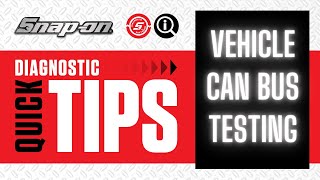
- Check OBD-II port: A technician will measure the resistance between Pin 6 (CAN High) and Pin 14 (CAN Low) with the battery disconnected. A healthy network should read approximately 60 ohms. 🎬 Watch: How to test CAN bus resistance with a multimeter. A reading of 120 ohms suggests a problem with a terminating resistor or a break in the circuit. A reading near 0 ohms indicates a short circuit.
- Visual inspection: Visually inspect wiring harnesses for obvious signs of damage, corrosion, or rodent activity, paying close attention to areas near the engine, under the vehicle, behind the dashboard, and in the driver's kick panel.
- Isolate the fault: This is the most complex step. A technician will disconnect modules one by one from the network. After disconnecting each module, they will re-check the network resistance or attempt to re-establish communication. When the network comes back online (resistance returns to 60 ohms), the last module disconnected is the source of the problem.
- Test the faulty module/circuit: Once a module or circuit is identified, it must be tested specifically to confirm the failure before replacement. This may involve checking for power, ground, and signal integrity at the module's connector.
Parts You'll Likely Need
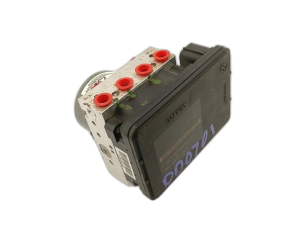
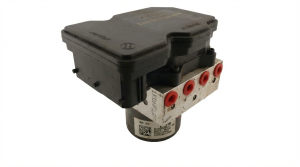
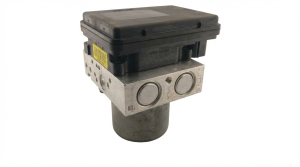
- ABS Control Module
(OEM #58920-B8700)— A recall for internal short circuits on 2016-2018 models makes the ABS module a component of interest. A shorting module can easily take down the entire CAN network, causing a U0073 code.
Trusted brands: Hyundai (OEM)
OEM price range: $800-$1500
Aftermarket price range: $400-$800 - Wiring Harness Connector or Pigtail — Corrosion or damage at a single connector in the CAN bus is a frequent cause of network failure. Common areas for corrosion include connectors in the engine bay and driver's side kick panel.
Trusted brands: Hyundai (OEM), Dorman
OEM price range: $20-$100
Aftermarket price range: $10-$50
Related Codes That Often Appear With This One
- U0100, U0121, U0140, etc. — When the main communication bus goes down (U0073), individual modules will also store codes indicating they have lost communication with other specific modules (e.g., U0100 Lost Communication with ECM, U0121 Lost Communication with ABS). A long list of U-codes is a classic symptom of a network-wide failure.
Platform-Specific Known Issues
- Recall 237 / 218 (NHTSA 22V-056): Affects certain 2016-2018 Santa Fe, 2017-2018 Santa Fe Sport, and 2019 Santa Fe XL models. The ABS module can malfunction internally, causing an electrical short that could lead to a fire and potentially disrupt CAN communication. The remedy involves replacing the ABS multi-fuse. Owners were advised to park outside.
- Diagnostic Case Study: A 2016 Santa Fe with multiple CAN faults and warning lights was traced to a faulty rearview camera that was shorting the network. Moisture can enter the camera, causing it to short out.
- Forum Experience: A user on hyundai-forums.com with a 2015 Santa Fe Sport reported a no-crank, no-start condition that was ultimately traced to poor ground connections. Cleaning the battery terminals and chassis ground points resolved the issue.
Mechanic-Grade Diagnostic Values
- CAN Bus Resistance — expected: ~60 Ω across Pin 6 (CAN-H) and Pin 14 (CAN-L) of the OBD-II port with the battery disconnected.. Failure: A reading of ~120 Ω indicates one of the two terminating resistors is offline or there's a break in the wiring. A reading near 0 Ω indicates a short between the CAN-H and CAN-L wires.
- CAN Bus Voltage (Key On, Engine Off) — expected: CAN_H (Pin 6) should be ~2.5V to ~3.5V. CAN_L (Pin 14) should be ~1.5V to ~2.5V. Both lines should show around 2.5V in the idle (recessive) state.. Failure: A line stuck at 0V or 5V indicates a short to ground or power, respectively. No voltage fluctuation indicates no communication.
Scan Tool Commands That Help
- Hyundai GDS (Global Diagnostic System): DTC Analysis & Network Topology — The GDS can display a network topology map showing which modules are communicating and which are offline. This is the primary tool for visualizing the scope of the U0073 fault and identifying which modules are not responding, which is a critical first step before physical testing.
- Hyundai GDS (Global Diagnostic System): Vehicle S/W Management — This function is used for reprogramming or updating a module's software. If a module is suspected of having a software glitch causing it to disrupt the network, a reflash with the latest calibration can be attempted as a diagnostic step before replacing the module.
Wiring & Ground Locations
- Smart Junction Box (SJB) — Located in the driver's side instrument panel, behind the cover.. The SJB is a central hub for multiple vehicle networks, including the C-CAN and B-CAN. Many CAN lines pass through its connectors, making it a critical point for inspection. For example, on a 2014 model, the B-CAN lines can be found on the blue 31-pin plug (A).
- Ground Points: GM03, GM04, GM05 — These are key ground distribution points located behind and on the sides of the main dash assembly. For example, GM04 is behind the center of the dash.. Multiple modules share these ground points. A loose or corroded ground at one of these locations can cause intermittent communication faults and trigger a U0073 code by creating an unstable voltage reference for one or more modules.
- CAN Terminating Resistors — On most modern vehicles, the two 120 Ω terminating resistors are not separate parts but are integrated within two different control modules at the physical ends of the bus (e.g., the ECM and the Instrument Cluster).. The entire network relies on these two resistors to function. If a module containing a terminating resistor fails or is disconnected, the total bus resistance will change from 60 Ω to 120 Ω, causing communication instability.
- Driver Kick Panel Connectors (MF11, EM11) — In the driver's side kick panel area, near the floor.. These large multi-pin connectors are major pass-throughs for wiring harnesses going to the rest of the vehicle. They are susceptible to corrosion from water entry (e.g., from a clogged sunroof drain or leaking windshield seal) which can short CAN bus wires.
Real Owner Repair Stories
- Hyundai Forums user (2007 Hyundai Santa Fe) — Air bag light was on, cruise control and trip computer buttons started to act up.
❌ Tried (didn't work) Initial diagnosis pointed to a general electrical issue.
✅ What actually fixed it The dealer found fault codes related to the clock spring. Replacing the clock spring resolved the issues with the airbag light and steering wheel controls, which were likely causing interference on the CAN bus.
OEM Part Supersession History
58920-B8700→N/A, but multiple similar part numbers exist for different trims/years.— This specific part number applies to the 2013-2016 Santa Fe (LWB, 3.3L, without Sport package). Other numbers like 58920-2W800 fit 2012-2014 models, and 58920-F2500 fits 2013-2015 Sport models.
Heads up: It is critical to match the ABS module part number exactly to the vehicle's VIN and equipment (e.g., Sport vs. LWB). An incorrect module may not program or function correctly, even if it physically fits.
Model Year Variations Within This Range
- 2017-2018: The 2017 model year received a significant refresh, adding more advanced electronic systems like a multi-view camera, full-range adaptive cruise control, lane departure warning, and an electronic parking brake. These additional modules increase the complexity of the CAN network, adding more potential points of failure that could lead to a U0073 code compared to the 2013-2016 models.
- 2013-2017: When installing an aftermarket stereo, a specific CANBUS adapter box is required to integrate with the factory amplifier and OEM backup camera. Compatibility depends on whether the factory radio has a 16-pin or 24-pin camera connector, which can vary.
Diagnostic Flowchart
Other Known Issues on This Vehicle
Issues unrelated to this code that are worth knowing about as an owner of this generation:
- Theta II Engine Failure 🔴 High — Widespread across 2.0L and 2.4L GDI engines, particularly in 2013-2014 models. Can occur under 100,000 miles. Symptoms include knocking, seizing, and excessive oil consumption. (Ref: Multiple recalls and a class-action lawsuit settlement resulted in extended/lifetime warranties for the engine short block for many owners.)
- ABS Module Fire Risk 🔴 High → Shop ABS Control Module — Affects a significant number of 2016-2018 models. An internal short can cause a fire, even when the vehicle is parked. (Ref: NHTSA Recall 22V-056 (Hyundai Recall 218/237).)
- Peeling Exterior Paint 🟡 Low — Common on white and other light-colored vehicles. Paint can delaminate and peel off in large sheets, particularly on the roof and hood. (Ref: No recall, but some owners have had success getting goodwill repairs from dealers, especially if the vehicle is still under warranty.)
- Faulty Crankshaft Position Sensor 🟠 Medium — Reported on 2014 models, causing the engine to stall unexpectedly while driving, often when hot. The engine may restart after cooling down.
- Transmission Hesitation 🟠 Medium → Shop Transmission Assembly — Owners of 2017 models in particular report hesitation or stuttering during acceleration and shifting.
- Corroding Hood Latch Cable 🟠 Medium — Affects 2013-2017 models. The secondary hood latch cable can corrode and bind, preventing the safety latch from engaging when the hood is closed. (Ref: Hyundai Recall)
Used vs. New Parts: Buying Guide for This Vehicle
When a used part is the smart pick: For expensive control modules like the ABS module or Instrument Cluster, a used part from a reputable salvage yard can offer significant savings (50-80%). Since these are not typical wear-and-tear items, a used module from a lower-mileage, accident-free donor vehicle is often a reliable and cost-effective repair.
Donor-vehicle mileage cap: roughly under 100000 miles for the part to have meaningful remaining life.
What to inspect on the donor part:
- Verify the part number on the used module exactly matches the original.
- Inspect connectors for any signs of corrosion, bent pins, or heat damage.
- Choose a seller that offers a warranty (e.g., 6 months) and a return policy.
- Obtain the VIN of the donor vehicle to check its history for flood or fire damage.
OEM-only on this vehicle (don't cheap out):
- ABS Control Module: While a used OEM part is a good option, avoid unbranded aftermarket ABS modules. These can have software incompatibilities and may not program correctly to the vehicle, leading to persistent faults.
Brands owners have reported issues with on this vehicle:
- Generic, unbranded electronic modules sold on marketplace websites. These often lack the proper software and quality control, leading to repeat failures or new issues.
Real Owner Stories
Aggregated from forums and TSBs cited above. Mileages and costs reflect what owners reported in those sources.
2016 Hyundai Santa Fe
Symptoms: Multiple CAN faults and warning lights on the dashboard.
What fixed it: Replacement of a faulty rearview camera that was shorting the network due to moisture intrusion.
Source hint: Aftermarket Magazine - 'Take the Santa Fe – diagnostic – trail'
2015 Hyundai Santa Fe Sport
Symptoms: No-crank, no-start condition.
What fixed it: Cleaning the battery terminals and chassis ground points.
Source hint: Hyundai Forums - '2015 hyundia santa fe sport'
2019 Hyundai Santa Fe
Symptoms: CAN/BUS communication issues.
What fixed it: Diagnostic procedure at the OBD-II port checking for 60/120 ohms resistance and 2.3-2.7V values to isolate the fault.
Source hint: Reddit r/MechanicAdvice - '19 Santa Fe CAN/BUS Issue'
Related OBD-II Codes
Frequently Asked Questions
Is there a recall for my 2016-2018 Santa Fe that could cause communication errors like U0073?
My 2015 Santa Fe Sport won't start and has multiple warning lights; could it be a simple battery issue?
Can a faulty rearview camera really cause a U0073 code on a 2016 Santa Fe?
Why is my Santa Fe's wiring prone to damage that causes communication codes?
What should the resistance be when testing the CAN bus at the OBD-II port?
Does the engine failure issue on 2013-2014 models relate to U0073?
Helpful Videos
We Have This Part in Stock

The information in this article is provided for general reference and educational purposes only. Vehicle specifications, procedures, and part compatibility can vary by production date, trim level, and region. Always consult your vehicle's factory service manual and verify part numbers before purchasing or performing repairs. Safety-critical components such as airbags, seat belts, and braking systems should be installed by a qualified professional.
- Hyundai Santa Fe:
- 🧭 Diagnostic Flowchart
- 🎬 Helpful Videos
- 🛍️ Shop This Part
- What's Unique About the 2013-2018 Hyundai Santa Fe
- Symptoms You May Notice
- Most Likely Causes
- Rare But Worth Checking
- Diagnosis Steps
- Parts You'll Likely Need
- Related Codes That Often Appear With This One
- Platform-Specific Known Issues
- Mechanic-Grade Diagnostic Values
- Scan Tool Commands That Help
- Wiring & Ground Locations
- Real Owner Repair Stories
- OEM Part Supersession History
- Model Year Variations Within This Range
- Other Known Issues on This Vehicle
- Used vs. New Parts: Buying Guide for This Vehicle
- Real Owner Stories
- 2016 Hyundai Santa Fe
- 2015 Hyundai Santa Fe Sport
- 2019 Hyundai Santa Fe
- Related OBD-II Codes
- Frequently Asked Questions
- 🎟️ Get 5% Off