

U0073 on 2017-2022 Kia Sportage: CAN Bus Communication Failure Causes and Fixes
Code U0073 on a 2017-2022 Kia Sportage means there's a major communication failure on the vehicle's main computer network (CAN bus). The most likely causes are wiring damage, a weak battery, or a poor ground connection. A full electrical diagnosis is required; simply replacing parts is not recommended.
- U0073 is a serious network failure code, not a simple part failure. Do not drive the vehicle.
- Diagnosis must be methodical. Start with the easiest and most common causes: check the battery, fuses, and look for obvious wiring damage.
- A professional scan tool is required to see which modules are offline, which is a critical diagnostic step.
- The most likely cause is a physical problem with the wiring, a bad connection, or an unstable power supply.
- Do not replace expensive control modules unless they have been definitively identified as the source of the network failure through a process of elimination.
What's Unique About the 2017-2022 Kia Sportage
The fourth-generation (QL) Kia Sportage is a modern vehicle with dozens of interconnected electronic modules. While the U0073 code is generic, on this platform it often points to issues in the physical wiring harness or a failing control module. Owners have reported seemingly unrelated electrical failures, such as a melted fuse in the main battery harness causing a total loss of power, which can also trigger network codes like U0073. A key area of concern is the Smart Junction Box (SJB), which integrates the Body Control Module (BCM). A failing SJB can cause a cascade of communication errors and electrical faults. The diagnostic process is not about a single known faulty part, but rather a methodical search for the break in the communication line, which could be anywhere in the vehicle.
Symptoms You May Notice
- Multiple warning lights illuminated on the dashboard at once (Check Engine, ABS, Traction Control, EPS, Airbag)
- Loss of power steering (EPS warning light on)
- Instrument cluster gauges dropping to zero or behaving erratically
- Failure of electrical accessories like power windows, radio, or climate controls
- Transmission may shift harshly or get stuck in one gear ('limp mode')
- Engine may not start (no-crank) or may stall unexpectedly
- Vehicle enters 'limp mode' with reduced power and RPM limited to 1800-2000
- Brake warning light illuminated
- Replacing a single control module (like the ECM or BCM) without confirming it is the source of the network failure. The code often means that module *can't communicate*, not that it is necessarily broken.
- Replacing the instrument cluster because the gauges are acting erratically. The cluster is usually just reporting the data it's receiving (or not receiving) from the network.
- Overlooking a weak battery or poor charging system performance, which is a frequent and simple-to-fix root cause.
Most Likely Causes
- Damaged or Corroded CAN Bus Wiring 🔴 High Probability Wiring harnesses can be susceptible to damage from vibrations, improper repairs, rodent intrusion, or water leaks. Connectors in exposed areas, like near the wheel wells or undercarriage, can suffer from water intrusion and corrosion, disrupting the CAN signal.
How to confirm: Perform a detailed visual inspection of the main wiring harnesses in the engine bay, under the dashboard, and near the fuse boxes. Look for chafed, pinched, or chewed wires. Check the resistance between CAN High (Pin 6) and CAN Low (Pin 14) at the OBD-II port with the battery disconnected; it should be approximately 60 ohms. A reading of 120 Ohms suggests a break in the circuit or a missing terminating resistor. A reading near 0 Ohms indicates a short circuit.
Typical fix: Repair the damaged section of the wiring harness. If a connector is corroded, it may need to be cleaned with a specialized contact cleaner or replaced entirely.
Est. part cost: $10-$100 - Weak or Failing Battery / Poor Power Supply 🟡 Medium Probability → Shop Vehicle Battery Modern vehicles are highly sensitive to voltage. A weak battery can provide enough power to crank the engine but may drop below the threshold required for all control modules to initialize and communicate properly, especially during startup. This is a very common trigger for network communication codes.
How to confirm: Test the battery voltage with a multimeter. A healthy battery should read at least 12.4 volts at rest and maintain voltage above 10 volts while cranking. Check that the alternator is charging correctly (typically 13.8-14.5 volts with the engine running).
Typical fix: Recharge or replace the vehicle's battery. Ensure battery terminals are clean and tight.
Est. part cost: $150-$300 - Faulty Control Module (e.g., BCM/SJB, ABS) 🟡 Medium Probability Any single module on the CAN network can fail internally, causing it to either stop communicating or broadcast disruptive signals that take down the entire network. On the Sportage, the Smart Junction Box (SJB), which contains the Body Control Module (BCM), is a known point of failure that can cause widespread electrical issues and communication codes.
How to confirm: This requires a professional scan tool. The diagnostic process involves disconnecting one module at a time and re-checking if communication is restored to the other modules. If the network comes back online after unplugging the ABS module, for example, then the ABS module is the likely culprit. A failing SJB may also cause parasitic battery drain.
Typical fix: Replace the faulty control module. A new module, especially the SJB/BCM, will require programming by a dealership or a qualified shop to work with the vehicle's specific VIN and options. Common SJB part numbers include 91950-D9650 (2018-2019) and 91955-D9660 (2020-2022).
Est. part cost: $400-$1500+ - Poor Ground Connection ⚪ Low Probability Ground straps and connection points can corrode or become loose over time, creating high resistance and causing intermittent electrical issues for one or more modules. Key ground points are located in the engine bay and under the dashboard near the fuse panel.
How to confirm: Visually inspect and physically check the main ground points for the engine, chassis, and under the dashboard. Use a multimeter to check for voltage drops between the battery negative terminal and various ground points on the chassis and engine block. A good ground should show minimal voltage drop.
Typical fix: Clean the contact surfaces of the ground connection with a wire brush and tighten the bolt securely. Apply dielectric grease to prevent future corrosion.
Est. part cost: $1-$10
Rare But Worth Checking
- Faulty Aftermarket Electronics: Improperly installed aftermarket head units, remote starters, or alarms can tap into CAN bus wires incorrectly, causing interference that disrupts network communication. If the problem started after a new accessory was installed, this should be the first suspect. The CAN bus wires are often accessed behind the radio for these installations.
- Software Glitch / Required Update: While no specific TSB links U0073 to a software bug on this model, other Kia TSBs show that CAN signal processing errors can sometimes be fixed with a module software update. For example, TSB ELE299 addresses a software update for the Smart Junction Block for false brake light warnings on 2020-2022 models. This indicates that module software can be a source of communication-related issues.
- Faulty Accessory Tow Hitch Wiring Harness: Kia has issued recalls (NHTSA 22V703000) for tow hitch harnesses that can short circuit due to moisture and debris accumulation on the module's circuit board, potentially causing a fire. While not directly linked to U0073, such a short circuit on a module connected to the vehicle's electrical system could potentially disrupt network communication.
Diagnosis Steps
- Check Battery Health: Start with the basics. Ensure the battery is fully charged (12.4V+ at rest) and the terminals are clean and tight. Test the battery under load and verify the charging system is working (13.8-14.5V).
- Scan for All Codes: Use a professional-grade scanner to read codes from ALL modules, not just the engine controller. Note which modules are not responding. This is critical for narrowing down the fault.
- Inspect Fuses: Check all related fuse boxes (in the engine bay and inside the cabin) for any blown fuses, particularly those labeled for ECU, BCM, ABS, Cluster, or other control units.
- Check CAN Bus Resistance: With the battery disconnected, measure the resistance between Pin 6 (CAN-H) and Pin 14 (CAN-L) on the OBD-II port. A healthy network should read approximately 60 Ohms. A reading of 120 Ohms suggests a break in the circuit or a faulty terminating resistor. A reading near 0 Ohms indicates a short circuit between the CAN lines.
- Visual Inspection: Thoroughly inspect all visible wiring harnesses for signs of damage, chafing, corrosion, or rodent activity. Pay close attention to harnesses in the engine bay, under the dash, and where they pass through the firewall.
Parts You'll Likely Need
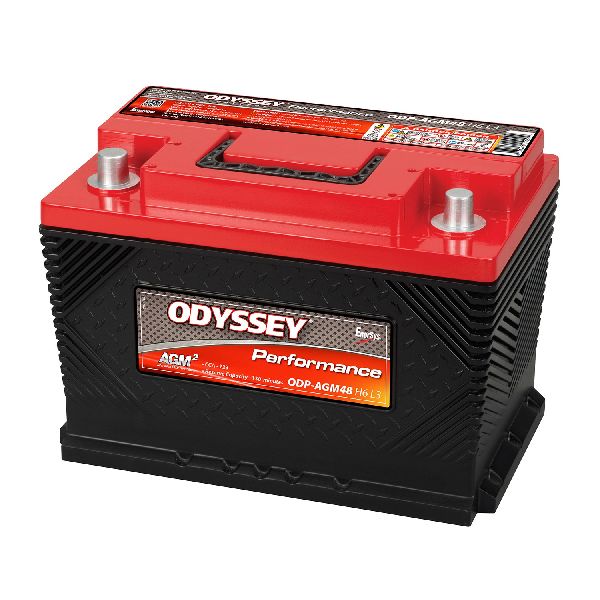
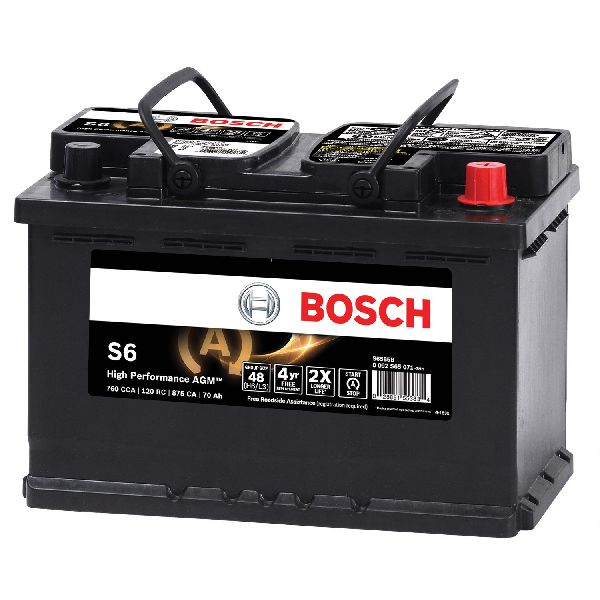
- Vehicle Battery — A weak or failing battery is a common cause of low voltage, which can disrupt module communication during startup.
Trusted brands: Bosch, Interstate, DieHard
OEM price range: $200-$350
Aftermarket price range: $150-$300 - Wiring Harness Repair Supplies — If the fault is a broken or corroded wire, repairing the harness is the most common fix. This is not a specific part but a collection of supplies.
OEM price range: $10-$50
Aftermarket price range: $10-$50 - Control Module (ABS, BCM, etc.) — If a specific module is identified as faulty and pulling down the network, it will need to be replaced. The specific module varies depending on the diagnostic results.
Trusted brands: Kia (OEM)
OEM price range: $400-$1500+
Related Codes That Often Appear With This One
- U0100 — Lost Communication With ECM/PCM
- U0121 — Lost Communication With Anti-Lock Brake System (ABS) Control Module
- U0140 — Lost Communication With Body Control Module (BCM)
- P1326 — Knock Sensor Detection System. While not a communication code, this code puts the vehicle in limp mode, which can sometimes be confused with or occur alongside network failure symptoms.
Technical Service Bulletins (TSBs) & Recalls
- TSB ELE299: Addresses a software update for the Smart Junction Block (SJB) on 2020-2022 models for a false 'Check brake light' warning, showing that software updates can fix module communication issues.
- Product Improvement Campaign PI1802: Provides a software update to install the Knock Sensor Detection System (KSDS) to protect the engine. While not for U0073, it is a critical software update for this platform that can cause limp mode and warning lights, sometimes confused with network issues.
Platform-Specific Known Issues
- Smart Junction Box (BCM) Failure: The Smart Junction Box (SJB), which houses the Body Control Module (BCM), is a known failure point. A faulty SJB can cause a wide array of electrical gremlins, including parasitic battery drain, flickering lights, and communication codes like U0140 and U0073. Replacement requires a part with a matching OEM number (e.g., 91950-D9650) and dealer programming.
- Electronic problems in the new Kia Sportage: A forum user describes an experience with a new Sportage where multiple errors appear on the dash, the electric brake engages, and the car loses power. The dealer repeatedly replaced wiring harnesses and control units, indicating the complexity and potential for recurring CAN bus issues.
Mechanic-Grade Diagnostic Values
- CAN Bus Network Resistance — expected: ~60 Ω (Ohms) between Pin 6 (CAN-H) and Pin 14 (CAN-L) at the OBD-II port with the battery disconnected.. Failure: A reading of ~120 Ω indicates an open circuit or one of the two terminating resistors is offline. A reading near 0 Ω indicates a short between the CAN-H and CAN-L wires.
- CAN Bus Voltage (Key On, Engine Off) — expected: CAN-H (Pin 6 to Ground) should be ~2.6V. CAN-L (Pin 14 to Ground) should be ~2.4V. These are average readings on a multimeter; an oscilloscope will show signals fluctuating between 1.5V and 3.5V.. Failure: No voltage, or voltage that is stuck high or low, indicates a short to power or ground on the respective line.
- CAN Bus Baud Rate — expected: 500k. Failure: Not directly measured, but incorrect configuration in an aftermarket device can disrupt the network.
Scan Tool Commands That Help
- Kia GDS (Global Diagnostic System): Vehicle Software Management / Special Function — Used for programming a new or used Body Control Module (BCM/SJB) to the vehicle's VIN and key configuration. This is a mandatory step after replacement.
- Kia GDS (Global Diagnostic System): Actuation Tests / Module Communication Status — To actively poll all modules on the CAN network and see which ones are responding and which are not. This helps isolate the source of the communication failure without having to physically disconnect each module one-by-one initially.
Wiring & Ground Locations
- OBD-II / Data Link Connector — Below the left side of the driver's dashboard.. This is the primary access point for testing the entire CAN network. Pin 6 (CAN-H) and Pin 14 (CAN-L) are used for resistance and voltage checks.
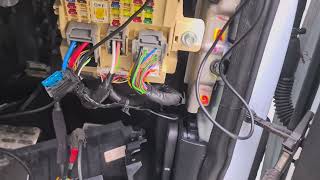
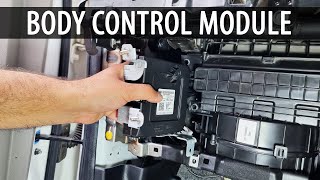
- Smart Junction Box (SJB) / BCM — Integrated with the interior fuse panel, located behind the glove box.. This is a central communication hub and a common failure point. A fault here can take down the entire network. It also houses fuses for multiple modules.
- Multipurpose Check Connector — Located in the engine room fuse & relay box.. This connector serves as another junction point for CAN lines, providing an alternative location to test network segments if the OBD-II port gives ambiguous readings.
- Transaxle Range Switch Connector (C301) — On top of the transmission housing.. While primarily for the starting system, wiring to this switch is part of a larger harness. Damage or corrosion in this area could potentially affect nearby CAN bus wiring.
OEM Part Supersession History
91950-D9650→N/A— Model Year Specific Part
Heads up: This Smart Junction Box (BCM) is typically found on 2018-2019 Sportage models.91955-D9660→N/A— Model Year Specific Part
Heads up: This Smart Junction Box (BCM) is typically found on 2020-2022 Sportage models, which correspond to the facelift. Do not interchange with the earlier part number.
Model Year Variations Within This Range
- 2019-2022: A mid-cycle facelift was introduced for the 2019/2020 model year, which included revised front/rear bumpers, new headlamp/taillight designs, a revised instrument cluster, and new powertrain options like a mild-hybrid diesel in some markets. These changes introduced different part numbers for electronic modules like the Smart Junction Box (BCM).
Diagnostic Flowchart
Other Known Issues on This Vehicle
Issues unrelated to this code that are worth knowing about as an owner of this generation:
- Theta II GDI Engine Failure 🔴 High — Widespread across multiple model years, leading to class-action lawsuits and recalls. Failures can occur at various mileages, often starting with knocking noises or excessive oil consumption. (Ref: Multiple recalls (e.g., 17V-224) and a lifetime warranty extension were issued. TSB PI1802 installs a Knock Sensor Detection System (KSDS) to provide early warning of impending failure.)
- Hydraulic Electronic Control Unit (HECU) Fire Risk 🔴 High — Affects certain 2017-2021 Sportage models. An electrical short within the HECU (ABS module) can cause a fire in the engine compartment, even when the vehicle is turned off. (Ref: NHTSA Recall 21V137000)
- Excessive Oil Consumption 🟠 Medium — Common complaint for the 2.4L and 2.0T engines, often a precursor to more serious engine problems related to the Theta II issues. (Ref: Related to the broader engine recalls and warranty extensions.)
- Tow Hitch Harness Fire Risk 🔴 High — Affects vehicles with an accessory tow hitch wiring harness. Debris and moisture can cause a short on the module's circuit board, leading to a fire risk. (Ref: NHTSA Recall 22V703000)
- Transmission Slipping or Harsh Shifting 🟡 Low → Shop Transmission Assembly — Some owners, particularly of earlier models in this generation, have reported transmission slipping or hesitation, sometimes linked to a faulty torque converter.
Used vs. New Parts: Buying Guide for This Vehicle
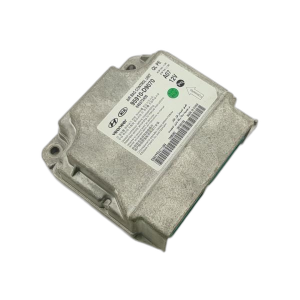
When a used part is the smart pick: A used Smart Junction Box (SJB/BCM) can be a cost-effective option, with prices often significantly lower than a new OEM part. However, the savings on the part must be weighed against the mandatory, and often expensive, programming required after installation.
Donor-vehicle mileage cap: roughly under 80000 miles for the part to have meaningful remaining life.
What to inspect on the donor part:
- Match the OEM part number EXACTLY. Do not rely on year/model alone. Physically inspect your original module and match the number (e.g., 91950-D9650 or 91955-D9660).
- Inspect the used module for any signs of water damage, corrosion on the pins, or physical damage to the casing.
- Source the part from a reputable salvage yard that offers a warranty or return policy in case the module is dead on arrival.
OEM-only on this vehicle (don't cheap out):
- Smart Junction Box / Body Control Module: While used OEM is an option, aftermarket or 'rebuilt' BCMs for this specific platform are not widely available or validated. Sticking with a new or used OEM part is strongly recommended.
Brands owners have reported issues with on this vehicle:
- Unbranded or no-name electronic modules from online marketplaces should be avoided due to high failure rates and potential incompatibility issues.
Real Owner Stories
Aggregated from forums and TSBs cited above. Mileages and costs reflect what owners reported in those sources.
2017-2022 Kia Sportage
Symptoms: Multiple errors appear on the dash, the electric brake engages unexpectedly, and the car loses power.
What fixed it: The dealer performed repeated replacements of wiring harnesses and control units to resolve recurring CAN bus issues.
Source hint: Electronic problems in the new Kia Sportage
2023 Kia Sportage
Symptoms: Owner looking for a reliable ground point for electrical accessories to avoid interference.
What fixed it: Identified and utilized a factory grounding bolt located to the right of the interior fuse panel.
Source hint: Reddit r/kia - 'Where to ground hardwire?'
Related OBD-II Codes
Frequently Asked Questions
Can a software update fix the communication issues on my 2020-2022 Kia Sportage?
Is there a specific part number for the Smart Junction Box if I need to replace it on my 2018 Sportage?
Could the 'limp mode' and warning lights be related to the engine recall instead of a CAN bus fault?
Where is the factory grounding point located in the cabin of the newer Sportage models?
Does the Hyundai Tucson share this same communication bus issue?
What resistance reading should I see at the OBD-II port to confirm the CAN bus is healthy?
Helpful Videos


Used OEM Parts in Stock
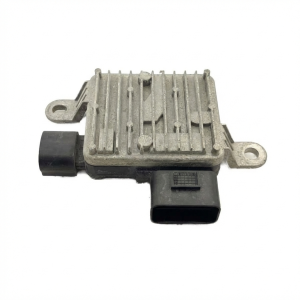
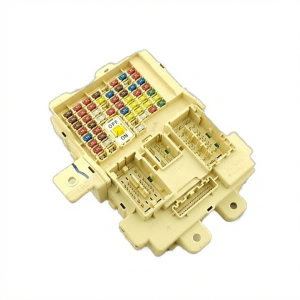
New Aftermarket Parts Available
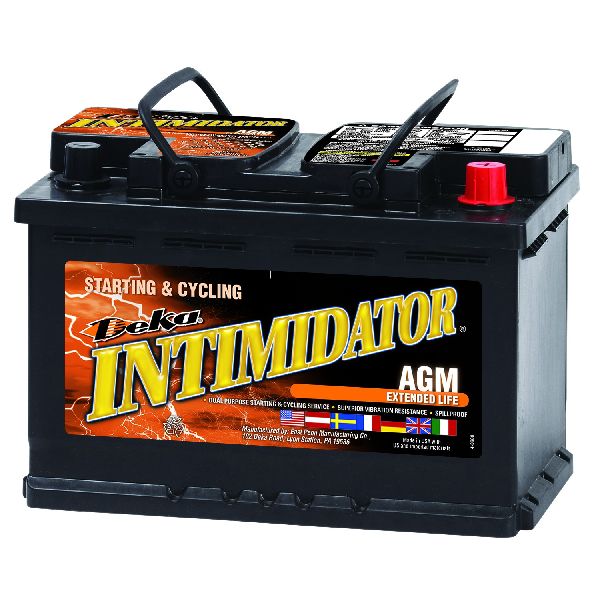


The information in this article is provided for general reference and educational purposes only. Vehicle specifications, procedures, and part compatibility can vary by production date, trim level, and region. Always consult your vehicle's factory service manual and verify part numbers before purchasing or performing repairs. Safety-critical components such as airbags, seat belts, and braking systems should be installed by a qualified professional.
- Kia Sportage:
- 🧭 Diagnostic Flowchart
- 🎬 Helpful Videos
- 🛍️ Shop This Part
- What's Unique About the 2017-2022 Kia Sportage
- Symptoms You May Notice
- Most Likely Causes
- Rare But Worth Checking
- Diagnosis Steps
- Parts You'll Likely Need
- Related Codes That Often Appear With This One
- Technical Service Bulletins (TSBs) & Recalls
- Platform-Specific Known Issues
- Mechanic-Grade Diagnostic Values
- Scan Tool Commands That Help
- Wiring & Ground Locations
- OEM Part Supersession History
- Model Year Variations Within This Range
- Other Known Issues on This Vehicle
- Used vs. New Parts: Buying Guide for This Vehicle
- Real Owner Stories
- 2017-2022 Kia Sportage
- 2023 Kia Sportage
- Related OBD-II Codes
- Frequently Asked Questions
- 🎟️ Get 5% Off